📐 "First 50 Enterprise Queries Get Custom 3D Warehouse Design" Plan















The E-commerce Storage Crisis and Your Silent Solution
E-commerce logistics managers face a relentless challenge: space is vanishing, SKUs are multiplying, and customer delivery promises are tightening. Traditional storage methods buckle under the pressure of modern fulfillment demands, creating bottlenecks that throttle growth and erode profitability. The solution, increasingly adopted by leading fulfillment centers, is shuttle racking for ecommerce.
This semi-automated, high-density storage technology represents a paradigm shift, moving from static storage to dynamic, intelligent inventory management. It is specifically engineered to address the unique pressures of the e-commerce sector, where velocity, variety, and volume collide. Companies specializing in shuttle racking for ecommerce do not merely sell equipment; they provide integrated logistics solutions designed to double or triple storage capacity while accelerating order fulfillment.
The offer of a free shuttle racking system design and quote is a critical first step, allowing operations managers to visualize a transformative solution tailored to their exact facility and inventory profiles without financial commitment. This process moves beyond theoretical benefits, providing a concrete, data-driven plan to conquer the storage density crisis.
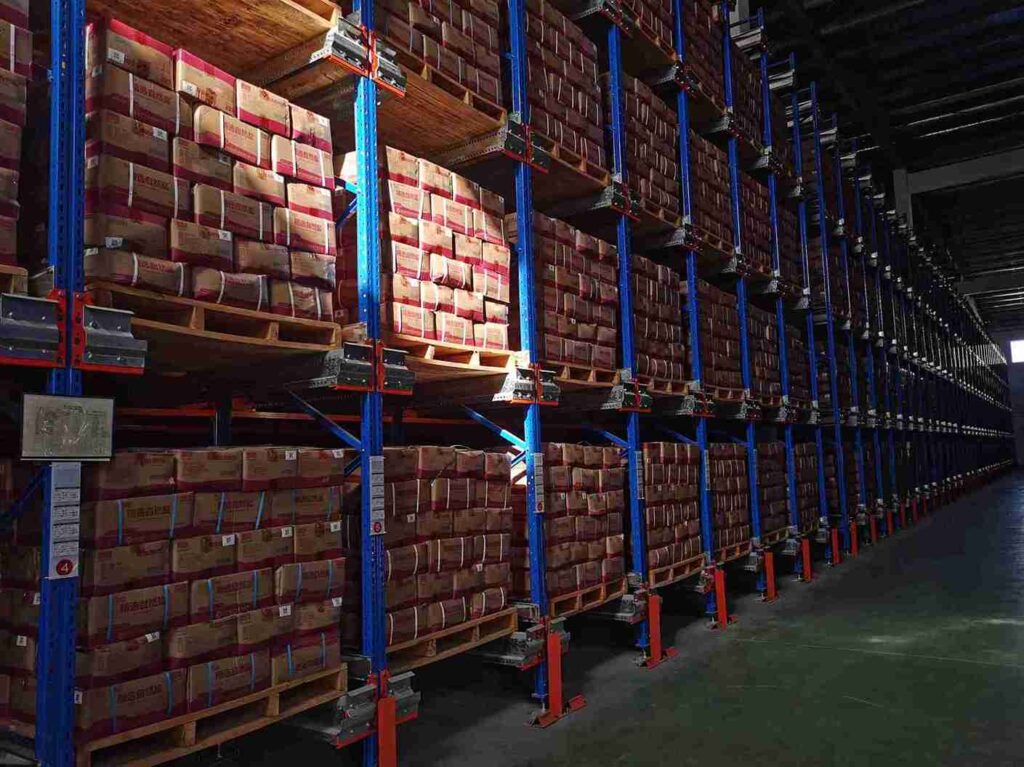
What is a Shuttle Racking System? The Engine of Modern E-commerce Fulfillment
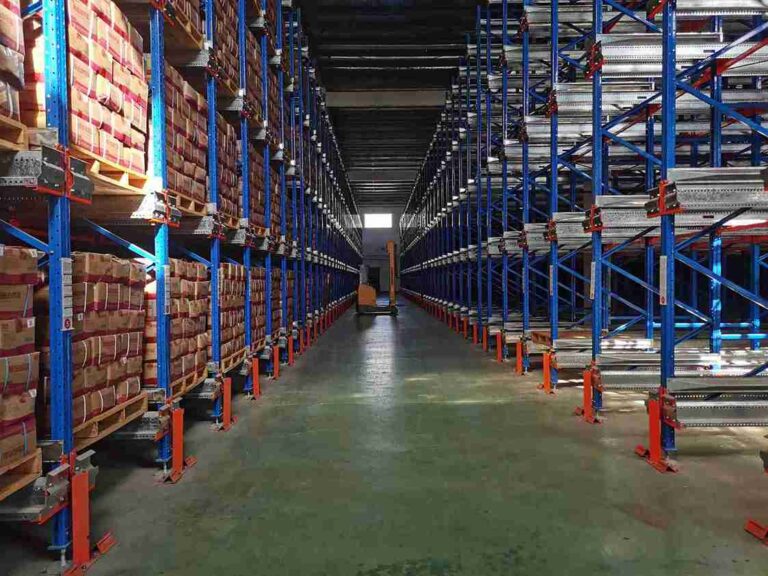
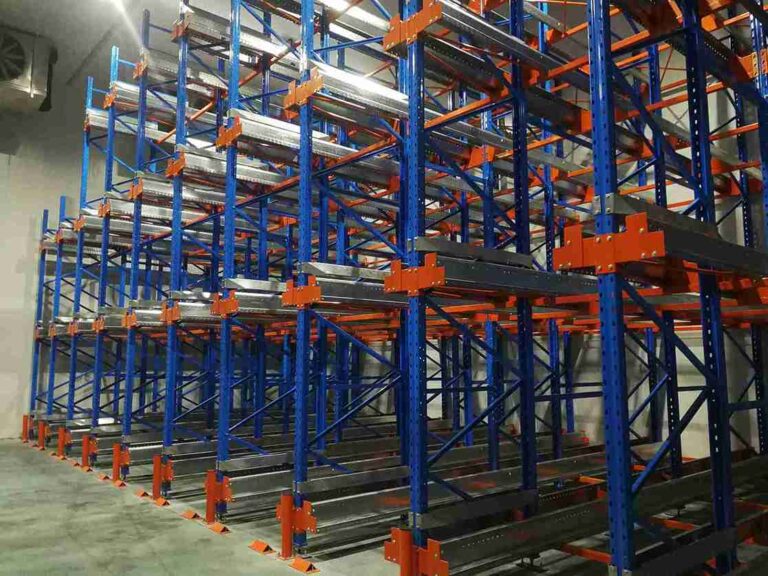
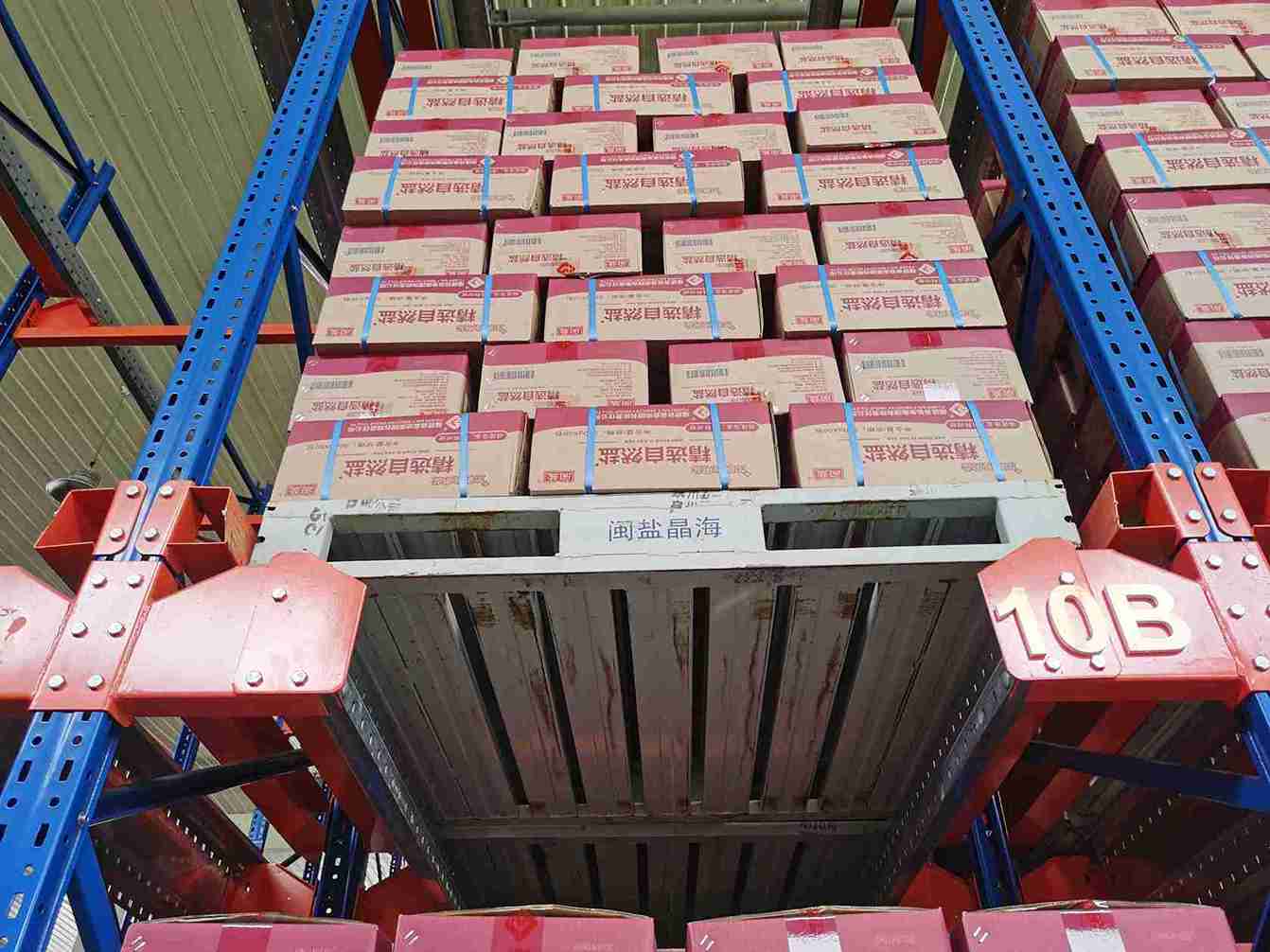
A shuttle racking for ecommerce system is a high-density storage solution comprising a series of deep storage lanes, typically configured in a drive-in or flow-through layout, and powered by autonomous, battery-operated shuttle vehicles that operate on rails within those lanes. The fundamental innovation of shuttle racking for ecommerce is its decoupling of the load-handling mechanism from the forklift. Instead of a forklift entering an aisle to access each pallet location—a process that consumes vast amounts of time and space—the forklift operator simply places a pallet at the entrance of a lane.
A shuttle racking for ecommerce vehicle is then deployed into the lane, automatically transporting the pallet to its designated depth position. This method of “moving the load, not the machine” is the core principle that unlocks unprecedented efficiency, making shuttle racking for ecommerce a superior choice for growing operations.
Core Components of a Shuttle Racking for Ecommerce Operation
The efficacy of any shuttle racking for ecommerce installation hinges on the seamless interaction of its core components:
The Shuttle Vehicle: The workhorse of the system, these robust, wireless machines are equipped with precision sensors, lithium-ion batteries, and communication modules. They navigate the storage lanes independently, lifting, transporting, and positioning pallets based on digital commands. The reliability of the shuttle vehicle is paramount to the uptime of the entire shuttle racking for ecommerce system.
The Racking Structure: This is not standard pallet racking. The structure for shuttle racking for ecommerce is a heavy-duty, engineered system designed with integrated guide rails to ensure the smooth and accurate movement of the shuttle. It must be meticulously calculated to handle dynamic loads and the specific dimensions of the client’s pallets and inventory.
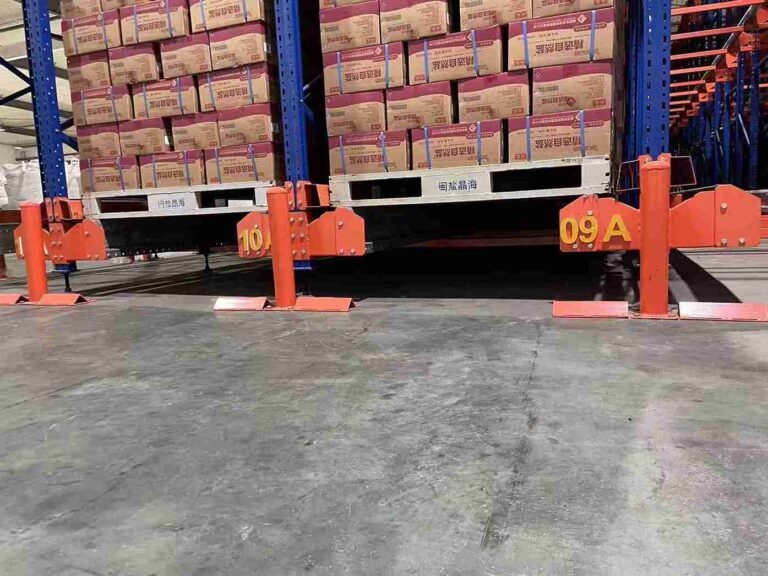
The Picking Face: This is the human interaction point of the shuttle racking for ecommerce system. It is the front end of the storage lanes where forklifts deposit inbound pallets and retrieve outbound pallets presented by the shuttle. The design of this interface is crucial for maintaining a high flow of goods.
The Control Software: The brain of the operation. Sophisticated software, which integrates directly with existing Warehouse Management Systems (WMS), orchestrates the entire shuttle racking for ecommerce operation. It determines optimal pallet placement based on SKU velocity (FIFO or LIFO), directs shuttle movements, and provides real-time, flawless inventory visibility.
The Perfect Match: Why E-commerce and Shuttle Racking Are Inseparable
The operational model of e-commerce is fundamentally different from traditional bulk storage, making the adoption of shuttle racking for ecommerce a strategic necessity rather than a luxury. The very challenges that keep logistics managers awake at night are the exact problems that shuttle racking for ecommerce is designed to solve.
Taming the SKU Explosion with Precision
E-commerce thrives on variety, but this creates a storage nightmare. Unlike a warehouse storing full pallets of a single product for a retail store, an e-commerce fulfillment center must house deep reserves of fast-moving “A” items alongside a long tail of “B” and “C” items. Shuttle racking for ecommerce excels in this environment. Lanes can be dedicated to specific high-volume SKUs, allowing for deep, dense storage without any risk of misplacement or inefficient space usage. The software-driven nature of shuttle racking for ecommerce means the system always knows the exact location of every single pallet, bringing a level of inventory control and accuracy that is impossible with manual systems.
Meeting the Velocity Demand Head-On
Speed is the currency of e-commerce. The ability to get products out the door faster than competitors is a key competitive advantage. Shuttle racking for ecommerce is engineered for speed. By drastically reducing—or even eliminating—forklift travel within the storage aisles, the system cuts retrieval times dramatically. The shuttle operates at high speeds within its lane, fetching required pallets and delivering them to the waiting forklift operator at the picking face. This creates a continuous, streamlined workflow where pickers spend their time actually picking orders instead of navigating warehouse aisles. This direct boost to picking efficiency is a primary driver of ROI for any shuttle racking for ecommerce project.
Beyond Density: The Multifaceted ROI of Shuttle Racking for Ecommerce
While the dramatic increase in storage density is the most headline-grabbing benefit, the value proposition of shuttle racking for ecommerce extends far beyond mere square footage, impacting nearly every aspect of warehouse operations.
Radical Storage Density and Real Estate Savings
The most immediate and quantifiable benefit is the massive increase in storage capacity. By removing the need for wide forklift aisles between every single row of racking, shuttle racking for ecommerce systems can store a significantly higher number of pallets in the same building footprint. It is common for businesses to achieve a 60-100% increase in pallet positions after implementing a shuttle racking for ecommerce solution. This directly translates into massive financial savings by postponing or completely eliminating the need for a costly facility expansion or relocation. The capital required for a shuttle racking for ecommerce system is often far less than the down payment on a new industrial property.
Labor Optimization and Operational Cost Reduction
In a tight labor market, workforce efficiency is critical. Shuttle racking for ecommerce systems dramatically optimize labor usage. Forklift operators are no longer required to spend their shifts driving long distances and performing repetitive, sometimes dangerous, high-level order picking. Instead, they operate at ground level at the lane entrances, functioning as supervisors managing the flow of pallets to and from the automated shuttles. This ergonomic improvement reduces fatigue and turnover.
Furthermore, a single operator can often manage multiple shuttle vehicles, significantly increasing pallet moves per man-hour. This labor efficiency is a recurring annual saving that quickly contributes to a short payback period for the shuttle racking for ecommerce investment.
Unparalleled Inventory Accuracy and Control
Human error in inventory management leads to stockouts, overstocking, and lost sales. The software-integrated nature of shuttle racking for ecommerce eliminates manual tracking. Every pallet movement—storage and retrieval—is automatically recorded in the system the moment the shuttle completes its task. This provides real-time, 100% accurate inventory data, which is the foundation for reliable order promises, efficient replenishment, and strategic business planning. For e-commerce businesses, this accuracy is non-negotiable.
Enhanced Safety and Reduced Product Damage
Safety is a paramount concern in any warehouse. Shuttle racking for ecommerce systems inherently create a safer work environment. By minimizing the need for forklifts to operate in narrow aisles or at significant heights, the risk of collisions, rack damage, and tip-overs is drastically reduced. The automated shuttle handles all the heavy lifting and transporting within the confined lanes, minimizing opportunities for product damage caused by forklift impacts. This not only protects inventory but also lowers insurance premiums and creates a more secure workplace.
Inherent Scalability and Future-Proofing
A well-designed shuttle racking for ecommerce system is not a static purchase; it is a scalable platform for growth. Businesses can start with a modular implementation, perhaps automating the storage for their top 100 SKUs. As volume grows, additional storage lanes, levels, and shuttle vehicles can be integrated into the existing system. This allows for capital expenditure to align with business growth, protecting the investment for the long term and making shuttle racking for ecommerce a cornerstone of a future-proof logistics strategy.
Strategic Evaluation: Is Shuttle Racking for Ecommerce Your Winning Move?
While powerful, shuttle racking for ecommerce is a strategic tool that delivers maximum ROI under specific operational conditions common in the e-commerce sector.
The Ideal Candidate for Shuttle Racking for Ecommerce
An operation is perfectly suited for shuttle racking for ecommerce if it exhibits several of the following characteristics:
High Volume of Pallet Moves: A need for frequent storage and retrieval of palletized goods.
Pressured by Real Estate Costs: Facing expensive expansion or relocation due to maxed-out capacity.
Manageable SKU Depth: Has a significant number of SKUs with sufficient volume to justify deep-lane storage (perfect for fast-moving e-commerce goods).
Requires Strict Inventory Rotation: Operates with goods that require First-In-First-Out (FIFO) or Last-In-First-Out (LIFO) management, such as perishables, cosmetics, or seasonal products.
Seeks a Stepping Stone to Automation: Views shuttle racking for ecommerce as a foundational technology that can later be integrated with AGVs and other automation for a fully automated storage and retrieval system (ASRS).
Considerations for Implementation
A thorough analysis is required. The initial capital investment for shuttle racking for ecommerce is higher than for traditional racking. However, this must be evaluated against the long-term savings in labor and real estate. Furthermore, while excellent for deep-SKU storage, the system is less efficient for operations where every SKU has only one or two pallets. A detailed consultation with a shuttle racking for ecommerce expert is essential to conduct a full cost-benefit analysis.
The Design Imperative: Why Your Free Custom Design is the Key to Success
The worst possible approach to shuttle racking for ecommerce is to treat it as a commodity product. Its performance is 100% dependent on flawless, custom engineering. This is why the offer of a free shuttle racking system design and quote is not a sales gimmick; it is an essential engineering service.
The Deep-Dive Design Process for Shuttle Racking for Ecommerce
Operational Data Analysis: Engineers don’t just measure the building. They analyze pallet data (dimensions, weights, types), inbound/outbound flow rates, SKU velocity profiles, seasonality patterns, and future growth projections. This data forms the foundation of the design.
3D Modeling and Flow Simulation: Using advanced software, engineers create a digital twin of the warehouse and simulate the proposed shuttle racking for ecommerce system. They test different configurations—lane depth, number of levels, shuttle quantity—against real operational data to optimize for throughput, not just storage.
Integration Architecture: The design must include a seamless plan for integrating the shuttle racking for ecommerce software with the existing WMS and any other material handling equipment, such as conveyors or AGVs. This ensures the shuttle system acts as a integrated component of the workflow, not an isolated island.
Transparent ROI Calculation: A professional proposal will include a detailed financial model projecting the ROI. This includes hard savings from avoided expansion costs, labor efficiency gains, and productivity increases, providing a clear financial justification for the investment in shuttle racking for ecommerce.
The Automated Ecosystem: Shuttle Racking as the Heart of the Operation
The true potential of shuttle racking for ecommerce is fully realized when it becomes the central hub of a larger automated fulfillment ecosystem.
Seamless Integration with AGVs and Robotics
The next evolution in efficiency involves connecting the shuttle racking for ecommerce system with Autonomous Mobile Robots (AMRs) or Automated Guided Vehicles (AGVs). In this scenario, the entire storage and retrieval process can be automated. AGVs can receive pallets at receiving, transport them to the entrance of the shuttle racking for ecommerce lanes, and then later retrieve picked pallets from the shuttle system to transport them to shipping or packing stations. This creates a “lights-out” storage process, further reducing labor costs and increasing speed.
The Critical Role of WMS and Control Software
The intelligence of the system resides in its software. The control software for shuttle racking for ecommerce must perform a delicate dance. It must communicate bidirectionally with the host WMS, receiving instructions on which pallets to store or retrieve. It then translates these commands into optimal tasks for the shuttle vehicles, managing battery levels, prioritizing retrievals based on order cut-off times, and ensuring the system operates at peak efficiency. This software layer is what transforms a mechanical system into an intelligent logistics tool.
Case Study: Quantifying the Transformation with Shuttle Racking for Ecommerce
A prominent online retailer of home goods was grappling with unsustainable growth. Their existing narrow-aisle racking system held 6,500 pallets, and they were spending over $200,000 annually on off-site storage. Order pick times were slow, and seasonal peaks were a logistical nightmare.
The Solution: A tailored shuttle racking for ecommerce system was designed and installed, featuring 8 double-deep lanes reaching 12 meters in height, controlled by 4 shuttle vehicles integrated with their WMS.
The Quantifiable Results:
Storage Capacity: Skyrocketed from 6,500 to over 16,000 pallets in the same footprint, eliminating off-site storage costs entirely.
Labor Productivity: Pallet moves per hour increased by 60%, allowing the same team to handle a 40% increase in order volume without adding staff.
Order Accuracy: Inventory accuracy reached 99.99%, virtually eliminating shipping errors and the associated costs.
Financial ROI: The total investment in the shuttle racking for ecommerce system was paid back in under two years through combined savings in external storage, labor efficiency, and error reduction.
Conclusion: From Storage Crisis to Competitive Advantage
The landscape of e-commerce fulfillment is a brutal arena where efficiency, speed, and accuracy determine the winners. clinging to outdated storage methodologies is a sure path to increased costs, operational paralysis, and lost market share. Shuttle racking for ecommerce is not merely a piece of hardware; it is a comprehensive logistics strategy engineered into a system.
It represents a fundamental shift from viewing storage as a passive cost center to leveraging it as an active, intelligent engine for growth. The technology is mature, the ROI is proven, and the strategic imperative is clear. The journey toward mastering e-commerce logistics begins with a single, zero-risk step: engaging with experts for a free shuttle racking system design and quote. This is the definitive move to stop managing a storage crisis and start deploying a competitive advantage.
Frequently Asked Questions (FAQs)
1. How does a shuttle system handle different pallet sizes or weights in the same lane?
Modern shuttle racking for ecommerce systems are designed with flexibility in mind. Shuttle vehicles can often be equipped with adjustable forks or deck widths to accommodate a range of standard pallet sizes (e.g., EUR, CHEP, GMA). For operations with significant variety, the best practice is to dedicate specific lanes to specific pallet types. The system’s software is programmed with the specifications of each lane, ensuring the right shuttle with the right settings is deployed, preventing jams and ensuring smooth operation.
2. What is the maintenance requirement and typical lifespan of a shuttle racking system?
A shuttle racking for ecommerce system is a durable, long-term asset. The racking structure itself has a lifespan of 20+ years with proper care. The shuttle vehicles, as electro-mechanical devices, require periodic maintenance similar to other automated equipment. This typically includes regular battery checks (most use swappable lithium-ion batteries), sensor cleaning, and mechanical inspections. Most providers offer annual maintenance contracts to ensure peak performance and maximize uptime. The design life of the shuttle vehicles is typically 7-10 years, but this can be extended with proper maintenance and software updates.
3. Can a shuttle system be retrofitted into an existing warehouse with traditional racking?
Absolutely. In fact, retrofitting is a very common scenario for implementing shuttle racking for ecommerce. The process often involves dismantling inefficient selective racking and replacing it with the high-density shuttle racking structure in the same footprint. The key to a successful retrofit is a meticulous engineering analysis of the existing facility, including floor flatness, column spacing, clear ceiling height, and fire suppression systems. This approach allows businesses to achieve massive gains in capacity without the prohibitive cost of building a new facility.
4. How does the software handle inventory rotation like FIFO (First-In, First-Out)?
The software is the key to enforcing precise inventory management. In a FIFO shuttle racking for ecommerce configuration, the system is programmed to always store pallets in the deepest available position in a lane. When a retrieval command is received, the software directs the shuttle to retrieve the pallet from the front-most position—the one that has been in storage the longest. This automated process guarantees perfect FIFO rotation, which is crucial for perishable goods or products with expiration dates, eliminating the risk of human error in stock rotation.
5. Are there specific fire safety regulations for high-density storage systems like this?
Yes, and this is a critical part of the design process. High-density storage installations, including shuttle racking for ecommerce, are subject to strict fire safety codes (e.g., NFPA standards). Because traditional ceiling sprinklers cannot effectively penetrate dense storage arrays, in-rack sprinkler systems are almost always required.
These are sprinkler heads installed at various levels within the racking structure itself. A professional shuttle racking for ecommerce provider will always include fire safety compliance in their design, consulting with experts to ensure the system layout includes the necessary in-rack sprinklers and complies with all local regulations and insurance requirements.
Welcome to contact us, if you need warehouse rack CAD drawings. We can provide you with warehouse rack planning and design for free. Our email address is: jili@geelyracks.com