📐 "First 50 Enterprise Queries Get Custom 3D Warehouse Design" Plan
















Introduction: Why Shuttle Racking Systems Are Revolutionizing Warehousing
In an era where warehouse space optimization and operational efficiency dictate profitability, the shuttle racking system explained concept has become a cornerstone of modern logistics. This automated storage solution is transforming how businesses manage inventory, offering unmatched storage density, faster load retrieval, and reduced labor dependency.
For warehouse managers, logistics coordinators, and supply chain professionals, understanding the shuttle racking system explained in detail is crucial for making informed decisions. This guide provides a comprehensive breakdown of how these systems work, their key benefits, industry applications, and how they compare to traditional storage methods.
H1: What Is a Shuttle Racking System? (Fully Explained)
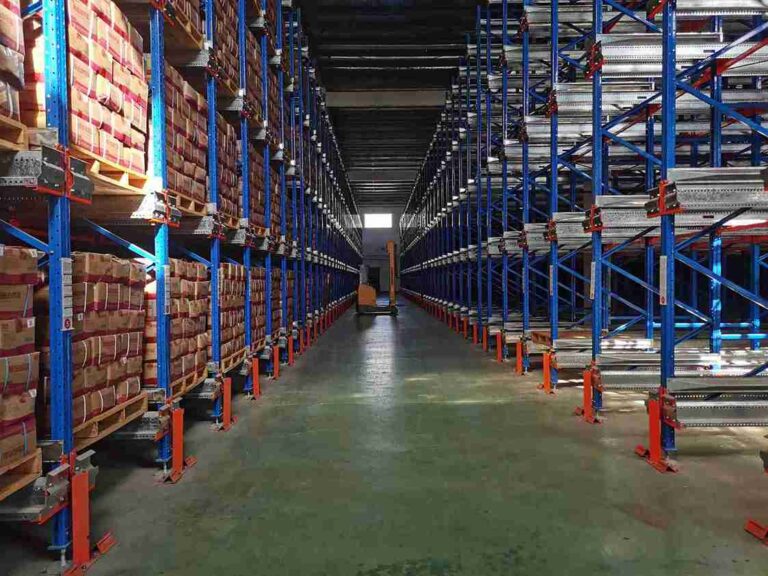
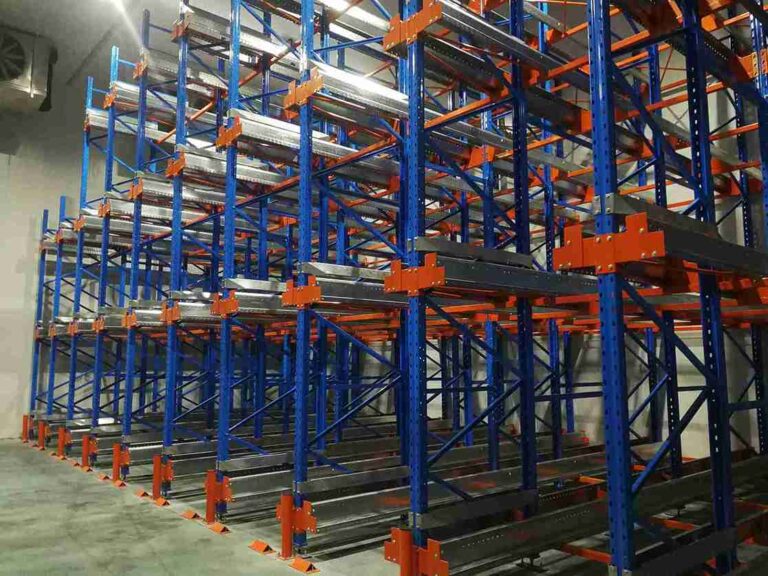
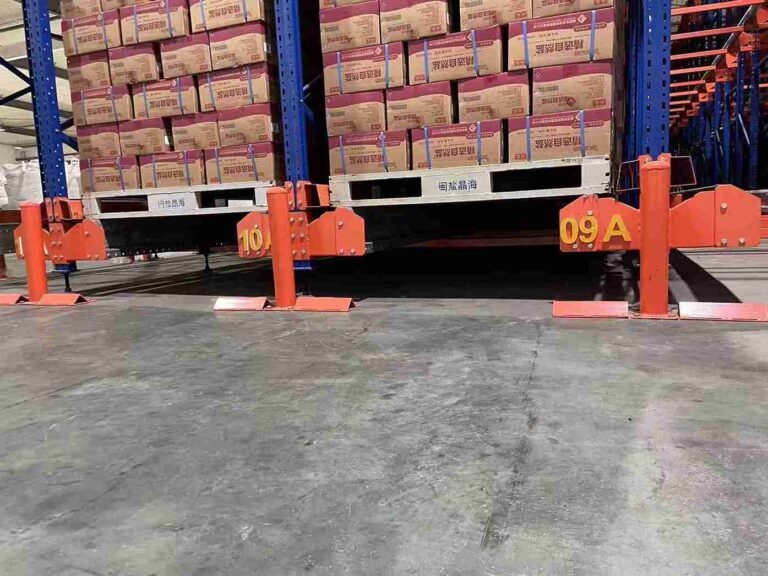
A shuttle racking system is an automated storage and retrieval (AS/RS) solution that uses motorized shuttles to transport pallets within deep storage lanes. Unlike conventional racking, which relies on forklifts to access each pallet, the shuttle racking system explained here operates on predefined rails, allowing for hands-free pallet movement.
H2: How Does a Shuttle Racking System Work? (Step-by-Step Breakdown)
To fully grasp the shuttle racking system explained, let’s examine its core mechanics:
- Pallet Loading – A forklift places a pallet at the lane entrance.
- Shuttle Deployment – The automated shuttle collects the pallet and transports it to the optimal storage position.
- Storage & Retrieval – The system follows FIFO (First-In, First-Out) or LIFO (Last-In, First-Out) logic, depending on warehouse needs.
- Automated Control – A Warehouse Management System (WMS) tracks pallet locations in real time.
This shuttle racking system explained process ensures maximum space utilization and minimized human intervention.
H2: Key Components of a Shuttle Racking System
A well-designed shuttle racking system explained includes:
- Motorized Shuttles – Battery-powered carts that move pallets autonomously.
- High-Density Racking Structure – Engineered for deep-lane storage.
- Control Software – Integrates with ERP/WMS for seamless inventory tracking.
- Charging Stations – Keep shuttles powered for 24/7 operation.
H1: Types of Shuttle Racking Systems (Which One Fits Your Warehouse?)
Not all shuttle racking systems are the same. The shuttle racking system explained below covers the most common configurations:
H2: 1. Semi-Automated Shuttle Systems
- Best for: Medium-density warehouses with moderate throughput.
- How it works: An operator manually places the shuttle in the desired lane.
H2: 2. Fully Automated Shuttle Racking Systems
- Best for: High-volume distribution centers.
- Key feature: No manual intervention—shuttles operate autonomously.
H2: 3. Multi-Depth Shuttle Racking
- Best for: Cold storage and large pallet volumes.
- Advantage: Stores multiple pallets per lane for deeper storage.
H2: 4. Satellite Shuttle Systems
- Best for: Multi-level warehouses with narrow aisles.
- How it works: Uses extendable shuttles to access different levels.
H1: Top Benefits of a Shuttle Racking System (Why Companies Are Switching)
The shuttle racking system explained in this section highlights why it’s a superior alternative to traditional racking.
H2: 1. Unmatched Storage Density (Up to 80% More Space)
- Eliminates aisle space wasted in selective racking.
- Perfect for warehouses with limited square footage.
H2: 2. Faster Load Handling (Reduced Retrieval Time)
- No forklift congestion—shuttles move pallets autonomously.
- Ideal for high-speed fulfillment centers.
H2: 3. Lower Labor Costs (Automation = Fewer Workers)
- One operator can manage multiple shuttles.
- Reduces forklift operator dependency.
H2: 4. Enhanced Safety (Fewer Workplace Accidents)
- Minimizes forklift-pedestrian collisions.
- Automated systems reduce human error.
H2: 5. Real-Time Inventory Tracking (WMS Integration)
- Every pallet’s location is logged digitally.
- Improves stock accuracy and reduces losses.
H1: Shuttle Racking vs. Traditional Pallet Racking (Head-to-Head Comparison)
To fully appreciate the shuttle racking system explained, let’s compare it to conventional storage:
| Feature | Shuttle Racking System | Selective Pallet Racking |
|---|---|---|
| Storage Density | ✅ High (80% more space) | ❌ Low to moderate |
| Labor Efficiency | ✅ Fully automated | ❌ Requires forklift drivers |
| Retrieval Speed | ✅ Faster (automated) | ❌ Slower (manual handling) |
| Best For | High-volume, high-SKU warehouses | Small warehouses with low turnover |
H1: Industries That Benefit Most from Shuttle Racking
The shuttle racking system explained is particularly valuable in:
H2: 1. Food & Beverage (Cold Storage Optimization)
- FIFO compliance for perishable goods.
- Energy-efficient in refrigerated warehouses.
H2: 2. Pharmaceuticals (Precision Handling)
- Accurate batch tracking for medicines.
- Compliance with strict regulatory standards.
H2: 3. E-Commerce & Retail (Fast Order Fulfillment)
- Speeds up picking and packing.
- Handles seasonal demand spikes efficiently.
H2: 4. Automotive (Heavy-Duty Storage)
- Stores bulky parts securely.
- Supports just-in-time (JIT) manufacturing.
H1: How to Choose the Right Shuttle Racking System
When selecting a shuttle racking system, consider:
H2: 1. Warehouse Dimensions (Aisle Width, Height, Floor Load)
- Narrow aisles may require satellite shuttles.
H2: 2. Throughput Needs (High vs. Medium Volume)
- Fully automated systems for high-speed operations.
H2: 3. Budget (Upfront Cost vs. Long-Term ROI)
- Semi-automated = lower initial cost.
- Fully automated = higher efficiency over time.
H2: 4. Future Expansion (Scalability Matters)
- Modular designs allow for easy upgrades.
H1: Installation & Maintenance Best Practices
To maximize the shuttle racking system’s lifespan:
H2: Installation Process (Step-by-Step)
- Site assessment (floor strength, ceiling height).
- Racking assembly (bolted or welded frames).
- Shuttle calibration (speed, load capacity testing).
H2: Maintenance Tips (Keep It Running Smoothly)
- Weekly shuttle battery checks.
- Regular rail cleaning to prevent jams.
- Software updates for optimal performance.
H1: 5 Common Questions About Shuttle Racking Systems
1. How long do shuttle racking systems last?
With proper maintenance, 15-20 years.
2. Can shuttle systems handle uneven pallets?
No—pallets must be uniform for smooth operation.
3. What’s the maximum weight capacity?
Typically 1,500–3,000 kg per pallet, depending on the model.
4. Are shuttle systems suitable for small warehouses?
Yes, but semi-automated versions are more cost-effective.
5. How much does a shuttle racking system cost?
Prices range from 500,000+, depending on automation level.
Conclusion: Is a Shuttle Racking System Right for You?
The shuttle racking system explained in this guide proves its superiority in space savings, speed, and automation. For businesses looking to cut costs, improve efficiency, and scale operations, investing in a shuttle racking system is a strategic move.