📐 "First 50 Enterprise Queries Get Custom 3D Warehouse Design" Plan















The Ultimate Guide to Double Deep Racking Installation Cost: A Strategic ROI Blueprint for Global Warehouses
For supply chain executives and warehouse managers in growth markets from Southeast Asia to Latin America, the decision to implement double deep racking is a significant capital investment. The central question transcends a simple price tag; it demands a thorough dissection of the double deep racking installation cost against a comprehensive, long-term Return on Investment (ROI). This definitive analysis serves as a strategic blueprint, moving beyond generic online calculators to deliver a granular, project-level assessment.
It will deconstruct every variable influencing the final double deep racking installation cost, from geotechnical surveys for concrete slab integrity to the hidden expenses of specialized forklift operator training. Crucially, it provides a proprietary financial modeling framework used by industry veterans to forecast not just space savings, but impacts on throughput, labor efficiency, and future automation readiness. By understanding the complete picture of double deep racking installation cost, operations can make an informed, data-driven investment that enhances logistical competitiveness and delivers a robust, measurable financial return.
Decoding the True Investment: A Multi-Layer Analysis of Double Deep Racking Installation Cost
When procurement teams request a quote, they often receive a figure for the racking steel alone. This represents a fundamental misunderstanding of the project’s scope. A professional assessment of double deep racking installation cost must be holistic, encompassing at least five interdependent cost layers. Underestimating any single layer can lead to budget overruns exceeding 30-40%.
The first and most non-negotiable layer is Site Analysis and Ground Preparation. The structural philosophy of double deep racking concentrates extreme weight on a minimal footprint. A single upright baseplate might support the load of four pallets weighing 1,500 kg each. This creates point loads that can surpass 5,000 pounds per square foot (PSI). Many warehouse slabs, particularly in older industrial parks across regions like Central Asia or parts of Africa, are simply not designed for this intensity.
Therefore, a detailed geotechnical survey and core sampling are imperative precursors to any accurate double deep racking installation cost projection. Remediation work—whether through slab thickening, the installation of reinforced concrete piers, or steel load-distribution plates—can constitute 15% to 35% of the total double deep racking installation cost. This phase is not an area for cost-cutting; it is the foundational insurance policy for the entire system’s safety and longevity.
Structural Engineering and Hardware: Where Quality Dictates Long-Term Value
The physical racking system forms the core of the double deep racking installation cost. However, not all steel is created equal. The engineering demands for double deep systems are markedly different from selective racking. The dynamic load transfer, especially when a reach truck extracts a 1.5-ton pallet from the rear position, imposes unique torsional and horizontal forces. Consequently, reputable suppliers specify:
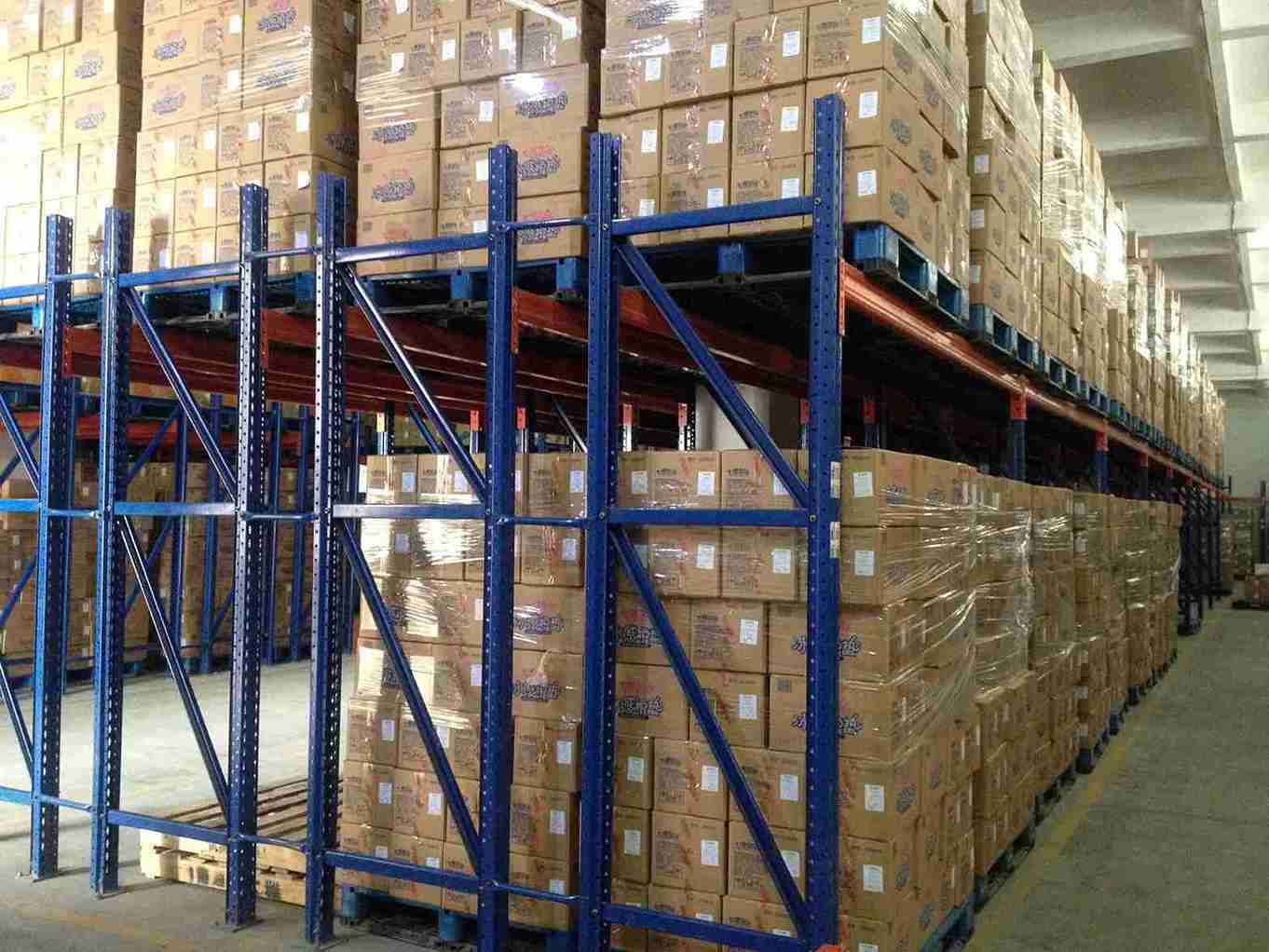
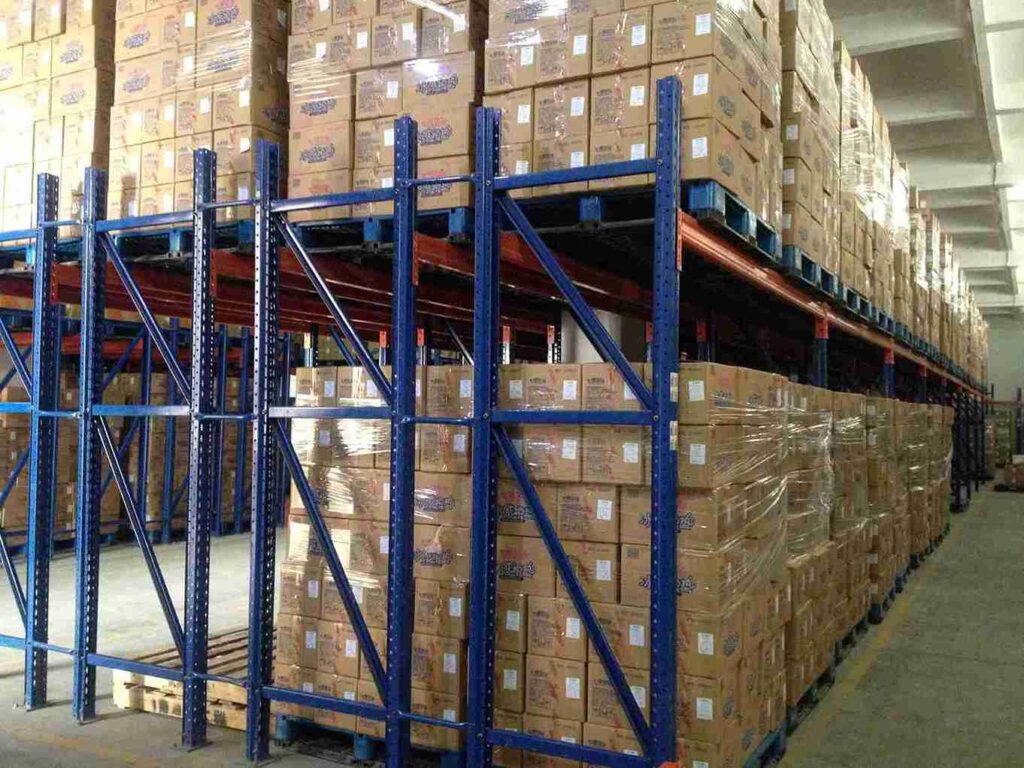
Heavy-Duty Upright Frames: Typically utilizing 12-gauge (2.6mm) or thicker steel with a higher yield strength, compared to the 14-gauge (2.0mm) common in lighter applications.
Continuous Tie-Beams: These horizontal members connect the front of adjacent uprights across the aisle, critical for resisting the “racking” motion and ensuring lane alignment.
Robust Bracing Systems: Often a combination of horizontal and diagonal braces, designed to specific seismic codes relevant to the installation region (e.g., IBC in the Middle East, Eurocode in parts of Southeast Asia).
While this results in a higher per-component price, it directly correlates to system integrity. Opting for underspec components to reduce the initial double deep racking installation cost is a false economy, inevitably leading to premature wear, safety hazards, and costly rebuilds. The true measure is the cost per secure, durable pallet position over a 15+ year lifecycle.
The Material Handling Equation: Integrating Forklift Costs into the Budget
A critical and frequently overlooked component of the total double deep racking installation cost is the requisite fleet upgrade. Double deep racking is incompatible with standard counterbalance forklifts. Its implementation mandates either:
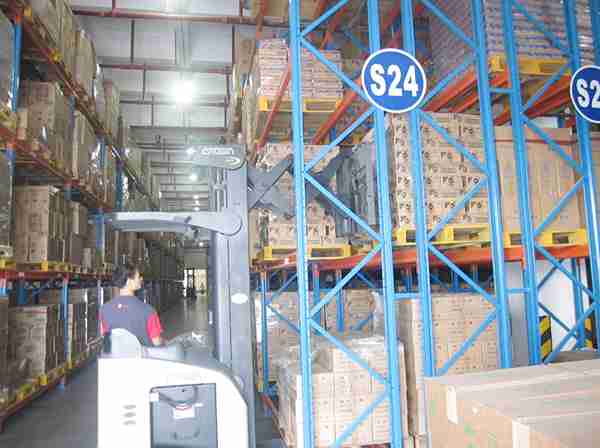
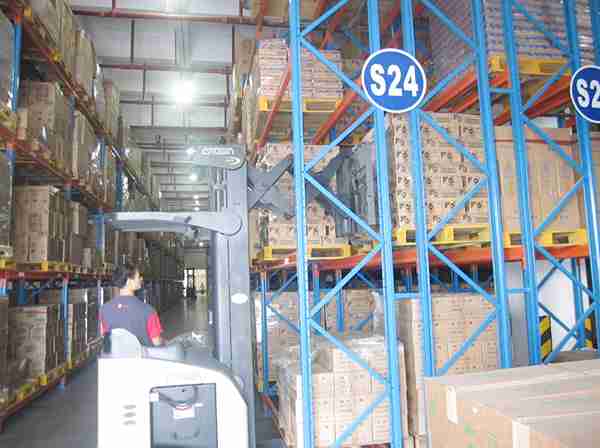
Deep-Reach Trucks: The standard solution, capable of operating in aisles as narrow as 2.7 meters.
Turret Trucks or VNA (Very Narrow Aisle) Trucks: For facilities with ceiling heights above 12 meters seeking maximum density.
The capital expenditure here is substantial. A single new deep-reach truck represents an investment of $85,000 to $140,000. For a medium-sized warehouse requiring three trucks, this equipment cost can rival or even exceed the double deep racking installation cost for the steel structure itself. Furthermore, operational expenses rise. Deep-reach trucks have higher energy consumption (often electric), require more specialized spare parts, and demand advanced operator training. The total cost of ownership (TCO) for this MHE (Material Handling Equipment) must be integrated into any credible ROI analysis of the double deep racking installation cost. Leasing options can mitigate upfront capital outlay but form an ongoing operational expense.
Professional Installation: The Art and Science of Precision
The complexity of erecting a double deep system means that installation labor is not a commodity service. It is a specialized skill that significantly influences the final double deep racking installation cost. Key differentiators include:
Laser-Aligned Precision: Beams must be perfectly level and parallel across the entire depth of the lane to prevent pallet jamming. This requires sophisticated tooling and expertise.
Sequenced Assembly: The installation of continuous tie-beams and bracing follows a specific sequence to maintain structural stability during build-out.
Certified Load Testing & Documentation: Upon completion, a professional installer provides certification that the system has been installed to design specifications and can safely handle the rated loads. This documentation is crucial for insurance and safety compliance.
Attempting to use uncertified general labor to reduce the double deep racking installation cost invites immense risk, including misalignment leading to operational inefficiencies, undetected installation flaws, and potential liability in the event of a collapse. Professional installation typically adds 20-30% to the hardware cost but is non-negotiable for system performance and safety.
Calculating Tangible ROI: A Framework Beyond Simple Density Gains
The primary driver for considering double deep racking is the promise of increased storage density—often cited as 40-60%. However, a sophisticated financial model must look deeper. A proper ROI analysis contextualizes the double deep racking installation cost against multi-year value streams.
The Core Density Model:
Consider a warehouse with 1,000 square meters of storage area. A single-deep selective system with wide aisles might yield 1,200 pallet positions. A double deep system with narrow aisles could yield 1,800 positions—a 50% increase. If the fully-loaded cost of space (rent, utilities, taxes) is $120 per square meter annually, the single-deep footprint costs $120,000. The double deep system achieves the same capacity in approximately 667 square meters, an annual space savings of roughly $40,000. If the total premium for the double deep system (including all aforementioned costs) is $280,000, the payback period on space savings alone is 7 years. This is a foundational calculation, but it’s incomplete.
Incorporating Operational Efficiency and Throughput Impact
A myopic focus on the double deep racking installation cost and density can overlook operational trade-offs. Double deep systems typically operate on a LIFO (Last-In, First-Out) basis per lane. This influences several ROI variables:
Throughput Velocity: Deep-reach truck cycle times are generally 10-15% longer than counterbalance trucks in open aisles due to the extension/retraction sequence and more cautious maneuvering. This may necessitate an additional truck or shift to maintain output, adding to operational cost.
Inventory Management Sophistication: To avoid “hiding” slow-moving stock behind fast-movers, a robust Warehouse Management System (WMS) with directed put-away and pick-face management is essential. The cost of WMS configuration and potential upgrades should be factored into the total project assessment alongside the double deep racking installation cost.
Product Damage Risk: Improperly trained operators can damage rear pallets or rack beams. Investment in high-quality training reduces this risk and protects the asset.
Therefore, a complete ROI model assigns a value to these factors. It may reveal that for a high-throughput, multi-SKU facility, the operational costs erode the density benefits, making the double deep racking installation cost harder to justify. Conversely, for a bulk-storage operation with fewer SKUs and higher pallet counts per SKU, the model shines.
The Strategic Premium: Future-Proofing for Automation
Perhaps the most compelling long-term justification for the double deep racking installation cost is its role as an enabler for automation. The uniform, structured environment of a double deep system is ideal for integration with:
Automated Storage/Retrieval Systems (AS/RS): Fixed-aisle S/R machines can seamlessly operate in double deep configurations.
Automated Guided Vehicles (AGVs): Fork-style AGVs can be programmed for reliable double deep pallet handling.
When designing the system with this future state in mind, certain specifications—tighter tolerances, reinforced uprights for machine interface, pre-installed guidance infrastructure—may add 5-10% to the initial double deep racking installation cost. This premium, however, transforms the racking from a static asset into a scalable platform. It protects the capital investment by allowing a phased automation rollout, thereby deferring larger future investments and securing long-term labor savings and accuracy improvements. This strategic dimension often tips the ROI scale from acceptable to exceptional.
Global Market Nuances: How Location Influences Double Deep Racking Installation Cost
The double deep racking installation cost is not a global constant. It fluctuates based on regional economic and logistical factors that astute buyers must consider.
Southeast Asia & Manufacturing Hubs: In countries like Vietnam, Thailand, and Malaysia, booming manufacturing drives demand. Local steel production can keep material costs competitive, but fluctuating shipping costs for specialized components and a competitive labor market for certified installers can impact the final double deep racking installation cost. Seismic considerations are paramount in areas like Indonesia and the Philippines.
The Middle East & GCC States: Projects in the UAE, Saudi Arabia, and Qatar often involve high-spec, large-scale facilities. While capital is available, the extreme climate necessitates considerations for steel specifications (e.g., hot-dip galvanizing for corrosion resistance) and warehouse cooling, which can influence structural loads. The double deep racking installation cost here often includes a premium for rapid project timelines and premium-grade materials.
Africa: Markets are highly varied. In established logistics hubs like South Africa or Kenya, local expertise and supply chains exist. In emerging markets, the double deep racking installation cost may be heavily influenced by import duties on steel, a scarcity of certified installers requiring expatriate teams, and challenging logistics for delivering equipment to inland sites. Comprehensive logistics planning becomes a critical part of the cost structure.
Latin America: Similar to Africa, diversity reigns. In countries like Mexico, Chile, or Brazil with strong industrial bases, local manufacturing can be leveraged. However, complex customs regulations, local tax structures (like Brazil’s intricate ICMS tax), and varying building codes significantly affect the final landed double deep racking installation cost.
A Step-by-Step Procurement Strategy to Optimize Value and Control Costs
Navigating the complexities of double deep racking installation cost requires a disciplined, phased approach to procurement and project management.
Phase 1: Internal Discovery & Data Gathering (4-6 Weeks)
Conduct a SKU Profile Analysis: Categorize inventory by turnover rate, physical dimensions, and pallet quantities per SKU. This data is the bedrock of a viable layout.
Establish Clear KPIs: Define success metrics: target pallet positions, required throughput (pallets in/out per hour), and accuracy levels.
Assemble Internal Stakeholders: Include operations, finance, safety, and IT (for WMS integration) from the outset.
Phase 2: The Request for Proposal (RFP) Process (6-8 Weeks)
Issue a Detailed RFP: Require vendors to break down the double deep racking installation cost into clear line items: 1) Site Survey & Prep, 2) Structural Steel & Components, 3) Professional Installation, 4) Certification & Training, 5) Post-Installation Support.
Require References & Case Studies: Demand evidence of similar-scale projects in your region. Visit a live installation if possible.
Evaluate Total Value, Not Just Price: Scrutinize the engineering quality, warranty terms, and the supplier’s ability to support future expansion or automation.
Phase 3: Project Execution & Change Management (12-20+ Weeks)
Insist on Detailed Project Plans: Gantt charts showing dependencies between site prep, delivery, and installation are essential.
Appoint a Dedicated Project Manager: This point-person coordinates between the supplier, internal teams, and any other contractors.
Phased Implementation: Plan the rollout to minimize disruption to ongoing operations, perhaps by zone or product line.
Mitigating Risks and Ensuring Long-Term System Performance
Understanding the double deep racking installation cost is also about understanding and mitigating risk. Proactive measures include:
Comprehensive Insurance Review: Ensure your property and liability insurance is updated to reflect the new high-density storage system. The insurer may require the installation certificate.
Preventive Maintenance Contract: Negotiate a service agreement with the supplier for scheduled inspections. Regular checks of beam locks, upright alignment, and anchor bolt torque can prevent minor issues from becoming major failures.
Ongoing Operator Recertification: Forklift operator training is not a one-time event. Annual recertification on the deep-reach equipment, focusing on double deep handling techniques, maintains safety and efficiency.
Conclusion: Transforming the Double Deep Racking Installation Cost into a Strategic Asset
The journey to ascertain the true double deep racking installation cost is a deep dive into the operational and financial heart of a warehouse. It reveals that the investment is not merely in storage hardware, but in a integrated system comprising site infrastructure, precision engineering, specialized equipment, and human expertise. For operations with the appropriate inventory profile—characterized by batch storage of medium-to-slow moving goods—the significant upfront double deep racking installation cost is justified by powerful, compounding returns: dramatic space savings, a structured path to automation, and enhanced inventory control.
The key to success lies in meticulous planning, partnering with experienced suppliers who provide full transparency on the double deep racking installation cost, and building a financial model that captures both the tangible and strategic value of this powerful density solution. By doing so, logistics leaders can confidently convert a major capital expenditure into a durable competitive advantage.
Frequently Asked Questions (FAQs)
1. How does the lead time for a double deep racking project compare to standard racking, and how does this affect planning?
The total lead time for a double deep racking project is typically 30-50% longer than for a standard selective system, directly influencing project scheduling and the double deep racking installation cost planning. This extended timeline accounts for the custom engineering and analysis required for the double deep racking installation cost, the manufacturing of heavier-gauge components, and the more complex installation process. A realistic timeline from initial site survey to operational handover is 18-26 weeks. Rushing this process to lower the perceived double deep racking installation cost often leads to errors in slab preparation or installation, creating far costlier problems long-term.
2. Can existing single deep racking be converted to double deep, and how does that impact the double deep racking installation cost?
While theoretically possible, conversion is often impractical and rarely cost-effective. The structural requirements for double deep racking installation cost projects are fundamentally different. Single deep uprights are typically lighter gauge and lack the reinforcement for the horizontal forces of double deep storage. Attempting a conversion usually requires reinforcing or replacing uprights, adding continuous tie-beams, and purchasing all new, longer beams and bracing. The labor for this piecemeal modification often exceeds the double deep racking installation cost for a new, designed-from-scratch system. In most cases, a full redesign and new installation offer better value, performance, and safety.
3. What are the specific safety protocols and certifications we should demand from an installer to protect our investment?
To safeguard both personnel and the integrity of the system, demand that the provider of your double deep racking installation cost project employs installers certified by recognized industry bodies (e.g., the Rack Manufacturers Institute (RMI) in the US, or equivalent international standards). The installation quote should explicitly include provision for a final engineered certification stating the installation complies with the original design drawings and relevant local building codes. This document is critical for liability and insurance purposes. Furthermore, the installer should provide a detailed site safety plan for the duration of the work.
4. For cold storage applications, are there special considerations that add to the double deep racking installation cost?
Yes, cold storage and freezer applications introduce significant factors that increase the double deep racking installation cost. First, the steel must be specified for low-temperature environments, often requiring special grades that resist brittleness. The coating system (e.g., a specialized epoxy paint) must withstand constant condensation and thermal cycling. Second, installation becomes more complex and expensive, as work must be conducted in stages to allow for thermal contraction, and installers work in a challenging environment. However, the ROI calculus also changes dramatically, as the cost per cubic meter of refrigerated space is extraordinarily high, making the density gains from double deep storage even more valuable and justifying the higher double deep racking installation cost.
5. How do you accurately model the potential increase in product damage risk, and how can this be mitigated in the ROI analysis?
Modeling damage risk is qualitative but crucial. The risk increases in double deep systems due to reduced visibility for the rear pallet and the complexity of the reach operation. To mitigate this and protect the ROI, factor in costs for:
1) Advanced Operator Simulation Training: Using VR or simulators to practice rear-pallet handling before live operation.
2) Pallet Quality Control Gates: Investing in inspection stations to ensure only perfect, square pallets enter the system.
3) Protective Upright Guards and Column Protectors: A direct cost within the double deep racking installation cost that prevents damage from minor impacts. In the ROI model, assign a projected reduction in annual damaged goods write-offs (e.g., 0.5% of inventory value) as a benefit stemming from these mitigation investments.
If you require perfect CAD drawings and quotes for warehouse racking, please contact us. We can provide you with free warehouse racking planning and design services and quotes. Our email address is: jili@geelyracks.com