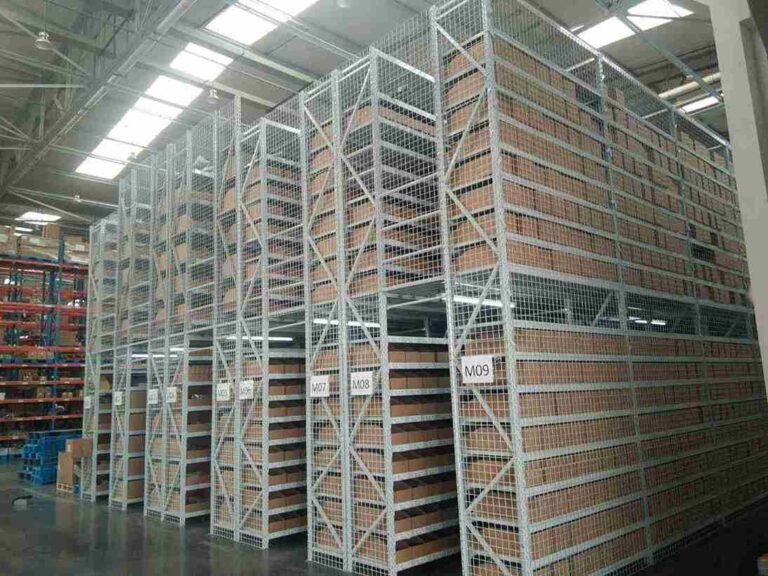
📐 "First 50 Enterprise Queries Get Custom 3D Warehouse Design" Plan
















The Spatial Crisis in Retail Logistics and the Path Forward
In the relentless arena of global retail, the warehouse is no longer a passive repository; it is the dynamic, beating heart of the supply chain. Its rhythm dictates the speed to market, the cost of operations, and ultimately, the resilience of the entire business. Retailers across Southeast Asia, the Middle East, Africa, and Latin America face a universal, pressing challenge: inventory portfolios are expanding, consumer expectations are accelerating, yet the physical and financial constraints of warehousing space are tightening. The sight of wide, sprawling aisles designed for bygone material handling equipment represents more than just outdated infrastructure—it signifies a vast, untapped reservoir of potential profit leaking away as wasted cubic air.
The proposition of implementing narrow aisle storage for retail operations is, therefore, not merely an equipment upgrade. It is a strategic pivot towards radical spatial efficiency. The often-cited potential of gaining 30% or more storage capacity is a tangible outcome of this pivot, but industry leaders understand that this figure is merely the entry point of value. True optimization through narrow aisle storage for retail environments unlocks a cascade of benefits: dramatic reductions in operational travel time, enhanced picking accuracy, improved inventory control, and the creation of a future-ready infrastructure capable of integrating advanced automation.
This comprehensive exploration delves beyond the sales brochure to unpack the engineering principles, economic calculations, and operational transformations that define a successful narrow aisle storage for retail project. It serves as a definitive guide for logistics managers, operations directors, and business owners seeking to transform their storage facilities from cost centers into potent competitive weapons.
Part 1: The Foundational Economics of Space Reclamation
The High Cost of Empty Air: Analyzing Traditional Warehouse Layouts
To fully appreciate the revolution offered by narrow aisle storage for retail facilities, one must first conduct a forensic audit of a conventional layout. A warehouse reliant on standard counterbalance forklifts dedicates an astonishing proportion of its valuable floor space purely to vehicle transit. These machines, requiring ample width to turn and maneuver, dictate aisle widths typically ranging from 3.2 to 3.8 meters. In a 10,000 square meter facility, it is not uncommon for 40% to 50% of the entire footprint to be consumed by these void corridors. This translates directly into a per-square-meter tax on efficiency, inflating real estate costs, energy expenditures, and limiting total storage throughput.
The shift to a dedicated narrow aisle storage for retail system fundamentally rewrites this spatial equation. By deploying specialized trucks—such as turret trucks, order pickers, or side-loaders—that operate within the aisle and do not require turning within it, the necessary aisle width can be slashed to between 1.6 and 2.0 meters. In Very Narrow Aisle (VNA) configurations, often utilizing guide rail systems, this can be reduced further to a mere 1.5 meters.
The immediate geometric effect is a dramatic reallocation of space from non-productive transit zones to high-value storage positions. For a retail business grappling with seasonal peaks or expanding SKU counts, this reclaimed space is the equivalent of discovering a new, rent-free extension to their existing facility. The strategic implementation of narrow aisle storage for retail operations is, first and foremost, an exercise in capital preservation and asset optimization.
Calculating the Gain: From Linear Feet to Pallet Positions
The promise of a 30% increase in capacity is not a marketing hyperbole but a predictable outcome of applied warehouse geometry. Consider a simplified model: A warehouse with 10 storage aisles, each 40 meters long, using traditional 3.5-meter aisles. Transitioning to a narrow aisle storage for retail system with 1.8-meter aisles saves 1.7 meters per aisle. Across 10 aisles, this reclaims 17 linear meters of width. This reclaimed space can be repurposed to install additional rows of high-density racking.
The actual percentage gain is sensitive to the original layout and racking profile, but for most retail operations handling unit loads on pallets, a 25-35% uplift in total pallet positions is a consistently achievable target. This newfound capacity directly addresses the core pain point of space scarcity, enabling retailers to hold broader inventory, improve stock availability, and reduce the frequency and cost of emergency replenishments. The economics of narrow aisle storage for retail are compelling because they are quantifiable and directly tied to solving a fundamental constraint on growth.
Part 2: Vertical Ascendancy: Exploiting the Cubic Potential
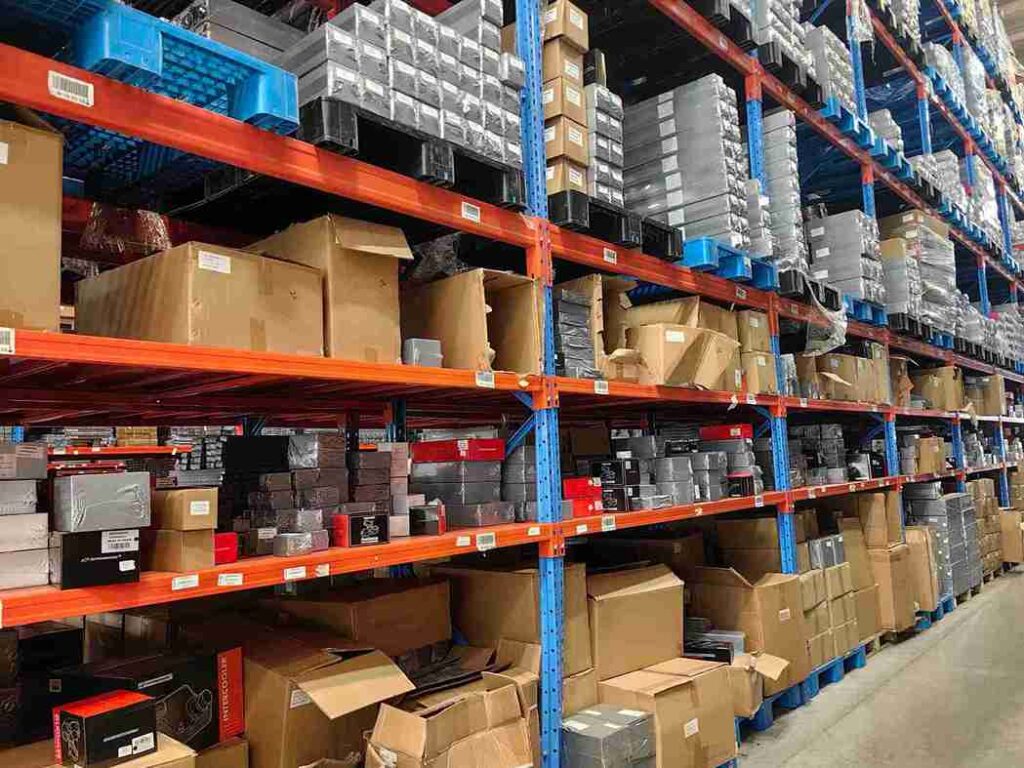
The most profound leap in efficiency occurs when businesses stop thinking in two dimensions and start mastering the third. A pivotal advantage of narrow aisle storage for retail systems is their inherent compatibility with high-bay racking. The specialized equipment designed for narrow aisles boasts superior lift heights, stability, and precision compared to their conventional counterparts, safely and efficiently accessing storage levels up to 15 meters and beyond.
This capability enables a strategy known as cubic storage optimization. Rather than spreading inventory across a vast, low-profile footprint, the retail operation builds upwards, creating a dense, vertical inventory archive. This approach is particularly transformative for retail sectors with high stock-keeping unit (SKU) counts but lower pick quantities per line, such as fashion, electronics, or home goods. By maximizing the usable air space above the floor, narrow aisle storage for retail solutions effectively multiply the functional capacity of the land parcel.
The synergy between narrow aisles and significant height is where the most dramatic density gains are realized. It represents a paradigm shift from floor-space management to air-space management, a critical evolution for retailers in urban or high-cost locations where land is at an absolute premium. Any comprehensive narrow aisle storage for retail strategy must, therefore, incorporate a detailed analysis of vertical potential, structural considerations, and equipment lift capabilities.
Part 3: The Machinery of Precision: Equipment Selection as a Strategic Choice
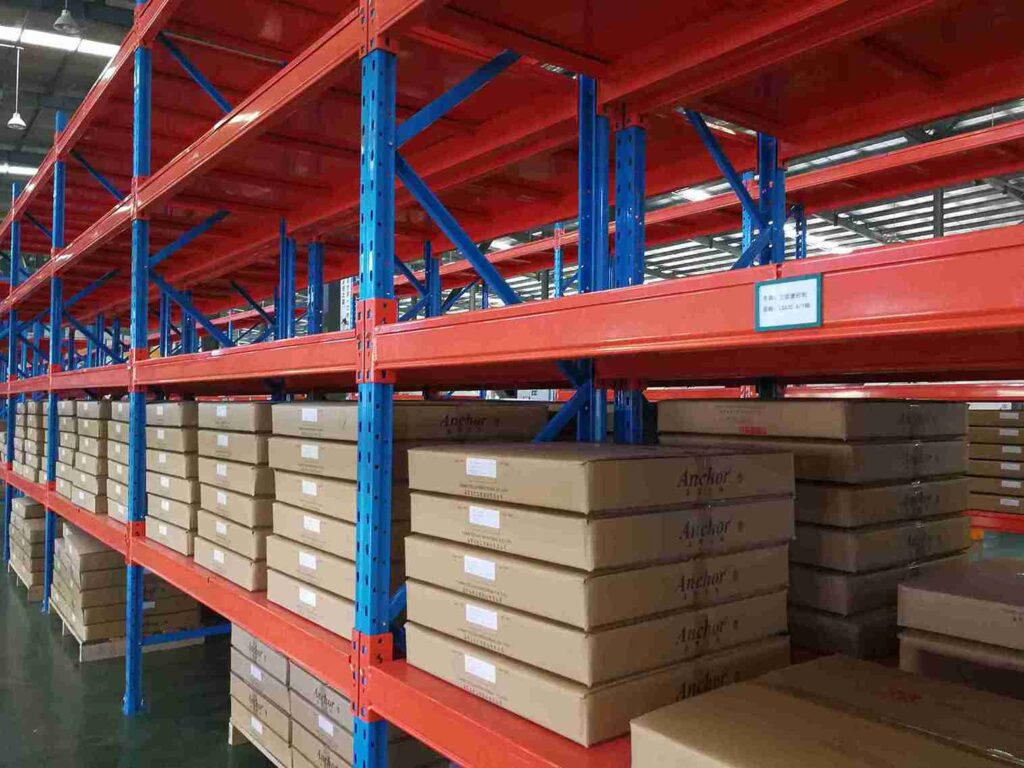
The aisle width is ultimately defined by the technology that traverses it. Selecting the right equipment is the single most critical technical decision in deploying narrow aisle storage for retail solutions, as it dictates operational workflow, throughput, and long-term adaptability. The choice is not one-size-fits-all but must be meticulously matched to the specific inventory and order profiles of the retail operation.
Turret Trucks and Swing-Mast Trucks: The Density Champions
For retail distribution centers focused on high-volume, full-pallet storage and retrieval, the turret truck is the undisputed workhorse of narrow aisle storage for retail. The operator’s compartment rises with the forks, and a rotating turret head allows the forks to pivot 180 degrees, enabling the truck to store and retrieve pallets from both sides of an exceptionally narrow aisle without ever turning the vehicle itself.
This allows for deep, double-deep, or even triple-deep storage configurations, pushing density to its practical maximum. Swing-mast trucks offer similar benefits with a different mechanical principle, providing robust options for heavier loads. These systems are ideal for the reserve storage area of a retail warehouse, where maximizing the number of pallets per square meter is the paramount objective.
Order Pickers: The Engine of Case-Level Efficiency
For the vast majority of retail fulfillment, where orders comprise individual cartons and cases rather than full pallets, the man-up order picker is the essential tool. In a narrow aisle storage for retail picking module, the operator and a picking platform ascend directly to the product location.
This “man-to-goods” principle, when executed within a narrow aisle framework, drastically reduces the non-productive travel and search time that plagues traditional pick-and-cart systems. The design of the narrow aisle storage for retail racking for pick faces—incorporating tailored shelf sizes, optimal level heights, and logical slotting—can double or triple a picker’s productivity. This direct access to stock within a high-density environment is a cornerstone of efficient e-commerce and store replenishment operations.
Very Narrow Aisle (VNA) Systems: The Pinnacle of Automated Precision
At the apex of space optimization and technological integration sits the guide-rail VNA system. These trucks operate on fixed rails, allowing for extreme aisle narrowness and highly precise, high-speed travel. Often integrated with a Warehouse Management System (WMS) for semi-automated “man-on-board” operations, VNA represents a significant step towards full automation. For large-scale retail logistics operations with predictable, high-volume flows, investing in a VNA-based narrow aisle storage for retail system offers unparalleled density, accuracy, and traceability. It establishes the disciplined physical infrastructure upon which future layers of automation, such as pallet-handling AGVs or robotic pick stations, can be seamlessly added.
Part 4: The Synergistic Ripple Effect: Efficiency Gains Beyond Capacity
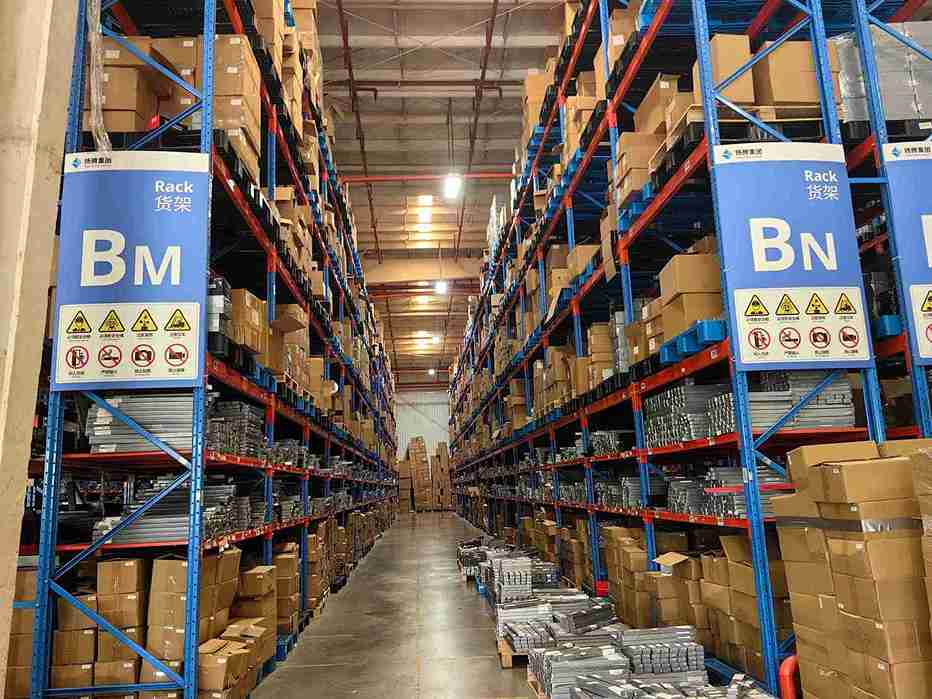
While the capacity increase captures immediate attention, the most valuable returns from a narrow aisle storage for retail project often flow from the systemic efficiencies it catalyzes across the entire warehouse operation.
The Travel Time Dividend
In warehouse dynamics, time is a direct function of distance. By condensing the storage footprint through narrower aisles and taller racking, the average travel path for any material movement is significantly shortened. Studies of implemented projects consistently show reductions in operator travel time of 20% to 40%. This translates into more put-away cycles per shift, more picks per hour, and faster replenishment of forward pick areas. For a retail operation, this means the ability to process more orders with the same labor force, to cut lead times, and to extend same-day or next-day cutoff times—a powerful competitive advantage in fast-moving consumer markets.
Enhanced Accuracy and Inventory Integrity
A disciplined narrow aisle storage for retail environment, governed by a WMS with strict location control, is inherently less prone to error. The clear, logical addressing of each storage location, combined with optimized pick paths that minimize backtracking, allows operators to focus on accurate selection rather than navigation. Furthermore, the reduced need for multiple, scattered overflow storage areas (a common symptom of space pressure) concentrates inventory into a controlled zone, improving cycle count accuracy and reducing instances of “lost” stock. The precision required to operate within a narrow aisle dovetails with a culture of procedural precision, leading to fewer mis-ships, lower return rates, and enhanced customer satisfaction.
The Foundational Step Towards Automation
A warehouse organized around narrow aisle storage for retail principles is a pre-optimized candidate for automation. The regimented layout, strict location discipline, and defined traffic flows are the exact physical prerequisites for technologies like Automated Guided Vehicles (AGVs), Autonomous Mobile Robots (AMRs), and even fully automated cranes. Implementing a narrow aisle system is not a dead-end investment; it is a strategic move that builds the foundational order and density necessary for a logical, phased automation journey.
It future-proofs the facility, allowing retailers to scale their operations by adding technology to a ready-made efficient structure, rather than attempting to retrofit automation into a chaotic, space-inefficient environment. This forward compatibility is a critical, long-term benefit of adopting a modern narrow aisle storage for retail philosophy.
Part 5: Implementation as a Science: A Phased Blueprint for Success
The transition to high-density narrow aisle storage for retail is a complex capital project, not a simple procurement exercise. Its success hinges on meticulous planning, localized adaptation, and holistic change management, particularly in diverse growth markets.
Phase 1: Data-Driven Discovery and Simulation
The process begins not with racking drawings, but with data analytics. A thorough analysis of SKU velocity (ABC classification), physical dimensions, order history, seasonality patterns, and growth forecasts is non-negotiable. Advanced design software is then used to create dynamic digital simulations of the proposed narrow aisle storage for retail layout. These simulations model material flow, equipment travel, and operator activity under various demand scenarios, identifying potential bottlenecks in throughput or congestion before any physical work begins. This phase de-risks the investment by providing a evidence-based forecast of performance, ensuring the designed system aligns precisely with the unique operational profile of the retail business.
Phase 2: Holistic System Design and Engineering
This phase transforms data insights into a tangible, engineered solution. It encompasses:
Structural & Layout Design: Precise specification of racking types (e.g., selective, drive-in), beam levels, load capacities, and seismic considerations tailored to local building codes in regions like Southeast Asia or Latin America.
Equipment Specification and Sourcing: Selecting the optimal make and model of narrow aisle truck, balancing performance, reliability, total cost of ownership, and local service support availability.
Integration with Warehouse Processes: Redesigning workflows for receiving, put-away, picking, replenishment, and shipping to fully leverage the new system’s capabilities. This often includes defining new WMS logic and location numbering schemes.
Safety and Ergonomic Planning: Developing comprehensive protocols for narrow aisle traffic management, pedestrian segregation, emergency access, and operator training programs focused on the unique demands of high-density, high-bay environments.
Phase 3: Staggered Deployment and Competency Building
A “big bang” switchover is typically disastrous. A phased rollout, converting the warehouse section by section, minimizes operational disruption and allows for iterative learning. Parallel to the physical installation is a rigorous competency-building program. Operators require certified, hands-on training not only on the new vehicles but on the new processes and safety rules. Supervisors need training on performance monitoring and exception handling within the narrow aisle storage for retail system. Managing this human element—turning apprehension into proficiency—is a decisive factor in achieving the projected ROI.
Phase 4: Performance Auditing and Continuous Optimization
Go-live is a milestone, not the finish line. A formal post-implementation audit should be conducted 3-6 months after full operation. This audit measures key performance indicators (KPIs)—such as capacity utilization, picks per hour, travel time reduction, and order accuracy—against the baseline established in Phase 1 and the projections from the simulation. This validates the investment and identifies areas for fine-tuning. Furthermore, establishing a long-term service and maintenance partnership ensures the narrow aisle storage for retail system sustains its peak performance, safeguarding the asset and its output over its entire lifecycle.
Conclusion: From Spatial Constraint to Strategic Advantage
The challenge of constrained space against expanding inventory is the defining logistics puzzle for modern retailers worldwide. Viewing this puzzle through the lens of high-density storage is no longer a tactical option for warehouse managers; it is a strategic imperative for business leaders. Deploying a sophisticated narrow aisle storage for retail solution represents a decisive investment in operational scalability and resilience.
The quantifiable gains—the 30%+ capacity increase, the double-digit productivity improvements, the accuracy enhancements—deliver a compelling and rapid return on investment. However, the greater value lies in the strategic repositioning of the warehouse itself. A facility powered by narrow aisle storage for retail principles is a leaner, faster, and more intelligent asset. It provides the disciplined foundation upon which omnichannel agility, scalable growth, and technological innovation can be built.
For retailers competing in the vibrant yet demanding markets of Asia, Africa, the Middle East, and the Americas, mastering the science of dense storage is not just about saving space; it is about securing a vital, structural advantage in the relentless race for market relevance and customer loyalty. The journey begins with a commitment to optimizing every cubic meter, and it is a journey that redefines what is possible within the four walls of the retail supply chain.
Frequently Asked Questions
1. How does the investment in a narrow aisle storage for retail system compare to the cost of building or leasing additional warehouse space?
The financial comparison is almost universally favorable to the narrow aisle retrofit. Constructing new warehouse space involves enormous capital outlay for land, construction, and new infrastructure. Leasing additional space commits the business to a recurring, often escalating, operational expense. An investment in narrow aisle storage for retail technology, by contrast, unlocks latent capacity within the existing asset.
The payback period is typically calculated in terms of avoided costs—the rent or mortgage payments not incurred, the construction loans not taken. For most businesses, the total project cost for a comprehensive narrow aisle storage for retail system is significantly less than the cost of expanding their physical footprint by an equivalent amount, and the ROI is realized in a much shorter timeframe (often 18-36 months).
2. Our retail warehouse handles a wide variety of pallet types and conditions, some of which are non-standard or damaged. Can a narrow aisle system handle this variability?
This is a crucial operational consideration. While narrow aisle storage for retail systems perform best with standardized, good-condition unit loads, they can be designed for real-world variability. The strategy involves a two-pronged approach: First, the system is designed to the minimum required specification for the worst-case pallet dimensions and weights expected.
This ensures all loads can be accommodated. Second, and more importantly, implementing the system provides the impetus and leverage to improve pallet quality at the receiving dock. Establishing and enforcing pallet acceptance standards with suppliers becomes a critical parallel process. The efficiency gains of the narrow aisle storage for retail system often fund the modest costs associated with pallet repair or replacement, ultimately leading to a more standardized, safer, and more efficient flow of goods from the outset.
3. What are the critical building requirements, especially regarding floor quality, for a successful narrow aisle or VNA installation?
Floor flatness and strength are non-negotiable prerequisites, often more critical than the racking or trucks themselves. For VNA operations, the required floor flatness tolerance is exceptionally high, often specified as FF/FL 50 or better (meaning a variance of no more than ±3mm over a 3-meter span). An uneven floor causes vehicle instability, forces speed reductions for safety, leads to excessive wear on racking and equipment, and poses a severe safety risk.
A professional floor survey using specialized laser equipment is an essential first step in any project feasibility study. Additionally, floor loading capacity must be verified to support the point loads of high-density, fully-laden racking. Addressing these foundational issues upfront is far more cost-effective than attempting remedial work after installation.
4. In regions with fluctuating or sometimes unreliable power grids, what are the backup and operational continuity plans for a narrow aisle system?
Power resilience is a key design factor for projects in developing markets. Modern narrow aisle equipment is predominantly electric, offering clean, quiet operation ideal for narrow aisle storage for retail environments. To mitigate grid instability, several solutions are employed:
Onboard Battery Capacity: Trucks are specified with sufficient battery capacity to operate for a full shift, often with a buffer. A structured battery changing or opportunity charging regimen ensures fleet continuity.
Backup Power for Charging Stations: The central charging room is equipped with a Uninterruptible Power Supply (UPS) or a diesel generator to ensure charging cycles are not interrupted during an outage, protecting the battery health and ensuring the next shift’s equipment is ready.
Process Design for Manual Operation: While inefficient, a contingency workflow should be documented, allowing for critical manual order picking or movement using pallet jacks in the event of a prolonged, widespread equipment failure.
5. Can a narrow aisle storage for retail system be effectively integrated with other automation technologies we may adopt in the future, such as goods-to-person systems or shuttle technology?
Absolutely, and this forward compatibility is a major strategic benefit. A well-planned narrow aisle storage for retail system acts as the high-density backbone for a modular automation strategy. The narrow aisle area typically serves as the high-bay reserve storage. This dense reserve can seamlessly feed downstream automation:
Goods-to-Person (G2P) Stations: Pallets or totes retrieved from the narrow aisle reserve can be delivered by AGVs or conveyors to ergonomic G2P picking stations, combining the density of narrow aisle with the speed and accuracy of automated order fulfillment.
Shuttle Systems: For small-parts storage, a narrow aisle configuration can be the ideal layout for autonomous shuttle-based systems, which themselves operate in extremely narrow channels within the racking.
WMS as the Integration Layer: The entire system is unified by a robust WMS, which directs workflows between the manual narrow aisle zones and the automated zones. Planning for this integration from the start involves ensuring software compatibility, defining standardized load interfaces (like pallet or tote sizes), and allocating space for automated transfer points. This layered approach allows retailers to invest in high-density storage now and add automated productivity boosts later in a cohesive, scalable manner.
If you require perfect CAD drawings and quotes for warehouse racking, please contact us. We can provide you with free warehouse racking planning and design services and quotes. Our email address is: jili@geelyracks.com