📐 "First 50 Enterprise Queries Get Custom 3D Warehouse Design" Plan
















Maximizing Vertical Space: The Strategic Implementation of Narrow Aisle Racking for eCommerce Fulfillment
In the competitive landscape of global eCommerce, operational efficiency within the four walls of a warehouse or distribution center is a primary determinant of scalability and profitability. For businesses targeting growth in dynamic regions such as Southeast Asia, the Middle East, Africa, and Latin America, the challenge is multifaceted: accommodating exponential SKU growth, meeting accelerating delivery expectations, and controlling capital and operational expenditures.
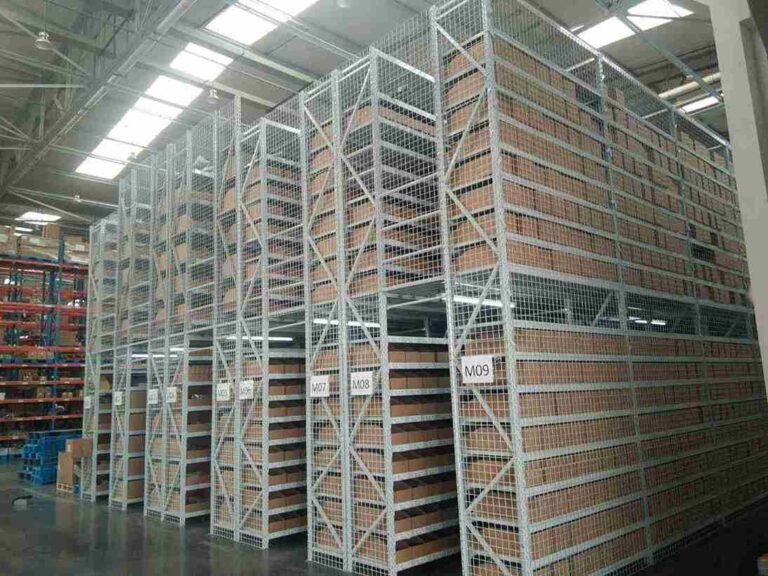
A foundational solution addressing these concurrent pressures is the strategic adoption and customization of narrow aisle racking for eCommerce operations. This storage methodology is not merely a physical infrastructure change but a comprehensive re-engineering of material handling processes, explicitly designed to unlock the vertical cubic space of a facility that traditional wide-aisle systems waste. An expertly configured narrow aisle racking for eCommerce deployment transforms storage density, directly impacting pick-path efficiency and throughput capacity.
For logistics managers, warehouse operators, and supply chain directors, mastering the implementation of narrow aisle racking for eCommerce represents a critical step in building a resilient, scalable, and cost-effective fulfillment backbone capable of supporting sustained business growth.

Understanding the Core Architecture: How Narrow Aisle Racking for eCommerce Redefines Storage Density
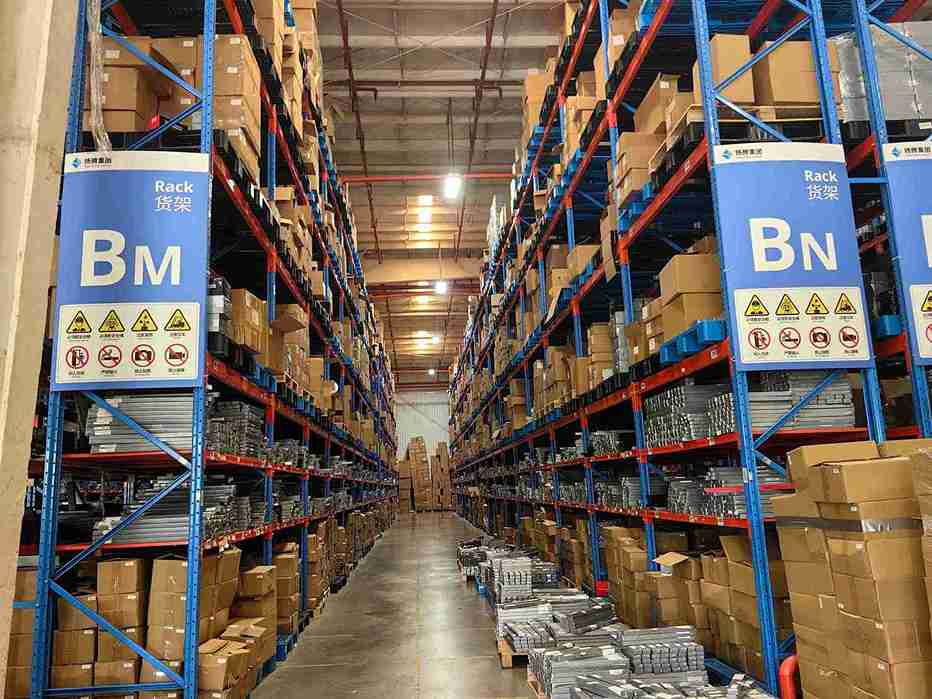
The fundamental principle behind narrow aisle racking for eCommerce is the systematic reduction of non-productive aisle space to increase pallet positions within the same footprint. Traditional warehouses utilizing counterbalance forklifts require aisles often exceeding 3.5 meters to accommodate their turning radius. In contrast, a narrow aisle racking for eCommerce system is designed to operate within aisles typically ranging from 1.5 to 2.0 meters. This significant reduction is enabled by specialized equipment—such as turret trucks, swing-mast trucks, or articulated narrow aisle forklifts—that navigate these tight spaces, often guided by wire or rail systems embedded in the floor for precision and safety.
The efficiency gains from implementing narrow aisle racking for eCommerce are quantifiable and substantial. By minimizing aisle width, the floor area allocated to actual storage increases dramatically. When combined with the ability to safely build storage heights to 15 meters or more using the appropriate equipment, the total storage capacity can see an increase of 200% or greater compared to conventional setups. This density is paramount for narrow aisle racking for eCommerce applications, where inventory variety (SKU count) is high, and space is a premium asset. The system’s design inherently supports better organization, allowing for a more logical and software-directed slotting strategy that aligns with the velocity profiling of eCommerce stock-keeping units.
The Synergy of Equipment and Layout: Engineering a Cohesive System
A successful narrow aisle racking for eCommerce project transcends the racking itself; it is an integrated ecosystem. The racking design, the material handling equipment, and the warehouse management software (WMS) must be engineered in concert. The racking structure for narrow aisle racking for eCommerce requires higher specifications for upright frames and beam connections to ensure precise alignment and durability, as the tolerances for equipment operation are much tighter. The choice between a turret truck, which allows the forks to rotate 180 degrees while the cab remains stationary, and a man-up order picker, which elevates the operator to the pick face, depends entirely on the order profile—whether full-pallet retrieval or broken-case picking dominates.
Furthermore, the integration of a WMS is what transforms static storage into a dynamic fulfillment engine. The WMS directs put-away to optimize space utilization and sequences pick waves to minimize travel time within the narrow aisle racking for eCommerce aisles. This software-hardware synergy ensures that the theoretical density gains are fully realized in daily operational throughput, reducing walk-and-pick times and enhancing order accuracy. For growing businesses, this integrated approach to narrow aisle racking for eCommerce means that scalability is baked into the design, allowing for additional aisles or vertical extensions to be incorporated seamlessly as volume grows.

Operational Workflow Optimization: Daily Life in a Narrow Aisle Environment
Transitioning to a narrow aisle racking for eCommerce environment necessitates a re-evaluation of standard operating procedures. Receiving, put-away, picking, and replenishment cycles all benefit from a more streamlined workflow. In receiving, inbound pallets are quickly scanned and assigned a location by the WMS, often in a velocity-based pattern where fast-moving items are positioned in the most accessible zones within the narrow aisle racking for eCommerce layout. Put-away is executed by narrow aisle forklifts, which can travel at higher speeds down the guided aisles with minimal risk of collision, ensuring rapid stock indexing.
The most significant impact is often felt in the picking process. For case-picking operations, an order picker traveling within the narrow aisle racking for eCommerce structure can access multiple storage levels from a single position within the aisle, dramatically reducing travel time compared to traditional floor-level picking. Batch picking or wave picking strategies become exceptionally efficient. Replenishment from bulk storage to forward picking locations is similarly optimized, as the same equipment serves both functions. This holistic workflow efficiency is the ultimate value proposition of narrow aisle racking for eCommerce, translating high density into high velocity.
Financial Justification and ROI Analysis: The Business Case for Investment
The decision to invest in narrow aisle racking for eCommerce is strategic and requires a clear financial model. The capital expenditure encompasses the racking, the guided aisle infrastructure, the specialized forklifts or pickers, and potential WMS upgrades. However, this is counterbalanced by powerful operational savings and deferred capital costs. The primary savings emerge from the dramatic reduction in the cost per storage position and the cost per pick. By storing more inventory in the existing footprint, businesses can delay or avoid the massive expense of leasing or building additional warehouse space—a critical factor in high-cost urban markets in Southeast Asia or the Middle East.
Labor productivity gains further solidify the ROI. Faster picking cycles, reduced travel time, and higher order accuracy directly lower labor costs per order shipped. When constructing a business case for narrow aisle racking for eCommerce, a detailed analysis should project these savings over a 3 to 5-year period, comparing the total cost of ownership of the new system against the ongoing inefficiencies and future expansion costs of the legacy system. For a growth-oriented eCommerce brand, the investment in narrow aisle racking for eCommerce is fundamentally an investment in scalable capacity, providing the infrastructure to handle rising order volumes without a linear increase in variable costs.
Global Adaptations: Tailoring Narrow Aisle Racking for eCommerce in Emerging Markets
The application of narrow aisle racking for eCommerce must be thoughtfully adapted to regional realities. In Southeast Asia, where humidity and temperature can vary, specifications for racking paint finishes and equipment electronics must account for environmental factors. Facility ceiling heights and column spacing also vary, necessitating a fully custom design for each narrow aisle racking for eCommerce installation. In the Middle East, where large-scale, state-of-the-art logistics parks are emerging, the focus may be on integrating narrow aisle racking for eCommerce with higher levels of automation, such as conveyors and sortation systems, from the outset.
In Africa and Latin America, where supply chains can be less mature and reliability is key, the robustness and serviceability of the narrow aisle racking for eCommerce system and its associated equipment are paramount. Designs may emphasize simplicity and durability, with strong local partnerships for maintenance and spare parts. Across all these markets, the core value proposition of narrow aisle racking for eCommerce—doing more with existing space—resonates powerfully, as it directly addresses universal constraints of cost, space, and growth ambition.

Safety and Training: The Non-Negotiable Pillars of Implementation
The high-density, equipment-intensive nature of a narrow aisle racking for eCommerce operation elevates the importance of safety protocols and comprehensive training. The design phase must incorporate safety features like column guards, rack protectors, and clear signage. The operational phase demands strict adherence to rules: speed limits within aisles, proper load handling, and disciplined traffic management between narrow aisles and wider cross-aisles.
Operator training is not a one-time event but an ongoing process. Equipment operators for narrow aisle racking for eCommerce systems require certified training on the specific truck models, guidance systems, and load handling at height. Furthermore, all warehouse staff must be educated on pedestrian safety around the narrow aisles. A culture of safety is essential to protect both personnel and inventory, ensuring the narrow aisle racking for eCommerce system delivers its efficiency benefits without incident over the long term.
The Future-Proof Warehouse: Narrow Aisle Racking as a Foundation for Automation
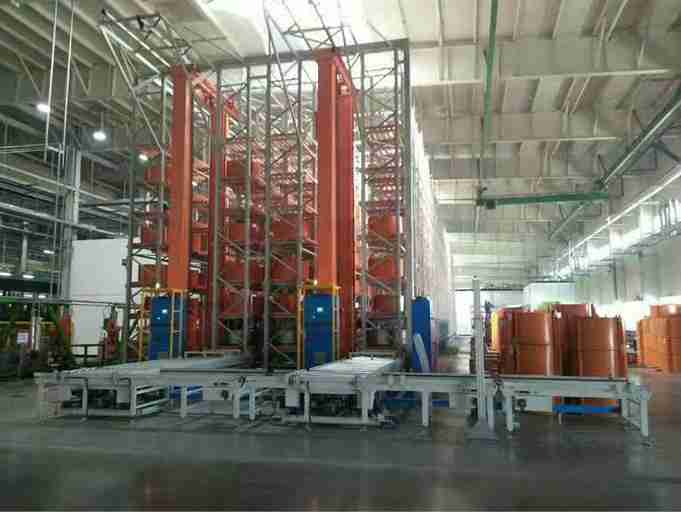
Implementing narrow aisle racking for eCommerce positions a facility for future technological adoption. The organized, dense, and WMS-managed environment created by a narrow aisle racking for eCommerce system is the ideal precursor to more advanced automation. The data integrity and optimized layout form a perfect base layer for technologies like automated guided vehicles (AGVs) for horizontal transport or even the transition to fully automated very narrow aisle (VNA) systems with robotic cranes.
For a business planning its evolution, starting with a high-performance, manually-operated narrow aisle racking for eCommerce system provides immediate benefits while building the infrastructure and operational discipline necessary for the next step. This phased approach to investment and innovation makes the adoption of narrow aisle racking for eCommerce a strategically sound decision for forward-thinking logistics leaders who need to balance present performance with future potential.
In conclusion, the integration of a well-planned narrow aisle racking for eCommerce system is a transformative decision for any growing online retailer or third-party logistics provider. It represents a move from reactive space management to proactive capacity engineering. By maximizing vertical cube, streamlining workflows, and integrating seamlessly with management software and skilled labor, narrow aisle racking for eCommerce solves the critical triad of challenges: space, speed, and cost.
For operations across the targeted growth markets, embracing this solution is not merely an equipment purchase; it is a strategic commitment to building a logistics operation that is dense by design, efficient by default, and scalable by necessity. The journey toward optimized fulfillment begins with a single, strategic step: the evaluation and implementation of a right-fit narrow aisle racking for eCommerce solution.
Frequently Asked Questions (FAQs)
1、What is the typical lead time from design to operational go-live for a narrow aisle racking for eCommerce system?
The timeline varies based on scope and customization. Generally, a complete project encompassing design, manufacturing, shipping, and installation for a narrow aisle racking for eCommerce system can range from 16 to 24 weeks. A detailed project plan with phased milestones is essential for planning operational continuity.
2、Can existing conventional racking be retrofitted or integrated with a new narrow aisle racking for eCommerce design?
While possible in some cases, it is often not recommended for the core narrow aisle zones. Narrow aisle racking for eCommerce requires higher precision in upright alignment and beam tolerances to ensure safe equipment operation. Retrofitted existing racking may not meet these specifications, risking damage and safety. A hybrid approach, using new narrow aisle racking for eCommerce for primary storage and legacy racking for bulk or overflow, is more common.
3、How does the maintenance cost of narrow aisle forklifts compare to standard forklifts in a narrow aisle racking for eCommerce environment?
Specialized narrow aisle equipment may have a marginally higher maintenance cost due to more complex components like rotating heads or guidance sensors. However, this is typically offset by their longer operational life in a dedicated application and the massive gains in productivity and space utilization within the narrow aisle racking for eCommerce system. A planned preventive maintenance program is crucial for reliability.
4、What floor condition is required for installing a wire-guided narrow aisle racking for eCommerce system?
Floor flatness is critical. Most guidance systems require a floor tolerance of ±3-5mm over a 3-meter span. An existing floor often needs professional grinding or leveling before installation. This is a key part of the site survey during the planning phase for any narrow aisle racking for eCommerce project.
5、Is narrow aisle racking for eCommerce suitable for cold storage or freezer applications?
Absolutely. Narrow aisle racking for eCommerce solutions are highly effective in cold environments where space is exceptionally valuable. The racking, guidance systems, and specially specified equipment (with cold-rated hydraulics and electronics) can be engineered for temperatures as low as -30°C, maximizing very expensive refrigerated cubic space.
If you require perfect CAD drawings and quotes for warehouse racking, please contact us. We can provide you with free warehouse racking planning and design services and quotes. Our email address is: jili@geelyracks.com