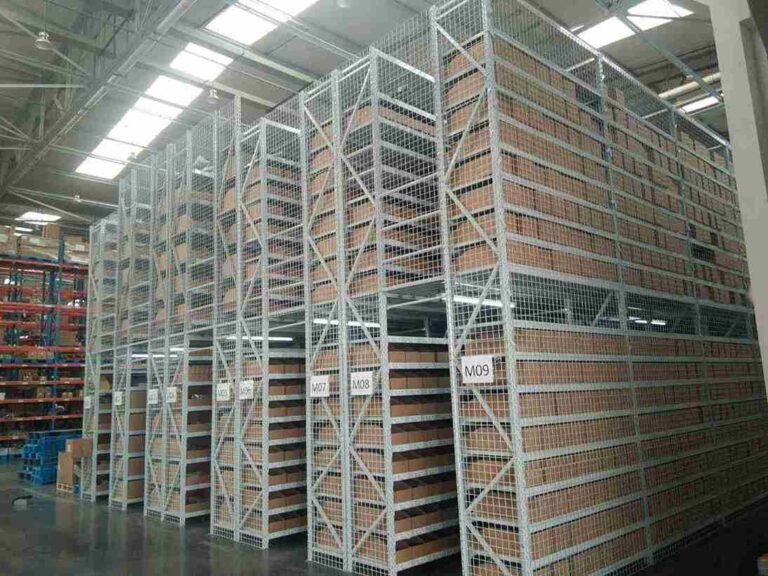
📐 "First 50 Enterprise Queries Get Custom 3D Warehouse Design" Plan
















Revolutionizing Industrial Storage Through Strategic Density
In the global manufacturing sector, where margins are perpetually scrutinized and supply chain agility is paramount, the warehouse has evolved from a passive storage area into a dynamic, strategic asset. The central challenge for operations directors and logistics managers worldwide—from the bustling industrial zones of Vietnam and Thailand to the expanding economic hubs of Saudi Arabia, Kazakhstan, Mexico, and Nigeria—is unambiguous: how to store more inventory, facilitate faster throughput, and enhance accuracy without embarking on costly and time-consuming facility expansions. The solution, consistently proven across diverse industries and geographies, is the strategic implementation of advanced narrow aisle systems.
These high-density storage solutions are engineered to systematically dismantle the inherent inefficiencies of traditional warehouse layouts. By integrating precision-engineered racking structures with specialized material handling equipment, a narrow aisle system reconfigures the very geometry of a storage facility. The result is a transformational increase in storage capacity—often exceeding 50% within the same footprint—and a concomitant surge in operational efficiency, directly addressing the core pain points of cost, space, and speed. This comprehensive guide delves into the intricate design principles, tangible benefits, and meticulous implementation process of these systems, providing the depth of knowledge necessary for manufacturing leaders to make informed, high-impact capital investment decisions.

The Inefficiency Quotient: Diagnosing the Cost of Conventional Warehouse Layouts
To fully appreciate the transformative power of a narrow aisle system, one must first diagnose the chronic ailments of the traditional wide-aisle warehouse. These facilities, often designed around the operational radius of a counterbalance forklift, are plagued by a fundamental design flaw: they prioritize vehicle maneuverability over storage density.
A standard counterbalance forklift requires an aisle width of 3.5 to 4 meters to safely turn and position loads. In a typical 10,000 square meter warehouse, this paradigm dedicates between 40% and 50% of the entire floor space solely to aisle ways—non-revenue-generating asphalt or concrete that serves only as a transit corridor. This spatial inefficiency creates a cascade of operational and financial drawbacks. Travel paths are elongated, increasing cycle times for put-away and retrieval. Energy consumption for material handling equipment rises unnecessarily.
Inventory becomes dispersed over a wider area, complicating management, slowing pick rates, and increasing the likelihood of errors. The aggregate cost—encompassing wasted real estate, inflated labor hours, higher energy overhead, and inventory inaccuracy—constitutes a significant, often unquantified, drag on profitability. It is this status quo that a professionally engineered narrow aisle system is meticulously designed to overturn, converting wasted space into a dense, organized, and highly functional storage matrix.
Core Engineering Principles: The Science Behind High-Density Storage
A narrow aisle system is not merely a collection of taller racking and different forklifts; it is a cohesively engineered ecosystem where every component interacts to maximize performance and reliability. The principle is rooted in physics and spatial optimization.
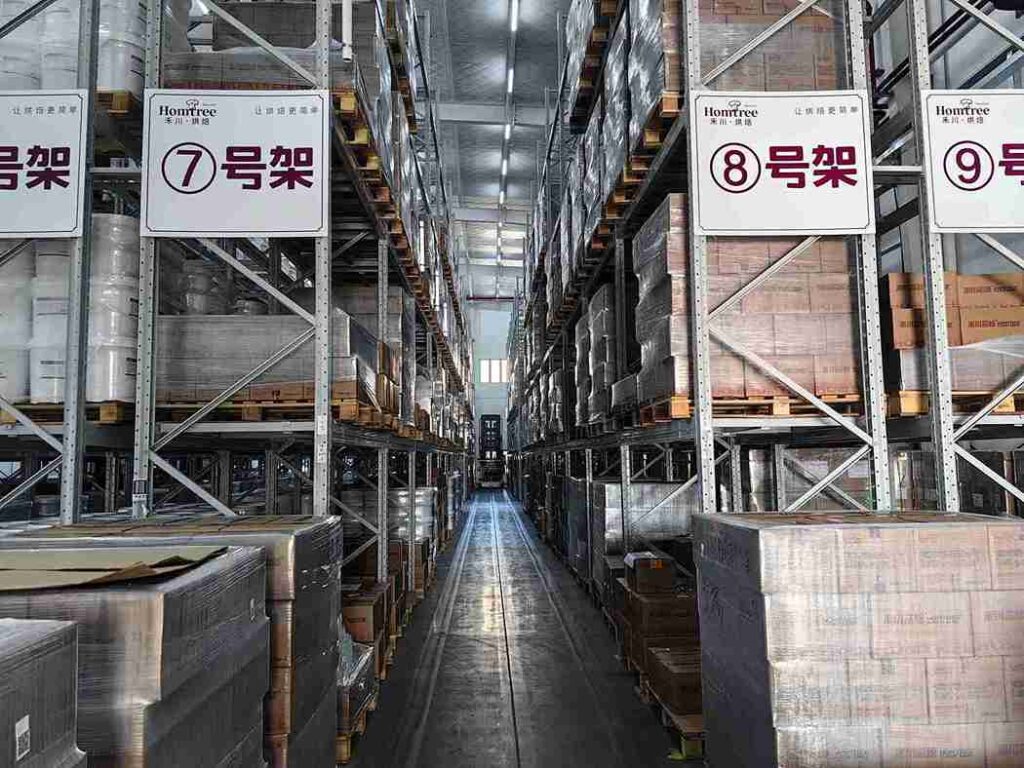
Aisle Width Reduction: The defining feature is the drastic reduction of aisle width to dimensions typically between 1.5 and 2.2 meters. This reduction is only viable because the material handling methodology shifts. Instead of a forklift approaching racks head-on and turning within the aisle, the equipment operates on a different axis.
Specialized Material Handling Equipment: The cornerstone of any functional narrow aisle system is the deployment of purpose-built trucks. The most common are:
Narrow Aisle Turret Trucks: In these models, the operator compartment remains at floor level. The forks, mounted on a rotating turret, can turn 180 degrees to either side. The truck travels linearly within the ultra-narrow aisle, and the turret rotates to deposit or retrieve pallets from the racking. This design is ideal for high-bay applications, often reaching heights of 15 meters or more.
Man-Up Order Pickers: For facilities requiring case picking or less-than-pallet-load retrieval, the man-up order picker is essential. Here, the operator’s platform elevates with the forks, allowing direct access to individual items at height. This integrates seamlessly with modern picking technologies like pick-to-light or voice-directed systems.
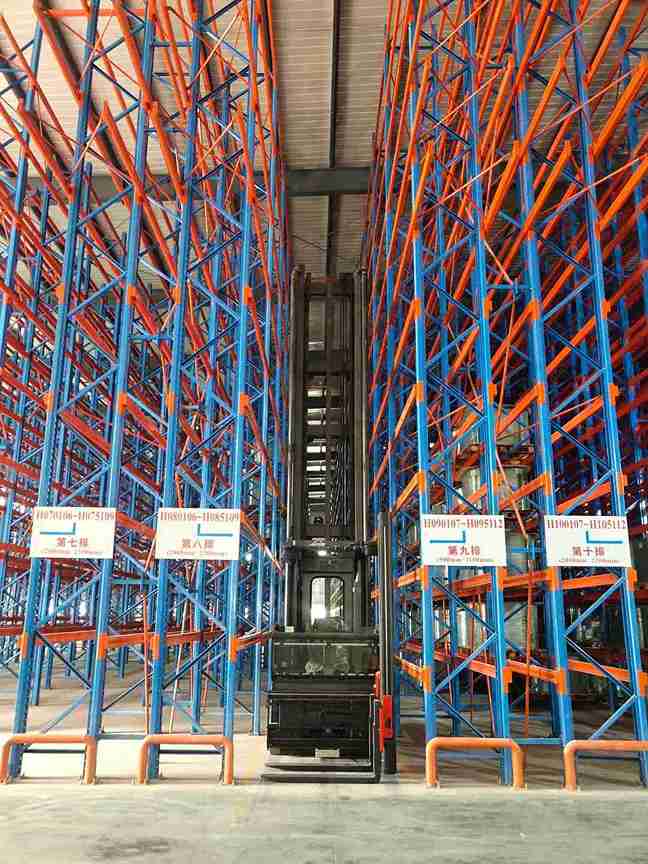
Very Narrow Aisle (VNA) Trucks: For the ultimate in density, VNA trucks operate in aisles as narrow as 1.5 meters. The operator rides up with the load, which is carried longitudinally. These often utilize more advanced guidance systems for pinpoint precision.
Guidance and Control Technologies: Precision in a confined space is non-negotiable. Wire guidance systems, where a low-voltage wire embedded in the floor provides a magnetic tracking path, are the industry standard for ensuring perfectly straight travel, eliminating operator steering drift, and protecting racking from impact. Alternative technologies like inertial (gyroscopic) guidance or optical laser guidance offer flexibility for retrofits where floor cutting is not feasible.
Structural Racking Design: The racking in a narrow aisle system is a critical structural component. It is typically heavier-gauge steel than standard selective racking, designed for greater load capacities and heights. Uprights are often reinforced, and systems may include continuous row spacers and floor anchors to ensure exceptional stability in tall, dense configurations. The design must account for seismic activity, a crucial consideration for installations in regions like the Philippines, Chile, or parts of Central Asia.
The Multifaceted Return on Investment: Quantifying the Transformation
While the dramatic increase in pallet positions is the most visible benefit, the true ROI of a narrow aisle system is multidimensional, impacting nearly every aspect of warehouse economics.
Capital Expenditure Deferral: The most immediate financial impact is the avoidance of new construction. By increasing storage capacity by 50-60% internally, a company can defer a multi-million dollar warehouse expansion project for 5-10 years or longer, representing an enormous capital saving.
Operational Efficiency Gains: This is where the 50%+ efficiency claim is realized. Shorter, faster travel paths, combined with equipment designed for rapid vertical movement, drastically reduce cycle times. Operators complete more put-away and retrieval tasks per shift. This either reduces the required labor force for the same throughput or enables significantly higher throughput with the existing team. The efficiency of a narrow aisle system directly lowers the cost per pallet handled.
Inventory Accuracy and Control: A high-density narrow aisle system demands and enforces superior organization. Every location is defined, logical, and accessible. When integrated with a robust Warehouse Management System (WMS), it enables flawless directed put-away and picking. Misplaced pallets become virtually impossible, pick errors plummet, and adherence to critical inventory rotation methods (FIFO, FEFO) is guaranteed. For manufacturers dealing with components with shelf-lives or batch-traceability requirements, this control is invaluable.
Enhanced Safety and Asset Protection: Contrary to intuition, a well-implemented narrow aisle system often enhances safety. The wire guidance system prevents lateral impacts with racking. Reduced and more predictable traffic patterns minimize vehicle-to-vehicle interaction risks. Furthermore, the superior organization reduces clutter and trip hazards. The protection of inventory from damage due to rack collisions also represents a direct cost saving.
Sustainability and Energy Efficiency: Optimizing a footprint is inherently sustainable. A narrow aisle system allows more storage in a smaller building envelope, reducing lighting, heating, and cooling loads. The high-efficiency electric motors in modern narrow aisle trucks consume less energy per pallet moved than their internal combustion counterparts often used in wider aisles. This contributes to both lower operational costs and a reduced carbon footprint—a key consideration for global enterprises.
Strategic Integration with Manufacturing Workflows: From Raw Material to Finished Goods
A world-class narrow aisle system does not operate in isolation; it becomes the synchronized backbone of the manufacturing supply chain within the four walls.
Raw Material and Component Warehousing: For manufacturers, timely access to components is vital. A narrow aisle system for raw materials ensures high-density, organized storage with absolute FIFO control. This prevents costly production line stoppages due to material shortages and minimizes the risk of component obsolescence or degradation.
Work-in-Progress (WIP) Buffering: In complex assembly processes, WIP storage is essential. A dedicated section within the narrow aisle system can serve as a highly efficient buffer, allowing smooth flow between manufacturing stages and supporting lean manufacturing or Just-In-Time (JIT) principles by providing precise, rapid access to sub-assemblies.
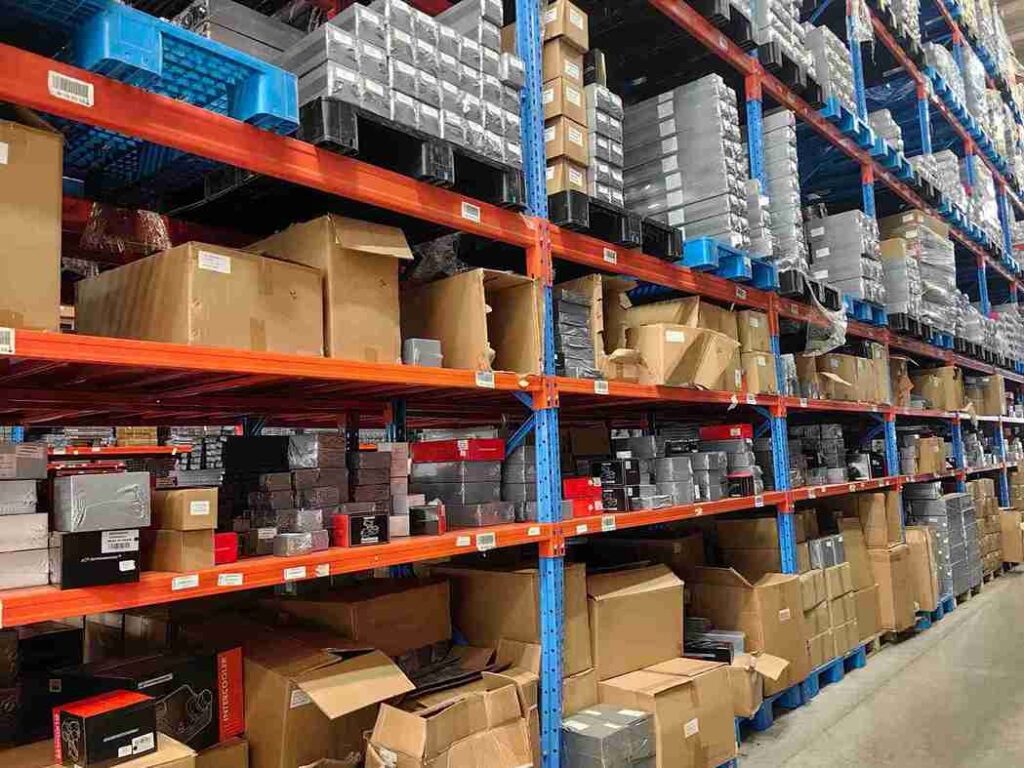
Finished Goods Storage and Order Fulfillment: For make-to-stock operations, the density of a narrow aisle system is ideal for holding finished product. Meanwhile, its efficiency ensures that order picking for outbound shipments—whether full pallets or mixed cartons via man-up order pickers—can be executed with speed and accuracy, meeting tight shipping windows and customer service level agreements.
The Automation-Ready Foundation: Perhaps most strategically, a narrow aisle system creates a digitized, structured storage environment that is the perfect foundation for broader automation. It can seamlessly interface with Automated Storage and Retrieval Systems (AS/RS) for ultra-high-density storage, be fed by AGVs (Automated Guided Vehicles) from production lines, and its data-rich WMS integration provides the real-time visibility required for Industry 4.0 supply chain management. Deploying a narrow aisle system is a future-proofing investment.
The Implementation Roadmap: A Phased, Risk-Mitigated Approach
The transition to a narrow aisle system is a significant operational change. Its success hinges on a meticulous, phased methodology that prioritizes planning and minimizes disruption.
Phase 1: The Comprehensive Warehouse Audit and Feasibility Study
This foundational phase transcends a simple walkthrough. A credible provider’s “Free Warehouse Audit” should be a detailed diagnostic exercise involving:
3D Laser Scanning to create a precise digital twin of the existing facility, capturing every column, ceiling obstruction, floor level variation, and door height.
Data Analysis of inventory profiles (SKU count, dimensions, turnover velocity), throughput requirements, and future growth projections.
Workflow Mapping to understand current material flows from receiving through to shipping.
KPI Establishment, defining clear, measurable goals for storage increase, efficiency gains, and ROI timeline.
Phase 2: Customized Conceptual Design and Simulation
Using audit data, engineers create multiple digital layout options. Advanced simulation software models different narrow aisle system configurations (single-deep, double-deep, drive-in) under various operational scenarios (peak season, new product launch). This virtual testing validates throughput capacity and identifies potential bottlenecks before any investment is committed, de-risking the project.
Phase 3: Detailed Engineering and Specification
This phase finalizes all technical details: structural engineering calculations (including for seismic zones), civil engineering requirements for floor flatness, detailed equipment specs (forklift capacity, lift height, battery systems), and integration protocols with the client’s WMS/ERP. All components of the narrow aisle system—racking, equipment, guidance—are specified for compatibility and performance.
Phase 4: Staged Installation, Training, and Commissioning
Execution is managed to limit operational impact. Installation may occur in phases, during off-peak periods. Concurrently, a rigorous operator training program is conducted, culminating in formal certification. Finally, the entire narrow aisle system is commissioned, with performance tested against the KPIs established in Phase 1.
Phase 5: Ongoing Support, Maintenance, and Optimization
The partnership continues post-installation with scheduled preventive maintenance, performance reviews, and strategic support for future scaling or reconfiguration of the narrow aisle system.
Technical Deep Dive: Equipment Selection and Configuration Nuances
Selecting the right components for a narrow aisle system is critical. The choice depends on product profile, throughput, and building characteristics.
Turret Truck vs. Order Picker: The fundamental choice hinges on the unit of pick. Full-pallet operations favor turret trucks. Case picking necessitates man-up order pickers. In many manufacturing warehouses, a mixed fleet is optimal, with a narrow aisle system zoned to accommodate both.
Guidance System Selection: Wire guidance remains the most robust and cost-effective choice for new installations. Inertial guidance offers excellent flexibility for retrofits or facilities with poor floor conditions. Optical guidance uses lasers targeting reflectors on the racking, providing high precision.
Racking Configuration Options:
Single Deep Racking: Offers direct access to every pallet, ideal for high-SKU environments. This is the most common configuration in a versatile narrow aisle system.
Double Deep Racking: Uses a specialized reach mechanism to store pallets two deep, increasing density by another ~20% but requiring disciplined FIFO management within each lane.
Pallet Flow or Push-Back Racking: These dynamic systems within the narrow aisle system framework can further enhance density and enforce perfect FIFO for high-throughput, homogeneous SKUs.
Addressing Critical Concerns: Safety, Flexibility, and Total Cost of Ownership
Prospective adopters of a narrow aisle system rightly have concerns which must be addressed with transparency and data.
Safety: A professionally installed narrow aisle system enhances safety. Guidance technology prevents rack strikes. Speed can be automatically reduced in the aisles. Overhead guards and proximity sensors are standard. Comprehensive training is, however, the irreplaceable human element. The structured environment of a narrow aisle system reduces chaotic interactions, creating a more predictable and safer workplace.
Flexibility and Future-Proofing: A well-designed narrow aisle system is inherently adaptable. Adjustable beam levels accommodate different pallet heights. The modular nature of racking allows for reconfiguration or expansion. The system’s digital integration actually makes adapting to new inventory or processes more data-driven and manageable than in a chaotic wide-aisle environment.
Total Cost of Ownership (TCO) and Justification: The upfront investment in a narrow aisle system is significant but must be compared against the alternatives: the colossal capital outlay for a new building, or the perpetual high operating costs of an inefficient layout. The financial justification rests on a clear TCO analysis comparing: (1) Capital cost of the narrow aisle system, (2) Avoided cost of expansion, (3) Annual operational savings (labor, energy, space), and (4) The value of improved throughput and agility. Payback periods of 2-4 years are common, making a narrow aisle system a compelling investment.
Global Market Adaptation: Tailoring the Narrow Aisle System Solution
Implementing a narrow aisle system in the humid climate of Indonesia presents different challenges than in the dusty environment of the UAE or the seismic zone of Peru. Expertise lies in localization.
Environmental Specifications: Equipment for Southeast Asia may require enhanced corrosion protection and climate-controlled operator cabins. For the Middle East, high-temperature ratings for electrical components and efficient cooling systems are critical.
Regulatory and Seismic Compliance: Racking designs must be certified by local structural engineers and comply with regional seismic codes, which can be stringent in parts of Latin America and Central Asia.
Localized Support Infrastructure: The long-term reliability of any narrow aisle system depends on accessible technical support and spare parts. Partnering with a provider with a strong local service network in target markets like Africa or South America is essential to minimize downtime and ensure operational continuity.
Conclusion: Building the Strategic, High-Performance Manufacturing Warehouse of the Future
The journey toward warehouse optimization is not a tactical upgrade but a strategic reimagining of one of manufacturing’s most critical nodes. In an era defined by supply chain volatility, rising real estate costs, and relentless pressure on margins, the wide-aisle warehouse is an antiquated model. The advanced narrow aisle system stands as its logical, proven, and high-performance successor.
For forward-thinking manufacturing executives across emerging global markets, the decision to implement a narrow aisle system is a declaration of intent. It is an investment in density over sprawl, in precision over estimation, and in data-driven control over operational chaos. The resulting transformation—quantifiable in additional pallet positions, reduced operational costs, faster order cycles, and enhanced inventory integrity—delivers a competitive advantage that is both immediate and enduring. The question for industry leaders is no longer whether to adopt high-density storage, but how swiftly they can transition to a robust, integrated narrow aisle system to secure their operational and financial future.
Frequently Asked Questions (FAQs)
1. How does the structural loading of a narrow aisle system differ from traditional racking, and does our existing warehouse floor need reinforcement?
The structural demands of a narrow aisle system are significantly greater due to increased height and load concentration. Engineering analysis is mandatory. Our audit includes a geotechnical assessment and evaluation of the existing slab. While many industrial floors can support a narrow aisle system, some may require strengthening. We provide full civil engineering specifications and can manage any necessary reinforcement work as part of the turnkey project, ensuring the foundation meets the stringent point-load and uniform-load requirements of the tall racking structure.
2. Can a narrow aisle system be integrated with our existing propane or diesel-powered forklifts for other yard and receiving duties?
This is a common operational consideration. The core narrow aisle system will utilize specialized electric equipment for the high-density storage aisles. However, a holistic warehouse design often incorporates a mixed fleet. Standard forklifts can still operate in designated wide-aisle areas for receiving, staging, or cross-docking. The key is a intelligent layout that segregates traffic flows, ensuring the dedicated narrow aisle system equipment operates exclusively in its optimized environment for safety and efficiency, while conventional trucks handle other tasks. We design the entire facility flow to accommodate this hybrid approach.
3. What are the maintenance requirements and typical lifespan of the core components in a narrow aisle system?
A narrow aisle system is a long-term capital asset. With proper maintenance, the structural racking has a lifespan of 25+ years. The electric narrow aisle trucks, being heavily utilized, require a disciplined preventive maintenance schedule: daily checklists, weekly inspections, and scheduled servicing every 500-1,000 hours. Key wear items include guidance system sensors, hydraulic components, and lifting chain inspection. We advocate for and provide comprehensive annual service contracts, which include software updates, performance diagnostics, and genuine parts replacement. This proactive approach maximizes uptime and extends the equipment’s operational life to 7-10 years or more.
4. How do you address lighting and worker comfort in the taller, denser environment of a narrow aisle system?
Worker productivity and safety are paramount. The design of a narrow aisle system must include a dedicated lighting plan. High-efficiency LED fixtures are often mounted directly on the racking uprights or in the aisles to provide consistent, shadow-free illumination at all storage levels, unlike traditional ceiling lights that are blocked by tall storage. For operator comfort in man-up trucks, options include ergonomic seats, climate-controlled cabins (critical in hot climates), and intuitive control interfaces to reduce fatigue. A well-designed narrow aisle system improves the overall working environment by reducing travel time and physical strain.
5. We have a legacy Warehouse Management System (WMS). How complex is the integration, and what data points are most critical for optimization?
Integration is a cornerstone of success. Most modern WMS platforms can interface with a narrow aisle system through APIs or standard middleware. The most critical data exchanges are: 1) Location Management: The WMS must understand the new, high-density location logic (aisle, bay, level, depth). 2) Task Commands: Sending optimized put-away and picking instructions directly to the forklift’s onboard terminal. 3) Confirmation Updates: Receiving real-time task completion and location status updates from the equipment. Our team includes integration specialists who work with your IT department to define the communication protocol, map the data fields, and conduct extensive testing to ensure the narrow aisle system and WMS operate as a unified intelligence platform, unlocking the full potential of the investment.
If you require perfect CAD drawings and quotes for warehouse racking, please contact us. We can provide you with free warehouse racking planning and design services and quotes. Our email address is: jili@geelyracks.com