📐 "First 50 Enterprise Queries Get Custom 3D Warehouse Design" Plan















Mastering Cubic Space: The Strategic Imperative of Very Narrow Aisle Racking for Modern Warehousing
In the relentless pursuit of supply chain optimization, warehouse operators and logistics managers face a universal constraint: physical space. The cost of square footage, whether owned or leased, represents a significant and often escalating operational expenditure. Simultaneously, the demand for greater inventory variety, faster turnaround times, and enhanced throughput continues to intensify. This fundamental tension between finite space and expanding operational requirements finds its most potent resolution in a single, transformative storage methodology: very narrow aisle racking.
This technology is not merely an alternative storage configuration; it represents a fundamental re-engineering of warehouse space utilization, offering a decisive competitive edge. For businesses operating in high-growth regions such as Southeast Asia, the Middle East, Africa, and Latin America, where urban land costs are soaring and supply chain agility is paramount, the adoption of very narrow aisle racking transitions from a considered upgrade to a strategic necessity.
The Density Equation: Recalculating Warehouse Storage Potential
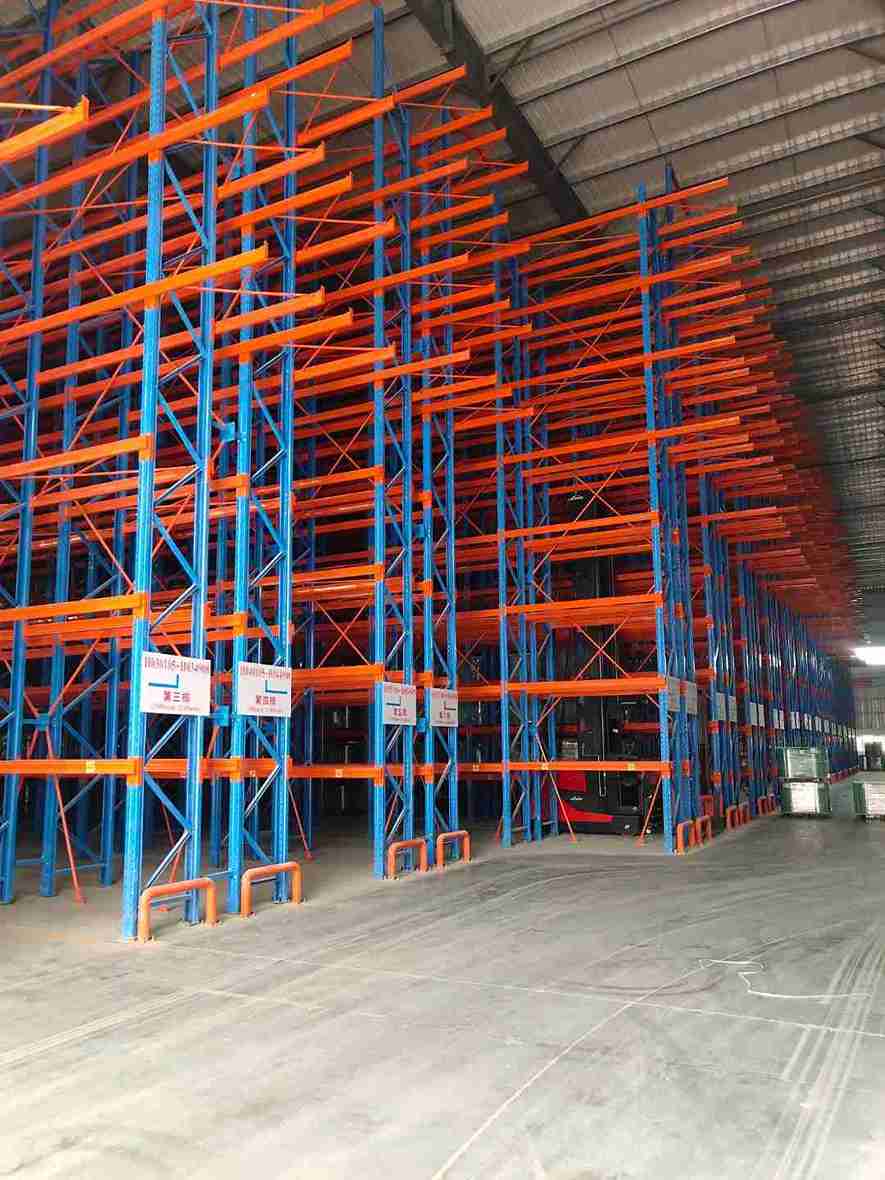
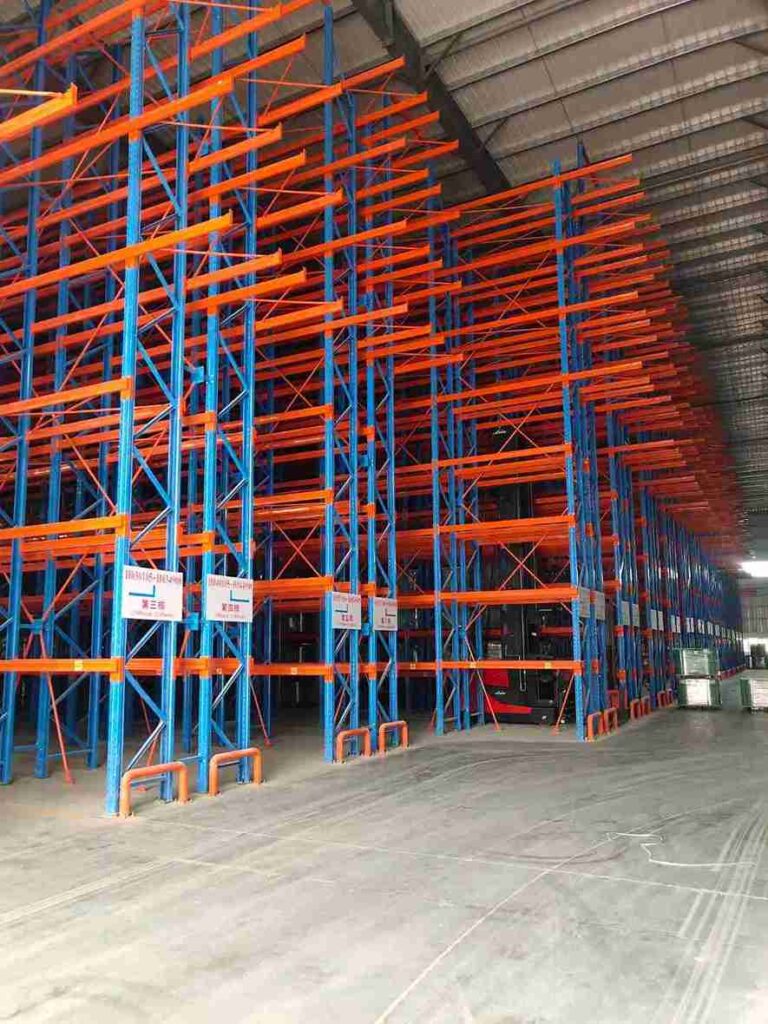
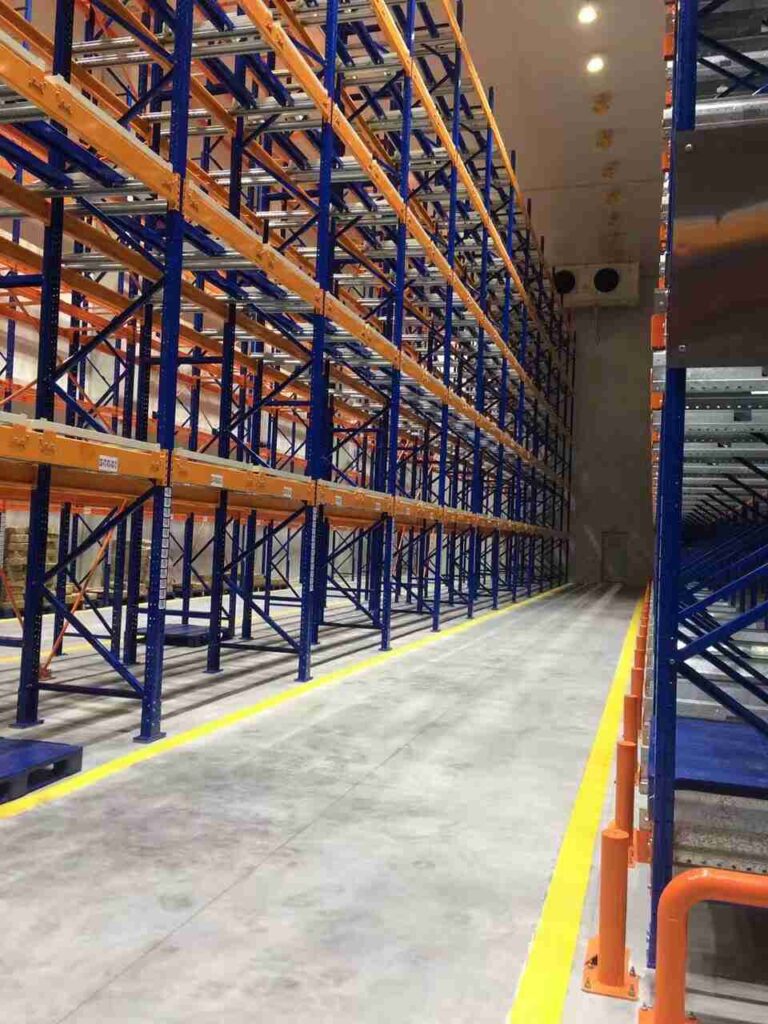
Traditional warehousing layouts, typically reliant on counterbalance forklifts operating in aisles ranging from 3.2 to 3.5 meters wide, are inherently inefficient. This design dedicates a staggering 40% to 50% of a facility’s total floor area purely to access corridors. In essence, nearly half of a premium industrial space is occupied not by revenue-generating inventory, but by empty pathways. The very narrow aisle racking system shatters this paradigm. By utilizing specialized, rail-guided or wire-guided storage and retrieval equipment—such as turret trucks or dedicated very narrow aisle forklifts—aisle widths can be dramatically reduced to between 1.6 and 1.8 meters. This simple dimensional shift is revolutionary.
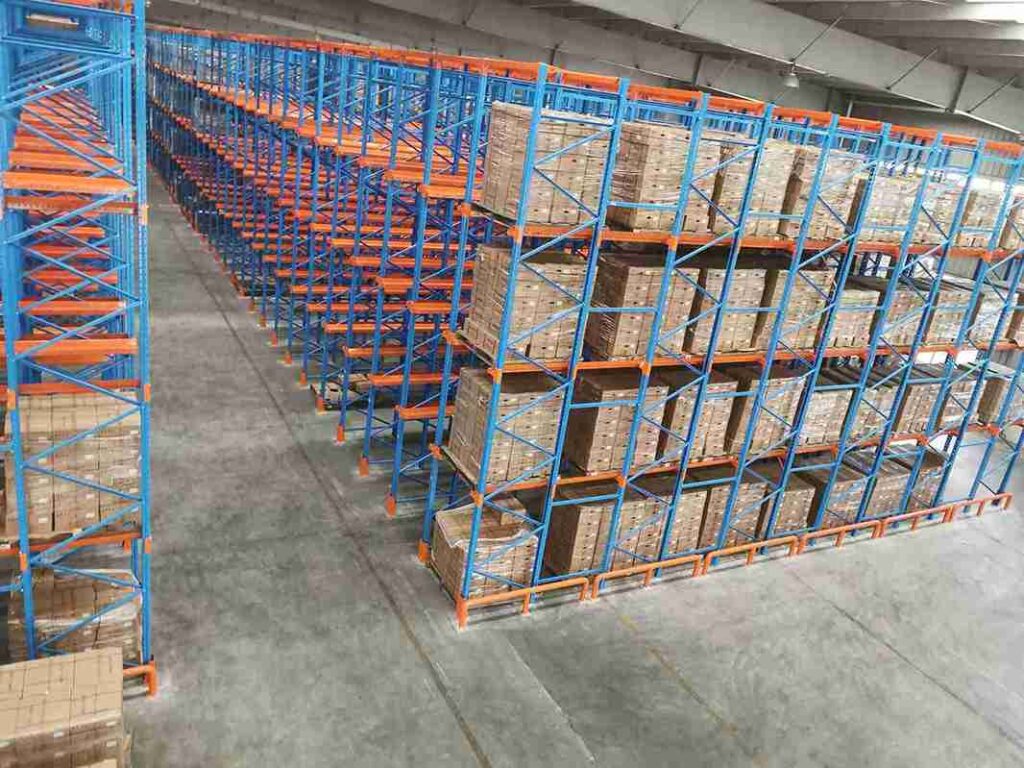
The mathematics of this shift are compelling. Implementing a very narrow aisle racking system consistently yields a 40% to 60% increase in pallet storage capacity within the exact same building footprint. For a facility storing 8,000 pallets using conventional methods, a transition to very narrow aisle racking can liberate space for an additional 3,200 to 4,800 pallet positions. This enhanced density directly translates to deferred capital expenditure on facility expansion, a reduction in the cost-per-pallet-stored, and the ability to consolidate operations from multiple sites into a single, highly efficient location. The very narrow aisle racking approach is fundamentally about mastering the cubic volume of a warehouse, utilizing its full height potential while minimizing wasted horizontal plane space.
The Synergistic Spine: Automation and the Very Narrow Aisle Ecosystem
A very narrow aisle racking structure alone is a potent framework, but its ultimate performance is unlocked through seamless integration with automation and intelligent software. This integration transforms a static storage system into a dynamic, high-velocity logistics spine. The true power of a very narrow aisle racking installation is realized when it becomes the core component of a synchronized material handling ecosystem.
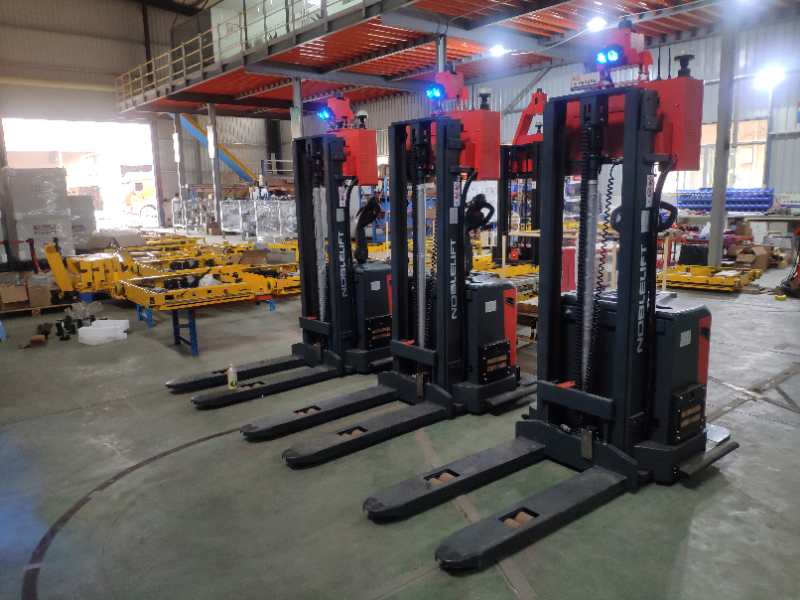
This ecosystem often features Automated Guided Vehicles (AGVs) or driverless forklifts serving as the horizontal transport layer. These units ferry pallets from receiving docks, production lines, or staging areas to the entrance of the very narrow aisle racking bays. Here, a manned or fully automated turret truck—the only equipment designed to operate within the confines of a very narrow aisle—assumes control, executing the vertical storage or retrieval mission with millimeter precision.
This handoff, choreographed by a sophisticated Warehouse Management System (WMS), creates a continuous, uninterrupted flow of goods. It eliminates the congestion and idle time associated with traditional forklift operations, where a single machine must perform both long-distance travel and precise stacking. In regions grappling with challenges in skilled labor recruitment and retention, this automated synergy ensures consistent, predictable, and high-throughput operation independent of workforce variables.
The Warehouse Management System acts as the central nervous system for the very narrow aisle racking complex. A WMS optimized for high-density storage does far more than track inventory. It performs intelligent, rule-based putaway, directing incoming pallets to optimal locations within the very narrow aisle racking grid based on factors like product turnover velocity (ABC analysis), weight distribution, expiry dates, or order affinity.
It dynamically optimizes retrieval sequences, batching picks to minimize the travel paths of the very narrow aisle truck. Furthermore, it provides a real-time digital twin of the storage environment, offering unparalleled visibility into stock levels, location accuracy, and system performance. This level of control is critical for maintaining the integrity and efficiency of a very narrow aisle racking operation, where spatial constraints demand flawless execution.
Engineering Excellence: The Components of a Robust Very Narrow Aisle Solution
The reliability and safety of a very narrow aisle racking installation are contingent upon the quality and integration of its core components. This is not a domain for standard racking simply placed closer together.
The Racking Structure Itself: The very narrow aisle racking framework is engineered to higher specifications than selective pallet racking. Upright frames are designed for increased load-bearing capacity and minimal deflection under load, as the precise operation of the turret truck within a very narrow aisle leaves minimal margin for error. Robust column guards, reinforced base plates, and high-quality beam connectors are standard. The design must account for seismic activity in certain regions and ensure absolute stability. The integrity of the very narrow aisle racking is the foundational element upon which all else depends.
Specialized Storage and Retrieval Equipment: The equipment that operates within the very narrow aisle racking is highly specialized. Very narrow aisle turret trucks feature forks that rotate 180 degrees, allowing them to deposit or retrieve pallets from either side of the aisle without the machine itself turning. They are equipped with multiple guidance systems—often a combination of rail guidance for the lower mast and optical or wire guidance for precise vertical alignment. Operators use ergonomic cabins that elevate with the forks, or the system may be fully automated, with the machine receiving instructions directly from the WMS. The choice between manned and automated very narrow aisle equipment depends on throughput requirements, SKU complexity, and capital investment strategy.
Safety and Control Systems: Safety in a very narrow aisle racking environment is paramount. Systems are equipped with redundant safety protocols: laser scanning systems at the aisle entrance to prevent unauthorized entry, bumpers and emergency stop bars on the equipment, and clear floor markings. The guidance system ensures the truck remains perfectly centered, preventing contact with the very narrow aisle racking structure. Advanced control software manages acceleration, deceleration, and lifting speeds to ensure both operational efficiency and absolute stability of the load at all times.
A Tailored Advantage: Very Narrow Aisle Racking Across Key Industries
The application of very narrow aisle racking extends far beyond general bulk storage. Its value proposition is uniquely powerful in several demanding sectors.
Cold Storage and Temperature-Controlled Logistics: In environments where energy costs constitute a massive operational overhead and space is at an extreme premium, very narrow aisle racking delivers unparalleled efficiency. By maximizing storage density, it minimizes the volume of air that must be refrigerated, leading to direct and substantial savings on energy consumption. The ability to store more product within a smaller cooled footprint makes very narrow aisle racking a cornerstone of modern, sustainable cold chain logistics.
Manufacturing and Production Support: For manufacturing plants operating Just-In-Time (JIT) or lean production models, very narrow aisle racking provides an ideal high-density buffer for raw materials, components, and work-in-progress inventory. Its high throughput capability ensures production lines are fed with precision, while its density frees up valuable floor space near production cells for other critical activities.
E-commerce Fulfillment and Distribution: While often associated with unit and case picking, e-commerce fulfillment centers rely heavily on efficient pallet storage for reserve inventory. A very narrow aisle racking system serves as the high-density backbone, efficiently storing thousands of SKUs in pallet form. This reserve storage dynamically replenishes forward picking areas, such as carton flow racking or shelving zones, ensuring pickers have constant access to stock. The speed and accuracy of a well-integrated very narrow aisle racking and AGV system are critical for meeting the rapid service-level agreements of the e-commerce sector.
The Strategic ROI: Justifying the Investment in Very Narrow Aisle Technology
The decision to implement a very narrow aisle racking system is a significant capital investment. Its justification, however, is built on a clear and multi-faceted return on investment (ROI) model that extends beyond simple equipment costs.
Real Estate Mitigation or Deferral: The most direct financial benefit. By increasing storage capacity by 40-60% within an existing facility, businesses can avoid the multi-million dollar costs of constructing a new warehouse or leasing additional space, particularly in high-cost urban industrial zones prevalent in markets like the GCC or Southeast Asia.
Operational Efficiency Gains: Very narrow aisle racking systems, coupled with automation, dramatically reduce travel time, cycle time, and energy consumption per pallet moved. This leads to a lower cost-per-transaction, higher overall throughput, and the ability to handle greater volumes without proportional increases in labor or overtime.
Labor Optimization and Safety: The system reduces dependency on a large pool of highly skilled forklift operators. It reallocates human labor to higher-value tasks such as quality control, system supervision, and exception handling. Furthermore, by containing high-reach, high-precision operations within automated or guided systems, it significantly reduces the risk of costly accidents, product damage, and racking impacts.
Inventory Accuracy and Control: The integration with a high-level WMS and the systematic nature of very narrow aisle racking operations result in near-perfect inventory accuracy. This reduces shrinkage, improves stock rotation (critical for FIFO/FEFO compliance), and enhances overall supply chain visibility.
A comprehensive financial analysis for a very narrow aisle racking project typically reveals a compelling payback period of 2 to 4 years, after which the operation benefits from sustained lower operational costs and valuable, liberated capacity.
Implementation and Partnership: The Pathway to Successful Deployment
The successful deployment of a very narrow aisle racking system is a complex undertaking that demands expert partnership, not merely a supplier relationship. It requires a phased, meticulous approach.
Phase 1: In-Depth Consultative Analysis and Simulation: The process begins with a profound understanding of the client’s business: SKU profiles, daily inbound/outbound volumes, peak season factors, growth projections, and specific facility constraints. Advanced simulation software is employed to model multiple very narrow aisle racking layout scenarios, stress-testing them against real-world operational data to predict performance and identify optimal design before any physical work begins.
Phase 2: Facility Preparation and Infrastructure Readiness: The very narrow aisle racking and its equipment have specific requirements. Detailed specifications are provided for critical factors like floor flatness (essential for equipment guidance and racking stability), column grid alignment, lighting, power distribution for charging stations, and fire protection system design. Preparing the site correctly is a non-negotiable step for long-term performance.
Phase 3: Precision Installation and Systems Integration: Certified installation teams erect the very narrow aisle racking structure with exacting precision. This is followed by the commissioning of the material handling equipment—the turret trucks and AGVs. Crucially, this phase includes the deep integration of the equipment control software with the client’s WMS/ERP systems, ensuring data flows seamlessly from order management to physical execution within the very narrow aisle racking aisles.
Phase 4: Knowledge Transfer and Lifetime Support: Empowering the client’s team is essential. Comprehensive training covers daily operation, basic troubleshooting, and safety procedures for the very narrow aisle racking system. Support extends for the lifecycle of the installation, encompassing preventive maintenance contracts, remote monitoring services, and readily available spare parts to maximize system uptime and longevity.
Navigating Regional Considerations: Very Narrow Aisle Racking in Emerging Markets
The value proposition of very narrow aisle racking is acutely relevant in the dynamic contexts of Asia, Africa, the Middle East, and Latin America.
Addressing Sky-High Real Estate Costs: In megacities from Jakarta and Bangkok to Dubai and Lagos, industrial land values and rental rates are among the fastest-growing globally. Very narrow aisle racking allows companies to intensify the use of their existing, often strategically located facilities, avoiding relocation to distant, cheaper land that incurs higher transportation costs and longer lead times.
Building Scalability into Fixed Assets: Growth is a central assumption. A very narrow aisle racking system is inherently scalable. As business expands, the system can be adapted: aisles can be extended, additional vertical levels can be integrated (where building height allows), and more AGVs or turret trucks can be added to the fleet. This allows throughput and capacity to scale efficiently within a known footprint.
Mitigating Skilled Labor Challenges: The specialized skill required to operate high-reach equipment safely and efficiently is in short supply in many markets. Automated and semi-automated very narrow aisle racking solutions reduce this dependency, creating operational resilience against labor market volatility and ensuring consistent performance standards.
Elevating to Global Standards: As local supply chains integrate into global networks, requirements for traceability, accuracy, and efficiency intensify. A modern very narrow aisle racking facility, with its integrated WMS and automated controls, provides the data integrity, operational transparency, and reliability demanded by international partners and stringent industry regulations.
The Future-Proof Warehouse: Conclusion
In conclusion, the transition to a warehouse centered on very narrow aisle racking technology represents a definitive strategic pivot. It is a move away from viewing storage as a passive, space-consuming cost center, and toward recognizing it as an active, density-optimized engine of supply chain velocity and resilience. For logistics leaders and business owners in high-growth regions, the question is no longer whether they can afford to invest in very narrow aisle racking, but whether they can afford the ongoing inefficiency, escalating real estate costs, and limited scalability of not doing so.
The complexity of designing, implementing, and maintaining a high-performance very narrow aisle racking ecosystem necessitates a partner with deep technical expertise, regional experience, and a commitment to holistic project success. It requires a provider that views the very narrow aisle racking structure not as an isolated product, but as the critical component within a fully synchronized automated storage and retrieval solution.
Frequently Asked Questions (FAQs)
1. How does the structural integrity and seismic resilience of very narrow aisle racking compare to traditional racking, especially for regions prone to seismic activity?
Very narrow aisle racking systems are engineered to exceptionally high standards of structural integrity. Due to the precise operating tolerances required for the turret trucks, the racking is designed with lower allowable deflection and higher load capacities per upright frame. For seismic zones, very narrow aisle racking can be specifically designed and certified to meet local seismic codes (e.g., IBC, Eurocode 8). This often involves specialized bracing configurations, increased base plate anchoring, and dynamic analysis to ensure stability during an event. Reputable suppliers conduct detailed seismic risk assessments as part of the design phase for very narrow aisle racking projects in susceptible regions.
2. Can a very narrow aisle racking system effectively handle non-standard pallet sizes or loads with overhang, which are common in certain industries?
Yes, a well-designed very narrow aisle racking system can accommodate a variety of load types, but this requires careful upfront planning. The system is highly customizable. Beam lengths, spacings, and load capacities can be engineered for specific pallet dimensions, including Euro pallets, CHEP pallets, or large, irregular footprints. For loads with overhang, specialized beam attachments or decking options can be specified. The critical factor is defining all load profiles during the design phase to ensure the very narrow aisle racking layout, beam levels, and equipment fork dimensions are perfectly configured to handle the actual inventory.
3. What are the key maintenance routines required for the guided turret trucks in a very narrow aisle system, and what is the typical impact on operational uptime?
Preventive maintenance is crucial for the reliable operation of very narrow aisle equipment. Key routines include regular inspection and cleaning of the guidance rails or wires, checking and adjusting fork alignment, mast inspection, hydraulic system checks, and battery care (for electric models). Modern very narrow aisle trucks often feature remote diagnostic capabilities, allowing technicians to predict issues before they cause downtime. A standard preventive maintenance schedule, performed during planned operational pauses (e.g., weekends), typically results in over 95% operational availability. This planned downtime is vastly preferable to the unplanned, extended outages common with poorly maintained conventional fleets.
4. For a business with an existing warehouse management system (WMS), how complex is the integration with a new very narrow aisle racking automation system?
The complexity of WMS integration depends on the capabilities of both the existing WMS and the very narrow aisle racking control software. A successful integration for a very narrow aisle racking project typically occurs at two levels: 1) High-level integration, where the WMS sends putaway and retrieval instructions to the warehouse control system (WCS) managing the very narrow aisle equipment, and 2) Real-time data exchange for inventory and task status.
Many leading WMS providers have pre-built interfaces or APIs for major automation vendors. The process involves detailed mapping of data fields and processes, and it is a core component of the implementation phase. A skilled integration team is essential to ensure seamless communication between the WMS and the very narrow aisle racking operational layer.
5. In humid or corrosive environments common in tropical climates, what special considerations or material specifications are needed for very narrow aisle racking?
Environmental factors are critical in very narrow aisle racking design for tropical or coastal regions. Standard recommendations include specifying hot-dip galvanized steel for the entire very narrow aisle racking structure, which provides a thick, durable protective coating against corrosion. For highly aggressive environments (e.g., certain chemical storage or coastal sites), stainless steel components or powder coatings over galvanization may be considered. Additionally, the very narrow aisle equipment must be specified with appropriate ingress protection (IP) ratings for electrical components and corrosion-resistant finishes on critical mechanical parts. Proper warehouse ventilation to control humidity can also prolong the life of both the very narrow aisle racking and the equipment.
If you require perfect CAD drawings and quotes for warehouse racking, please contact us. We can provide you with free warehouse racking planning and design services and quotes. Our email address is: jili@geelyracks.com