📐 "First 50 Enterprise Queries Get Custom 3D Warehouse Design" Plan
















Strategic Integration: Mastering Warehouse Automation with AGVs and Narrow Aisle Racking Systems
Article Summary: For logistics and operations directors across emerging global markets, achieving a competitive edge hinges on intelligent warehouse design. The strategic fusion of Automated Guided Vehicles (AGVs) and purpose-built narrow aisle racking for automation represents the pinnacle of modern storage strategy. This comprehensive analysis delves into the engineering principles, operational benefits, and tailored implementation frameworks that make this integration the definitive solution for maximizing cubic space, ensuring flawless inventory handling, and achieving unparalleled throughput.
Tailored for the specific infrastructural and economic landscapes of Southeast Asia, the Middle East, Africa, and Latin America, this guide provides a masterclass in transitioning from conventional storage to a high-density, automated, and future-proof operational core. The focus is squarely on delivering a tangible roadmap for capital investment that yields rapid, measurable ROI through seamless material flow.

The Imperative for Intelligent Density in Global Logistics Hubs
The logistical landscapes of Jakarta, Dubai, Lagos, and Santiago are characterized by explosive growth, volatile real estate costs, and intensifying customer demand for rapid fulfillment. Conventional wide-aisle warehouses, reliant on human-operated forklifts, are fundamentally misaligned with these modern pressures. They waste a staggering percentage of available vertical airspace, sacrifice valuable floor area to inefficient vehicle turning radii, and introduce unpredictable variables through human-dependent workflows. The operational bottleneck is no longer at the dock doors, but within the very storage matrix itself.
The evolution towards narrow aisle racking for automation is not merely an upgrade; it is a strategic recalibration of the warehouse’s DNA. This approach specifically engineers the storage environment to be served not by people, but by precision-guided robotic systems, creating a symbiotic relationship between structure and machine. For companies looking to scale efficiently in these dynamic regions, adopting a system built around narrow aisle racking for automation is the most direct path to creating a scalable, resilient, and high-throughput distribution asset.
Deconstructing the Symbiosis: Core Technologies Defined
A deep understanding of the individual components is essential to appreciate the power of their integration. This is not about using standard racking with robots; it is about deploying a unified system where each element is engineered for the other.
The Automated-Ready Storage Structure: More Than Just Narrow Aisles
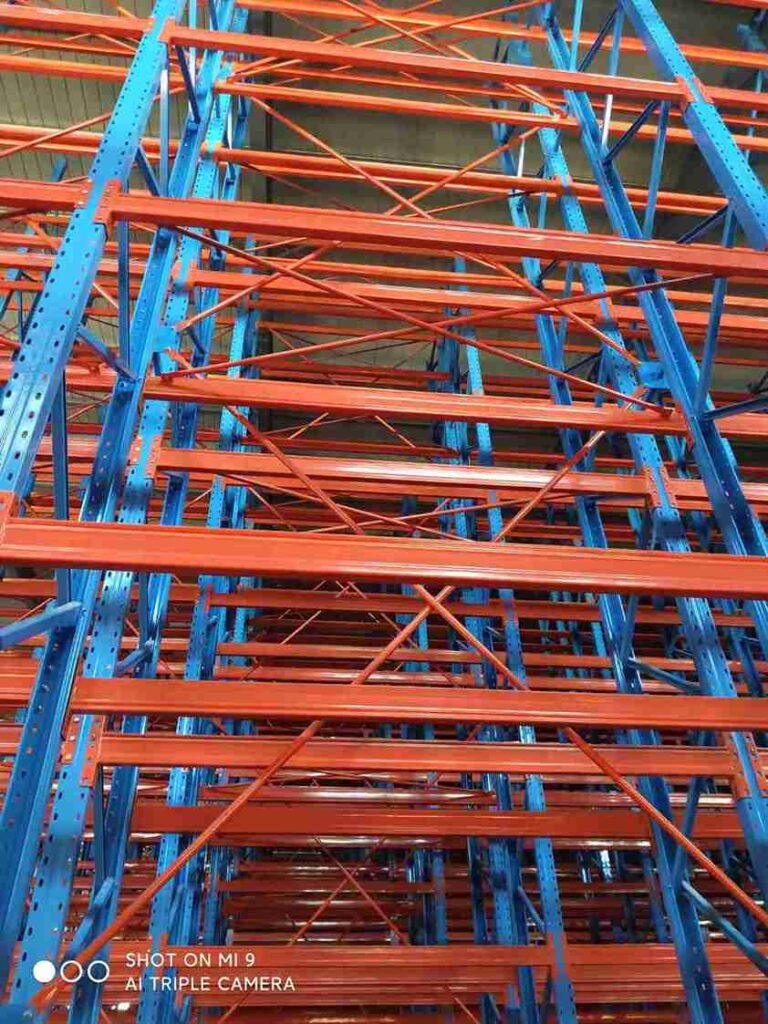
A system designed for narrow aisle racking for automation differs profoundly from traditional shelving. Every specification is tightened to meet the exacting demands of robotic interaction.
Precision Engineering: Tolerances for upright vertical alignment, beam levelness, and bay straightness are held to millimeter-level specifications. This precision ensures that an AGV’s pre-programmed lift and store cycles are executed perfectly every time, across thousands of locations.
Structural Reinforcement: Automation-grade upright frames often feature heavier gauge steel or specialized bracing to withstand the constant, precise engagement of AGV forks, which applies force differently than a human operator. The entire structure is calculated for dynamic loads during robotic retrieval.
Integrated Guidance Infrastructure: True narrow aisle racking for automation incorporates physical or digital guides. This may include flush-mounted magnetic tape, optical targets, or reinforced kick plates that interact with the AGV’s onboard sensors, creating a “railroad track” for ultraprecise aisle entry and positioning.
Safety and Protection Systems: Column guards, end-of-aisle protectors, and specially designed base plates are not optional accessories but integral components. They safeguard the significant investment in both the racking and the AGVs from any margin of error, ensuring long-term system integrity.
The Robotic Material Handler: AGVs as the Active Component
In this ecosystem, the AGV transitions from a simple transport vehicle to an intelligent, autonomous storage and retrieval machine. The critical design philosophy for AGVs operating within narrow aisle racking for automation centers on reliability, accuracy, and system awareness.
Navigation Synergy: While free-ranging areas may use LiDAR-based SLAM navigation, entry into the narrow aisle racking zone triggers a shift to a dedicated, high-fidelity guidance mode. This hybrid approach ensures both flexibility in open areas and rock-solid precision where clearance is minimal.
Specialized Mast and Fork Design: AGVs for this application feature masts with exceptional vertical stability and forks equipped with multiple sensors—pallet presence detectors, mid-height travel sensors, and load stability monitors. They perform complex, sequenced movements to engage, lift, and secure loads without any lateral sway that could compromise the tight aisle environment.
Continuous System Dialogue: These AGVs operate in constant communication with the central Warehouse Execution System (WES). They are not just executing tasks; they are providing real-time feedback on task status, battery levels, and any encountered exceptions, making the entire automated storage and retrieval process transparent and manageable.
The Compelling Advantages: A Multifaceted ROI Proposition
The integration of AGVs with a narrow aisle racking for automation system generates value across financial, operational, and strategic dimensions. The benefits compound, creating a whole that is greater than the sum of its parts.
Radical Cubic Space Optimization: The Primary Driver
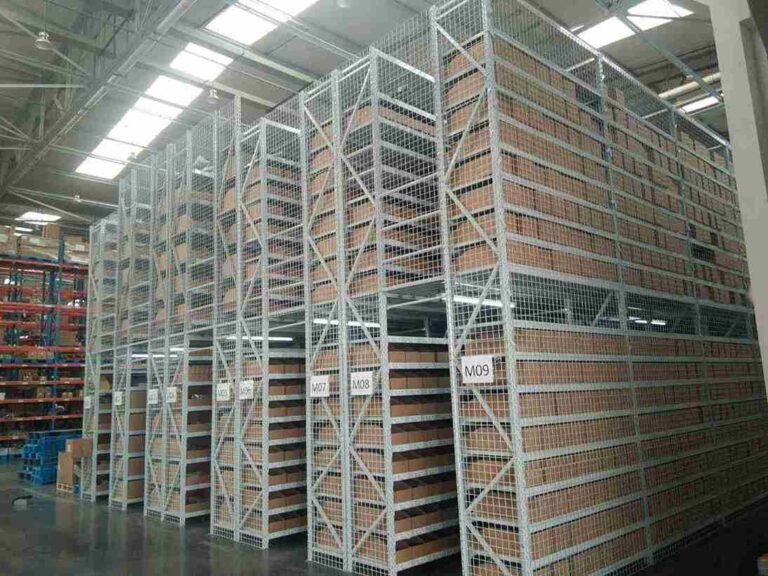
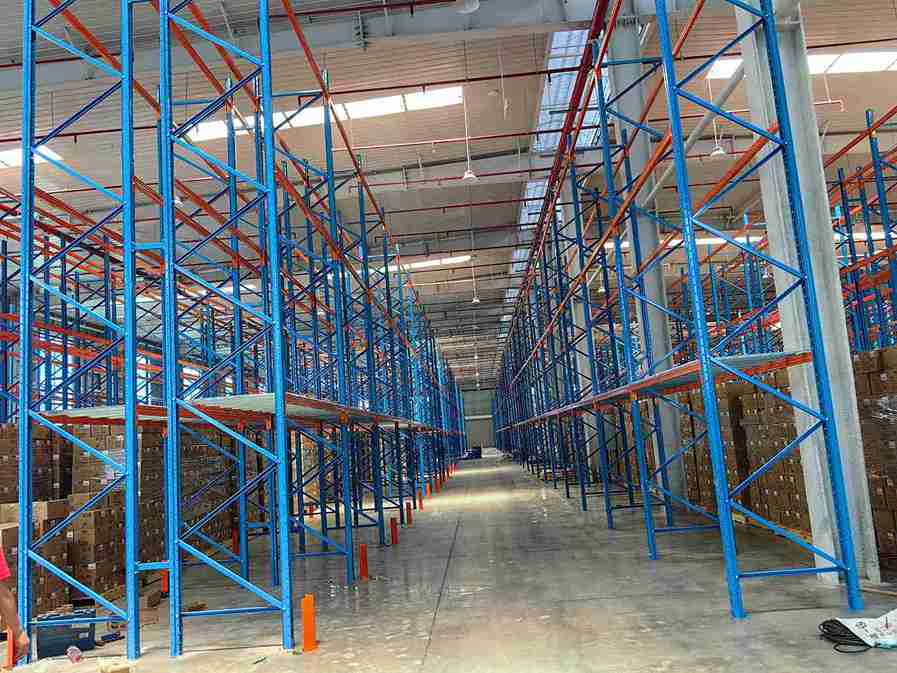
The most immediate impact is on storage capacity. By reducing aisle width from a standard 3.5+ meters to 1.6-2.0 meters, facilities can increase storage locations by 30-50% within the same footprint. When this horizontal density is combined with the ability to safely build racking to greater heights (as AGVs are unimpeded by operator height restrictions), the total cube utilization can often double. For a logistics provider in Manila or Bangkok facing exorbitant land rents, implementing narrow aisle racking for automation can defer capital-intensive expansion for years, effectively creating a new warehouse within the existing four walls. This level of space efficiency is the cornerstone of the business case for automated narrow aisle solutions.
Unwavering Operational Predictability and Uptime
Human-operated equipment introduces variability. Robotic systems eliminate it. A fleet of AGVs operating within a narrow aisle racking for automation system delivers consistent, measurable cycle times 22-24 hours per day. This predictability allows for accurate labor planning in surrounding zones, reliable cut-off times for orders, and the capacity to leverage off-peak hours for replenishment. For a manufacturing plant in Monterrey or a cold storage facility in the GCC, this means being able to guarantee just-in-time material delivery to production lines or supermarket distribution, transforming warehouse performance from a cost center to a competitive lever.
The Paradigm of Zero Damage and Enhanced Safety
In a manual narrow aisle environment, the skill of the forklift operator is the single largest factor in racking longevity and product integrity. Automation removes this risk. AGVs approach, align, and handle loads with sub-centimeter repeatability. The incidence of rack beam impacts, column strikes, and product damage plummets to near zero. This not only saves direct costs but also preserves the structural warranty of the narrow aisle racking for automation system, ensures perfect inventory accuracy, and—most importantly—creates a inherently safer warehouse by segregating human workers from high-traffic, high-density storage aisles.
The Technical Architecture of Seamless Integration
Achieving seamless automation requires a meticulously layered architecture, where physical, control, and software systems operate in concert.
Layer 1: Physical Integration and Precision Alignment
The foundation is the exact spatial relationship between the AGV and the rack. The design of the narrow aisle racking for automation system must account for the AGV’s precise dimensions, fork geometry, and sensor locations. This involves detailed interface drawings specifying clearances, approach angles, and lift profiles. The concrete floor within the aisles must meet stringent flatness standards (e.g., FM2/FL2) to prevent AGV sway and ensure lifting stability. This physical layer is non-negotiable; without it, the highest levels of software intelligence cannot execute effectively.
Layer 2: The Control Nexus: Aisle Management and Traffic Coordination
This is the real-time nervous system. An Aisle Management System acts as a traffic controller for each narrow aisle racking bay. It uses light curtains, safety lasers, or simple logic locks to grant exclusive access to a single AGV, preventing collisions. In the wider warehouse, a Fleet Management System orchestrates the movement of multiple AGVs, optimizing their paths, preventing deadlocks, and managing priorities. This layer ensures that the high-density potential of the narrow aisle racking for automation is not bottlenecked by chaotic traffic in the transfer zones.
Layer 3: The Cognitive Layer: Warehouse Execution System (WES) Intelligence
At the apex resides the WES, the brain of the automated warehouse. For a system centered on narrow aisle racking for automation, the WES is particularly crucial for storage optimization. It employs algorithms to:
Dynamically Slot Inventory: It assigns pallets to locations based on turnover velocity (ABC classification), product affinity (grouping frequently picked together), weight distribution, and expiry dates, continuously refining placement within the narrow aisle grid.
Batch and Sequence Tasks: It intelligently groups retrieval orders from the same aisle or zone, minimizing AGV travel distance and maximizing the number of cycles per hour.
Manage System Health: It monitors AGV battery states, scheduling autonomous opportunistic charging, and flags preventative maintenance needs for both vehicles and racking, ensuring sustained system availability.
System Design Philosophy for Diverse Global Markets
A successful deployment in Vietnam will have different prerequisites than one in Saudi Arabia. Expertise in narrow aisle racking for automation must include deep regional adaptation.
Site Readiness: Beyond the Floor
A comprehensive site audit is the first critical step. For narrow aisle racking for automation, this extends beyond floor flatness to encompass:
Building Fabric Analysis: Column grid spacing, roof truss clear heights, and door locations must be mapped against the optimal racking layout to maximize density without compromising structure or fire regulations.
Power and Data Infrastructure: AGV fleets require strategically located high-amperage charging stations. Robust, redundant Wi-Fi or private 5G coverage is mandatory for continuous data flow. In regions with unstable power grids, the design must incorporate UPS systems or generator backups for critical control hardware.
Environmental Considerations: Designs for coastal Southeast Asia specify high-grade zinc plating or powder coating to combat humidity. For Middle Eastern applications, AGV component selection includes high-temperature ratings and dust filtration systems.
AGV Configuration: Matching Technology to Operational Profile
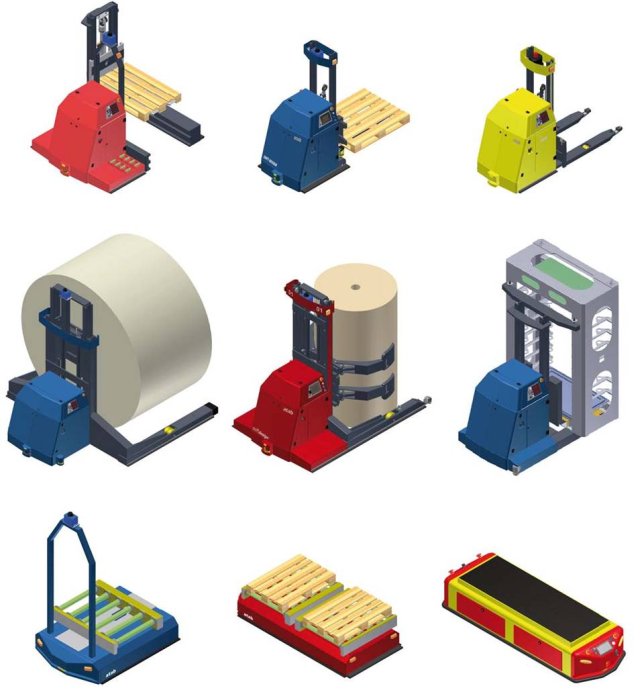
Selecting the right AGV type is a strategic decision integral to the narrow aisle racking for automation project:
Counterbalance vs. Reach AGVs: A fork-over counterbalance AGV is standard for single-deep storage. For even greater density, double-deep narrow aisle racking for automation configurations require an AGV with a telescopic reach mechanism, adding complexity but significantly increasing storage counts.
Load Capacity and Battery Strategy: Capacity is sized for the maximum pallet weight plus a safety margin. Battery technology (often Lithium-ion) and charging methodology (opportunistic vs. scheduled swap) are chosen based on operational intensity and shift patterns prevalent in the region.
Pallet Handling Adaptability: Given the variety of pallet types (wooden, plastic, CHEP) and conditions found in emerging market supply chains, AGVs can be equipped with fork cameras and adaptive arms to handle a degree of non-conformity, ensuring system robustness.
Racking Specification: The Automated-Ready Backbone
The racking itself must be procured and installed to automation-grade standards. This involves:
Certified Tolerances: Supplier certification of upright straightness and beam camber is required prior to installation.
Enhanced Safety Features: Integral bolt-on wire mesh pallet support decks prevent falling debris, while seismic considerations may be factored into designs for certain geographic zones.
Future-Proofing Design: The system layout may incorporate convertible aisles or sections that can be easily reconfigured as product profiles or throughput requirements evolve, protecting the long-term value of the investment in narrow aisle racking for automation.
A Phased Implementation Methodology for Risk Mitigation
A disciplined, phased approach is the hallmark of a successful narrow aisle racking for automation project, especially in markets where local experience with such integrated systems may be limited.
Phase 1: Detailed Simulation and Virtual Commissioning
Before any metal is cut or code is written, the entire system—racking layout, AGV paths, and WES logic—is modeled in high-fidelity simulation software. This digital twin allows engineers to stress-test the design, identify potential congestion points, and validate throughput projections. Virtual commissioning tests the control logic against the simulation, catching software errors early. This phase de-risks the project fundamentally and aligns all stakeholders on expected performance.
Phase 2: Pilot Zone Deployment and Real-World Validation
A designated pilot zone, representing a full slice of the operation (e.g., one product family, one aisle), is commissioned first. This live pilot of the narrow aisle racking for automation system serves multiple purposes: it validates the simulation with real goods, trains the core operations and maintenance team in a controlled setting, and builds organizational confidence. Data on actual cycle times, battery life, and exception handling is collected and used to fine-tune the system before full rollout.
Phase 3: Staged Roll-Out and Parallel Operations
Expansion proceeds zone by zone. During this phase, it is common to run the new automated narrow aisle system in parallel with legacy manual processes for the same SKUs. This parallel run provides an irrefutable, side-by-side comparison of productivity, accuracy, and labor requirements, solidifying internal support while ensuring a smooth cutover with zero operational disruption.
The Comprehensive ROI Analysis: Quantifying the Transformation
The investment case for narrow aisle racking for automation is built on both direct financial savings and strategic value creation. A detailed model typically captures:
Capital Avoidance: The value of deferred or eliminated spending on new warehouse construction or leasing, directly attributable to the increased storage density of the narrow aisle racking for automation system.
Labor Productivity Gains: Reduction in required forklift operators, reallocation of staff to higher-value tasks (e.g., quality control, exception management), and elimination of overtime costs due to 24/7 robotic operation.
Asset Preservation: Near-total elimination of costs related to racking damage repair, product damage write-offs, and associated insurance premiums.
Energy and Maintenance Efficiency: Lower energy consumption per pallet moved compared to traditional forklifts, and predictable, scheduled maintenance for AGVs versus reactive repairs on manned equipment.
Business Value Metrics: Improved order accuracy leading to higher customer satisfaction, increased throughput capacity enabling revenue growth, and enhanced resilience to labor market fluctuations.
Tailoring Solutions for Regional Operational Realities
A provider with genuine expertise in narrow aisle racking for automation demonstrates it through localization.
For Southeast Asia’s Diverse Manufacturing Base: Systems are designed for mixed pallet loads common in electronics and textile sectors. Software must handle complex multi-owner inventory in 3PL settings. Service networks are established with local technical partners to ensure rapid response.
For the Middle East’s Mega-Distribution Centers: Designs account for very high pallet-in/pallet-out ratios for FMCG and retail. AGV fleet sizing and charging strategies are optimized for continuous peak operation. Racking systems are specified for high seismic loads where required.
For Africa and Latin America’s Growth Markets: The implementation philosophy emphasizes scalability and simplicity. Systems may start with a core narrow aisle racking for automation zone and expand modularly. Training programs for local technicians are intensive and certification-based, building in-country expertise for long-term sustainability.
The Evolutionary Platform: Beyond Initial Integration
Deploying a narrow aisle racking for automation system is not an end-state but the creation of a high-performance platform for continuous advancement. This integrated backbone enables the next wave of innovation:
Advanced Robotics Integration: Robotic arms for depalletizing or case picking can be seamlessly fed by the AGV system, creating fully automated goods-to-robot solutions.
IoT and Predictive Analytics: Sensors on the racking (monitoring load weight, integrity) and AGVs feed data into AI platforms that predict maintenance needs, optimize energy use, and further refine slotting strategies in real-time.
Digital Twin for Continuous Optimization: The virtual model created during simulation lives on as a digital twin, continuously updated with operational data. It becomes a tool for managers to run “what-if” scenarios for layout changes or process improvements without ever disrupting the live automated storage and retrieval operation.
Conclusion
In the competitive arenas of global commerce, where logistics efficiency directly correlates with market leadership, the strategic integration of Automated Guided Vehicles with purpose-engineered narrow aisle racking for automation stands as the most impactful infrastructural investment a company can make. This synthesis transcends simple mechanization, delivering a transformative operational paradigm characterized by maximal space utilization, flawless execution, and resilient, predictable throughput.
For decision-makers in the world’s most dynamic growth regions, the path forward is clear: the future of efficient, scalable, and competitive logistics is built on the robust, intelligent, and seamless foundation of a fully realized narrow aisle racking for automation ecosystem. The journey begins with a commitment to intelligent density and culminates in an automated workflow that drives profitability, agility, and enduring market advantage.
Frequently Asked Questions (FAQs)
1. How does the system handle power outages, which can be frequent in some of our target regions?
The system is designed with resilience in mind. The central control servers and critical networking hardware are protected by Uninterruptible Power Supply (UPS) systems, allowing for a graceful shutdown or sustained operation during short outages. AGVs are programmed with “fail-safe” procedures; in the event of a power loss, they will complete their current cycle if possible and then park in a designated safe zone without blocking aisles. For longer outages, the narrow aisle racking for automation system is accessed via manual pallet jacks or standard forklifts in a degraded mode, ensuring basic operations can continue. The design phase always includes an analysis of local power reliability to size backup solutions appropriately.
2. Can the AGVs work effectively in multi-temperature environments, like a cold storage facility?
Absolutely. Narrow aisle racking for automation systems are commonly deployed in cold chain logistics. AGVs for cold storage are equipped with environmental packages including sealed electronics, cold-greased components, and heated compartments for batteries and sensors. They are tested to operate reliably in temperatures as low as -30°C. The racking itself uses steels and finishes suitable for low-temperature, high-humidity environments. The elimination of human operators from freezing aisles not only boosts productivity but also significantly improves worker safety and comfort.
3. What is the typical lifespan of such an integrated system, and how is technology obsolescence managed?
The physical narrow aisle racking for automation structure has a lifespan of 20-25 years with proper maintenance. The AGV fleet’s core mechanical components are designed for a 10-year service life, with technology updates (like new sensors or control boards) available as retrofits. The key to avoiding obsolescence lies in the system’s modular, open-architecture design. Software is updated regularly. New AGV models from the same or different manufacturers can be integrated into the existing fleet management system, and the racking layout can be modified. A reputable provider views this as a long-term partnership, offering technology refresh roadmaps to keep the system at peak performance.
4. How do you manage the accuracy of inventory location when pallets are stored so densely in double-deep configurations?
Double-deep narrow aisle racking for automation relies on a strict “First-In, Last-Out” (FILO) inventory management policy for each lane, which the WES enforces rigidly. The system’s accuracy is maintained through multiple layers of verification: 1) The WES records the exact lane and position of every pallet. 2) AGVs often use fork-mounted RFID readers or cameras to verify the pallet license plate as they store or retrieve it. 3) Regular cycle counts are automated using the AGVs themselves or integrated drone technology. This multi-layered approach, governed by unerring software logic, ensures that even with high-density storage, inventory record accuracy exceeds 99.99%.
5. For businesses with existing standard racking, is a full rip-and-replace the only option, or are hybrid solutions possible?
Hybrid solutions are not only possible but often a smart, phased approach. A common strategy is to deploy the narrow aisle racking for automation system in a new expansion area or dedicate it to fast-moving “A” items, while slower-moving “C” items remain in the existing manual racking. AGVs can be configured to service both zones—operating in automated mode in the narrow aisles and potentially in a simpler transport mode to/from the manual area. This allows companies to capture the benefits of automation for their core SKUs, prove the ROI, and then plan for a gradual full conversion, thereby spreading the capital investment over time.
If you require perfect CAD drawings and quotes for warehouse racking, please contact us. We can provide you with free warehouse racking planning and design services and quotes. Our email address is: jili@geelyracks.com