📐 "First 50 Enterprise Queries Get Custom 3D Warehouse Design" Plan
















Is Your Warehouse Truly Earthquake-Ready? The Definitive Guide to Seismic Safety for Pallet Racking
In the dynamic logistics landscapes of Southeast Asia, the Middle East, Africa, and Latin America, the imperative for robust seismic safety for pallet racking transcends basic storage concerns, emerging as a fundamental pillar of operational integrity and corporate responsibility. This authoritative guide dissects the intricate engineering, evolving regulatory mandates, and practical implementation strategies that define true resilience for industrial storage systems.
The discourse moves beyond theoretical compliance to deliver a masterclass in protecting personnel, inventory, and supply chain continuity against seismic threats. From the initial seismic audit to the final certification of an earthquake-resistant design, this resource provides a comprehensive blueprint for warehouse operators and managers investing in long-term, credible seismic safety for pallet racking.

The Unseen Vulnerability: Why Conventional Warehousing Falls Short
The modern distribution center is a marvel of density and efficiency, yet its very design often harbors a critical weakness. Standard pallet racking systems, engineered primarily for vertical load-bearing capacity, frequently lack the inherent lateral strength and ductility to withstand seismic forces. The concept of seismic safety for pallet racking is not merely an add-on specification; it is a fundamental re-engineering of the storage structure’s behavior under dynamic, multi-directional loads.
During a seismic event, the ground acceleration imparts complex forces into a warehouse structure. Unlike a building, which is designed as a monolithic entity, storage racking is an array of semi-independent, tall, and slender frames loaded with heavy, often unrestrained payloads. The primary failure mode is not simple bending but progressive collapse, where the failure of a single beam connector or upright can initiate a catastrophic domino effect.
Achieving genuine seismic safety for pallet racking requires an understanding of these unique dynamics: the amplification of forces up the height of the rack, the cyclic loading that fatigues metal joints, and the critical importance of force transfer from the pallet, through the frame, and into the building slab via specifically designed seismic anchoring for racking.
Industry analyses of past warehouse failures in active zones consistently point to common, preventable flaws: undersized or corroded base anchors pulling out, boltless beam connectors disengaging, and inadequate horizontal bracing allowing excessive sway. These are not acts of nature but failures of foresight. Implementing a culture of seismic safety for pallet racking begins with acknowledging that the standard, price-driven procurement model for storage equipment is inherently insufficient for facilities located in seismically active regions.
Decoding Regional Seismic Codes: A Compliance Imperative for Global Operators
A one-size-fits-all approach is the antithesis of effective seismic safety for pallet racking. The global operator must navigate a complex tapestry of national and regional building codes, each with distinct seismic zonation maps, soil classification requirements, and performance criteria for non-building structures like storage racks. Compliance is a legal and ethical mandate, and ignorance of local statutes carries significant liability.
In Southeast Asia, a region defined by intense tectonic activity, codes are stringent and non-negotiable. The Philippines’ National Structural Code (NSCP 2015) provides detailed seismic hazard maps and explicit requirements for the design of storage racks, mandating specific load combinations. Indonesia’s SNI 1726:2019 sets rigorous parameters for spectral acceleration, directly influencing the design load calculations for pallet racking in cities like Jakarta or Surabaya.
Even in Thailand and Vietnam, where codes may reference international standards like the IBC, local amendments and enforcement are critical. A warehouse in Bangkok’s industrial outskirts cannot rely on a design validated for a European facility; its seismic safety for pallet racking plan must be site-specific, derived from local latitude and longitude coordinates.
The Middle East presents a common misconception of seismic calm. Modern building codes in the UAE, Saudi Arabia (SBC 301), and Oman explicitly include seismic provisions, particularly for strategic infrastructure and taller warehouses. The seismic hazard for a logistics park in Jebel Ali or the industrial heartland of Dammam is quantifiable and must be addressed.
For regions like Eastern Turkey or Iran, which sit on major fault lines, local codes (Turkish Earthquake Code, Iranian Standard 2800) are among the world’s most demanding, leaving no room for error in seismic safety for pallet racking design. The engineering partner for such projects must possess not only global expertise but verifiable, localized experience in submitting and securing approvals from relevant municipal authorities.
The Diagnostic Foundation: The Comprehensive Seismic Audit and Risk Assessment
The journey to assured seismic safety for pallet racking begins with a clear-eyed assessment of current vulnerabilities. A professional seismic audit is a forensic engineering exercise, not a casual walkthrough. It is the diagnostic tool that transforms uncertainty into a structured, actionable risk management plan.
A best-in-class seismic audit for warehouse racking follows a meticulous, multi-phase protocol. The process initiates with a Documentation Review, scrutinizing original design drawings, load application and configuration (LAC) drawings, and anchorage details. This historical analysis determines if the system was ever designed for lateral forces. The subsequent Field Investigation is data-driven and thorough. Engineers measure upright plumb, inspect for visible damage or corrosion, and critically assess beam-to-column connections—the most common point of failure. The type, installation, and condition of every base anchor are cataloged, as a standard expansion bolt offers vastly different performance than a certified seismic adhesive anchor under cyclic load.
Crucially, the audit evaluates real-world Load Conditions. Actual unit weights and load heights are compared against the original design specifications; overloading or uneven weight distribution dramatically alters seismic performance. The final phase involves Site-Specific Seismic Analysis. Using the facility’s exact GPS coordinates, engineers determine the governing spectral acceleration parameters (Ss, S1) per the local code, then model the existing racking structure using advanced finite element analysis software. This calculates the Demand-Capacity Ratio (DCR) for each primary component.
The deliverable is a Seismic Risk Assessment Report—a transparent, prioritized roadmap. It classifies risk areas (Green/Yellow/Red), provides a line-item deficiency log (e.g., “Aisle C, Frames 5-8: Baseplates show signs of walk-out; anchor type insufficient for calculated shear”), and presents a comparative cost-benefit analysis of retrofit versus replacement strategies. This report is the foundational document for any credible investment in seismic safety for pallet racking, providing the justification and technical clarity needed for stakeholder buy-in.
Engineering for Dynamics: Principles of Earthquake-Resistant Rack Design
Designing new storage systems from the ground up offers the optimal path to integrating seismic safety for pallet racking. This is a specialized discipline within structural engineering, moving beyond static load tables to a dynamic performance-based design philosophy.
The core objective is to create a clearly defined, redundant load path that manages and dissipates seismic energy. This begins with the selection of the Response Modification Coefficient (R-Factor), a code-derived value that accounts for the system’s ductility and energy-dissipation capability. Selecting the appropriate R-factor for the rack type (e.g., moment frame vs. braced frame) is a fundamental first step that scales the design forces. The Importance Factor (Ie) is then applied, elevating the design criteria for facilities storing hazardous materials or mission-critical inventory.
At the component level, earthquake-resistant pallet racking incorporates several key features. Upright Frames often utilize closed tubular or reinforced open-section columns with higher moment of inertia to resist bending and torsion. Beam-to-Column Connections are transformed from simple supports into moment-resisting joints. These seismically qualified connectors undergo rigorous cyclic testing (per standards like FEM 10.2.08 or RMI/ANSI MH16.3) to ensure they remain engaged and functional through repeated loading cycles. They may incorporate positive-locking bolts, reinforced tabs, or integrated plate designs.
The anchorage system is arguably the most critical link. True seismic safety for pallet racking demands the use of certified seismic anchors—undercut anchors or torque-controlled adhesive anchors—that are specifically tested and approved for simultaneous tension and shear loads under dynamic conditions. Their installation requires strict adherence to embedment depth, edge distance, and hole preparation protocols, always executed by certified technicians.
Finally, the bracing system is designed as an integrated network. Robust horizontal strut beams at multiple levels and continuous vertical cross-bracing work in concert to form a stiff truss, minimizing lateral drift and ensuring uniform force distribution throughout the structure. This holistic design approach ensures that seismic safety for pallet racking is embedded in the DNA of the storage system, not applied as a superficial afterthought.
The Strategic Retrofit: Fortifying Existing Infrastructure
For the vast inventory of existing warehouses, complete rack replacement is often economically or operationally prohibitive. Strategic seismic retrofitting provides a powerful, cost-effective alternative to achieve compliant seismic safety for pallet racking. Retrofitting is the art and science of upgrading an existing structure’s capacity and performance through targeted, engineered interventions.
The retrofit process is initiated and guided by the findings of the seismic audit. Common and highly effective retrofit solutions form a tactical toolkit for engineers. Anchor Upgrade/Replacement is typically the highest-impact intervention. Swapping out standard wedge or sleeve anchors for post-installed seismic anchors can increase overturning resistance by several hundred percent. Connection Reinforcement involves adding externally bolted side plates or proprietary moment kits to standard beam connectors, effectively creating a moment-resisting node where one did not exist.
Bracing Enhancements are another key strategy. Installing additional horizontal strut beams between back-to-back rack frames or upgrading the diagonal bracing within upright frames significantly improves lateral stiffness. In cases where upright capacity is marginal, column strengthening using bolted-on steel jacket kits can be implemented. Often, a significant gain in seismic safety for pallet racking can be achieved through Operational & Load Management: reconfiguring pallet positions to lower the center of gravity, enforcing strict adherence to posted load limits, and implementing a regular inspection regimen for load placement.
The execution of a retrofit project demands precision. It follows a strict sequence: Audit > Engineered Retrofit Design > Phased Implementation Plan > Certified Installation > Final Inspection & Certification. The installation phase, particularly anchor drilling and setting, is a critical path activity that must be performed by trained and certified crews using calibrated equipment. The culmination is a post-retrofit inspection and the issuance of a Structural Certification or Seismic Compliance Report, a vital document for risk management, insurance, and due diligence. This systematic approach to retrofitting delivers verified seismic safety for pallet racking, extending the lifecycle and protecting the capital investment in existing warehouse infrastructure.
Automated System Imperatives: ASRS, Shuttles, and VNA in Seismic Zones
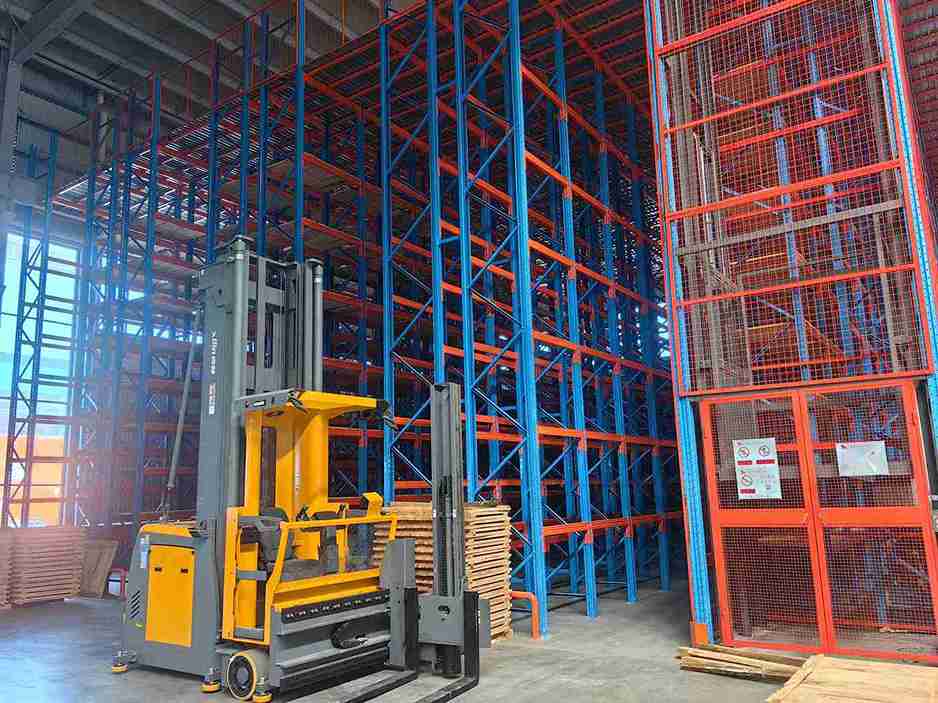
The integration of automation—Automated Storage and Retrieval Systems (ASRS), pallet shuttles, and Very Narrow Aisle (VNA) rack-supported systems—introduces a new dimension of complexity to seismic safety for pallet racking. These systems are characterized by extremely tight operational tolerances, often as little as +/-10mm, and the presence of heavy, moving machinery within the rack structure itself.
The seismic design for automated racking must account for this dynamic interaction. The inertial forces generated by a moving stacker crane or shuttle during an earthquake are substantial and must be modeled in addition to the static pallet loads. The rack structure for automation is typically designed to be a standalone, decoupled system with even greater rigidity than manual racking to maintain the critical alignment of runways and rails. This often involves dedicated, reinforced upright frames, specialized bracing configurations, and a separate foundation or a meticulously engineered interface with the building floor.
Furthermore, true seismic safety for pallet racking in automated environments encompasses electronic mitigation protocols. This involves the integration of seismic sensors or accelerometers within the warehouse that are wired into the Warehouse Management System (WMS) and the automation controls. Upon detecting initial P-wave vibrations (which travel faster than the damaging S-waves), these systems can execute a controlled emergency shutdown: commanding all stacker cranes to park at designated safe zones, locking retrieval machines, and securing conveyors.
This fail-safe protocol, designed in collaboration between the rack engineer, automation provider, and software team, protects both the physical inventory and the high-value automated equipment, making it an indispensable component of comprehensive seismic safety for pallet racking in modern, high-tech distribution centers.
The Holistic Safety Ecosystem: Beyond the Rack Structure
Achieving seismic safety for pallet racking is a necessary but insufficient condition for total warehouse resilience. The rack structure exists within a larger operational ecosystem, and its performance is interdependent with other elements. A holistic safety approach addresses these ancillary risks.
Load Containment and Restraint is paramount. Even a perfectly engineered rack can fail if its loads become projectiles. The implementation of pallet safety netting, span wires, or load bars prevents individual unit loads from shifting or falling off beams. Wire mesh decking on shelving levels contains loose items. Column guards and end-of-aisle protectors, while often installed for impact protection, also play a role in maintaining structural integrity during an event.
The facility-wide perspective is crucial. Non-Structural Securing involves anchoring heavy ancillary equipment—mezzanines, conveyor supports, HVAC units, and piping—that could fall onto and damage racking. Maintaining clear and unobstructed egress paths is a life-safety imperative; rack layout and operational policies must ensure aisles remain passable even after significant seismic drift or minor debris fall. This integrated view transforms a project focused solely on seismic safety for pallet racking into a comprehensive Warehouse Seismic Resilience Program, safeguarding human life, preserving business continuity, and minimizing total financial exposure.
The Unassailable Business Case: Quantifying the ROI of Seismic Resilience
Investment in seismic safety for pallet racking must be framed not as a sunk cost but as strategic risk capital with a demonstrable return on investment (ROI). The financial calculus extends far beyond the price of steel and anchors.
The most direct ROI component is Asset Protection. A single warehouse may contain tens of millions of dollars in inventory and capital equipment. The cost of a full seismic retrofit or a resilient new system is typically a single-digit percentage of this total asset value, representing a highly leveraged insurance policy. Business Continuity value is even more significant. A warehouse collapse or severe operational impairment can halt distribution for months, leading to catastrophic revenue loss, contract penalties, and permanent customer attrition. A resilient facility can resume operations in days or weeks, preserving market position and supply chain reputation.
The Insurance and Liability dimension is powerful. Demonstrating a proactive, engineered approach to seismic safety for pallet racking through audits, certifications, and as-built drawings can lead to materially lower property insurance premiums. More importantly, it establishes a documented “standard of care” that is invaluable in mitigating litigation and liability following an event. Finally, in an era where supply chain robustness is scrutinized, Resilience as a Competitive Advantage emerges. Companies that can guarantee operational continuity in a regional disaster secure stronger partnerships and become preferred suppliers. Thus, the investment in seismic safety for pallet racking directly contributes to brand equity and long-term commercial stability.
Selecting a Qualified Partner: The Attributes of True Expertise
The complexity of achieving verifiable seismic safety for pallet racking necessitates a partnership, not a simple vendor relationship. The selection of an engineering and implementation partner is the most critical decision in the process.
A qualified partner demonstrates several non-negotiable attributes. First, it possesses In-House, Licensed Structural Engineering Capability. The design must originate from engineers specializing in dynamic, non-building structures, not from sales personnel applying generic tables. Second, it has Provable Regional Code Expertise—a portfolio of approved submittals and stamped drawings for projects in the specific target country or region, whether it’s the Philippines, UAE, or Chile.
The partner must offer a Full-Scope, Integrated Service, managing the entire continuum from the initial seismic audit and risk assessment, through custom engineering design, supply of certified seismic components, to certified installation and final inspection. The reliance on Tested and Certified Components is essential; connectors and anchors should have independent third-party cyclic load test reports compliant with FEM 10.2.08, EN 16681, or equivalent standards.
Perhaps most importantly, the partner’s methodology should be Collaborative and Transparent, willing to educate the client, provide clear documentation, and work seamlessly with the client’s risk managers, insurers, and local authorities. This depth of partnership turns the complex challenge of seismic safety for pallet racking into a managed, predictable, and successful project.
Conclusion: Building an Enduring Legacy of Safety and Stability
In the final analysis, the pursuit of seismic safety for pallet racking represents a convergence of ethical stewardship, financial prudence, and operational excellence. For logistics leaders operating across the world’s emerging and active seismic zones, this is no longer a niche consideration but a core competency of modern warehouse management. The path is well-defined: it begins with the illumination provided by a professional seismic audit, is realized through precise earthquake-resistant design or strategic retrofitting, and is sustained by a culture of disciplined load management and inspection.
The ground will move; this is a geological certainty. The ultimate question for every warehouse operator is whether their storage infrastructure—the very skeleton of their distribution capability—will move with it in a controlled, ductile manner or succumb to brittle failure. By embedding the principles of seismic safety for pallet racking into their strategic planning, companies do more than protect assets. They secure the well-being of their workforce, ensure the uninterrupted flow of commerce, and build a resilient enterprise capable of weathering uncertainty and sustaining growth for decades to come. The time to engineer this resilience is now, while the ground is still.
Frequently Asked Questions (FAQs)
Q1: We have a mixed fleet of racking from different suppliers and eras. Can a seismic retrofit be applied uniformly?
A: A competent engineering assessment is crucial in such scenarios. A comprehensive seismic audit will evaluate each rack type independently. A retrofit design is then developed, which may involve different solutions for different rack frames based on their original design, condition, and capacity. The goal is to bring the entire storage asset to a uniform, compliant standard of seismic safety for pallet racking, but the path may involve tailored strategies for different sections of the warehouse.
Q2: How does soil type beneath our warehouse slab influence seismic racking design?
A: Soil type (Site Class, per building codes) profoundly impacts the seismic ground motion that reaches the structure. Soft soils (Class D or E) can amplify shaking compared to hard rock (Class B). The site-specific seismic analysis for seismic safety for pallet racking must incorporate the project’s soil classification, which may require a geotechnical report. This classification directly affects the spectral response parameters used to calculate the design forces on the racking system.
Q3: After a retrofit, are there specific operational changes we must enforce to maintain compliance?
A: Yes. The engineered seismic safety for pallet racking design is validated for specific load weights, heights, and configurations outlined in the post-retrofit documentation. Operations must enforce strict adherence to posted load notices, ensure no beam level exceeds its designated safe working load, and maintain clear aisles. Any significant change in stored product density or layout should trigger a re-evaluation by the engineering partner to ensure ongoing compliance.
Q4: What is the realistic lead time for a full warehouse seismic retrofit project from audit to completion?
A: Lead time varies by warehouse size and complexity. A typical project for a 50,000 sq. ft. facility might follow this timeline: 2-3 weeks for the seismic audit and report generation; 3-4 weeks for detailed retrofit engineering and manufacturing of custom components; and 4-6 weeks for phased installation, which is scheduled to minimize disruption, often conducted at night or during low-activity periods. Total project duration often ranges from 3 to 5 months.
Q5: Can seismic bracing or anchors interfere with our warehouse operations, like forklift traffic or inventory placement?
A: A well-designed retrofit prioritizes operational continuity. Engineers strategically place horizontal bracing to avoid conflict with common pallet overhang and specified clearances. Seismic anchors are flush with the floor. The design phase includes detailed layout drawings for client review to identify and resolve any potential conflicts before installation. The philosophy is to enhance seismic safety for pallet racking without imposing unnecessary operational constraints.
If you require perfect CAD drawings and quotes for warehouse racking, please contact us. We can provide you with free warehouse racking planning and design services and quotes. Our email address is: jili@geelyracks.com