📐 "First 50 Enterprise Queries Get Custom 3D Warehouse Design" Plan
















The Ultimate Data-Driven Forklift Aisle Turning Radius Guide: Maximizing Warehouse Storage Density
In the high-stakes world of logistics and warehousing, efficiency translates directly to profitability. While many operations managers pursue advanced software or robotics, a fundamental and often underestimated opportunity lies in the very geometry of the facility layout. This comprehensive forklift aisle turning radius guide delves into the critical relationship between equipment maneuverability and storage density. A profound understanding of the forklift aisle turning radius is not merely an operational detail; it is a strategic imperative.
This definitive forklift aisle turning radius guide provides a data-backed framework, moving beyond generic advice to offer actionable insights that can unlock significant capacity within existing footprints. By mastering the principles outlined in this forklift aisle turning radius guide, businesses can make informed decisions that lead to a denser, more productive, and safer warehouse environment.

The Hidden Economics of Aisle Width: A Strategic Imperative
A walk through a conventional warehouse often reveals a landscape of wide, underutilized aisles. To the untrained eye, this is simply empty space. To a logistics professional, it represents a continuous, quantifiable financial drain. Every superfluous inch of aisle width is square footage that fails to generate revenue by storing goods. The width of these aisles is not arbitrary; it is a direct and calculable function of the equipment’s required forklift aisle turning radius.
The core objective of any effective forklift aisle turning radius guide is to help operations managers pinpoint the exact minimum aisle width that permits safe, efficient, and fluid operation without compromising speed or safety. This foundational concept is what makes this forklift aisle turning radius guide an essential tool for modern warehouse planning.
When a forklift enters an aisle to store or retrieve a pallet, it executes a complex sequence of maneuvers. This process involves the approach, the turn into the aisle, the insertion or extraction of the load, and the subsequent exit. Each phase demands a specific geometric envelope to be performed effectively. An aisle that is too narrow transforms a simple task into a time-consuming and hazardous series of multi-point turns, inevitably leading to product damage, rack impacts, and potential worker injury.
Conversely, an aisle that is too wide constitutes a direct donation of valuable real estate to inefficiency. This forklift aisle turning radius guide emphasizes that finding the operational sweet spot is the key to unlocking substantial gains in storage density .
Quantifying the Cost of Inefficient Aisles
To fully appreciate the value of this forklift aisle turning radius guide, one must assign a tangible cost to the waste of inefficient aisles. Consider a standard warehouse with 20 aisles, each measuring 150 feet in length. A reduction of a mere 8 inches in aisle width across the entire facility yields a surprising result:
Space Saved per Aisle: 150 ft * 0.67 ft = 100.5 sq ft
Total Space Saved: 100.5 sq ft/aisle * 20 aisles = 2,010 sq ft
The reclamation of over 2,000 square feet of space is a significant achievement. This newly available area can be converted into numerous additional pallet positions, directly increasing the warehouse’s throughput capacity. Following the principles of a sound forklift aisle turning radius guide allows businesses to defer costly expansions, accommodate growing inventory, or consolidate operations from multiple sites. The financial rationale for applying this forklift aisle turning radius guide is irrefutable, making it a critical component of any warehouse optimization strategy.
Deconstructing Maneuverability: The Anatomy of a Turn
The term “forklift aisle turning radius” is frequently used as a monolithic specification, but for precise and effective warehouse design, it must be deconstructed into its fundamental components. A superior forklift aisle turning radius guide must clarify these distinctions to prevent costly planning errors. Misunderstanding the nuances can lead to the procurement of mismatched equipment or the construction of aisles that are either dangerously narrow or wastefully wide. This section of the forklift aisle turning radius guide breaks down the key elements that define a forklift’s spatial requirements.
Core Components of a Forklift’s Turning Geometry
1. The Outside Turning Radius
This is the most commonly referenced, yet often misinterpreted, figure provided by manufacturers. It denotes the minimum radius of the circle scribed by the outermost point of the forklift—typically a tire or the tip of the forks—during a full-lock turn executed on an open, unobstructed floor. While this measurement is crucial for understanding the vehicle’s maneuverability in open areas like loading docks or staging zones, it is less directly correlated with the minimum aisle width than other, more specific metrics. A comprehensive forklift aisle turning radius guide will always contextualize this measurement rather than presenting it as the sole determinant of aisle width.
2. The Right-Angle Stack Aisle Width: The Operational Benchmark
This is the paramount metric for any serious forklift aisle turning radius guide. It represents the minimum possible aisle width required for a specific forklift to enter an aisle, perform a 90-degree turn, and then place or retrieve a standard pallet from racking in a single, continuous maneuver. This dynamic measurement is influenced by a multitude of factors, including load size, mast construction, tire type, and the specific interface with the storage racking. When consulting a forklift aisle turning radius guide, the “right-angle stack” figure is the most critical data point for layout planning, as it reflects real-world operational requirements rather than a theoretical maximum.
3. The Critical Role of Load Center and Overhang
The turning geometry extends beyond the physical dimensions of the forklift itself. A long or overhanging load effectively increases the operational forklift aisle turning radius. The load’s center of gravity alters the dynamic stability of the vehicle, and the physical extremities of the load dictate the necessary clearance from racking uprights and other obstacles. A proficient orklift aisle turning radius guide will always stress the importance of factoring in the load profile. Failing to account for load dimensions is a primary error that results in damaged products, structural impacts, and compromised safety, negating the benefits sought from applying this forklift aisle turning radius guide.
A Data-Driven Forklift Aisle Turning Radius Guide to Equipment and Aisle Configurations
The choice of materials handling equipment fundamentally dictates the potential storage density of a warehouse. This section of the forklift aisle turning radius guide provides a detailed, data-oriented analysis of the most common forklift types and their corresponding aisle requirements. Understanding these categories is essential for leveraging the full potential of this forklift aisle turning radius guide.
Conventional Layouts: The Counterbalance Forklift
The counterbalance forklift is the traditional workhorse, but it is also the most space-intensive option detailed in this forklift aisle turning radius guide.
Typical Aisle Width:11 to 13 feet (approximately 3.4 to 4.0 meters) Operational Mechanism:These trucks require turning their entire body and mast within the aisle to place or retrieve loads, necessitating a wide arc for maneuvering. The forklift aisle turning radius for these models is at its maximum. Density Impact:Low. This configuration serves as the baseline. Any deviation toward more specialized equipment, as recommended in this forklift aisle turning radius guide, offers measurable improvements in storage capacity.
The Density Workhorse: The Reach Truck
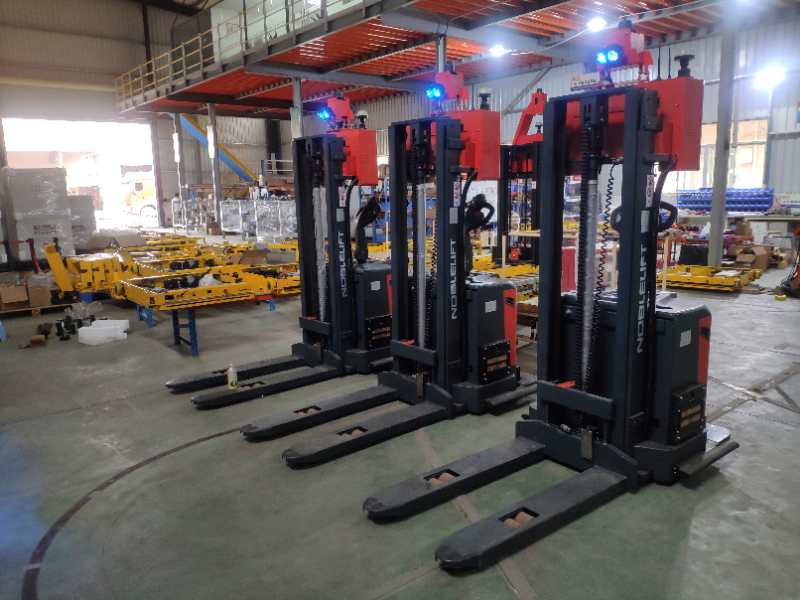
The adoption of the reach truck represents a significant leap forward, a core recommendation in any modern forklift aisle turning radius guide. Typical Aisle Width:8 to 9 feet (approximately 2.4 to 2.7 meters) Operational Mechanism: The mast and forks extend (“reach”) into the racking, while the truck’s chassis remains predominantly within the aisle. This mechanism dramatically reduces the required forklift aisle turning radius for entry and exit compared to a counterbalance model. Density Impact:High. By following this forklift aisle turning radius guide and transitioning from counterbalance to reach trucks, operations can typically achieve a 25-30% increase in storage capacity within the same building footprint.
High-Density Specialists: Order Pickers and Turret Trucks
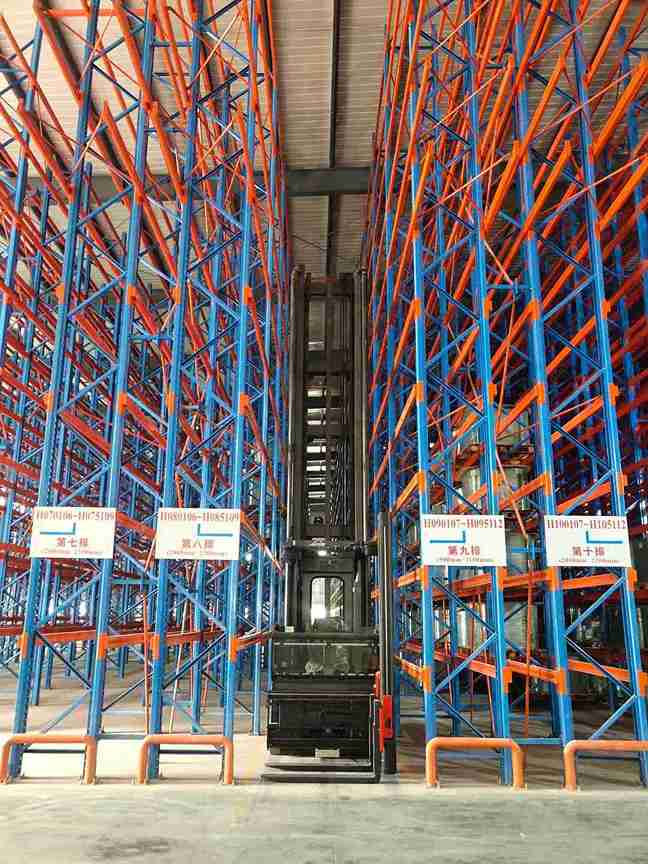
For operations where storage density is the paramount concern, this forklift aisle turning radius guide points toward specialized narrow-aisle equipment. *Typical Aisle Width:5 to 6 feet (approximately 1.5 to 1.8 meters) Operational Mechanism:** In these systems, the operator platform and the forks elevate together within a fixed chassis. Turret trucks feature a rotating fork assembly that can swing 180 degrees, allowing them to service both sides of an aisle without turning the truck itself.
This innovation is a cornerstone of the modern forklift aisle turning radius guide. Density Impact: Very High. This is the domain of Very Narrow Aisle (VNA) operations, which can deliver density increases of 40-50% over conventional layouts, a key takeaway from this advanced forklift aisle turning radius guide.
The Automation Frontier: Guided Aisle Systems
At the pinnacle of density and efficiency, as detailed in this forward-looking forklift aisle turning radius guide, are fully automated solutions. Typical Aisle Width:Mere inches wider than the load itself. Operational Mechanism: Traditional forklifts are replaced by automated storage and retrieval systems (AS/RS) or wire-/rail-guided Very Narrow Aisle trucks. These systems eliminate operator steering variation, allowing for incredibly tight tolerances. Density Impact: Maximum. These systems can nearly double storage capacity compared to a conventional layout, representing the ultimate application of the principles in this <b>forklift aisle turning radius guide by minimizing the forklift aisle turning radius to its physical limit.
Implementing the Forklift Aisle Turning Radius Guide: A Step-by-Step Optimization Process
Transitioning to a narrower aisle configuration is a strategic undertaking that requires a disciplined, analytical approach. This section of the forklift aisle turning radius guide outlines a systematic process for planning and execution, ensuring that investments in new equipment and layout changes yield a strong return.
Phase 1: Comprehensive Operational and SKU Analysis
Before examining forklift specifications, a thorough internal analysis is imperative. This foundational step in the forklift aisle turning radius guide ensures that the solution is tailored to the unique characteristics of the operation. ABC SKU Analysis: Categorize inventory based on velocity. High-turnover ‘A’ items should be positioned in the most accessible locations within the new layout, a strategy that synergizes perfectly with a narrow-aisle design.
Pallet Profile and Load Analysis: Document the dimensions, weights, and stability of all unit loads. This data directly impacts the forklift aisle turning radius calculation and determines the required lift capacity and mast type. Throughput Analysis:Understand daily and seasonal workflow patterns. A high-density system must be designed to handle peak demands without creating bottlenecks, a critical consideration in this forklift aisle turning radius guide.
Phase 2: Precision Layout Modeling with Advanced Software
Modern planning has moved far beyond paper blueprints. This forklift aisle turning radius guide strongly advocates for the use of advanced warehouse design and simulation software. These tools allow planners to create a digital twin of the facility, input the exact specifications of shortlisted narrow-aisle equipment, and visually simulate operations. This process can identify potential clearance conflicts, optimize travel paths, and provide a compelling visual validation of the proposed design, de-risking the investment.
Phase 3: Calculating the Return on Investment (ROI)
The final step in this practical forklift aisle turning radius guide is to build a robust business case. The ROI calculation must be comprehensive and include: Capital Expenditure: Costs for new narrow aisle forklifts, any necessary racking modifications or replacements, and infrastructure upgrades like floor flattening or guidance system installation. Operational Savings:Real Estate Value:The monetary value of the reclaimed square footage. *Labor Productivity: Quantified gains from reduced travel time per transaction.
Damage Reduction: Projected savings from decreased product and racking damage due to more predictable maneuvers. Energy Efficiency:Narrow aisle electric trucks often offer lower operational energy costs. Payback Period: A well-executed project, guided by this forklift aisle turning radius guide, often demonstrates a full financial payback within 18 to 36 months, making a compelling argument for implementation.
The Supporting Infrastructure for a High-Density Warehouse
Optimizing the forklift aisle turning radius is not an isolated initiative. It necessitates a holistic review and potential upgrade of the entire storage infrastructure. This forklift aisle turning radius guide underscores the importance of these supporting elements for long-term success and safety.
Racking Integrity and Precision Alignment
In narrow aisle environments, tolerance for error diminishes significantly. Racking must be perfectly aligned and maintained to the highest structural standards. An impact that might be a minor incident in a wide aisle can completely block a VNA aisle, halting all operations. This forklift aisle turning radius guide recommends regular professional racking inspections and the mandatory use of high-quality, impact-resistant upright protectors to safeguard both the infrastructure and the investment.
The Critical Role of Warehouse Floor Flatness
This is arguably the most frequently overlooked factor, and this <b>forklift aisle turning radius guide places a strong emphasis on it.Very Narrow Aisle forklifts, especially those that are wire-guided, are exceptionally sensitive to floor flatness. An uneven surface can cause the truck to sway or deviate from its path, leading to inaccurate positioning, increased wear on components, and a heightened risk of collision. A professional floor flatness survey (using the F-number system) is a non-negotiable prerequisite before implementing a VNA system, a key piece of advice from this forklift aisle turning radius guide.
Enhanced Signage, Lighting, and Traffic Management
As aisles become narrower, visibility is reduced and the margin for error shrinks. A comprehensive safety and management system is paramount. This forklift aisle turning radius guide advises the implementation of: * Highly visible signage at aisle entrances. * Uniform, high-lumen lighting to eliminate shadows and dark spots. * Strict traffic management protocols, potentially including physical segregation of pedestrian and forklift zones.
Case Study: A 150,000 Sq Ft Distribution Center Transformation
A practical application of this forklift aisle turning radius guide can be seen in the transformation of a regional consumer goods distributor. Their 150,000 sq ft facility was operating at maximum capacity with counterbalance forklifts in 12-foot aisles, forcing them to turn away new business.
The Intervention Based on this Forklift Aisle Turning Radius Guide
A detailed analysis, following the principles of this forklift aisle turning radius guide, led to a two-phase strategy:
1. **Phase 1:** A swift transition from counterbalance forklifts to high-capacity reach trucks, reducing aisles to 8.5 feet.
2. **Phase 2:** Implementation of a turret truck-based VNA system in a dedicated zone for slower-moving SKUs, with aisles at 5.5 feet.
The Quantifiable Outcomes
Storage Capacity: Increased by 20% after Phase 1, and an additional 25% after Phase 2, culminating in a total storage density increase of 45%.Order Picking Efficiency: Improved by 35% due to optimized travel paths and better slotting. **ROI and Business Impact: The project achieved a complete payback in 22 months. The reclaimed capacity allowed the company to onboard new clients, effectively using the insights from this forklift aisle turning radius guide to drive revenue growth without expanding their facility.
Future-Proofing with Automation: The Evolution of the Aisle
The logical progression of minimizing the forklift aisle turning radius, as explored in this forklift aisle turning radius guide, is the removal of the human operator from the steering equation. Automated Guided Vehicles (AGVs) and Automated Storage and Retrieval Systems (AS/RS) represent the ultimate implementation of these principles. These systems operate with millimeter precision, enabling aisles that are only marginally wider than the load itself.
They provide 24/7 operational availability, unparalleled consistency, and push storage density to the absolute physical limit of the building. While requiring a significant capital outlay, the long-term benefits in labor savings, operational predictability, and space utilization make automation the strategic endgame for high-volume, high-value distribution centers. This forklift aisle turning radius guide positions automation as the pinnacle of warehouse optimization.
Conclusion: The Turning Radius as a Strategic Lever
The path to a world-class warehouse operation is paved with data-driven decisions, and a meticulous focus on the forklift aisle turning radius is one of the most impactful. This comprehensive forklift aisle turning radius guide demonstrates that this single metric is deeply intertwined with storage density, operational efficiency, and overall profitability.
By embracing the methodologies outlined—from rigorous data analysis and precise layout modeling to strategic equipment selection and infrastructure investment—businesses can unlock hidden potential and secure a powerful competitive advantage. The insights contained in this forklift aisle turning radius guide provide the necessary blueprint. The decision to act, to move beyond conventional layouts and harness the full power of optimized space, is the first step toward a more productive and profitable future.
Frequently Asked Questions (FAQs)
1. How critical is the load center specification in a forklift aisle turning radius guide?
The load center is a fundamental variable in any accurate forklift aisle turning radius guide. It directly affects the truck’s stability and its effective turning geometry. A longer load center increases the tail swing and the overall space required for safe maneuvering. Always verify that the forklift aisle turning radiusdata provided by a manufacturer is based on the intended load center for your specific application.
2. Can existing racking be modified to accommodate a narrower forklift aisle turning radius?
In some cases, yes, but it requires a professional engineering assessment. Modifications might involve repositioning uprights or changing out beam connectors. However, this forklift aisle turning radius guide cautions that it is often more cost-effective and structurally sound to invest in new, purpose-built racking designed for the specific clearances of the new equipment, ensuring integrity and safety in the narrow-aisle environment.
3. What training is required for operators transitioning to narrow-aisle equipment after using this forklift aisle turning radius guide?
Specialized, certified training is non-negotiable. Operating a reach truck or a turret truck is fundamentally different from driving a counterbalance forklift. Training must cover the unique stability characteristics, the use of the reach mechanism, guidance systems, and the specific safety protocols for working in constricted spaces. A proper forklift aisle turning radius guide always emphasizes that operator proficiency is the final, critical link to achieving the promised gains in density and efficiency.
4. How does tire type (cushion vs. pneumatic) influence the forklift aisle turning radius?
Tire type can have a minor but measurable effect. Cushion tires, common on indoor electric models, typically have a slightly smaller turning radius than pneumatic tires on comparable models due to their compact design and solid construction. This forklift aisle turning radius guide recommends consulting the manufacturer’s precise dimensional diagrams for each specific tire and model configuration during the selection process.
5. Is it feasible to have multiple types of forklifts with different turning radii operating in the same warehouse?
While feasible, it requires meticulous zoning and traffic management, which adds complexity. It is generally inefficient and introduces safety risks to have a counterbalance forklift operating in an area designed for VNA trucks. The most effective strategy, endorsed by this forklift aisle turning radius guide, is to dedicate distinct areas of the warehouse to specific truck types based on SKU velocity and density requirements, creating a optimized, hybrid layout.
If you require perfect CAD drawings and quotes for warehouse racking, please contact us. We can provide you with free warehouse racking planning and design services and quotes. Our email address is: jili@geelyracks.com