📐 "First 50 Enterprise Queries Get Custom 3D Warehouse Design" Plan
















The Definitive Guide to Mastering Deep-Freeze Logistics: A Technical and Strategic Deep Dive into VNA Forklifts for Narrow Aisle High-Density Storage
For logistics directors, warehouse operations managers, and cold chain investors across the globe’s most dynamic growth regions—from the humid tropics of Southeast Asia to the industrial hubs of the Middle East and the vast agricultural export centers of Latin America and Africa—the operational paradigm is shifting. The relentless pressures of energy inflation, spatial constraints, and demanding compliance standards are rendering traditional cold storage methods obsolete.
This exhaustive resource presents the incontrovertible case for a transformative solution: the integration of purpose-engineered VNA forklifts for narrow aisle configurations within ultra-low temperature environments. This is not merely an equipment upgrade; it is a total re-engineering of cold storage economics.
By enabling aisles as narrow as 1.6 meters and operating with unwavering reliability at temperatures down to -30°C, these specialized VNA forklifts for narrow aisle applications form the cornerstone of a system that demonstrably increases storage density by over 40% and reduces total energy expenditure by a minimum of 30%. This document delves into the engineering principles, strategic implementation, and tangible financial calculus that define why VNA forklifts for narrow aisle cold stores are the undisputed foundation for future-proof, profitable, and scalable logistics operations.

Introduction: The Global Cold Chain Imperative and the Spatial-Financial Equation
The global cold chain logistics market is experiencing unprecedented growth, driven by population expansion, changing consumption patterns, and the international trade of perishable goods. In emerging economies, this growth is explosive. However, this opportunity is matched by a formidable set of challenges. The cost of energy—often the single largest operating expense—is volatile and rising. Real estate for new, expansive warehouses is prohibitively expensive or simply unavailable in strategic urban ports. Simultaneously, regulatory standards for food safety and pharmaceutical integrity are tightening.
In this context, the traditional model of a wide-aisle freezer, serviced by standard forklifts struggling in the cold, represents a significant vulnerability. The solution lies in a fundamental rethinking of space utilization, and this is precisely where the application of VNA forklifts for narrow aisle design becomes non-negotiable. These are not merely vehicles; they are the enabling technology for a high-density storage philosophy, turning constrained footprints into competitive assets.
Section 1: Deconstructing the High-Cost Model of Conventional Cold Storage
The inefficiencies of a standard cold storage operation are systemic and interlinked. Understanding them is key to appreciating the revolution offered by VNA forklifts for narrow aisle retrofits.
1.1 The Tyranny of Wasted, Expensively Cooled Space
A typical warehouse using a counterbalance forklift requires aisles of 3.5 to 4 meters to allow for safe 90-degree turns. In a -25°C environment, every cubic meter of that aisle space is not just empty; it is filled with air that the refrigeration system must cool and maintain. This represents a direct and continuous financial drain. The refrigeration load is a function of volume.
By transitioning to a layout built for VNA forklifts for narrow aisle operations, aisle widths can be reduced to between 1.6 and 2.0 meters. This simple geometric change can reduce the total air volume of a storage chamber by 15-25%. The immediate effect is a proportional reduction in the baseline energy required to maintain temperature, as compressors have less void space to control.
1.2 The Human and Machine Performance Penalty
Conventional forklifts and their operators are profoundly unsuited for deep-freeze environments. Standard hydraulic oil becomes viscous, leading to sluggish operation and potential pump failure. Lead-acid batteries can lose over half their rated capacity, causing unexpected downtime. For the operator, working in -25°C without a properly sealed, heated cabin is not only inhumane but drastically reduces efficiency, focus, and safety. Mistakes, such as rack collisions, become more frequent, leading to product loss and infrastructure damage.
This operational degradation creates a cycle of high cost, low throughput, and elevated risk. In stark contrast, a VNA forklift for narrow aisle cold storage is engineered as a cohesive system to overcome these hurdles, ensuring both machine and operator perform at optimal levels.
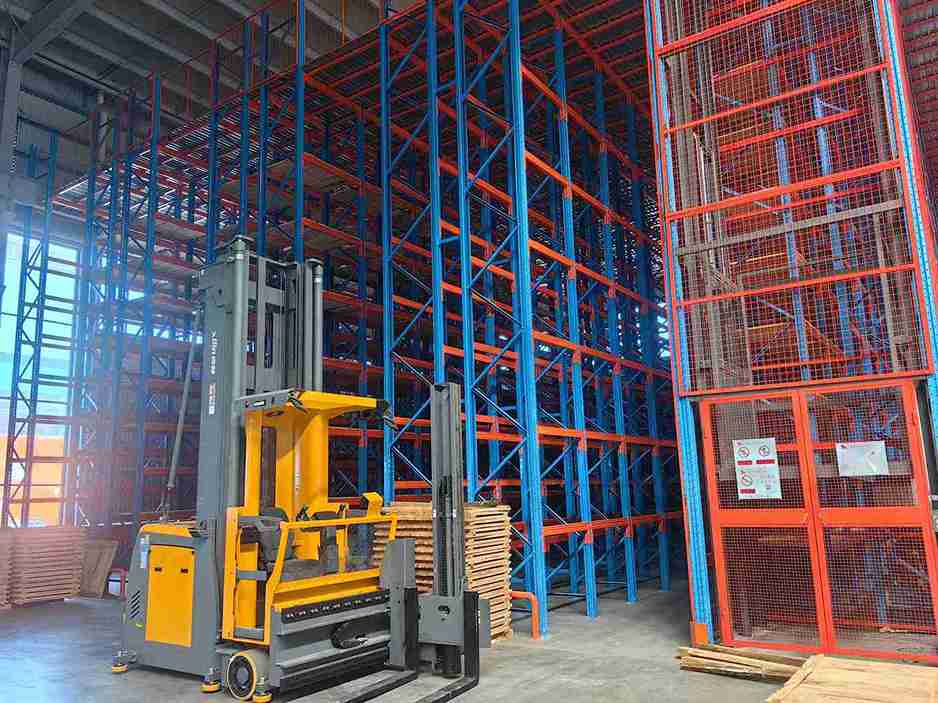
Section 2: The Engineering Marvel: Anatomy of a Deep-Freeze VNA Forklift
The distinction between a standard forklift and a model designed for VNA forklifts for narrow aisle cold storage is profound. It is a product of specialized engineering across every subsystem.
2.1 Powertrain and Hydraulic Resilience
The circulatory system of any forklift is its hydraulics. For reliable VNA forklifts for narrow aisle performance at -30°C, manufacturers utilize synthetic hydraulic oils with exceptionally low pour points. These fluids maintain their viscosity and lubricating properties in extreme cold. Additionally, critical hydraulic lines are often insulated, and systems may incorporate pre-heaters that activate prior to shift start, ensuring immediate fluidity. The mast assembly, with its complex network of cylinders and chains, employs cold-tolerant seals and specially formulated lubricants to prevent binding and ice-induced wear.
2.2 The Critical Powerplant: Advanced Thermal Battery Management
This is the single most significant differentiator. A standard battery’s chemical reactions slow dramatically in the cold. The solution is an integrated Thermal Management System (TMS). In advanced VNA forklifts for narrow aisle applications, the battery—increasingly Lithium Iron Phosphate (LiFePO4) for its safety, longevity, and cold-weather performance—is housed in an insulated compartment.
An active heating element, powered by a small fraction of the battery’s own charge or a separate trickle-charger, maintains the battery core at its ideal operating temperature (around 15-20°C). This preserves over 95% of its rated capacity, ensures consistent power delivery for a full shift, and extends the battery’s lifecycle by preventing the damaging deep-cycle discharges common in cold environments. This technology is essential for the reliable operation of VNA forklifts for narrow aisle settings.
2.3 The Human-Centric Cabin: Ergonomic Design for Sustained Productivity
Operator efficiency is paramount. The cabin on a world-class VNA forklift for narrow aisle deep-freeze application is a marvel of ergonomic design. It is a fully pressurized, thermally sealed pod featuring:
Heated, Demisting Windscreens: Triple-glazed glass with conductive heating elements ensures a clear field of vision at all times.
Climate Control: A powerful HVAC unit maintains a comfortable +20°C environment, regardless of external conditions.
Heated Contact Points: The steering wheel, seat, and floor are heated to maintain operator core temperature and dexterity.
Ergonomic Controls: All controls are laid out for intuitive use, reducing fatigue and error.
This investment directly translates to higher pick rates, improved safety, and lower operator turnover—key factors in regions where skilled labor is scarce.
2.4 Chassis and Component Hardening
Every component is selected or treated for the environment. The chassis receives a multi-stage anti-corrosion treatment, such as cathodic electrocoating, to resist the constant condensation and corrosive salts common in cold stores. Electrical connectors are sealed to IP66 standards or higher to prevent moisture ingress and icing. Drive motors are rated for low-temperature operation, and special cold-weather tires maintain flexibility and traction on often slick floors.
Section 3: Guidance and Control: The Neural Network of the Narrow Aisle
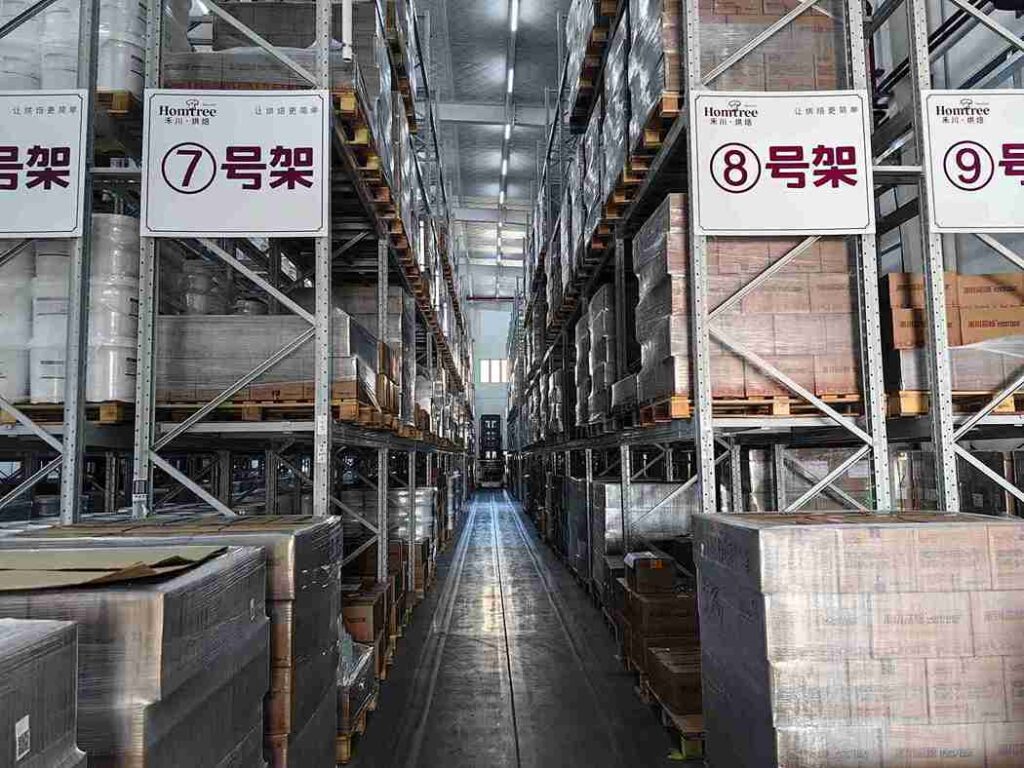
The “Very Narrow Aisle” is only viable with precise, reliable guidance. This technology is what separates a VNA forklift for narrow aisle system from a conventional one, transforming the operator into a high-precision pilot.
3.1 Wire Guidance: The Proven Workhorse
A wire embedded in the floor carries a low-frequency signal. A sensor on the truck’s underside follows this signal with millimeter accuracy. This system is incredibly robust, unaffected by floor debris, condensation, or poor visibility. It is the preferred choice for many VNA forklifts for narrow aisle installations in harsh environments due to its “set-and-forget” reliability. Reconfiguring aisles requires floor work, but for stable, high-density layouts, its performance is unmatched.
3.2 Optical Tape Guidance: Flexibility with Robust Design
This system uses a high-contrast tape applied to the floor. An optical camera on the truck follows the tape’s path. For cold storage, this is not standard vinyl tape. It is an arctic-grade polymer tape with adhesives formulated to remain bonded at -30°C without becoming brittle. The optical sensor itself is housed in a heated, sealed enclosure to prevent lens fogging and ice accumulation. This system offers easier reconfiguration than wire guidance and is a superb choice for facilities that anticipate layout changes.
3.3 LiDAR and Free Navigation: The Cutting Edge
The most flexible system uses LiDAR scanners to create a real-time 3D map of the warehouse, allowing the VNA forklift for narrow aisle operation to navigate without physical guides. For cold storage, the LiDAR units must be thermally regulated. This technology, often paired with inertial measurement units (IMUs), is ideal for highly dynamic warehouses or those implementing phased automation. It represents the future-forward choice for businesses viewing their VNA forklifts for narrow aisle fleet as the first step toward full automation.
Section 4: The Inescapable Financial Logic: Modeling the 30%+ Energy Savings
The promise of drastic energy reduction is the core value proposition. It is achieved through a multi-faceted engineering and operational approach enabled by the VNA forklifts for narrow aisle system.
4.1 The Direct Impact of Reduced Air Volume
As established, narrower aisles directly reduce the volume of air requiring refrigeration. A 20% reduction in cooled air volume translates to an almost linear reduction in the baseline load on the compressors. This is the most straightforward saving unlocked by adopting a layout for VNA forklifts for narrow aisle.
4.2 Enhanced Thermal Mass and Stability
A high-density warehouse packed with product has a high thermal mass. Frozen goods act as a “cold battery,” stabilizing the temperature. When doors open for receiving or dispatch, the dense mass of cold product resists temperature spikes far more effectively than an empty chamber. This reduces the peak load on the refrigeration system and shortens recovery times, leading to significant energy savings over the course of a day.
4.3 Optimized Material Flow and “Door Discipline”
Efficiency is kinetic. A well-trained operator in a purpose-built cabin, directed by an integrated Warehouse Management System (WMS), completes tasks faster and with fewer errors. This means:
Reduced Travel Time: The VNA forklift for narrow aisle design allows direct, guided travel at higher speeds within the aisle.
Fewer Door Openings: Batch-picking strategies and optimized workflows minimize the frequency and duration of cooler/freezer door openings.
Elimination of “Search” Time: WMS integration provides exact location data, so the operator goes directly to the target pallet.
Every minute a door is closed represents energy preserved. The cumulative effect of these efficiencies, enabled by the VNA forklifts for narrow aisle ecosystem, contributes directly to the bottom line.
4.4 A Detailed Financial Model for a Facility in the Middle East
Consider a 12,000-pallet frozen storage facility in Dubai, operating at -25°C.
Current State (Wide Aisle): Monthly energy consumption: 1,200,000 kWh. Cost at $0.10/kWh: $120,000.
Post-Implementation (VNA Narrow Aisle):
Air volume reduced by 22%.
Operational efficiency improves, reducing door-open “infiltration” load by 8%.
Projected New Monthly Consumption: ~840,000 kWh.
Projected New Monthly Cost: ~$84,000.
Monthly Savings: $36,000.
Annual Savings: $432,000.
This scale of saving can cover a significant portion of the capital investment in VNA forklifts for narrow aisle technology and high-density racking within a very short timeframe, while the increased capacity (often 40-50% more pallet positions) generates new revenue.
Section 5: Strategic Implementation: From Blueprint to Operational Reality
Deploying a fleet of VNA forklifts for narrow aisle cold storage is a strategic project, not a simple procurement exercise.
5.1 The Holistic Audit and 3D Simulation
The process begins with a granular audit of current operations: SKU profiles, turnover rates (ABC analysis), peak throughput, and existing energy data. Using this data, engineers create a digital twin of the proposed warehouse. This simulation models traffic flow, predicts potential bottlenecks, and accurately calculates the new storage capacity before any physical work begins. This step is crucial for validating the ROI of the VNA forklifts for narrow aisle solution.
5.2 Integrated System Design: Racking, Software, and Infrastructure
The VNA forklift for narrow aisle is the centerpiece of a synchronized system.
Racking Selection: The choice of racking (selective, drive-in, push-back, or pallet flow) is made based on SKU homogeneity and turnover. The structural design must account for the precise turning radii and lift heights of the chosen VNA forklifts for narrow aisle model.
WMS/Software Integration: Maximum efficiency requires intelligence. The onboard computers of the VNA forklifts for narrow aisle should interface directly with the WMS. This enables features like task interleaving (combining put-away and retrieval runs), dynamic slotting, and flawless FIFO/FEFO control, which is critical for compliance in pharmaceutical and food storage.
Site Preparation Specs: The supplier must provide detailed requirements: floor flatness tolerances (e.g., ±3mm over 3 meters for guidance systems), location and power specifications for external battery charging rooms, and door specifications to ensure smooth transit.
5.3 Phased Deployment and Change Management
A successful rollout minimizes disruption:
Phase 1: Infrastructure preparation (floor work, charging room setup).
Phase 2: New racking installation.
Phase 3: Guidance system installation (wire embedding or tape application).
Phase 4: Delivery and cold-acclimatization of the VNA forklifts for narrow aisle.
Phase 5: Intensive, hands-on operator and maintenance technician training.
Phase 6: System go-live and parallel running support.
Phase 7: Performance review and optimization.
Section 6: Global Applications: Tailoring the Solution to Regional Needs
The versatility of VNA forklifts for narrow aisle technology allows for precise adaptation to regional industries and challenges.
6.1 Southeast Asia: Frozen Seafood and Processed Food Export
In Vietnam, Thailand, or Indonesia, exporters face stringent international standards and tight shipping schedules. A VNA forklift for narrow aisle system in a blast-freezer or holding store maximizes the throughput of palletized shrimp, fruit, or ready-meals. The speed and accuracy ensure containers are loaded quickly and correctly, protecting just-in-time supply chains and brand reputation. The energy savings are critical where grid reliability can be an issue and generator fuel costs are high.
6.2 Middle East & Africa: Pharmaceutical and Vaccine Logistics
In Dubai, Saudi Arabia, or South Africa, regional distribution hubs for pharmaceuticals require unwavering compliance with GDP guidelines. Temperature mapping, audit trails, and product security are paramount. A VNA forklift for narrow aisle system, fully integrated with a compliant WMS, provides an unbroken digital chain of custody. Every movement is logged, and the precision handling minimizes risk of damage. The reliability of the VNA forklifts for narrow aisle in both chillers (+2°C to +8°C) and vaccine freezers (-20°C) ensures product integrity, a matter of both ethical and commercial imperative.
6.3 Latin America: Agricultural and Protein Export
In Brazil, Chile, or Mexico, massive volumes of beef, poultry, and fruit are stored for export. Facilities are vast, and energy costs are a major determinant of profitability. Deploying VNA forklifts for narrow aisle technology across multiple chambers in a large facility compounds the energy savings. The ability to handle high loads reliably and safely in cold, high-humidity environments is key to maintaining the quality of premium export goods.
Section 7: The Future Trajectory: Automation and Data Intelligence
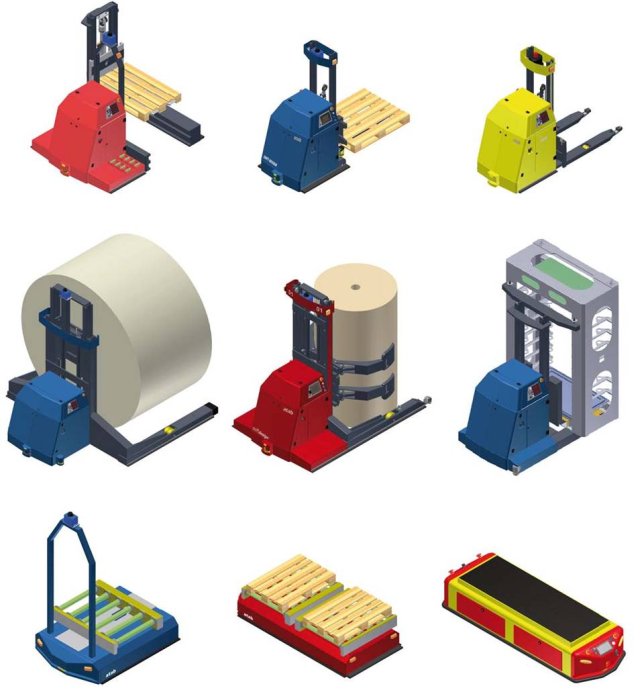
The journey with VNA forklifts for narrow aisle technology is a pathway toward greater autonomy. The same guidance systems and onboard intelligence that enable manual VNA forklifts for narrow aisle operation are the foundations for automation.
7.1 The Evolution to Automated Guided Vehicles (AGVs)
For greenfield sites or facilities with highly predictable flows, the VNA forklift for narrow aisle concept evolves into a fully automated VNA AGV for narrow aisle storage. These driverless vehicles can operate in even colder environments (e.g., -35°C) and with even narrower aisles, as human comfort constraints are removed. They offer 24/7 operation, perfect FIFO, and ultimate energy efficiency by optimizing travel paths and eliminating door-open time for operator breaks.
7.2 The Role of IoT and Predictive Analytics
Modern VNA forklifts for narrow aisle are data hubs. Sensors monitor component health, battery status, energy consumption, and operational metrics. This data, fed into a cloud-based Fleet Management System, enables predictive maintenance. A technician can be alerted to a potential hydraulic issue or a degrading battery cell before it causes downtime. This transforms maintenance from a reactive cost to a proactive, planned activity, maximizing the uptime of the VNA forklifts for narrow aisle fleet.
Conclusion: A Strategic Inflection Point for Cold Chain Leaders
The evidence is overwhelming and the technology is proven. The business-as-usual model for cold storage is a legacy of inefficiency. For decision-makers in growth markets where margins are tight and competition is fierce, the strategic investment in a high-density system centered on robust VNA forklifts for narrow aisle deep-freeze applications represents a decisive competitive leap. It is an investment that attacks the largest variable cost (energy), multiplies the ROI on existing real estate, future-proofs operations with data and automation readiness, and safeguards both product and personnel.
In the high-stakes global cold chain, density, efficiency, and intelligence are the new currencies of success. The enabling technology for this transformation is, unequivocally, the advanced VNA forklift for narrow aisle solution. The question for forward-thinking operators is no longer if to adopt this technology, but how swiftly they can implement it to secure their market leadership for the decade ahead.
Frequently Asked Questions (FAQs)
Q1: We have a mix of pallet sizes and loads. Can VNA forklifts for narrow aisle systems handle this variability?
Absolutely. Modern VNA forklifts for narrow aisle applications are equipped with variable reach mechanisms and can be specified with different fork lengths and attachments. Furthermore, the accompanying Warehouse Management System (WMS) can be configured to slot different SKUs into appropriately sized locations within the racking framework designed for VNA forklifts for narrow aisle. The key is a thorough pre-implementation audit to ensure the equipment specification matches the load portfolio.
Q2: What is the expected lifespan of a VNA forklift built for -30°C operation compared to a standard model in a normal warehouse?
With proper maintenance per the manufacturer’s cold-environment schedule, the lifespan of a purpose-built VNA forklift for narrow aisle cold storage can meet or exceed that of a standard model in a ambient warehouse. The critical factor is the hardening of components against corrosion and cold-specific wear. While the initial investment is higher, the Total Cost of Ownership (TCO) over 7-10 years is often lower due to greater reliability, preserved battery life, and dramatically higher productivity.
Q3: How do you address condensation and ice buildup on the forklift when it exits the cold store into a warmer environment?
This is a crucial engineering detail. Best practice is to locate the battery charging and maintenance room in a dedicated “temperize” area with positive air pressure and humidity control. When a VNA forklift for narrow aisle unit exits the cold chamber, it should proceed directly to this room. The gradual warming in a controlled environment minimizes condensation. Additionally, the advanced anti-corrosion coatings on the chassis and the sealed electrical connectors are specifically designed to protect against the moisture generated during this thermal cycling.
Q4: Can your solution be integrated with our existing legacy Warehouse Management System?
In the vast majority of cases, yes. Providers of high-end VNA forklifts for narrow aisle systems use open API (Application Programming Interface) protocols and standard data communication formats (like XML or JSON). Their onboard terminals can typically interface with most mainstream WMS platforms via middleware or direct integration. A pre-project integration workshop is conducted to confirm compatibility and define the data exchange requirements for tasks like receiving, put-away, picking, and cycle counting.
Q5: What kind of after-sales support and spare parts availability can we expect in our region, such as in West Africa or Central Asia?
Leading global suppliers operate through a network of certified local partners. This model ensures there is regional expertise and a critical inventory of cold-specific spare parts (“Arctic Kits”) within the market. Before any commitment, a client should receive a detailed support plan outlining response times, local technician certifications, and the process for expediting specialized parts from global hubs. The reliability of the support ecosystem is as important as the quality of the VNA forklifts for narrow aisle equipment itself.
If you require perfect CAD drawings and quotes for warehouse racking, please contact us. We can provide you with free warehouse racking planning and design services and quotes. Our email address is: jili@geelyracks.com