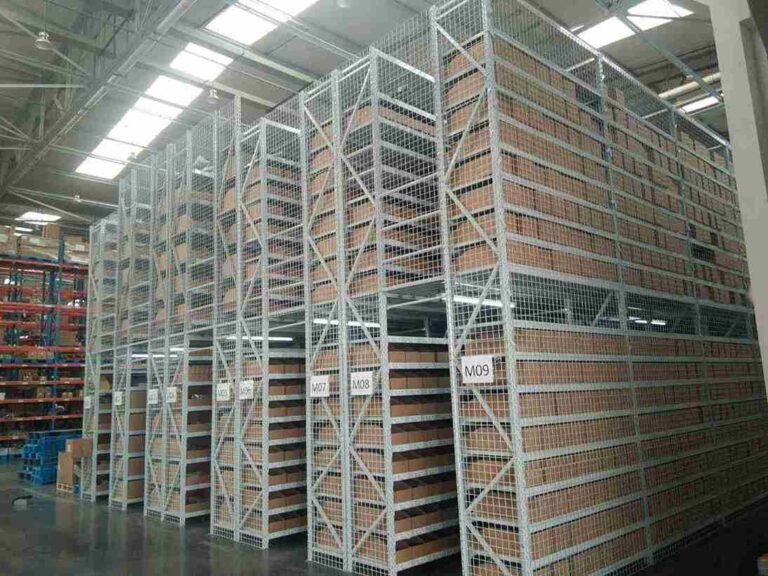
📐 "First 50 Enterprise Queries Get Custom 3D Warehouse Design" Plan















The Definitive Guide to Selecting and Deploying High-Performance Forklifts for Narrow Aisle Racking in Growth Markets
In the competitive landscapes of Southeast Asia, the Middle East, Africa, and Latin America, warehouse managers and logistics directors face a universal dilemma: spiraling operational costs against the pressing need for greater storage capacity. The solution, increasingly, is not outward expansion but inward optimization. This guide delves into the strategic heart of warehouse intensification: the synergistic partnership between high-density storage structures and the specialized equipment that brings them to life.
At the core of this partnership are forklifts for narrow aisle racking. These are not merely modified versions of standard forklifts; they are precision-engineered instruments designed to operate within aisles as tight as 1.6 meters, unlocking 30-50% more storage within the same four walls. For decision-makers in emerging economies, the journey to selecting the right forklifts for narrow aisle racking involves navigating a complex matrix of cost, technology, local infrastructure, and future scalability.
This resource, crafted from decades of field implementation, provides an exhaustive roadmap. It moves beyond vendor specifications to offer a holistic view of integrating these systems for maximum ROI, rapid deployment, and sustained operational excellence, ultimately positioning your facility as a leader in logistical efficiency within your region.
The Imperative for Density: Why Narrow Aisle Solutions Are Non-Negotiable
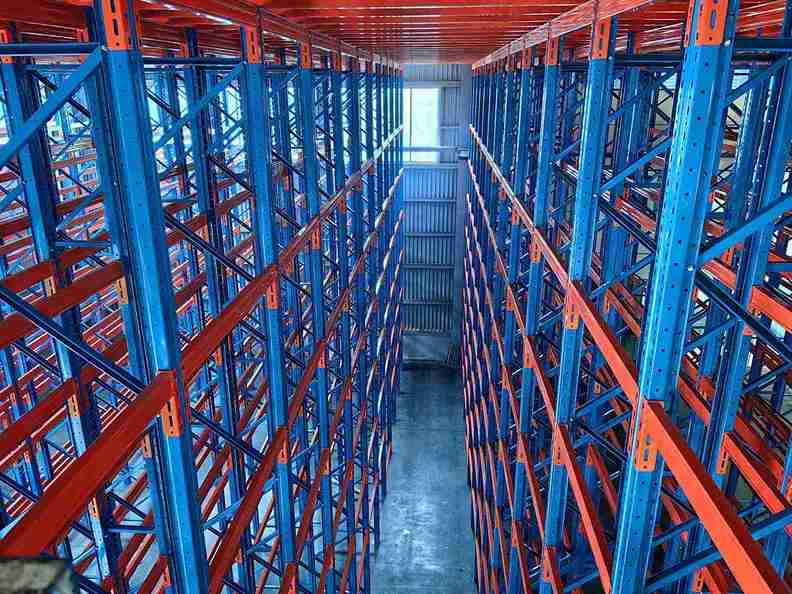
The economic argument for implementing narrow aisle racking systems, powered by the appropriate forklifts for narrow aisle racking, is overwhelming for growth-focused markets. Consider a typical warehouse in Manila or Johannesburg using traditional counterbalance forklifts. These machines require aisles often exceeding 3.5 meters wide to maneuver, meaning over 50% of the total floor space is dedicated solely to travel lanes—non-revenue-generating concrete. By contrast, a system built around dedicated forklifts for narrow aisle racking can reduce aisle width to between 1.6 and 2.2 meters. The immediate effect is a dramatic increase in pallet positions without the capital expenditure and time lag of constructing a new facility.
However, the benefits extend far beyond static storage maps. The real gains are dynamic and operational. First, travel time is drastically reduced. Operators of forklifts for narrow aisle racking spend significantly less time traversing empty space and more time on value-added tasks like loading, unloading, and order picking. This translates directly to higher throughput and lower cost per pallet moved—a critical metric for third-party logistics (3PL) providers competing on speed and price. Second, accuracy and safety improve.
The constrained environment, coupled with the advanced stability systems on modern forklifts for narrow aisle racking, minimizes the risk of load damage and racking strikes. For industries dealing with high-value goods, such as pharmaceuticals in the GCC or electronics in Vietnam, this protection of inventory is a direct financial safeguard. The choice to invest in a true narrow aisle system with the correct forklifts for narrow aisle racking is, therefore, a strategic decision to boost profitability, resilience, and competitive edge.
Case in Point: Transforming a Regional Distribution Hub in Colombia
A concrete example illustrates the impact. A beverage distributor serving the Andean region operated from a 10,000-square-meter warehouse with standard selective racking and counterbalance forklifts. Facing a 40% annual volume increase, they confronted the prospect of leasing additional space at a premium. Instead, a consultant redesigned the facility around a narrow aisle racking system served by a fleet of high-reach forklifts for narrow aisle racking.
The redesign increased storage capacity by 45% within the existing building. Furthermore, the cycle times for order fulfillment dropped by 30% due to reduced travel distances. The capital invested in the new racking and forklifts for narrow aisle racking was recovered in under 22 months through savings in avoided rental costs and improved labor productivity—a transformative outcome powered by the correct equipment choice.
The Anatomy of Efficiency: Demystifying Types of Forklifts for Narrow Aisle Racking
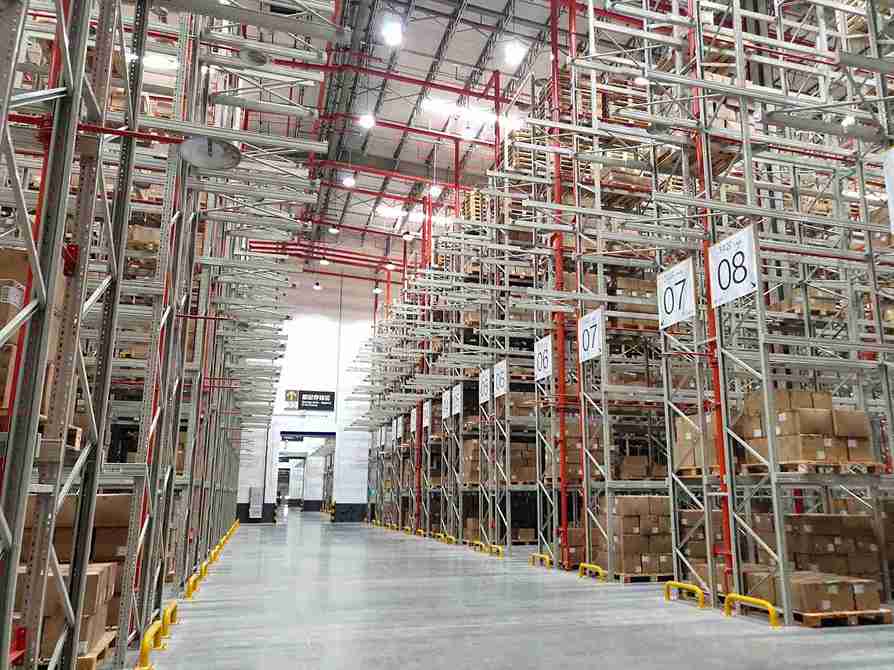
The umbrella term “forklifts for narrow aisle racking” encompasses several distinct machine types, each with unique operational characteristics, cost profiles, and ideal applications. Selecting the wrong type is a costly error that can undermine the entire project’s ROI. A deep understanding of these variants is the first critical step for any logistics professional.
The Versatile Workhorse: Narrow Aisle Reach Trucks
The most common and versatile of all forklifts for narrow aisle racking is the reach truck. In this configuration, the operator remains on the floor, and the machine features a pantograph mechanism that extends the forks into the rack bay to deposit or retrieve a load. This design allows reach trucks to operate in aisles as narrow as 2.3 to 2.5 meters while handling pallets at heights up to 13 meters. They are the go-to solution for the majority of applications involving full-pallet storage and retrieval.
Modern iterations offer features like electronic steering (reducing operator fatigue by up to 80%), high-visibility masts, and lithium-ion power options. For a manufacturing plant in Indonesia or a retail DC in Egypt needing to maximize pallet density with a proven, reliable solution, reach trucks represent the most pragmatic and cost-effective forklifts for narrow aisle racking in a broad range of scenarios.
The High-Density Specialist: Very Narrow Aisle (VNA) and Man-Up Trucks
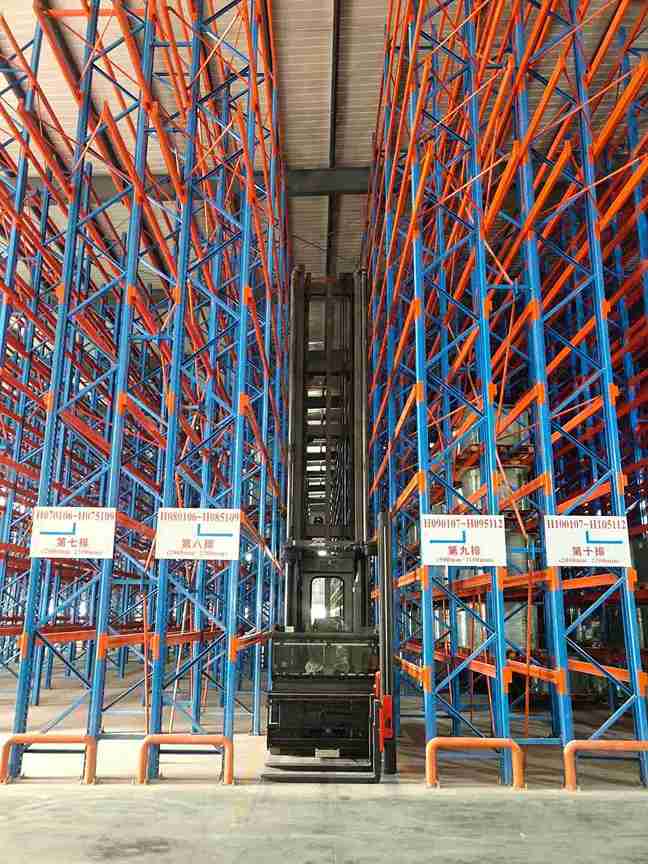
When storage heights push beyond 12 meters and aisle widths must shrink below 2 meters, Very Narrow Aisle (VNA) forklifts for narrow aisle racking become essential. This category primarily includes man-up trucks, where the operator ascends with the load. To safely navigate aisles as tight as 1.6 meters at these heights, VNA trucks require a guidance system—typically either inductive wire embedded in the floor, optical tape, or rail guidance. This guidance is non-negotiable; it ensures pinpoint accuracy, prevents racking collisions, and allows the operator to focus on the load-handling task. There are two main subtypes:
Man-Up Order Pickers: Designed for case picking, where the operator selects individual items from pallets at height. These are pivotal for e-commerce fulfillment centers across Southeast Asia.
VNA Turret Trucks or Swing-Mast Trucks: These forklifts for narrow aisle racking do not require the chassis to turn in the aisle. Instead, the mast or forks rotate 180 degrees, allowing the truck to store and retrieve pallets from both sides of the aisle without maneuvering. This enables the ultimate in storage density and is ideal for cold storage facilities in the Middle East or high-throughput automated buffer zones.
The Hybrid Solution: Guided Reach Trucks
Occupying the middle ground, guided reach trucks offer a compelling compromise. These are essentially standard reach forklifts for narrow aisle racking equipped with a lower-cost guidance system, often optical or magnetic. They provide greater accuracy and allow for slightly narrower aisles than “free-range” reach trucks, while maintaining the operational simplicity and lower cost base of a man-down machine. For companies in markets like Nigeria or Bolivia making their first foray into high-density storage, this hybrid approach offers a lower-risk entry point with a clear upgrade path to full VNA operations in the future.
The Specification Deep Dive: Engineering the Perfect Match Between Truck and Task
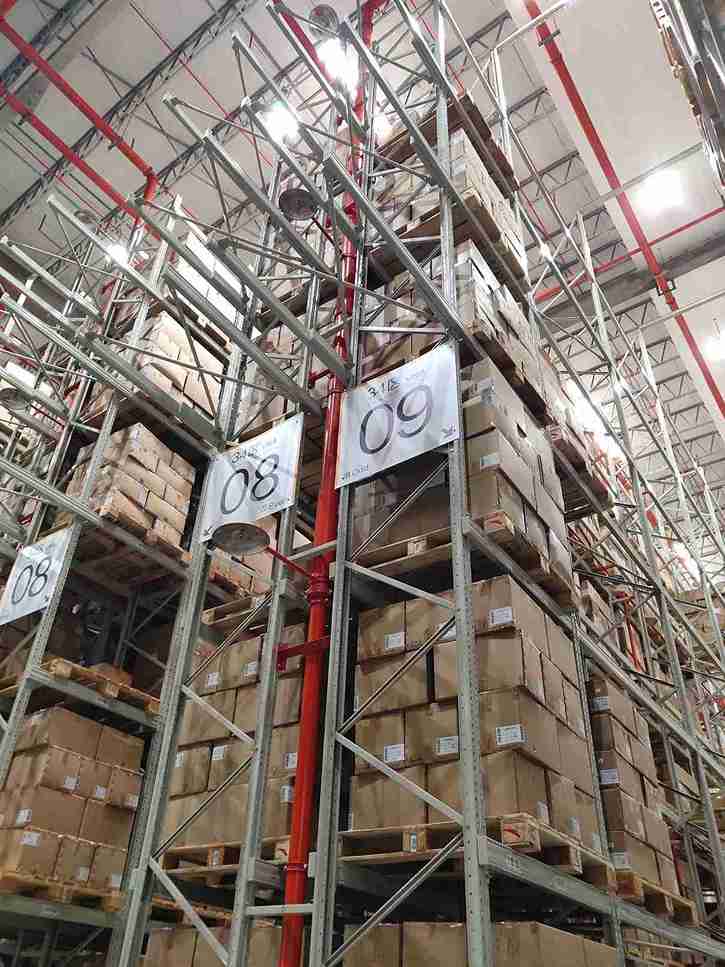
Selecting forklifts for narrow aisle racking based solely on brochure specifications is a recipe for underperformance. The selection process must be forensic, matching the machine’s capabilities to the specific, often demanding, realities of your daily operations.
Critical Parameter #1: Load Capacity and Dimensions
The analysis must start with the load, not the truck. The crucial metric is load capacity at the required load center. A truck rated for 1.5 tons at a 500mm load center may only handle 1.2 tons at a 600mm center—a discrepancy that can lead to catastrophic failure. Engineers must measure the actual dimensions of the “problem” pallet: the heaviest, the most unevenly stacked, or the one with excessive overhang. The mast and fork dimensions of the proposed forklifts for narrow aisle racking must provide ample clearance for these real-world loads within the racking uprights and beams. Overlooking this step is a primary cause of system failure.
Critical Parameter #2: Lift Height, Mast Type, and Free Lift
Required lift height is a function of clear building height minus safety clearances. However, the mast configuration is equally vital. Simplex masts offer superb visibility for applications under 8 meters. For higher reaches, duplex or triplex masts are necessary, but each telescoping section reduces forward sightlines, often necessitating camera systems. “Free lift”—the distance the forks can rise before the mast begins to extend—is a critical feature for operations in multi-level pick modules or under mezzanines. Specifying the correct mast for your forklifts for narrow aisle racking is a delicate balance between height, visibility, and operational flexibility.
Critical Parameter #3: The Power Source Decision – Electric as Standard
For indoor forklifts for narrow aisle racking, electric power is the only sensible choice. It eliminates harmful emissions in enclosed spaces, reduces noise, and generates minimal heat. The modern debate centers on battery technology. While traditional lead-acid batteries are a lower upfront cost, Lithium-ion (Li-ion) technology is revolutionizing TCO for intensive operations. Li-ion batteries for forklifts for narrow aisle racking support opportunity charging (short breaks can extend runtime), require no maintenance or watering, have a longer lifespan, and deliver consistent power output without the performance drop-off seen at the end of a lead-acid charge.
For a multi-shift warehouse in Thailand or Brazil, the productivity gains and reduced infrastructure (no battery change room) make Li-ion an increasingly compelling choice for a fleet of forklifts for narrow aisle racking.
The Total Cost of Ownership (TCO) Lens: Defining Truly Cost-Effective Forklifts
The purchase price of forklifts for narrow aisle racking is merely the entry fee. Astute procurement managers evaluate based on Total Cost of Ownership over a 5-to-7-year period. A genuinely cost-effective forklift is one that minimizes the sum of all costs associated with its operation.
A comprehensive TCO model for forklifts for narrow aisle racking must include:
Depreciation/Financing Cost: The capital cost amortized over its useful life.
Energy Consumption: Detailed calculations based on kWh per cycle, factoring in local electricity rates. Efficient AC motors and regenerative braking in modern forklifts for narrow aisle racking can yield savings of 15-20%.
Planned Maintenance: The cost of scheduled services, filters, and wear parts. Trucks with modular, accessible components often have lower labor costs.
Unplanned Downtime & Repairs: This is the hidden killer. It incorporates both repair parts/labor and the cost of lost productivity. Forklifts for narrow aisle racking from manufacturers with robust local parts depots and service technicians in, say, Kenya or Peru, will dramatically reduce this cost compared to a bargain brand with no support network.
Operator Training & Safety: Costs associated with certifying operators on this specialized equipment.
Residual Value: Strong, well-supported brands of forklifts for narrow aisle racking typically command higher resale values.
An analysis for a frozen food warehouse in Saudi Arabia revealed that while Option A (a reputable brand) had a 20% higher sticker price than Option B (a lesser-known import), its 5-year TCO was 18% lower. The superior reliability, local service support, and higher residual value of the established brand of forklifts for narrow aisle racking made it the more cost-effective forklift choice by a significant margin.
The Deployment Playbook: Ensuring Fast Deployment in Diverse Emerging Markets
The promise of fast deployment is often broken due to poor planning. For forklifts for narrow aisle racking, successful and swift commissioning is a disciplined, phased process that begins long before the equipment arrives on site.
Phase 1: Digital Twin Simulation and Layout Validation
Prior to any physical work, a sophisticated warehouse design simulation should be conducted. Using the exact specifications of the proposed forklifts for narrow aisle racking, engineers model the entire operation—from receiving to shipping. This digital twin validates aisle widths, turning radii at aisle ends, interaction with loading docks, and charging station placement. It identifies potential congestion points and optimizes travel paths. For a client in the Philippines, this simulation revealed that a proposed column location would block access for the forklifts for narrow aisle racking, allowing for a last-minute layout adjustment that saved weeks of potential rework.
Phase 2: Rigorous Site Preparation and Infrastructure Hardening
This is the most common point of failure. Forklifts for narrow aisle racking, especially guided VNA trucks, demand near-perfect floor conditions. Specifications often require floor flatness within ±3mm over a 3-meter span. Existing floors in markets like India or Chile frequently require professional grinding or even a new super-flat topping slab. Concurrently, the electrical infrastructure must be audited. Are there sufficient, correctly rated power outlets for opportunity charging? Is the voltage stable, or are surge protectors needed? Furthermore, the narrow aisle racking installation must be completed to a high degree of precision, with uprights plumb and beams level, as the tight tolerances of the forklifts for narrow aisle racking leave no room for error.
Phase 3: Staggered Logistics and Competency Transfer
“Fast deployment” does not mean everything arrives at once. A coordinated sequence is key: racking first, then electrical work, then the forklifts for narrow aisle racking. Commissioning involves more than a functional test; it includes running full workflow cycles with actual pallets. Crucially, the process must include a “train-the-trainer” program. The supplier’s engineers should certify key client staff—not just in operation, but in daily safety checks, basic diagnostics, and battery management. This builds in-house competency, which is the ultimate guarantor of uptime and the true hallmark of a successful, swift deployment for your new forklifts for narrow aisle racking.
The Intelligence Layer: Integrating Forklifts for Narrow Aisle Racking with Warehouse Systems
Standalone equipment delivers a fraction of its potential. The highest ROI from forklifts for narrow aisle racking is achieved when they are integrated as intelligent nodes within a broader warehouse management ecosystem, typically via a Warehouse Management System (WMS).
Integration transforms forklifts for narrow aisle racking from simple lifting devices into data-driven execution tools. An on-board terminal or touchscreen connected to the WMS provides the operator with paperless, directed tasks. This eliminates travel errors, ensures perfect FIFO/FEFO compliance, and dynamically assigns the most efficient storage location.
For example, the WMS can direct a forklift for narrow aisle racking to store a fast-moving SKU in a “golden zone” location based on real-time velocity data. Furthermore, the forklifts for narrow aisle racking themselves become sources of invaluable telematics data: travel distance, energy use, impact events, and idle time. This data feeds continuous improvement programs, allowing managers in a facility in South Africa to refine processes, re-slot inventory, and optimize labor scheduling based on hard evidence, not intuition.
Sustaining Peak Performance: Maintenance Strategies for Harsh Environments
The maintenance regimen for forklifts for narrow aisle racking cannot be a one-size-fits-all schedule copied from a European manual. It must be aggressively tailored to the operating environment, which in growth markets can be exceptionally punishing.
Climate-Driven Maintenance Protocols
High Humidity & Salt Air (Coastal Vietnam, GCC): For forklifts for narrow aisle racking in these areas, emphasis is on corrosion protection for masts and chassis, more frequent inspection of electrical connections for moisture ingress, and specifying components with higher IP (Ingress Protection) ratings.
Dust and Particulate (North Africa, Central Asia): Air filtration is paramount. Maintenance intervals for air filters on forklifts for narrow aisle racking may be halved. Hydraulic systems require vigilant monitoring for contamination, and guidance system sensors (optical or inductive) need daily cleaning to prevent misreading.
Temperature Extremes (Andean Highlands, Saudi Desert): Battery performance (both lead-acid and Li-ion) is temperature-sensitive. Thermal management systems and climate-controlled charging areas may be necessary. Hydraulic oil viscosity and seal integrity must be checked against manufacturer specs for extreme temperatures.
Focus on High-Wear Components Unique to Narrow Aisle Operations
Forklifts for narrow aisle racking stress specific components. Preventive maintenance checklists must prioritize:
Guidance System Components: Wheels, sensors, and guide rails.
Reach Mechanism: Rollers, bearings, and chains on reach trucks.
Mast Components: Lift chains, rollers, and side-thrust bearings.
Floor Contact Points: Load wheels and steer wheels for abnormal wear patterns indicating floor issues.
Implementing condition-based monitoring—using vibration analysis on motors or thermal imaging on electrical panels—can predict failures before they cause unplanned downtime for these critical forklifts for narrow aisle racking.
Engineering a Culture of Safety in High-Density Storage Environments
Implementing forklifts for narrow aisle racking introduces unique safety dynamics. A proactive, engineered safety culture is essential, built on four pillars:
Infrastructure Integrity: This starts with the racking itself. Column guards, end-of-aisle protectors, and rear frame guards are mandatory. A regular, documented rack inspection program must be instituted to identify and repair any damage caused by the forklifts for narrow aisle racking.
Traffic Management and Segregation: The layout must enforce strict zoning. Pedestrian walkways must be clearly marked and physically separated where possible. One-way traffic flows in aisles serviced by forklifts for narrow aisle racking should be standard. Mirrors and warning systems at aisle intersections are critical.
Operator Competency and Wellness: Certification must be machine-specific, covering emergency descent procedures for man-up forklifts for narrow aisle racking and specific blind-spot awareness. Ergonomics cannot be ignored; comfortable operators are alert operators. Fatigue management is a safety strategy.
Technology as a Safeguard: Modern forklifts for narrow aisle racking come equipped with suites of safety technology: speed reduction in aisles, automatic braking on detection of obstacles, and stability monitoring systems that restrict functions if an unsafe condition is detected. These are not optional extras but core requirements for a safe narrow aisle operation.
Future-Proofing the Investment: Designing for Automation and Scalability
The warehouse built today must be the platform for the automation of tomorrow. A well-planned narrow aisle system, centered on the right forklifts for narrow aisle racking, provides this ideal foundation.
The key is to “build in” upgrade potential. When installing narrow aisle racking, ensure uprights are perfectly aligned and spaced to the tolerances required not just for manned forklifts for narrow aisle racking, but for future autonomous guided vehicles (AGVs). Install a robust, enterprise-grade Wi-Fi network with coverage designed for mobile data transmission, a necessity for both advanced WMS integration and future automation.
Choose forklifts for narrow aisle racking that are, at a minimum, “automation-ready”—featuring standardized data interfaces (like CAN bus) that allow for later integration with fleet management or automation software. For a large distributor in Mexico planning a 5-year automation roadmap, this approach meant that Phase 1 (manned forklifts for narrow aisle racking) created the perfect physical and digital infrastructure for Phase 2 (adding autonomous pallet transports), protecting the initial investment and dramatically simplifying the second-phase rollout.
Conclusion: Securing a Durable Competitive Advantage Through Strategic Investment
The journey to optimize a warehouse with narrow aisle racking and a fleet of high-performance forklifts for narrow aisle racking is a definitive strategic maneuver. In the fast-paced, cost-conscious markets spanning from Indonesia to Colombia, this approach provides the operational leverage to compress costs, amplify throughput, and build a scalable logistics engine.
Success hinges on a meticulous, holistic process: selecting forklifts for narrow aisle racking that are engineered for your specific loads and workflows; analyzing investment through the clear lens of Total Cost of Ownership; executing a deployment plan that accounts for local infrastructural realities; and fostering a culture of safety and continuous data-driven improvement.
By partnering with experts who possess not just product knowledge but deep implementation experience across emerging economies, businesses can de-risk this transformation. The outcome is more than a warehouse with higher density. It is a resilient, efficient, and agile asset that drives margin, supports growth, and establishes an enduring leadership position in your regional market. The era of inefficient, space-wasting storage is over. The future belongs to those who master the precise, powerful synergy between intelligent racking and the specialized forklifts for narrow aisle racking that bring it to life.
Frequently Asked Questions (FAQs)
1. Q: What is the single most important factor in ensuring the long-term reliability of our new forklifts for narrow aisle racking in a challenging environment?
A: Beyond selecting a robust brand, the paramount factor is proactive, environment-specific maintenance and local technical support. A maintenance schedule designed for a German warehouse will fail in the humidity of Malaysia or the dust of Egypt. The most critical action is to work with your supplier to develop a bespoke preventive maintenance plan that aggressively addresses local environmental stressors (dust, humidity, temperature) and focuses on the high-wear components unique to forklifts for narrow aisle racking (guidance systems, reach mechanisms). Ensuring the supplier has certified technicians and a critical parts inventory within your region is equally vital to minimize downtime.
2. Q: We have a mix of pallet types and sizes, including non-standard and fragile loads. Can narrow aisle systems and their specialized forklifts still handle this variability?
A: Absolutely, but it requires careful upfront analysis and potential attachments. The specification process for the forklifts for narrow aisle racking must be based on your most difficult load, not an average. Special fork attachments (e.g., carpet rams, coil rams, paper roll clamps) can be integrated onto many models of forklifts for narrow aisle racking. The key is communicating all load types to your system designer early. They will ensure the racking apertures are sized correctly and recommend the appropriate forklifts for narrow aisle racking with the necessary attachment interfaces and load-handling precision to manage fragile items safely.
3. Q: How do we calculate the required number of forklifts for narrow aisle racking for our new facility to avoid under or over-investing?
A: This requires a detailed throughput analysis, not a rule of thumb. The process involves: 1) Mapping your daily peak activity in pallets received, put away, picked, and shipped. 2) Calculating the average cycle time for each activity using the performance data of the specified forklifts for narrow aisle racking (factoring in travel distances from your layout). 3) Factoring in operator efficiency, breaks, and planned maintenance time. 4) Running a simulation model to identify bottlenecks. Reputable consultants use discrete-event simulation software to model different fleet sizes, providing a data-backed recommendation. This ensures you invest in the optimal number of forklifts for narrow aisle racking to meet your service levels without capital waste.
4. Q: Is operator training fundamentally different for forklifts for narrow aisle racking compared to standard counterbalance forklifts?
A: Yes, significantly. Operating forklifts for narrow aisle racking is a specialized skill. Training must be machine-specific and include: advanced maneuvering in confined spaces; specific procedures for operating at height (for man-up trucks); understanding the guidance system and manual override; emergency descent protocols; and a heightened emphasis on spatial awareness due to reduced visibility in tight aisles. Certification should not be transferable from a standard license. Investing in comprehensive, accredited training for operators of your forklifts for narrow aisle racking is a direct investment in safety, productivity, and the protection of your racking and inventory assets.
5. Q: With rapid technological change, how can we ensure our investment in forklifts for narrow aisle racking remains relevant for the next 7-10 years?
A: The strategy is to prioritize flexibility and connectivity in your initial purchase. Select forklifts for narrow aisle racking with an open-architecture electronics platform that allows for software upgrades and integration with new warehouse systems. Ensure they are equipped with standard telematics capabilities (CAN bus, Ethernet) to feed data into a Fleet Management System. Physically, insist on a racking design and floor specification that meets the stricter tolerances for potential future automation. By choosing a scalable platform and building an “automation-ready” infrastructure, your manned forklifts for narrow aisle racking become the first phase of a long-term evolution, not a technological dead end.
Welcome to contact us, if you need warehouse rack CAD drawings. We can provide you with warehouse rack planning and design for free. Our email address is: jili@geelyracks.com