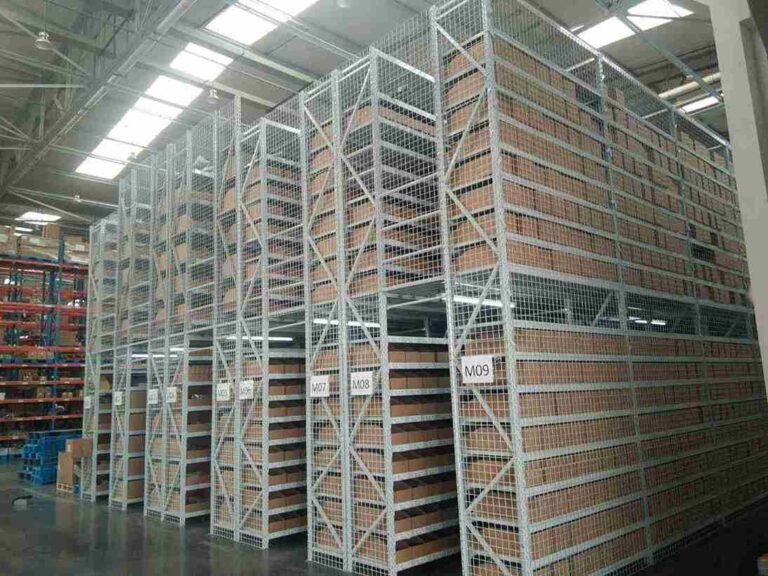
📐 "First 50 Enterprise Queries Get Custom 3D Warehouse Design" Plan
















Precision Engineered for Performance: The Definitive Guide to Custom Narrow Aisle Rack Layouts in Demanding Environments
Executive Overview:
For logistics directors and operations managers overseeing cold storage or multi-level warehouse facilities, achieving peak efficiency is a complex equation of space, speed, and temperature control. This exhaustive resource delves into the strategic superiority of a custom narrow aisle rack layout. This is not a generic shelving solution but a meticulously engineered storage architecture, designed from first principles to maximize cubic utilization, streamline material flow, and deliver quantifiable return on investment.
By exploring the nuanced interplay between structural engineering, climatic challenges, automation software, and workflow dynamics, this guide establishes why a truly custom narrow aisle rack layout is the cornerstone of a modern, high-velocity logistics operation in competitive global markets.
(Introduction: The Imperative for Bespoke Storage Strategy)
The global supply chain’s pressure points—skyrocketing real estate costs, demanding service-level agreements, and stringent energy regulations—converge most acutely within the four walls of a warehouse. In sectors like cold storage, where operational margins are perpetually thin, or in urban multi-level facilities where expansion is geographically impossible, conventional storage approaches are obsolete.
The decision to implement a custom narrow aisle rack layout represents a fundamental shift from passive storage to active, intelligent inventory management. It is a capital investment in process density. For companies operating in the growth corridors of Southeast Asia, the export hubs of the Middle East, or the sprawling production centers of Latin America, embracing this tailored approach is not merely an upgrade; it is a critical step in securing a durable competitive advantage. This guide articulates the philosophy, engineering, and execution that transform this concept into a tangible asset.
Chapter 1: Deconstructing the Anatomy of a High-Performance Custom Narrow Aisle Rack Layout
The efficacy of any storage system lies in the harmony of its components. A high-performance custom narrow aisle rack layout is a symphony of precision, where every element is specified to perform under unique operational stresses.
The Structural Backbone: More Than Just Uprights and Beams
At the heart of the system lies the rack structure itself. Unlike off-the-shelf solutions, a custom narrow aisle rack layout begins with a forensic analysis of load profiles and dynamic forces. Engineers specify cold-rolled, high-yield-strength steel for upright frames, often moving beyond standard “C” or “H” column profiles to customized tubular or box-section designs for superior torsional rigidity in tall, seismic-prone regions.
Beam connections utilize patented, positive-locking mechanisms that engage securely without relying solely on friction, a critical safety feature in environments subject to vibration from automation or seismic activity. The design of a custom narrow aisle rack layout meticulously calculates load capacities not just for static weight, but for the dynamic forces exerted during high-speed insertions and retrievals by automated guided vehicles (AGVs) or narrow aisle forklifts.
The Critical Interface: Floor Flatness and System Integrity
Perhaps the most underestimated component is the warehouse floor. A precision custom narrow aisle rack layout is entirely dependent on a floor meeting exacting flatness tolerances. Specifications such as FF (Floor Flatness) 50 / FL (Floor Levelness) 50 are often the minimum requirement. In a custom narrow aisle rack layout designed for autonomous vehicle operation, even a minor deviation can cause sensor misalignment, wheel chatter, and load instability. Consequently, the design process includes a comprehensive floor survey using digital laser scanners. The findings dictate whether professional diamond grinding or a self-leveling topping slab is required as a prerequisite for installation—a step generic suppliers frequently overlook, leading to premature equipment wear and safety hazards.
Optimization Metrics: The Triad of Density, Accessibility, and Velocity
Designing a custom narrow aisle rack layout is an exercise in balancing three competing priorities. The primary driver is Storage Density—maximizing the number of pallet positions within a fixed airspace. The second is Accessibility—ensuring every single SKU can be reached without complex shuffling or creating dead slots, a phenomenon known as honeycombing. The third, and most financially significant, is Operational Velocity—the speed at which goods flow through the system.
A brilliant custom narrow aisle rack layout optimizes all three. Using advanced warehouse simulation software, designers model thousands of order-picking scenarios based on the client’s specific SKU velocity (ABC analysis), turnover rates, and seasonality. The resulting custom narrow aisle rack layout for a facility storing slow-moving, seasonally imported frozen meat will differ radically from one designed for fast-moving chilled beverages, even if the building dimensions are identical.
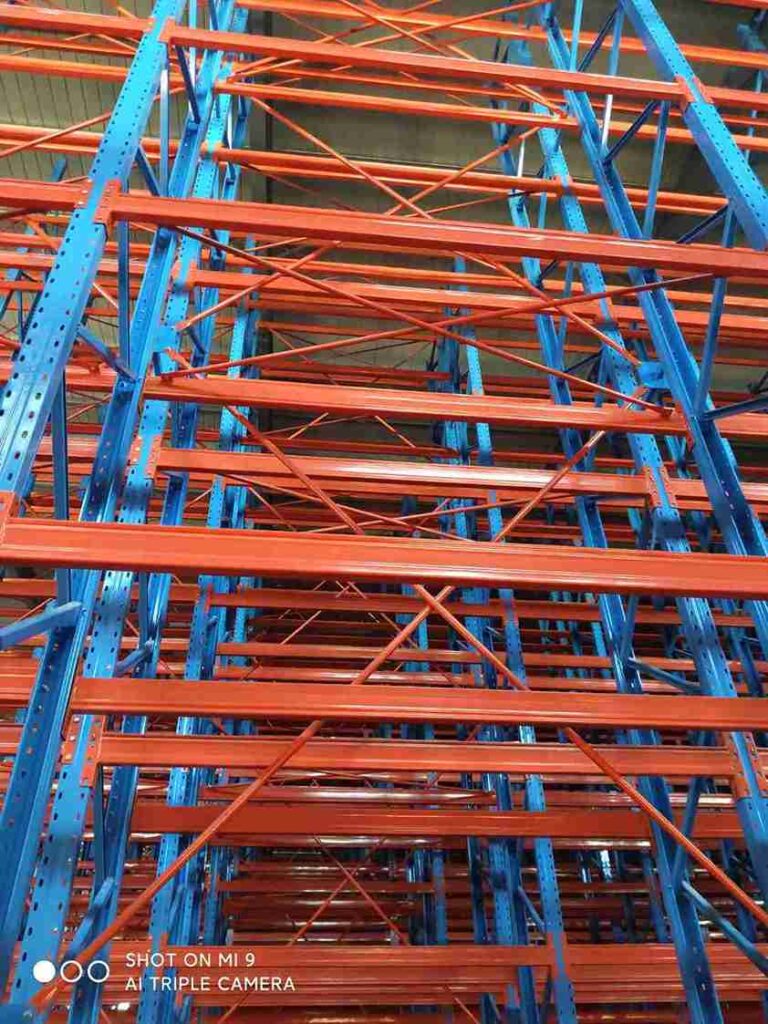
Chapter 2: Mastering Sub-Zero Logistics: The Custom Narrow Aisle Rack Layout for Cold Storage Dominance
In cold storage and blast freezer applications, a custom narrow aisle rack layout transitions from a productivity tool to an essential asset for profitability. The intense energy costs and harsh operating conditions demand a system engineered for material resilience and thermal efficiency.
Engineering for Extremes: Materials and Metallurgy
Standard mild steel becomes perilously brittle at temperatures below -20°C. A custom narrow aisle rack layout destined for a freezer must be fabricated from specially formulated low-temperature-grade steels. These alloys undergo rigorous Charpy V-Notch impact testing to certify their ductility and fracture resistance at the facility’s operational minimum temperature. Furthermore, every bolt, lock, and safety clip is specified from alloys that resist embrittlement. The finishing process is equally critical. A custom narrow aisle rack layout for cold storage employs multi-stage, epoxy-based powder coatings engineered for extreme thermal cycling. These flexible coatings prevent micro-cracking, which would expose raw steel to corrosive condensation and ultimately lead to structural compromise.
The Thermodynamic Advantage of a Tailored Layout
Energy conservation is the paramount financial metric in cold storage. A expertly conceived custom narrow aisle rack layout directly attacks energy waste. First, by calculating the absolute minimum safe aisle width for the chosen handling equipment, the design reduces the volume of conditioned air trapped in the working aisle. This smaller air mass is cheaper to cool and loses less energy during door openings. Second, a custom narrow aisle rack layout prioritizes vertical storage, pushing storage heights to the safe maximum allowed by sprinkler clearances and air circulation patterns.
This “building up, not out” philosophy reduces the overall surface area of the building envelope, directly minimizing heat ingress. Third, when integrated with a Warehouse Execution System (WES), a custom narrow aisle rack layout enables “batch sequencing.” The system can coordinate multiple retrieval tasks into a single, consolidated trip for an automated forklift, minimizing the frequency and duration of door openings and allowing refrigeration systems to operate in longer, more efficient cycles.
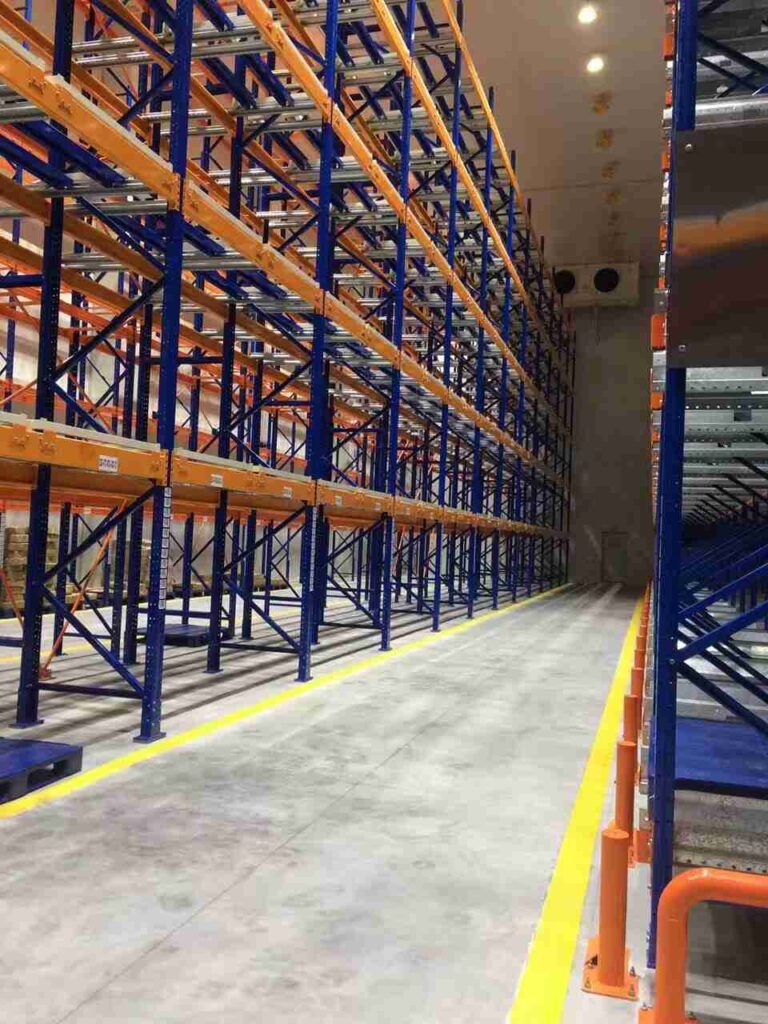
Chapter 3: Vertical Ambition: Executing a Custom Narrow Aisle Rack Layout in Multi-Level Facilities
Urban logistics centers frequently occupy multi-story buildings, presenting a unique puzzle of structural limits and vertical material flow. A successful custom narrow aisle rack layout in this context must be a fully integrated component of the building’s circulatory system.
Structural Symbiosis: Aligning Storage with Building Load Paths
The first rule of a multi-level custom narrow aisle rack layout is to respect the existing structure. The process begins with a collaborative structural audit involving licensed civil engineers. They analyze original blueprints and conduct on-site core tests to determine the slab’s composition, thickness, and reinforcing. The design team then calculates point loads (from rack uprights) and uniform loads, ensuring they align with the building’s load-bearing columns and walls.
In regions with seismic activity, the custom narrow aisle rack layout incorporates specialized seismic bracing and base plates engineered to absorb and dissipate lateral energy, protecting both the inventory and the building’s integrity. The outcome is a custom narrow aisle rack layout that works in harmony with the facility, often requiring strategic slab reinforcement or the use of load-spreading pedestals, all identified and planned for in the design phase.
Orchestrating Vertical Flow: Beyond the Aisle
In a multi-story facility, the elevator or vertical conveyor lift is not an isolated machine; it is the critical vertical extension of the aisle. A holistic custom narrow aisle rack layout designs the entire vertical workflow. This includes designated buffer zones and staging areas on each floor, adjacent to lift interfaces, managed by automated conveyor sortation systems to prevent queues from blocking main aisles. The warehouse software acts as the central nervous system, synchronizing the dispatch of autonomous forklifts from the custom narrow aisle rack layout with the elevator’s call schedule.
This ensures a pallet arriving at the lift finds the carriage ready, eliminating idle waiting—a major hidden source of inefficiency. For mission-critical operations, the custom narrow aisle rack layout may even incorporate redundant vertical transport pathways, ensuring operations continue uninterrupted during maintenance.
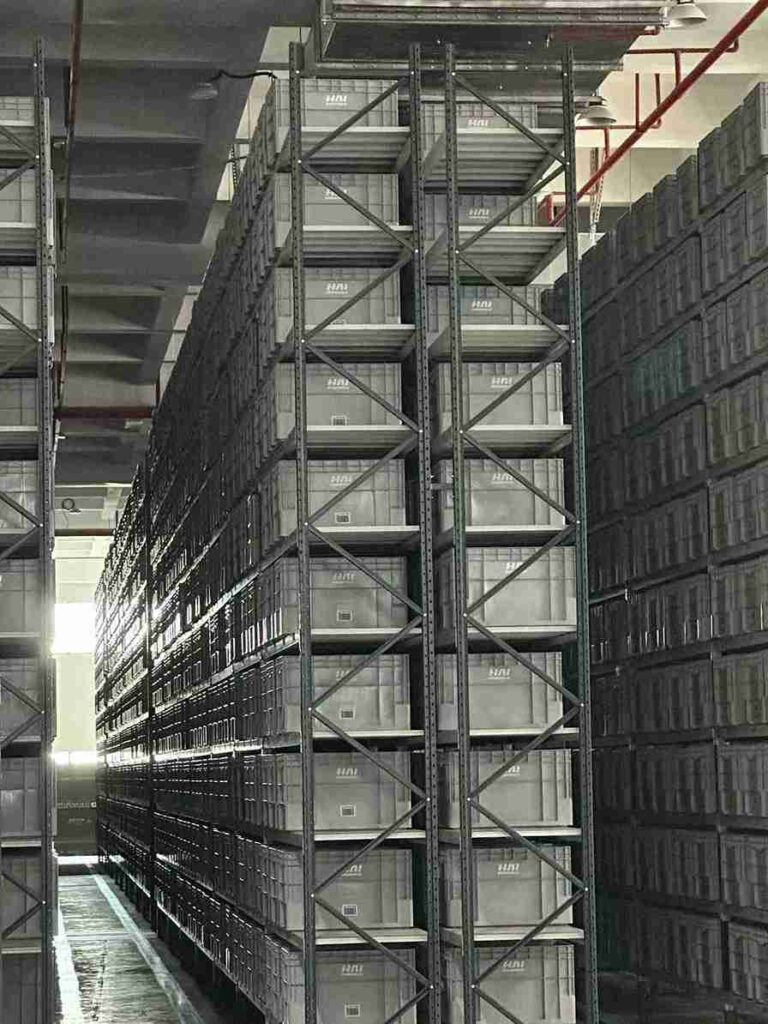
Chapter 4: The Intelligence Layer: Integrating Automation with Your Custom Narrow Aisle Rack Layout
A sophisticated custom narrow aisle rack layout provides the stage; intelligent automation provides the performers. The integration must be co-engineered, not retrofitted.
Navigational Synergy: From Wire Guidance to AI Pathfinding
The choice of navigation technology directly influences the flexibility of the custom narrow aisle rack layout. Traditional wire-guided vehicles are cost-effective for ultra-stable, permanent layouts. However, a forward-looking custom narrow aisle rack layout increasingly leverages free-navigation AGVs and autonomous forklifts. These units use LiDAR, vision cameras, and simultaneous localization and mapping (SLAM) algorithms to navigate. This allows the custom narrow aisle rack layout to be more dynamic; aisles can be temporarily reconfigured, and vehicles can dynamically re-route around obstacles or congestion, a level of flexibility essential in multi-tenant or high-variability facilities.
System Interconnectivity: The Digital Thread
The true power of a custom narrow aisle rack layout is unlocked by its digital integration. The layout is digitally twin in the Warehouse Management System (WMS). Each storage location is a discrete address. When the WMS dispatches a pick order, the instruction flows to the Fleet Management System (FMS), which assigns the task to the optimal vehicle. That vehicle, operating within the precise dimensional confines of the custom narrow aisle rack layout, navigates to the exact pick-face, confirms its location via integrated RFID or barcode scanning, and executes the task. This closed-loop data exchange, from business system to physical movement within the custom narrow aisle rack layout, ensures 99.99%+ inventory accuracy and provides real-time visibility impossible with manual systems.
Chapter 5: The Blueprint for Success: The Phased Methodology of Designing a Custom Narrow Aisle Rack Layout
The journey to an operational custom narrow aisle rack layout is a disciplined, phase-gated process that de-risks the project and guarantees the outcome aligns with business objectives.
Phase 1: Discovery and Digital Twinning
This phase is foundational. It extends far beyond taking measurements. Specialists conduct a deep-dive operational audit, analyzing historical SKU data, order profiles, peak season forecasts, and growth projections. Concurrently, a technical team performs a laser scan of the entire facility, creating a millimeter-accurate 3D point cloud. This digital twin captures every structural column, conduit, sprinkler head, floor drain, and ceiling obstruction. This rich dataset becomes the immutable canvas upon which the custom narrow aisle rack layout is designed, eliminating costly guesswork and field modifications.
Phase 2: Iterative Design and Simulation-Based Validation
Using the digital twin and operational data, engineers generate multiple conceptual models for the custom narrow aisle rack layout. These are not just static CAD drawings. Each concept is subjected to discrete-event simulation. Software models a typical operational day, simulating the movement of virtual forklifts and AGVs, processing thousands of theoretical orders. Stakeholders can visually assess traffic flow, identify potential choke points at intersections or lift interfaces, and receive hard data on projected throughput, travel times, and equipment utilization rates for each custom narrow aisle rack layout option. This allows for confident, data-driven selection before any manufacturing begins.
Chapter 6: The Investment Rationale: Calculating the Full ROI of a Custom Narrow Aisle Rack Layout
Justifying the capital outlay for a comprehensive custom narrow aisle rack layout and automation system requires a holistic financial model that captures both hard and soft benefits.
Quantifying the Tangible and Intangible Returns
A robust financial analysis for a custom narrow aisle rack layout project typically accounts for:
Real Estate Avoidance: The most significant saving often comes from deferring or eliminating the need for a new building. The cost per square meter of industrial land and construction is quantified and offset against the density gains of the custom narrow aisle rack layout.
Labor Productivity & Safety: Automated systems within a custom narrow aisle rack layout can triple pallet moves per operator shift. Reduced physical strain in cold environments lowers turnover and associated recruitment/training costs. The safety benefit of removing manual drivers from narrow aisles is a major liability reduction.
Energy Efficiency (Cold Storage): As previously detailed, a thermally optimized custom narrow aisle rack layout can reduce energy consumption by 25% or more. This is modeled as a recurring annual cash flow saving.
Inventory Integrity: Precision handling and perfect slot alignment in a custom narrow aisle rack layout reduce product damage by over 90%. The system also delivers near-perfect inventory accuracy, eliminating stock-outs and shrinkage.
Throughput Enablement: The increased velocity enabled by the custom narrow aisle rack layout allows the business to handle higher volumes or meet tighter delivery windows, directly supporting revenue growth.
Chapter 7: Flawless Execution: The Installation and Commissioning of a Custom Narrow Aisle Rack Layout
A perfect design is only realized through impeccable execution. The installation of a complex custom narrow aisle rack layout, especially in a live operational environment, is a feat of military-grade project management.
Phased Roll-Out: Maintaining Business Continuity
For facilities that cannot shut down, the installation of a new custom narrow aisle rack layout is executed in carefully sequenced phases. A common strategy is the “decant and rebuild” approach. A new section of the high-density custom narrow aisle rack layout is built in a cleared area. Inventory is systematically migrated into this new zone. Once empty, the old storage area is demolished, and the second phase of the custom narrow aisle rack layout is constructed. This dance is choreographed with detailed logistics plans to ensure daily operations continue seamlessly.
Commissioning: The Proof of Performance
Commissioning is the rigorous final validation. It involves load-testing the racking to 110% of design capacity, running the automation fleet through every programmed task and emergency stop scenario, and executing a full-scale mock operational cycle with the client’s team. The performance data from this shake-down is compared directly against the original simulation models for the custom narrow aisle rack layout, ensuring the physical system delivers on its digital promise.
Chapter 8: Sustained Excellence: The Lifecycle Management of a Custom Narrow Aisle Rack Layout
The partnership extends beyond go-live. A custom narrow aisle rack layout is a long-term asset, and its performance must be sustained through proactive care and strategic adaptation.
Predictive Maintenance and Structural Integrity Programs
A formal maintenance regimen is established. For the automation, this is increasingly predictive, using telemetry from vehicles to anticipate bearing failures or battery degradation. For the custom narrow aisle rack layout itself, scheduled inspections using Rack Damage Assessment tools are mandatory. Any impact, however minor, is documented and repaired immediately to maintain the system’s structural integrity and safety certification.
Future-Proofing through Adaptive Design
A visionary custom narrow aisle rack layout is designed with adaptability in mind. This includes using modular components that can be reconfigured, specifying floor anchors that allow for future re-spacing, and employing an open-architecture WES that can integrate next-generation robotics. The initial design may even “over-specify” certain elements, like floor loading capacity in zones, to accommodate unforeseen future needs, protecting the client’s long-term investment.
Conclusion: The Strategic Imperative of a Bespoke Storage Architecture
In the relentless pursuit of logistics excellence, particularly within the punishing confines of cold storage and the complex verticality of multi-level facilities, standardized solutions are a liability. A custom narrow aisle rack layout represents the antithesis of compromise. It is the deliberate, analytical, and creative application of engineering principles to the unique DNA of an operation—its inventory, its building, its market demands, and its growth ambitions. This guide has articulated that such a layout is not a commodity purchase but a capital-intensive strategic initiative.
The return, however, is transformative: a hardened, agile, and supremely efficient storage infrastructure that drives down operational cost, unlocks latent capacity, accelerates throughput, and provides a formidable competitive edge. For leaders across Southeast Asia, the Middle East, Africa, and Latin America looking to dominate their sector, the investment in a genuinely custom narrow aisle rack layout is the definitive pathway to building a logistics operation that is not just efficient, but intelligently resilient.
Frequently Asked Questions (FAQs)
Q1: How does the design process for a custom narrow aisle rack layout account for future changes in our pallet sizes or product dimensions?
A: A professionally designed custom narrow aisle rack layout incorporates inherent flexibility. The process begins by analyzing not just current, but anticipated future SKU profiles. The layout is often engineered using adjustable beam levels and may employ pallet support bars that can be reconfigured. Furthermore, the simulation modeling includes “what-if” scenarios for different pallet footprints. The key is designing the custom narrow aisle rack layout with a modular philosophy, allowing certain aisles or sections to be re-spaced or re-configured with minimal disruption, ensuring the system evolves with your business.
Q2: What are the specific safety protocols and certifications required for the installation team working on a custom narrow aisle rack layout in a live, operational cold storage facility?
A: Safety is paramount. Installation teams for a custom narrow aisle rack layout in cold storage must undergo specialized低温作业培训 (low-temperature work training). This includes protocols for working in layers of PPE, managing tools in sub-zero conditions to prevent metal-on-metal sparks, and understanding the signs of cold stress. Teams are certified in fall protection for high-bay work and follow strict lock-out/tag-out (LOTO) procedures when working near operational refrigeration or automation systems. All equipment used is rated for cold-temperature operation.
Q3: Can a custom narrow aisle rack layout be designed to work seamlessly with both our existing fleet of manual narrow aisle forklifts and new AGVs during a transitional phase?
A: Absolutely. This hybrid approach is common. The custom narrow aisle rack layout is designed to the most critical dimensions, typically the tighter tolerances required by AGVs. The aisle width, floor flatness, and pick-face alignment are established to AGV standards. Manual forklifts, with their operator’s ability to make minor adjustments, can easily operate within the same custom narrow aisle rack layout. The WES can be configured to dispatch tasks to both manual and automated resources, allowing for a smooth, phased transition to full automation without operational downtime.
Q4: For a multi-level facility with varying ceiling heights on different floors, how is a unified custom narrow aisle rack layout designed to maximize space on each level?
A: This is a classic challenge where customization is key. A unified custom narrow aisle rack layout in such a facility is not “one-size-fits-all.” The design will feature a consistent aisle width and modular component system across floors for operational simplicity. However, the vertical storage height on each floor is independently optimized. On a floor with 12-meter clear height, the custom narrow aisle rack layout may be 10 levels high. On a floor with 7-meter clearance, it may be 5 levels. The system is designed as a cohesive whole, but the vertical dimension of the custom narrow aisle rack layout is tailored per floor, ensuring maximum cube utilization everywhere.
Q5: What ongoing data and performance analytics should we expect to receive from our operational custom narrow aisle rack layout with integrated automation?
A: A mature system delivers rich, actionable business intelligence. Beyond basic metrics like pallets moved per hour, you should receive analytics on: Storage Utilization Heatmaps (showing real-time density across the custom narrow aisle rack layout), Vehicle Fleet Performance (uptime, travel distance, energy consumption per task), Task Cycle Time Analysis (identifying bottlenecks in the custom narrow aisle rack layout), and Predictive Health Dashboards for both racking and automation. This data feed allows for continuous tuning of the custom narrow aisle rack layout workflows and provides a clear basis for future capacity planning.
If you require perfect CAD drawings and quotes for warehouse racking, please contact us. We can provide you with free warehouse racking planning and design services and quotes. Our email address is: jili@geelyracks.com