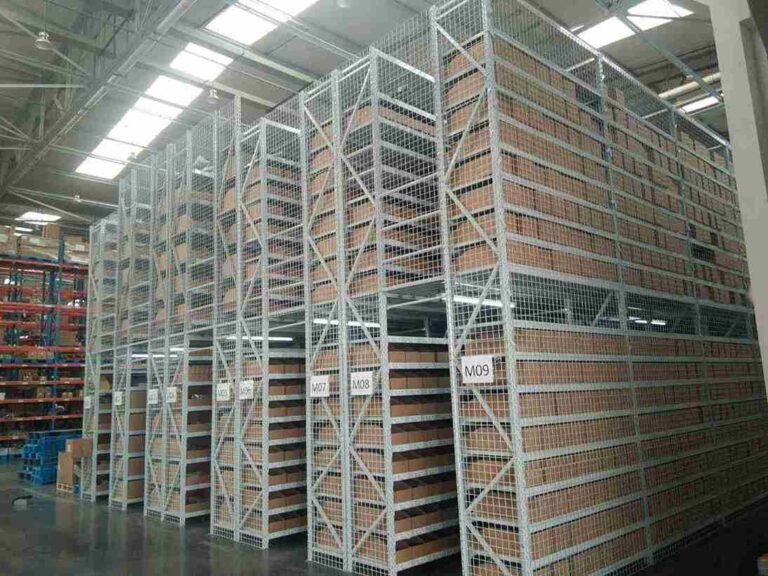
📐 "First 50 Enterprise Queries Get Custom 3D Warehouse Design" Plan















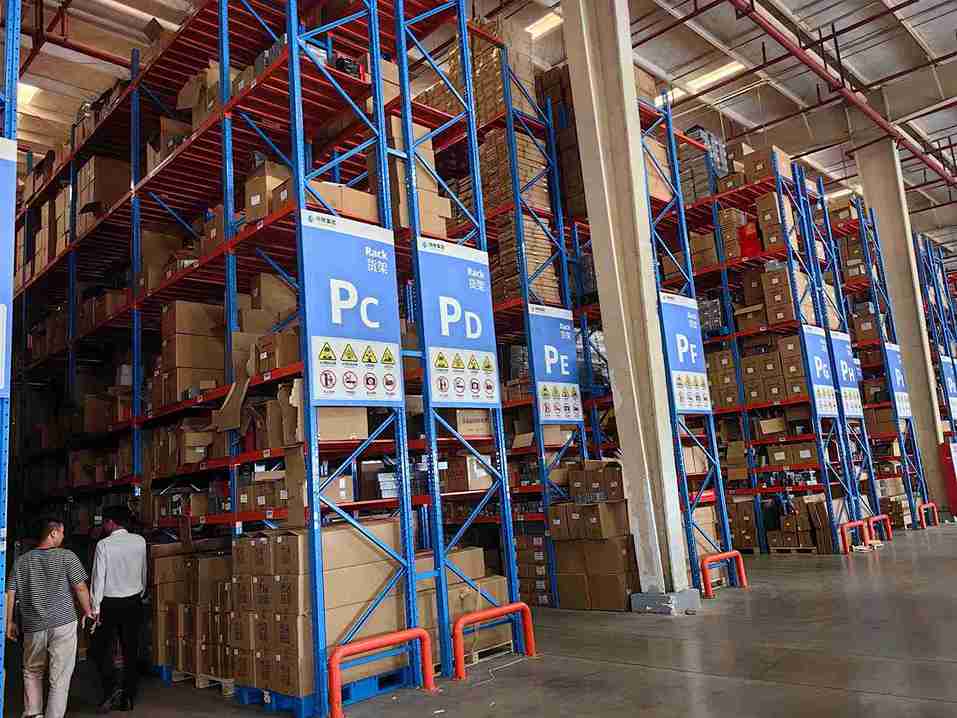
The Unassailable Logic of High-Density Storage: A Masterclass in Strategic Warehouse Transformation
For logistics directors, operations managers, and business owners navigating the explosive growth markets of Southeast Asia, the Middle East, Africa, and Latin America, the challenge is unequivocal: achieve more within the confines of existing assets. The pressure to enhance throughput, slash operational expenditure, and adapt to volatile demand cycles is relentless. Central to conquering this challenge is a fundamental reevaluation of storage infrastructure. This definitive exploration delves beyond superficial features to articulate the profound, multi-layered strategic advantage conferred by a meticulously executed narrow aisle rack investment.
The core benefits of this approach—systematically doubling storage density and slashing a comprehensive range of operational costs—are not mere claims but predictable, quantifiable outcomes of superior engineering and intelligent design. This analysis provides the comprehensive framework for understanding how such an investment transforms warehouse operations from a static cost center into a dynamic, profit-generating engine, delivering an unparalleled Return on Investment (ROI) that resonates across balance sheets and operational KPIs alike.
The Foundational Imperative: Storage Density as a Non-Negotiable Strategic Asset
In global logistics, the cost of space—whether purchased, leased, or constructed—represents a dominant, fixed overhead. Traditional wide-aisle pallet racking, the industry standard for decades, is now recognized as a paradigm of ingrained inefficiency. It routinely dedicates 40-50% of a facility’s precious floor space to access corridors, a design dictated by the turning radius of counterbalance forklifts. This model is financially unsustainable in modern, cost-competitive landscapes. The strategic pivot to high-density storage is, therefore, an operational and financial imperative, not a luxury.
The narrow aisle rack stands as the foundational pillar of this pivot. It directly attacks the core inefficiency by radically re-engineering the aisle-to-storage ratio. The underlying principle is powerfully simple: by minimizing the space allocated for equipment travel, the proportion of floor area dedicated purely to storage is maximized. This is the critical first step in unlocking the primary benefits of a narrow aisle rack investment: the dramatic escalation of asset utilization and the powerful deferral or elimination of capital-intensive expansion projects.
Deconstructing the Capacity Miracle: The Engineering Precision Behind Doubling Storage
The assertion that a narrow aisle rack investment can effectively double storage capacity is a statement of geometric and operational fact, not hyperbole. The mechanism is rooted in precise calculation and equipment synergy.
The Aisle Width Arithmetic: A Transformation in Feet and Meters
Consider a standard warehouse block. A traditional reach truck or counterbalance forklift necessitates an aisle width of approximately 3.5 to 4.2 meters for safe load manipulation. A narrow aisle system, leveraging specialized man-down turret trucks or articulated forklifts, reduces this requirement to a corridor of 1.6 to 2.0 meters. This net reduction of 1.5 to 2.5 meters of non-productive space per aisle is instantly converted into productive storage lanes.
A Quantifiable Model for Capacity Planning
Visualize a warehouse area 60 meters in length. Accommodating traditional 4-meter aisles allows for approximately 15 aisles. Re-engineering this layout with a narrow aisle rack configuration using 1.8-meter aisles enables the fitting of roughly 28 aisles in the same linear space—an increase of over 85% in aisle count alone. When this horizontal gain is compounded by the vertical potential of narrow aisle trucks, which are engineered for stable, high-reach operation (often up to 15 meters or more), the capacity enhancement becomes multiplicative.
The outcome is more storage lanes and additional storage tiers within each lane. Empirical data from hundreds of global implementations consistently confirms a 70% to 120% increase in pallet positions within the original building envelope. This tangible gain is the most immediately visible of all narrow aisle rack investment benefits, providing a direct and measurable solution to inventory congestion.
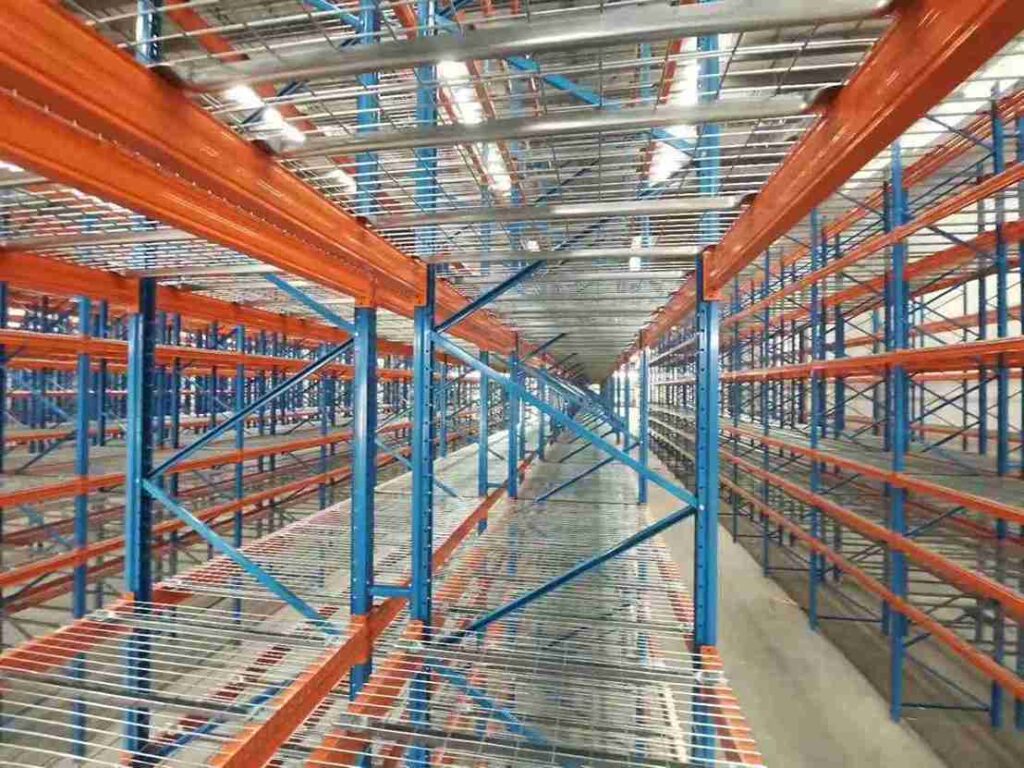
Beyond Pallet Counts: The Holistic, System-Wide Cost Reduction Engine
While the capacity augmentation is transformative, the true strategic depth of a narrow aisle rack investment is revealed in its systemic impact on operational expenditures. It engineers efficiency into every facet of warehouse activity, delivering benefits that permeate the P&L statement.
1. Labor and Equipment Productivity: A Leap in Efficiency
The specialized equipment integral to a narrow aisle system—such as turret trucks, swing-mast trucks, or wire-guided vehicles—is designed for precision and speed in confined spaces. These machines offer superior travel and lift velocities compared to their conventional counterparts. Operators experience a significant reduction in non-productive travel time between picks, leading to a higher number of completed cycles per shift. Industry benchmarks indicate productivity uplifts of 15% to 35%.
Furthermore, these electric-powered vehicles exhibit substantially lower energy consumption per pallet moved and reduced maintenance requirements compared to internal combustion engine forklifts, translating into direct savings on utilities and repair overheads—a key component of the ongoing benefits of this investment.
2. The Substantial Dividend from Reduced Energy Consumption
The consolidation of storage into a denser footprint creates a consequential benefit: a reduction in the cubic volume of space requiring climate control and illumination. By effectively eliminating the need to heat, cool, or brightly light vast, empty aisles, facilities can realize a 20% to 35% reduction in annual energy costs. In regions with high commercial electricity rates or in temperature-controlled environments (e.g., for pharmaceuticals or certain foods), this aspect of the narrow aisle rack investment benefits the operational budget year after year, contributing significantly to the lifetime ROI.
3. Enhanced Inventory Integrity and Damage Elimination
A properly implemented narrow aisle racking system enforces superior organization and control. The defined, accessible locations, often managed by a Warehouse Management System (WMS), drastically reduce mis-picks and lost inventory. The inherent stability of a high-quality rack structure, combined with the precise handling of the dedicated trucks, minimizes product damage from collisions and improper placement. This reduction in shrinkage and claim-related costs is a direct, though often underappreciated, benefit that protects revenue and enhances customer satisfaction, further amplifying the value of the investment.
4. Inherent Scalability and Future-Proofing
A well-designed narrow aisle system is inherently modular and scalable. Growth is accommodated by extending the racking layout within the existing footprint or increasing lift heights, delaying the need for expensive new construction. This strategic flexibility provides a long-term benefit, safeguarding the investment against obsolescence and making it a cornerstone for future automation.
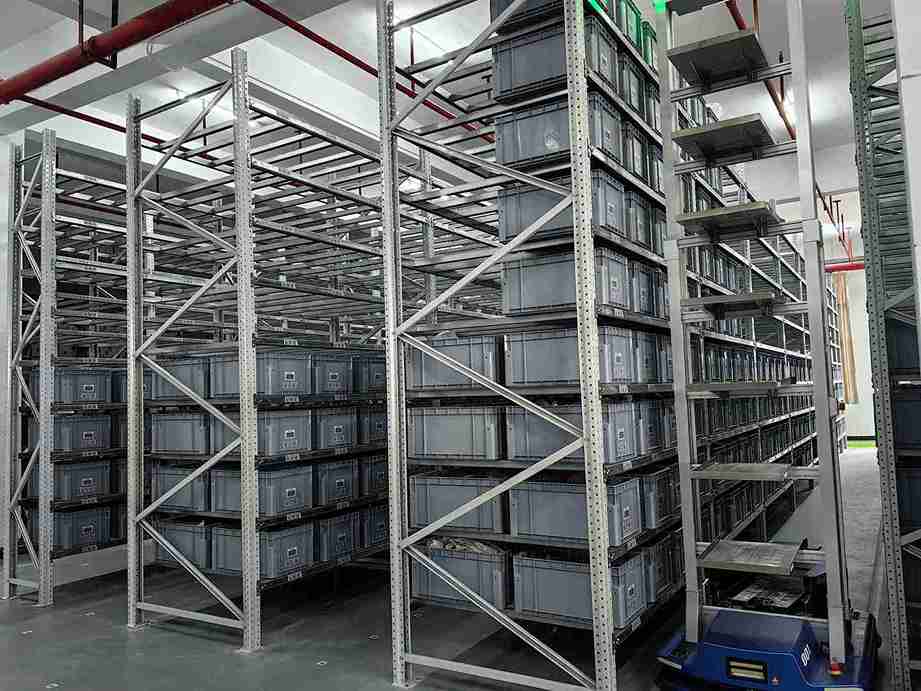
The Critical Path to Success: System Integration as the Differentiator
The full spectrum of narrow aisle rack investment benefits is only accessible through flawless, holistic integration. This is where expert consultancy separates a transformational success from a suboptimal purchase.
The Triad of Performance: Rack, Truck, and Floor
The system operates as a single, interdependent unit. The rack must be manufactured to exacting tolerances, with high-strength steel and secure locking mechanisms. The forklift must be meticulously specified to match the exact aisle clearance, lift height, load capacity, and operational workflow. The warehouse floor must be laser-leveled to a tolerance often exceeding ±3mm over 10 meters to ensure the safe, high-speed operation of high-mast equipment. A failure in any single component compromises safety, performance, and the overall return on investment.
Seamless Integration with Automation and Data Systems
A narrow aisle rack investment creates the ideal physical infrastructure for technological integration. It is the critical first step toward semi-automated or fully automated storage (AS/RS). Even at a basic level, integrating barcode/RFID scanning and real-time WMS direction into the forklift’s workflow maximizes throughput and accuracy. Planning for this digital layer from the outset ensures the physical investment is future-ready, protecting and extending its value over time.
Financial Modeling with Precision: Calculating Your Custom ROI
Transitioning from concept to conviction requires rigorous financial modeling. A genuine appraisal of narrow aisle rack investment benefits demands a detailed, site-specific analysis.
Step 1: Quantifying the Tangible Capacity Gain
Audit existing usable capacity (total pallet positions).
Using advanced CAD or simulation software, model the new narrow aisle layout within the current footprint.
Calculate the new pallet position count to determine the net gain.
Step 2: Attributing Monetary Value to the Gained Capacity
Avoided Expansion Cost: Calculate the cost per square meter of new construction or external leasing. The gained capacity defers or eliminates this capital outlay.
Revenue Enablement Value: Can the new space allow for holding more SKUs, reducing stockouts, or fulfilling more orders? Assign a conservative monetary value to this capability.
Step 3: Cataloguing Annual Operational Savings
Labor Savings: (Estimated productivity increase %) x (Annual operator labor cost).
Equipment Savings: Difference in annual energy and maintenance costs between new electric narrow aisle trucks and existing ICE fleet.
Utility Savings: Estimated reduction in kWh consumption for lighting and HVAC.
Damage & Shrinkage Reduction: Apply a conservative reduction percentage to historical loss averages.
Step 4: The Definitive ROI Calculation
Net Project Investment / (Total Annual Operational Savings + Annualized Value of Capacity Gain) = Payback Period (Years).
A professionally executed narrow aisle rack investment in a medium-to-large facility typically demonstrates a compelling payback period of 18 to 36 months. Every operational cycle thereafter represents pure financial benefit, solidifying the long-term wisdom of the investment.
Navigating Implementation: A Phased, Zero-Disruption Methodology
Realizing the full suite of narrow aisle rack investment benefits requires a managed transition that prioritizes business continuity. A proven, phased methodology is essential.
Comprehensive Audit & 3D Simulation: A full site survey informs the creation of a digital twin, allowing stakeholders to virtually validate the design and workflow.
Staged Installation & Migration: The installation and inventory transfer are sequenced to maintain operational capability in a designated zone throughout the project.
Certified Operator Training & SOP Development: Comprehensive training ensures safe, efficient equipment use, while new standard operating procedures embed the new workflow.
Go-Live Support & Long-Term Partnership: On-site support during the operational cut-over and offered maintenance agreements ensure sustained performance, protecting the investment.
Global Application with Local Intelligence: From Bangkok to Bogotá
The engineering principles are universal, but successful application demands local adaptation. The benefits of a narrow aisle rack investment must be realized within specific regional contexts. In the humid, coastal climates of Southeast Asia, specifications call for high-grade, corrosion-resistant paint finishes. For the dusty environments prevalent in parts of the Middle East and Africa, equipment recommendations include enhanced filtration systems and sealed components.
In cost-conscious, high-growth markets across Latin America, phased implementation plans align the investment with cash flow projections. This localized expertise is critical to maximizing the benefits and ensuring the narrow aisle rack investment delivers optimal performance wherever it is deployed.
The Strategic Comparison: Navigating the High-Density Solution Spectrum
A narrow aisle rack investment occupies a strategic sweet spot in the density-versus-selectivity matrix. A comparative analysis clarifies its optimal application:
vs. Drive-In/Drive-Through Rack: Narrow aisle offers 100% selectivity (direct access to every pallet) versus the LIFO or FIFO limitations of drive-in systems. This is a critical benefit for operations requiring fast turnover of many SKUs.
vs. Push-Back Rack: While push-back offers good density and selectivity within a lane, it typically has lower overall density than a narrow aisle system and can involve higher per-position costs. The narrow aisle rack investment often provides better density and is more adaptable to varying pallet sizes.
vs. Mobile Pallet Racking: Mobile racking offers the highest possible density but at a significantly higher capital cost, with slower retrieval times and more mechanical complexity. The narrow aisle rack investment presents a superior balance of density, speed, accessibility, and cost, delivering a more favorable ROI for the majority of dynamic warehouse operations.
The Invisible Guardian: Safety and Ergonomics as Core Benefits
A significant, yet sometimes overlooked, dimension of the narrow aisle rack investment benefits portfolio is the enhancement of warehouse safety and operator ergonomics. The dedicated, purpose-built equipment features enhanced stability systems, multiple cameras, and wire-guidance or rail-guidance technology that virtually eliminates rack collision risk.
The operator environment in a modern turret truck is ergonomically designed, climate-controlled, and quiet, reducing fatigue and improving focus. This leads to fewer accidents, lower insurance premiums, and a more stable, skilled workforce—intangible benefits that contribute profoundly to sustainable operational excellence and reinforce the holistic value of the investment.
Conclusion: The Definitive Step Toward Warehouse Modernization and Financial Performance
The evidence for undertaking a strategic narrow aisle rack investment is overwhelming and multidimensional. It represents a paradigm shift from viewing storage as a passive asset to leveraging it as an active driver of efficiency and profitability. The benefits are interconnected and compounding: a radical increase in storage capacity that defers capital expenditure; a systematic reduction in labor, energy, and maintenance costs; enhanced inventory accuracy and safety; and a future-proofed platform for technological integration.
For logistics leaders in the world’s most dynamic growth regions, where agility and cost control are paramount, this investment is not merely an equipment upgrade—it is a foundational business strategy. The comprehensive narrow aisle rack investment benefits deliver a predictable, accelerated, and sustained ROI, transforming the warehouse from a constraint into a formidable competitive advantage. The question is no longer if such an investment is justified, but how swiftly an organization can implement it to capture these decisive benefits and secure its position in an increasingly demanding market.
Frequently Asked Questions (FAQs)
Q1: How does a narrow aisle rack system specifically impact order picking efficiency and accuracy compared to traditional racking?
A narrow aisle rack investment directly optimizes the order picking process. The reduced travel distance between picks, combined with the high-visibility, organized layout, allows pickers to complete more cycles per hour. When integrated with a WMS and onboard terminals, the system can implement optimized pick paths (e.g., batch or zone picking) and provide visual/audio confirmation at the exact location, reducing errors to near zero. This dual benefit of speed and accuracy is a central component of the operational return on this investment.
Q2: What are the typical maintenance requirements and associated costs for the specialized narrow aisle forklifts?
The electric-powered narrow aisle trucks (turret trucks, etc.) generally have lower maintenance costs than ICE forklifts. There are no engines, transmissions, or complex exhaust systems. Maintenance primarily involves regular checks on batteries, tires, hydraulic systems, and electronic guidance components. A comprehensive service contract, often recommended as part of the investment, provides predictable annual costs and maximizes equipment uptime. This reliability and lower maintenance overhead is a key financial benefit contributing to the total ROI.
Q3: Can an existing warehouse with uneven flooring still implement a narrow aisle system effectively?
Floor flatness is critical for the safe and efficient operation of high-reach narrow aisle equipment. A prerequisite for the investment is a professional floor survey. In many cases, existing floors can be improved through grinding or leveling compounds to achieve the required tolerance (e.g., ±3mm over 3m). This site preparation cost must be factored into the initial investment but is non-negotiable for unlocking the full system benefits of stability, speed, and safety.
Q4: How does the ROI calculation account for potential increases in property tax or insurance due to a higher asset value in the warehouse?
A sophisticated financial model for a narrow aisle rack investment considers all cost variables. While property tax may see a marginal increase due to added fixed assets, this is almost always overwhelmingly offset by the operational savings and the avoided cost of expansion. Insurance premiums may remain stable or even decrease due to the enhanced safety features and reduced risk of product damage and rack collision inherent in a professionally installed system. A detailed proforma analysis will net all these factors out to reveal the true net financial benefit.
Q5: For a business with highly seasonal inventory fluctuations, is the high density of a narrow aisle system a liability if fast access to all SKUs is constantly needed?
Not at all. This is a primary strength of narrow aisle over other high-density options like drive-in racking. A narrow aisle system provides full selectivity—every single pallet is accessible at all times regardless of its position in the lane. This makes it ideal for seasonal operations where SKU profiles and accessibility requirements change throughout the year. The system’s flexibility to handle varying pallet types and provide direct access is a fundamental benefit that supports dynamic inventory strategies, ensuring the investment delivers value across all business cycles.
If you require perfect CAD drawings and quotes for warehouse racking, please contact us. We can provide you with free warehouse racking planning and design services and quotes. Our email address is: jili@geelyracks.com