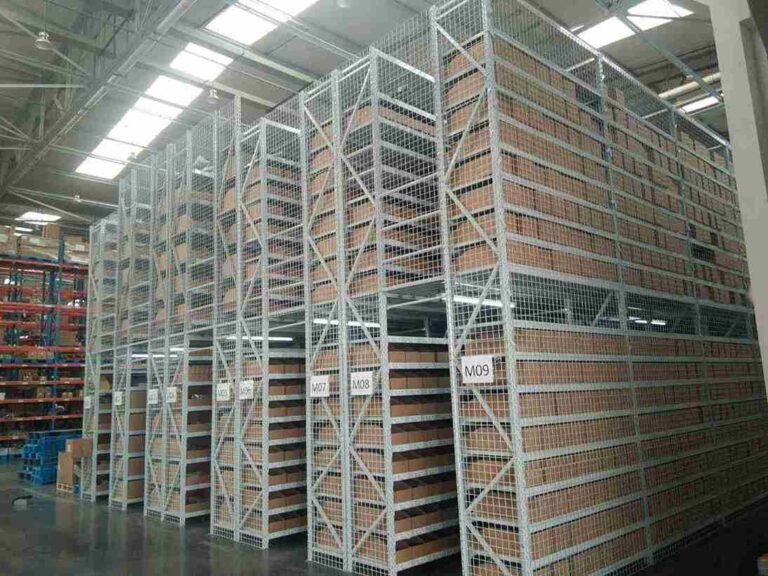
📐 "First 50 Enterprise Queries Get Custom 3D Warehouse Design" Plan
















Unlocking Hidden Capital: The Definitive Guide to Warehouse ROI with a Narrow Aisle Racking ROI Calculator
In the global logistics arena, where margins are perpetually under pressure and spatial efficiency translates directly into competitive advantage, the strategic implementation of narrow aisle racking systems stands as a transformative investment. For decision-makers across Southeast Asia, the Middle East, Africa, and Latin America, the central question transcends simple equipment procurement: What is the precise, quantifiable return on investment? This exhaustive guide delves into the multifaceted economics of high-density storage, introducing the indispensable role of a sophisticated narrow aisle racking ROI calculator.
This tool is not merely a digital gadget; it is the nexus between operational potential and financial certainty, designed to convert spatial constraints into a powerful engine for profitability.
The Foundational Principle: Spatial Efficiency as a Direct Revenue Stream
At its core, warehouse management is the science of volumetric optimization. Every cubic meter of unused air represents a sunk cost in rent, utilities, and taxes. Traditional wide-aisle layouts, necessitated by the turning radius of counterbalance forklifts, effectively mortgage up to 50% of a facility’s footprint to circulation space. A narrow aisle racking system, engineered for operation with specialized turret trucks or guided vehicles, collapses these aisles to widths between 1.6 and 2.0 meters.
The immediate effect is a dramatic increase in storage density—often between 30% and 50%. However, understanding the true financial implication of this density requires moving beyond a simple pallet-position count. This is where a dedicated narrow aisle racking ROI calculator proves its worth from the first inquiry. It contextualizes added capacity within the specific economic reality of the operator’s locale.
For a distribution center in Manila facing a 15% annual increase in industrial lease rates, the calculator quantifies the deferred capital expenditure of a physical expansion. For a manufacturing hub in Sharjah, it translates higher density into reduced per-pallet overhead costs. By inputting local square-meter rates, the ROI calculator provides a foundational savings figure that alone can justify the project, framing the system not as an expense but as a strategic asset that actively generates value by leveraging previously wasted volume.
Deconstructing the ROI Model: Beyond Simple Storage Metrics
A robust financial analysis of a narrow aisle racking installation must adopt a holistic Total Cost of Ownership (TCO) and Return on Investment (ROI) framework. A premier narrow aisle racking ROI calculator is architected to account for this complexity, modeling both direct and indirect financial drivers that impact the bottom line.
1. Capital Avoidance and Deferral:
The most potent savings often lie in costs not incurred. By maximizing a current facility’s capacity, companies can delay or eliminate the need for new construction or additional leased space. A high-fidelity narrow aisle racking ROI calculator factors in regional construction costs, land prices, and rental trajectories to model this avoided capital outlay, presenting it as a primary component of the system’s return.
2. Operational Productivity Gains:
The financial impact of a narrow aisle racking system on daily operations is profound. Specialized equipment like man-down turret trucks operates with greater speed and precision in confined spaces. Travel distances are reduced, lift speeds are optimized, and operator fatigue is minimized through ergonomic cabin design. A competent narrow aisle racking ROI calculator integrates industry-standard productivity benchmarks. It requires inputs on current pick/putaway cycles and labor costs, then projects the throughput increase—often 20-35%—and translates it into tangible labor cost savings or the ability to handle increased volume without proportional headcount growth.
3. Inventory Integrity and Damage Reduction:
Financial losses from product damage and picking errors silently erode profitability. Narrow aisle systems, particularly when integrated with a Warehouse Management System (WMS), enforce greater discipline and accuracy. The use of guided vehicles with automatic height positioning and fork cameras drastically reduces mishandling. An advanced narrow aisle racking ROI calculator will include a field for historical annual damage costs, applying a conservative reduction percentage to quantify these savings, which directly boost the calculated ROI.
4. Energy and Sustainability Impact:
A denser warehouse has a smaller environmental and utility footprint. Less floor space requires less lighting, heating, and cooling. Modern electric narrow aisle trucks are highly efficient, with regenerative braking systems. While often a secondary factor, the energy savings contribute to the operational cost reduction over the system’s lifespan, a variable that can be incorporated into a comprehensive narrow aisle racking ROI calculator for a complete financial picture.
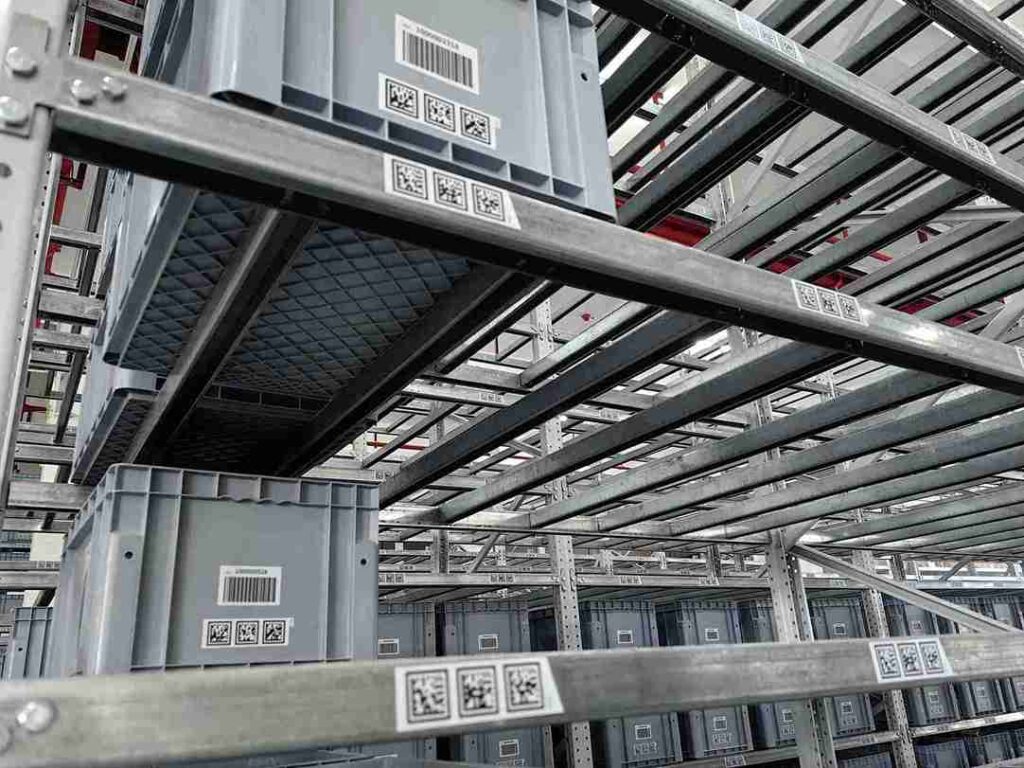
The Anatomy of a High-Precision ROI Calculation Tool
What separates a simplistic online estimator from a professional-grade narrow aisle racking ROI calculator is the depth of its algorithm and the relevance of its underlying data assumptions. A tool built on three decades of global project experience does not rely on generic multipliers; it uses a proprietary database of actual performance metrics from installations in markets from Vietnam to Colombia.
Critical Inputs for a Meaningful Output:
Facility Geometry: Clear height, overall footprint, and column spacing. Height is a critical multiplier for storage capacity in a narrow aisle racking configuration.
Inventory Profile: Pallet dimensions, weight, and SKU velocity (fast/slow mover mix). This determines whether selective, double-deep, or pallet flow racking within the narrow aisle framework is optimal.
Operational Rhythm: Number of shifts, current fleet type, and daily transaction volume. This data feeds the productivity and labor model within the narrow aisle racking ROI calculator.
Financial Parameters: Local cost per square meter for space, fully burdened hourly labor rate, and current average cost of product damage. These regionalize the calculation, ensuring relevance for a logistics manager in Jakarta or Durban.
Upon processing these inputs, the narrow aisle racking ROI calculator performs a dynamic simulation. It compares the current “base case” scenario against the proposed “narrow aisle” scenario across multiple financial dimensions: capital expenditure vs. avoidance, operational cost savings, productivity gains, and residual value. The output is not a single percentage, but a detailed breakdown showing payback period, net present value (NPV), and internal rate of return (IRR)—the language of CFOs and financial controllers.
Strategic Implementation: From Calculator Output to Operational Reality
The value of a narrow aisle racking ROI calculator is fully realized only when its projections are faithfully executed. Transitioning to a high-density storage environment demands meticulous planning. A seasoned provider uses the data from the ROI calculator as the blueprint for a phased implementation strategy designed to minimize disruption.
Phase 1: Validation and Design Refinement.
The results from the preliminary narrow aisle racking ROI calculator serve as the basis for a detailed, on-site audit. Engineers verify data inputs and use advanced simulation software to create a digital twin of the proposed operation, stress-testing traffic flows and peak periods. This step refines the financial model, turning the calculator’s estimate into a firm projection.
Phase 2: Phased Installation and Integration.
A full warehouse shutdown is rarely feasible. The installation of the narrow aisle racking system is sequenced in logical zones, allowing ongoing operations to continue in adjacent areas. Simultaneously, integration with the existing or upgraded WMS is configured to ensure seamless data flow and location control, a prerequisite for achieving the productivity gains forecast by the narrow aisle racking ROI calculator.
Phase 3: Competency Development and Change Management.
The human element is paramount. Comprehensive training programs are instituted not only for equipment operators but also for maintenance technicians and inventory controllers. This ensures the entire organization is aligned to leverage the new system’s capabilities, safeguarding the ROI predicted by the narrow aisle racking ROI calculator.
Phase 4: Performance Monitoring and Optimization.
Post-implementation, key performance indicators (KPIs)—such as picks per hour, space utilization percentage, and damage rates—are meticulously tracked against the benchmarks set during the ROI modeling phase. This continuous feedback loop allows for operational tweaks and validates the accuracy of the narrow aisle racking ROI calculator, building trust for future investments.
Navigating Regional Nuances: The ROI Calculator in Emerging Markets
The economic drivers for investing in a narrow aisle racking system can vary significantly across different geographic landscapes. A sophisticated narrow aisle racking ROI calculator must be adaptable to these regional contexts to provide accurate guidance.
Southeast Asia: Characterized by rapid urbanization, rising land costs, and a growing skilled workforce. Here, the narrow aisle racking ROI calculator often highlights capital avoidance as the primary benefit, alongside strong labor productivity gains due to the adoption of advanced technology.
Middle East: Focused on economic diversification and developing world-class logistics hubs. The ROI narrative often centers on creating benchmark levels of efficiency, reducing reliance on expatriate labor through semi-automation, and achieving sustainability goals—all factors a nuanced narrow aisle racking ROI calculator can model.
Africa: Where infrastructure challenges and cost sensitivity are paramount. The calculator must emphasize robustness, low total cost of ownership, and solutions that can deliver high ROI even in single-shift operations, justifying the investment in a tighter financial environment.
Latin America: Markets with volatile real estate costs and a strong focus on improving export logistics. The narrow aisle racking ROI calculator proves crucial in demonstrating how increased density and speed can improve competitiveness in global supply chains, protecting margins.
In each case, the ability of the narrow aisle racking ROI calculator to incorporate localized cost data and operational patterns is what transforms it from a theoretical tool into a trusted decision-making instrument for local managers and international directors alike.
The Automation Continuum: How the ROI Calculator Informs Future-Proofing
Investment in a narrow aisle racking system is often the first step on a path toward greater automation. A forward-looking narrow aisle racking ROI calculator can also model the incremental benefits of integrating automated guided vehicles (AGVs) or forklift-agnostic stackers for horizontal transport.
The calculator helps identify the tipping point. For a facility operating two or three shifts, the labor savings from automating material movement between the racks and the staging areas become compelling. The tool can run comparative scenarios: a fully manual narrow aisle operation versus a semi-automated hybrid. It factors in the higher initial investment against the dramatic reduction in operational labor costs and potential for “lights-out” operation in high-value or cold storage environments. This strategic foresight, powered by the narrow aisle racking ROI calculator, ensures that today’s investment in racking and floor layout remains compatible with tomorrow’s automation technologies, protecting long-term capital.
Conclusion: The Calculated Path to Warehouse Transformation
In the final analysis, the decision to implement a narrow aisle racking system is a strategic financial decision of the first order. It represents a deliberate choice to optimize one of the most significant fixed costs in the supply chain: physical space. Relying on intuition or rule-of-thumb estimates in this context is an unnecessary and substantial risk.
The disciplined use of a professional-grade narrow aisle racking ROI calculator demystifies this investment. It provides a data-driven, transparent, and defendable projection of financial returns, encompassing savings from real estate, labor, inventory, and energy. It facilitates informed dialogue between logistics, finance, and executive leadership, aligning the organization around a common vision of efficiency and growth.
For logistics leaders in the dynamic markets of the world, the message is clear. The potential for savings with a narrow aisle racking system is not hypothetical; it is measurable, significant, and attainable. The first and most critical step on this journey is to harness the power of a precise narrow aisle racking ROI calculator. This tool provides the confidence to move forward, transforming the warehouse from a cost center into a documented source of competitive advantage and profitability. The opportunity for transformation begins with a calculation.
Frequently Asked Questions (FAQs)
1. How does the accuracy of my initial data impact the results from the narrow aisle racking ROI calculator?
The output from any narrow aisle racking ROI calculator is fundamentally dependent on the quality of its inputs. While the tool uses sophisticated algorithms, its precision is a direct reflection of the data provided. Inaccurate measurements of clear height, overstated current productivity, or underestimates of local space costs will lead to a skewed projection. It is always recommended to gather data from operational reports and financial records rather than relying on estimates. Most providers offering a professional narrow aisle racking ROI calculator will subsequently request an opportunity to validate these inputs through a consultation, ensuring the model’s integrity before any commitment is made.
2. Can the ROI calculator account for the costs of reinforcing an existing warehouse floor?
A best-in-class narrow aisle racking ROI calculator will include parameters related to floor loading and condition. When inputting facility details, if the existing slab strength is below the required threshold for the proposed high-density, high-bay narrow aisle racking system, the calculator should factor in the estimated cost of slab remediation or reinforcement as part of the initial capital expenditure. This ensures the ROI calculation presents a complete and realistic picture of the total investment required, preventing unforeseen costs that could jeopardize the project’s financial viability.
3. How does the model handle different types of narrow aisle equipment, such as turret trucks versus guided reach trucks?
An advanced narrow aisle racking ROI calculator will have underlying cost and performance profiles for different equipment classes. The choice between a man-down turret truck (which rotates its forks) and a guided reach truck impacts aisle width, lift height capability, initial purchase price, and maintenance costs. During the data input phase, the tool may ask about performance requirements or allow for scenario comparison. It then applies the appropriate equipment costs and productivity multipliers to the financial model, enabling a comparative analysis directly within the narrow aisle racking ROI calculator framework.
4. What is the typical payback period range that the calculator projects for a narrow aisle system, and what factors cause the most variance?
While every project is unique, a comprehensive narrow aisle racking ROI calculator typically projects payback periods between 2 and 5 years for a well-specified system. The primary factors causing variance are:
Real Estate Costs: In hyper-expensive markets, the savings from avoided expansion can drive payback under 2 years.
Operational Intensity: Facilities running multiple, labor-intensive shifts will see faster payback from productivity gains.
System Height: Utilizing greater clear height dramatically improves storage density and ROI.
Equipment Selection: A higher degree of automation increases initial cost but can accelerate payback in high-throughput, multi-shift environments. The narrow aisle racking ROI calculator exists specifically to quantify this variance for your unique operation.
5. After we implement the system, how can we verify that we are achieving the ROI projected by the calculator?
The process does not end at implementation. A professional partner will help establish a KPI dashboard based on the model created by the narrow aisle racking ROI calculator. This includes tracking metrics like storage capacity utilization, picks per labor hour, energy consumption per pallet moved, and inventory damage rates.
Regularly comparing these post-implementation metrics against the pre-project baselines and the calculator’s projections provides an objective measure of success. This audit trail not only validates the investment but also identifies areas for continuous improvement, ensuring the narrow aisle racking system continues to deliver maximum value throughout its lifecycle.
If you require perfect CAD drawings and quotes for warehouse racking, please contact us. We can provide you with free warehouse racking planning and design services and quotes. Our email address is: jili@geelyracks.com