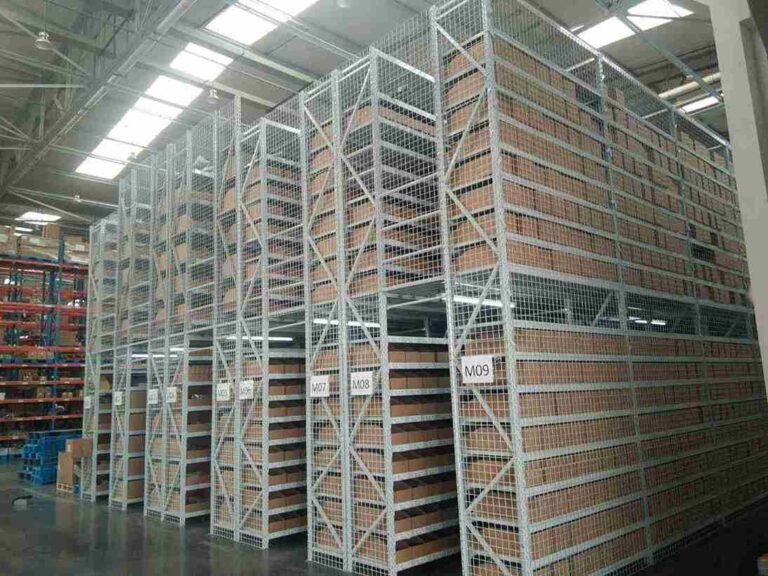
📐 "First 50 Enterprise Queries Get Custom 3D Warehouse Design" Plan
















The Warehouse Manager’s Definitive Guide: Achieving Operational Excellence with Affordable Narrow Aisle Racking
In the dynamic and cost-conscious industrial landscapes of Southeast Asia, the Middle East, Africa, and Latin America, warehouse managers face a universal, pressing challenge. The mandate is clear: store more inventory, fulfill orders faster, and enhance safety protocols, all while operating within stringent budget constraints and often limited physical footprints. The solution to this complex equation is neither a fleeting trend nor an exorbitant capital project. It is a strategic, proven, and fundamentally sound investment in affordable narrow aisle racking.
This comprehensive exploration serves as an authoritative blueprint, dissecting how a meticulously engineered affordable narrow aisle racking system transcends its physical form to become the very backbone of a streamlined, profitable, and future-ready operation. We will move beyond mere product specifications to unveil the operational philosophy, the financial calculus, and the technical nuances that make reliable and affordable narrow aisle racking the undisputed cornerstone of modern warehousing in growth markets.
The Strategic Imperative: Why Space Optimization is No Longer Optional
Across bustling logistics hubs from Jakarta to Johannesburg, and from Dubai to São Paulo, the cost of industrial real estate is soaring. The traditional warehouse model, characterized by wide aisles designed for counterbalance forklifts, represents an extraordinary inefficiency. These aisles, often consuming 40% to 50% of the total floor area, are non-productive space—mere corridors for movement. This paradigm is a luxury modern businesses can no longer afford.
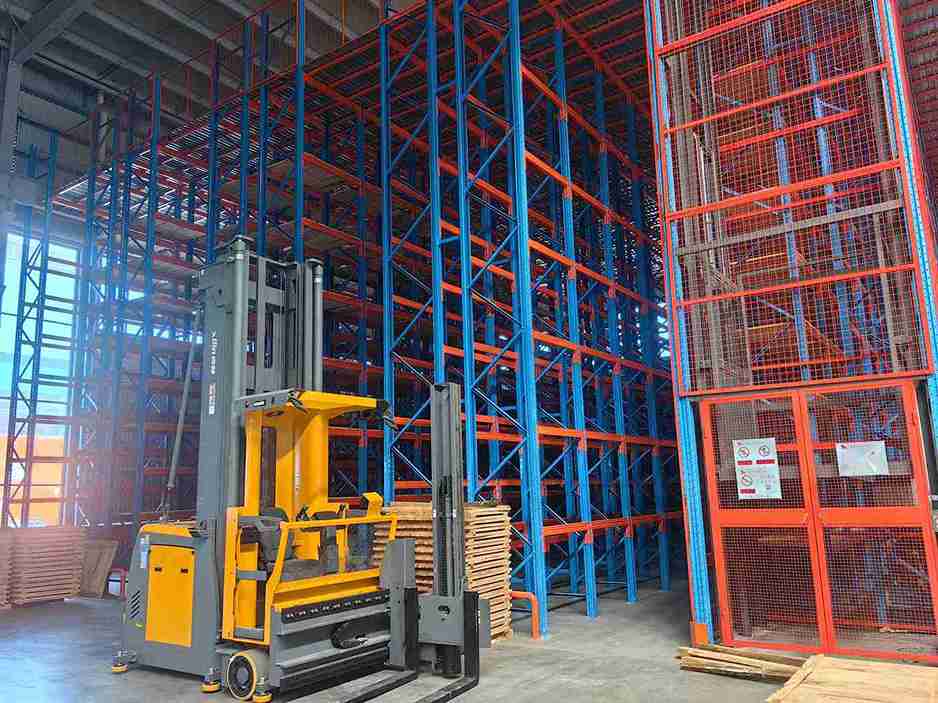
The strategic shift to narrow aisle racking systems represents a critical re-engineering of the storage cube. By systematically reducing aisle widths from a typical 3.5 meters to a lean 1.6 to 2.2 meters, warehouse managers instantly reclaim vast swathes of floor space for revenue-generating storage. This is not merely an equipment change; it is a spatial revolution. The immediate, tangible outcome is a dramatic surge in storage density—frequently quantified at a 40% to 60% increase—without the need for costly construction, relocation, or lease expansion.
For a growing manufacturing plant in Vietnam or an expanding e-commerce fulfillment center in Colombia, implementing affordable narrow aisle racking is the most impactful first step toward scalable, resilient, and efficient operations. It directly translates intelligent design into enhanced profitability and competitive edge.
Deconstructing True Affordability: A Total Cost of Ownership Analysis
The term affordable narrow aisle racking is often misunderstood, reduced to a simple comparison of initial price quotes. This is a profound mistake. True affordability is a comprehensive calculation measured over the entire 15 to 25-year lifecycle of the storage infrastructure. A genuinely affordable narrow aisle racking solution is one that minimizes total cost of ownership (TCO), balancing prudent upfront investment with long-term operational savings and risk mitigation. Let’s dissect this financial model.
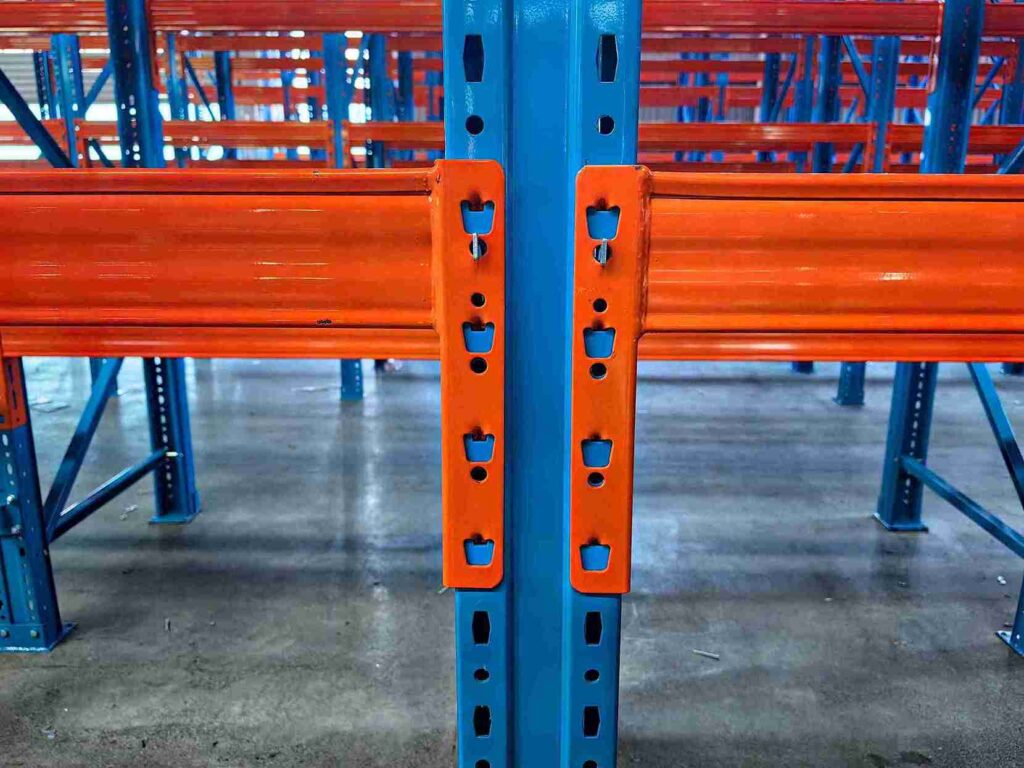
The initial investment in a high-quality narrow aisle racking system encompasses more than the steel components. It includes the cost of engineering, high-grade materials, precision manufacturing, professional installation, and integration planning. Opting for a system built with structural-grade, high-tensile steel and robust safety locks might present a marginally higher initial cost compared to lighter-duty alternatives.
However, this decision is the primary driver of long-term affordability. It is an investment in reliability, preventing the catastrophic costs associated with rack failure: business downtime, inventory loss, potential liability, and the urgent, expensive replacement of a compromised system. In regions where technical support or replacement parts may face logistical delays, this inherent reliability is not a luxury feature; it is a non-negotiable component of operational continuity and financial prudence.
The operational savings generated by a narrow aisle racking system are where the financial argument becomes compelling. Reduced travel distances for order pickers and put-away equipment create a cascade of efficiencies. Data from implemented projects consistently shows a 20-30% reduction in travel time per pallet movement. This translates directly into lower energy consumption for machinery, reduced wear and tear on forklifts, extended maintenance intervals, and the ability to achieve higher throughput with existing labor and equipment.
Furthermore, the enhanced density delays, often indefinitely, the need for expensive warehouse expansions. When the cost of avoided real estate, construction, and relocation is factored into the equation, a well-planned affordable narrow aisle racking system typically demonstrates a full return on investment within 2 to 4 years, thereafter generating pure cost savings. This is the definitive benchmark of an affordable capital investment.
Engineering Uncompromising Reliability: The Pillars of a Decade-Spanning System
Reliability in the context of industrial racking is absolute and non-negotiable. It is the silent assurance that the storage infrastructure will perform flawlessly under dynamic loads, across multiple shifts, and in diverse environmental conditions—from the humid climates of Southeast Asia to the arid, dusty environs of the Middle East. The engineering behind a reliable narrow aisle racking system is rooted in material science, precision manufacturing, and proactive design.
The foundation of reliability is the steel itself. Specifying the correct yield strength and structural properties for upright frames and beams is paramount. Each component must withstand not only the static load of stored pallets but also the dynamic forces exerted during insertion and extraction, as well as incidental impacts. For operations in coastal regions of the Philippines or in the saline air of the Gulf, advanced anti-corrosion protection is integral to longevity.
A superior affordable narrow aisle racking system employs a multi-stage defense: shot blasting for perfect surface preparation, followed by a electrostatically applied epoxy-polyester powder coating. For highly corrosive environments, hot-dip galvanizing provides a sacrificial layer of zinc, offering decades of protection and ensuring the system remains reliable throughout its lifespan.
Structural integrity is engineered into every connection. The beam-to-upright connector is the heart of the system’s stability. High-quality narrow aisle racking utilizes robust, safety-engineered locks that engage securely and visibly. Upright frames are designed with strategic bracing patterns to manage both vertical loads and lateral forces. In seismically active zones, such as parts of Central Asia or the Pacific coast of Latin America, the racking design must account for these forces. Professional suppliers of affordable narrow aisle racking can perform specific seismic calculations and integrate reinforcement kits—special braced frames and moment-resisting connections—that allow the structure to safely dissipate seismic energy, protecting both inventory and personnel.
The Synergy of Infrastructure and Technology: Future-Proofing the Warehouse
A narrow aisle racking system is far more than passive storage; it is the essential physical grid upon which both current efficiency and future automation are built. Its ordered, predictable layout provides the perfect “roadmap” for technological integration, making the move toward automation a logical evolution rather than a disruptive revolution.
The consistent, precise dimensions of a professionally installed narrow aisle racking system create an ideal environment for guided vehicles. Whether using wire guidance, inertial systems, or optical/laser targeting, Automated Guided Vehicles (AGVs) and unmanned forklifts rely on fixed reference points for navigation. The rack structure itself serves as this stable, reliable landmark. This synergy allows for a pragmatic, phased approach to automation—a critical consideration for markets in Africa and Latin America.
A warehouse can commence operations with manual narrow aisle reach trucks and, as volumes justify the investment, seamlessly upgrade to semi-automated or fully automated guided vehicles. The underlying affordable narrow aisle racking infrastructure remains constant, protecting the initial investment and enabling scalable technological advancement.
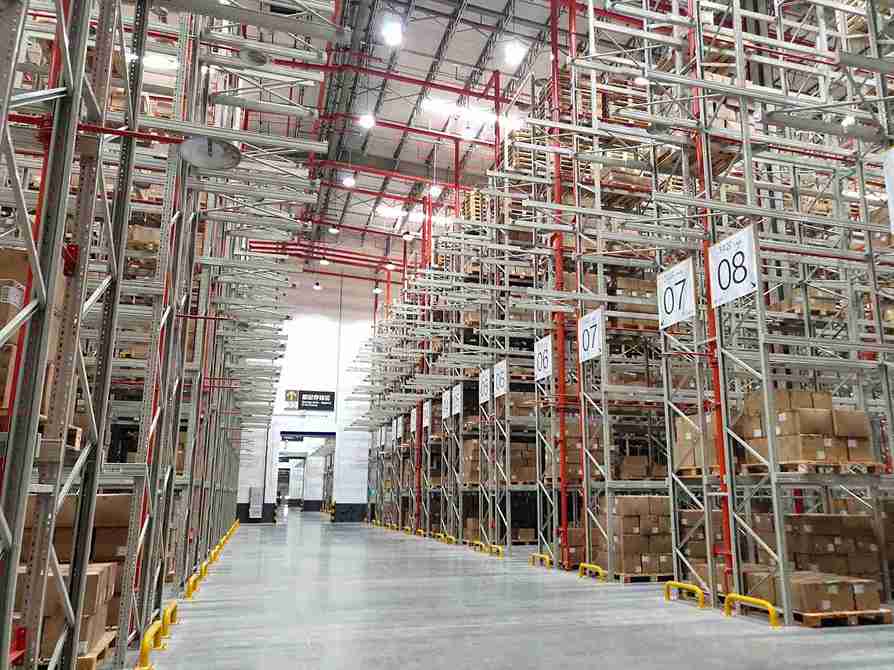
The digital integration of a narrow aisle racking system with Warehouse Management Software (WMS) is where operational precision is achieved. Each pallet location within the racking grid is assigned a unique, logical address (e.g., Aisle 02, Level 4, Position 12). This addressing scheme is the critical physical-digital link. When the WMS directs an operator to a specific location for picking or put-away, the optimized layout of the narrow aisle system ensures the most direct and efficient path. This integration enforces strict inventory control methodologies like FIFO or FEFO, dramatically reduces search times, and provides real-time, location-accurate data. Thus, the reliable narrow aisle racking system becomes the physical executor of a digital inventory strategy, a cornerstone of a streamlined operation.
Tailored Configurations: Meeting the Unique Demands of Diverse Industries
While the core principle of aisle reduction is universal, the application of affordable narrow aisle racking is brilliantly adaptable. Its configuration is tailored to meet the specific volumetric, weight, and accessibility requirements of different sectors prevalent in target markets.
For heavy manufacturing and bulk raw material storage—common in Thailand’s automotive sector or Egypt’s packaging industries—the emphasis is on brute strength and durability. Here, narrow aisle racking is configured with reinforced, high-capacity beams and upright frames with closer vertical beam spacing to handle dense, uniform pallet loads. The focus is on creating a reliable backbone for high-throughput production support, where speed of access for feeding assembly lines is as crucial as storage density.
In the fast-moving world of E-commerce and Fast-Moving Consumer Goods (FMCG)—experiencing explosive growth in Indonesia, the Philippines, and across the Middle East—velocity and flexibility are paramount. An affordable narrow aisle racking system often forms the reserve storage “engine room” in these operations. It holds bulk inventory that replenishes dynamic forward-picking zones, which may utilize carton-flow lanes or multi-tier pick modules. This hybrid model, centered around a dense narrow aisle buffer, creates a high-velocity fulfillment ecosystem capable of managing thousands of SKUs and fulfilling complex online orders with speed and accuracy.
In cold storage logistics, where energy costs are monumental and operational efficiency is doubly critical, narrow aisle racking delivers a powerful dual benefit. First, it maximizes the utilization of incredibly expensive refrigerated cubic space. Second, by drastically reducing travel distances for forklifts, it minimizes the time refrigerated doors are open, conserves energy, and improves working conditions for personnel. The reliability of the system in low-temperature conditions, with properly specified steels and finishes, is essential to avoid maintenance nightmares in a -25°C environment.
The Human-Centric Design: Safety, Training, and Optimized Workflow
The most advanced affordable narrow aisle racking system can only realize its full potential within a framework of skilled operation and safe practices. Investing in human capital is a parallel necessity that yields massive returns in productivity and accident prevention.
Specialized equipment, such as reach trucks or turret trucks, requires specialized skills. Comprehensive operator training and certification programs are imperative. This training extends beyond basic vehicle operation to encompass spatial awareness in confined aisles, precise load handling at significant heights, and strict adherence to safety protocols specific to the narrow aisle environment. A certified, confident operator is the single most effective safeguard against the most common source of rack damage: impact from machinery. This training investment directly protects the integrity and reliability of the storage asset.
Operational workflow must be designed intuitively around the narrow aisle racking grid. This involves planning clear, one-way traffic patterns, establishing designated pedestrian walkways, and strategically locating packing stations, staging areas, and replenishment points to minimize congestion. Thoughtful design reduces operator stress, prevents near-misses and accidents, and creates a smooth, rhythmic workflow that accelerates order cycle times. A well-planned layout makes the system not just affordable in cost, but also efficient and safe in daily use.
The Implementation Roadmap: A Phased, Collaborative Journey
The successful deployment of a reliable and affordable narrow aisle racking system follows a meticulous, collaborative process designed to eliminate risk and ensure the final installation meets all operational and financial objectives.
The journey begins with an in-depth discovery phase. This includes a precise site survey documenting floor flatness, column positions, door and sprinkler head locations, and clear heights. Concurrently, an analysis of SKU profiles, pallet specifications, and inventory turnover data is conducted. Using sophisticated warehouse design and simulation software, multiple 3D layout options are generated. Clients can visually “walk through” these virtual models, allowing for optimization of pick paths, throughput simulation, and consensus-building before manufacturing commences. This phase is crucial for validating the affordability and functionality of the proposed design.
Following design finalization, the project moves into precision manufacturing. Components are fabricated from certified materials to exacting tolerances. Quality assurance involves load testing on sample assemblies and rigorous finish inspections. All parts are then kitted, bundled, and clearly labeled specific to the project installation sequence, ensuring smooth logistics and on-site efficiency, whether the destination is a factory in Mexico or a distribution center in Malaysia.
Professional installation is conducted by certified teams following stringent protocols. This includes verifying floor conditions, using laser levels for perfect alignment, and torqueing all structural bolts to precise specifications. The culmination is not merely a handover. A formal load test is conducted, placing calibrated weights on beam levels to verify deflection is within safe engineering limits. This provides the warehouse manager with documented, physical proof of the system’s integrity and reliability, a final assurance of a sound investment.
Lifecycle Partnership: Support, Maintenance, and Continuous Optimization
The provider-client relationship for an affordable narrow aisle racking system should extend far beyond the installation date. To maintain reliability and affordability over decades, a proactive, partnership-oriented approach to support is essential.
Suppliers should provide clear, actionable guidelines for routine inspection and maintenance. This empowers warehouse teams to identify minor issues—like a small dent in a beam end connector or a slightly dislodged safety lock—before they escalate. Many leading providers of affordable narrow aisle racking also offer scheduled annual safety audit services, conducted by their engineers, to provide a professional assessment of the system’s condition and recommend any necessary interventions.
A key advantage of a bolted, selective narrow aisle racking system is its inherent modularity and reconfigurability. As business needs evolve—a new product line is added, or pallet specifications change—the racking system can adapt. Professional partners can design the initial system with future expansion in mind. When growth necessitates change, additional bays can be seamlessly integrated, or existing frames can be reconfigured. This adaptability protects the initial capital outlay and ensures the affordable narrow aisle racking solution remains perfectly aligned with the operation’s needs for its entire service life, the ultimate expression of long-term value and affordability.
Conclusion: Building the Foundation for Sustainable Competitive Advantage
For warehouse managers navigating the vibrant yet challenging markets of Southeast Asia, Central Asia, the Middle East, Africa, and Latin America, the decision to invest in a reliable and affordable narrow aisle racking system is a definitive step toward operational maturity and resilience. It is a strategic choice that concurrently solves the fundamental challenges of space scarcity, cost control, and process efficiency.
By selecting a system engineered for longevity, supported by expert planning and a lifecycle partnership, managers are not merely installing storage equipment. They are instituting a robust framework for scalable growth, operational agility, and pinpoint accuracy. They are constructing a warehouse where every square meter is a productive asset, every material movement is optimized, and every team member operates within a safer, more empowering environment. In the fast-paced economies defining these regions, such an infrastructure is the essential platform that supports expansion, delights customers, and drives sustainable profitability.
The future of warehousing is not about working harder within outdated confines; it is about working smarter within a meticulously designed, efficient, and utterly dependable storage ecosystem. For leaders committed to that future, affordable narrow aisle racking is the indispensable first and most important building block.
If you require perfect CAD drawings and quotes for warehouse racking, please contact us. We can provide you with free warehouse racking planning and design services and quotes. Our email address is: jili@geelyracks.com