📐 "First 50 Enterprise Queries Get Custom 3D Warehouse Design" Plan
















Synergizing Static Strength and Dynamic Intelligence: The Holistic Paradigm of Modern Pallet Racking Damage Prevention
The modern distribution center is a biome of coordinated motion. Within this ecosystem, the static steel skeleton of the pallet racking system and the dynamic, intelligent fleets of Automated Guided Vehicles (AGVs) and automated forklifts must coexist in perfect harmony. The paramount operational imperative governing this coexistence is a comprehensive and engineered approach to pallet racking damage prevention. This is no longer a peripheral safety consideration but a central pillar of operational integrity, financial prudence, and technological synergy.
Failure to implement a robust damage prevention strategy does not merely risk an isolated repair bill; it jeopardizes the entire throughput of a multi-million-dollar automated system, posing severe safety threats and unraveling calculated returns on investment. The philosophy of modern pallet racking damage prevention transcends the simplistic application of protective bolted-on products. It represents an integrated discipline, spanning from the initial warehouse design phase through daily operations and into predictive maintenance, creating a culture where structural integrity is continuously monitored and proactively defended.

The Amplified Stakes: Why Automation Demands a New Standard of Pallet Racking Damage Prevention
In a manually operated warehouse, damage prevention often relies on operator training, sporadic vigilance, and reactive repairs. The introduction of automation fundamentally rewrites the risk equation. AGVs and automated forklifts operate with relentless consistency, often within centimeters of racking uprights. A human operator might feel a slight bump and correct; an AGV, following a corrupted path signal or a misaligned guide tape, will impart its full kinetic energy into a structural point with mechanical precision. This transforms pallet racking damage prevention from a matter of human error mitigation to one of system engineering and fail-safe design.
The core challenge lies in the repetitive nature of the threat. A single AGV may traverse the same narrow aisle thousands of times per week. A minuscule guidance drift of even a few millimeters results not in a one-off incident, but in a series of micro-impacts or one catastrophic collision at the point of closest convergence. This cyclical loading induces metal fatigue, a slow and insidious enemy that can compromise structural integrity more dangerously than a single, obvious impact. Therefore, the goal of pallet racking damage prevention in automated environments is to create a system that is inherently tolerant of such variances, capable of absorbing unintentional contact, and intelligent enough to report and rectify deviations before they culminate in failure.
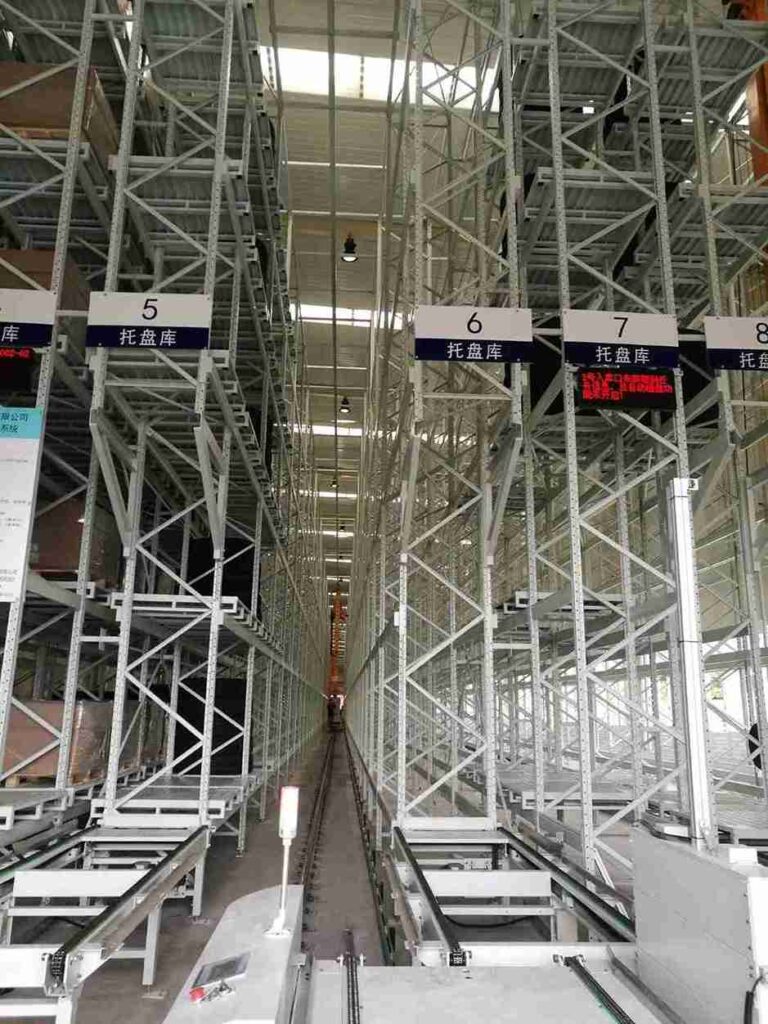
The Foundational Layer: Designing and Specifying Racking for a Hostile Environment
The first and most critical phase of pallet racking damage prevention occurs on the drawing board. A racking system destined for an automated warehouse must be specified not just for static load capacity, but for dynamic operational hazards.
Enhanced Structural Specifications: Proactive pallet racking damage prevention begins with material choice and design. This involves specifying uprights and beams with higher yield strengths and thicker gauges. Engineers should calculate not only for the weight of stored pallets but also for potential dynamic forces. This may involve applying a higher safety factor (e.g., a 1.5 or 1.67 design factor instead of a standard 1.33) to account for the unforeseen impact loads inherent in an automated, high-traffic environment. The connection method is also vital; bolt-together racking systems offer superior resistance to the vibrational and shear forces common near AGV pathways compared to standard clip-in designs, forming a more resilient skeleton from the outset.
Strategic Layout for Damage Prevention: Warehouse layout is a powerful, yet often underutilized, tool for pallet racking damage prevention. Intelligent design can minimize exposure. This includes creating generous buffer zones at aisle ends and major intersections—the hotspots for navigation errors. Designing wider “transit corridors” for AGVs separate from “pick faces” or “interface zones” reduces traffic density near the racking. Furthermore, orienting racking bays so that the shorter, braced end-frame faces high-traffic areas, rather than the long, vulnerable side, presents a more robust profile to potential impacts. This spatial strategy is a passive yet highly effective form of damage prevention.
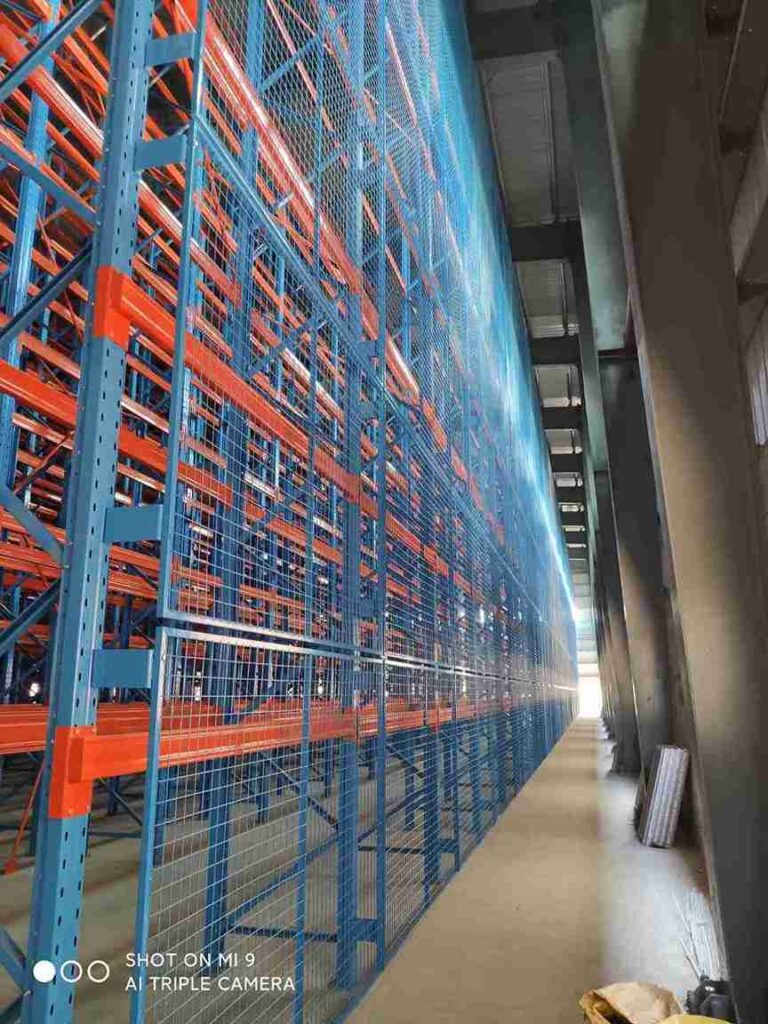
The Physical Defense Matrix: Engineered Barriers and Reinforcement
When the inevitability of contact is acknowledged, the strategic response is to deploy engineered systems designed to absorb and dissipate impact energy before it reaches the primary rack structure. This constitutes the most visible and tangible layer of pallet racking damage prevention.
Evolution of Column Guards: The traditional hollow-pipe column guard is inadequate for the forces involved in automated operations. Advanced pallet racking damage prevention utilizes engineered column protectors. These are constructed from heavy-gauge, often ribbed, steel and are frequently filled with high-density polyurethane or other energy-absorbing materials. Crucially, for maximum effectiveness in damage prevention, they must be anchored both to the concrete floor and to the rack upright itself. This dual-anchoring ensures that impact forces are transferred directly into the slab and shared with the rack frame, preventing localized buckling. For comprehensive pallet racking damage prevention, these guards should provide full-height coverage, as AGV impacts often occur at the height of their load-handling mechanisms, not just at the base.
Reinforcement of Critical Points: Pallet racking damage prevention focuses on strengthening known weak links. The connection between the upright and the floor is paramount. Using oversized, thicker base plates spreads impact loads over a greater concrete area, reducing the risk of anchor bolt failure or plate deformation. Additionally, reinforcing collars or welded “shoe” guards can be installed around the base of uprights to prevent crippling damage at this vulnerable point. Beam-to-upright connections are also critical; using robust, positive-locking safety latches prevents beams from dislodging during a side-impact, a key component of holistic damage prevention.
Perimeter Defense Systems: For exceptionally high-risk areas—such as racking adjacent to critical infrastructure, fire protection systems, or building columns—a stand-off perimeter defense is the gold standard for pallet racking damage prevention. Industrial-grade steel guardrails, installed several inches in front of the rack row, act as a sacrificial first line of defense. They are designed to take the full impact, are easily replaced, and completely isolate the rack structure from contact. Similarly, flexible, high-visibility bollards at aisle ends can redirect a wayward vehicle without causing significant damage to either the bollard or the AGV, embodying a pragmatic and effective damage prevention tactic.
The Cognitive Layer: Integrating Intelligence for Proactive Pallet Racking Damage Prevention
The most transformative advancements in pallet racking damage prevention are digital. This involves embedding intelligence into both the mobile equipment and the static infrastructure to create a self-aware warehouse environment that prevents collisions before they happen.
Next-Generation AGV Safety Systems: True pallet racking damage prevention is built into the vehicle’s navigation and control systems. Modern AGVs are equipped with sophisticated sensor suites that go beyond basic obstacle detection. 3D LiDAR and machine vision cameras allow the vehicle to create a real-time map of its surroundings, distinguishing between a permissible open aisle and the precise profile of a rack upright. Redundant navigation systems—combining inertial guidance with laser or natural feature recognition—maintain pinpoint accuracy, especially during the critical final approach for pallet pickup or deposit. Furthermore, implementing “soft” docking protocols, where vehicle speed is automatically reduced to a crawl within a predefined zone near the rack, is a software-driven form of damage prevention.
System-Wide Awareness and Analytics: Effective pallet racking damage prevention requires a system-level view. Advanced Fleet Management Software (FMS) plays a crucial role by managing traffic flow to prevent congestion in narrow aisles, thereby reducing the risk of gridlock and subsequent navigation errors. Moreover, these systems can be configured to log anomalous events. When an AGV’s safety scanners trigger an emergency stop or its accelerometers detect a sudden jolt, the event is automatically recorded with a timestamp, vehicle ID, and precise location. This creates an invaluable digital audit trail for damage prevention, allowing managers to identify high-risk locations, analyze incident patterns, and implement targeted corrective measures.
The Advent of Structural Health Monitoring (SHM): The ultimate expression of high-tech pallet racking damage prevention is the “smart rack.” Wireless sensor networks attached to key uprights can continuously monitor for indicators of damage. Tilt sensors can detect a change in upright plumb caused by a significant impact. Accelerometers can record shock events. Data from these sensors is fed to a central dashboard, providing real-time health monitoring of the storage infrastructure. This shift from scheduled inspections to condition-based monitoring represents a quantum leap in proactive damage prevention, enabling interventions before a minor issue escalates into a structural failure.
Operational Discipline: The Human-Centric Pillars of Sustained Damage Prevention
Technology provides the tools, but sustained pallet racking damage prevention is anchored in rigorous processes, continuous training, and a pervasive safety culture. Humans design, manage, maintain, and interact with these automated systems, making their role irreplaceable.
Developing Automation-Specific Protocols: A robust operational framework is essential for pallet racking damage prevention. This includes establishing clear “geo-fences” and zones of operation for AGVs, physically marked on the floor and programmed into the FMS. Formal Lock-Out/Tag-Out (LOTO) procedures must be in place for conducting rack inspections or repairs, ensuring that no automated vehicle enters a zone under maintenance. Perhaps most importantly, a standardized incident response protocol must be drilled into the team: immediate area isolation via the FMS, preliminary damage assessment by a qualified individual, execution of engineered repairs, and comprehensive documentation. This procedural rigor closes the loop on damage prevention.
Targeted Training for a Hybrid Environment: Training programs must evolve beyond standard forklift certification. Maintenance technicians need to understand how to safely work within live automation zones and how to inspect racks for the specific fatigue and impact marks left by AGVs. Operations managers require training to interpret data from the FMS and SHM systems, transforming raw alerts into actionable insights for damage prevention. This specialized knowledge turns staff from passive operators into active guardians of system integrity.
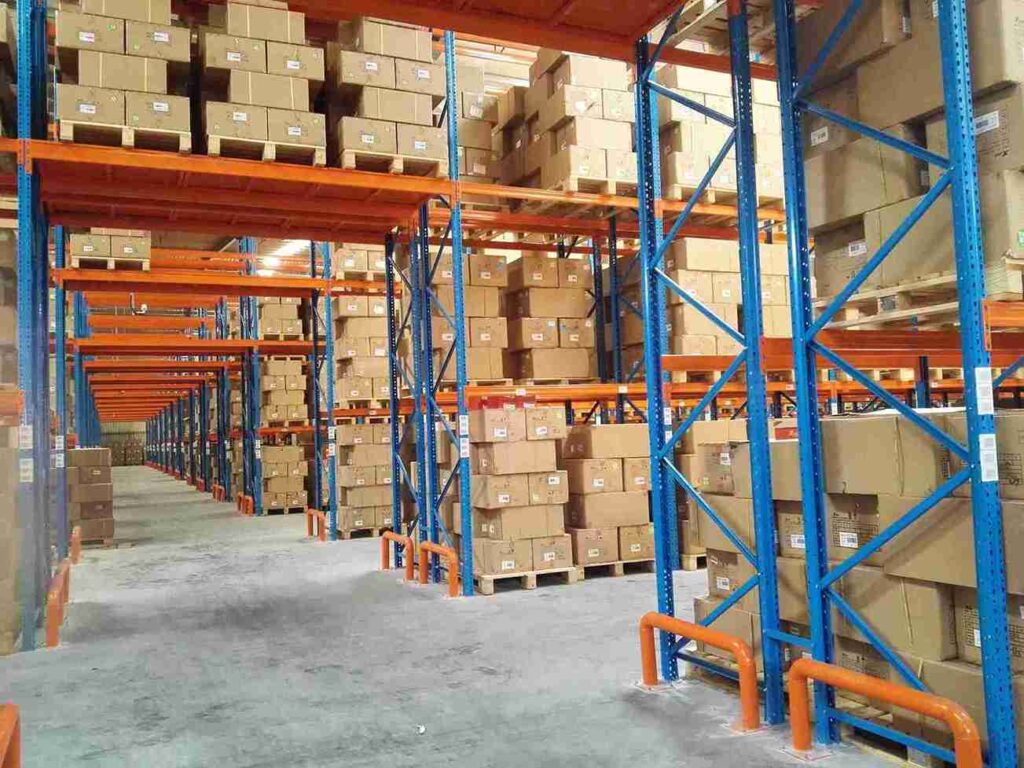
The Non-Negotiable Ritual: Specialized Inspection and Certified Repair
Even within the most intelligent and guarded system, a regimen of professional inspection and repair forms the final, critical layer of pallet racking damage prevention. In an automated facility, the traditional annual inspection is insufficient.
Augmented Inspection Regimes: A strategic pallet racking damage prevention plan mandates more frequent and focused inspections. High-traffic aisles and known impact zones may require quarterly or even monthly visual and instrumental checks. Inspectors must be trained to look for the unique signatures of automated vehicle contact: specific paint transfers at AGV fork height, polished scoring on guardrails, or hairline cracks in weld points. Tools like laser plumb gauges are essential to detect deviations as small as 6mm, which can indicate a compromised upright that is not yet visibly deformed.
The Imperative of Engineered Repair: The moment damage is identified, the principle of pallet racking damage prevention dictates a disciplined response. “Field straightening” of a bent upright with a hammer or forklift is strictly prohibited, as it work-hardens and further weakens the steel. Authentic damage prevention relies on manufacturer-engineered repair solutions. This typically involves the use of certified rack repair kits, which may include spliced upright sections, reinforced repair plates, or specialized bracing. These kits are designed to restore the rack’s original load capacity and are installed following strict protocols. No repaired section should be returned to service without a formal re-inspection and load re-certification, completing the cycle of responsible damage prevention.
Conclusion: Forging a Resilient and Self-Protecting Storage Ecosystem
Ultimately, the mission of pallet racking damage prevention in the age of automation is the creation of a resilient, integrated ecosystem. It is a continuous, multi-disciplinary practice that binds together structural engineering, industrial design, software intelligence, and human expertise. A successful strategy does not view the racking and the AGVs as separate entities in tension, but as interdependent components of a unified material handling organism. By championing a philosophy of holistic pallet racking damage prevention—from specification and design, through active protection and intelligent monitoring, to disciplined process and repair—organizations do more than shield a physical asset.
They protect their operational continuity, safeguard their workforce, and secure the formidable capital investment embodied in their automated warehouse. In doing so, they transform their facility from a mere warehouse into a model of modern, efficient, and inherently safe industrial operation, where the seamless flow of goods is guaranteed by an unwavering commitment to structural integrity and proactive damage prevention.
Frequently Asked Questions (FAQs) on Pallet Racking Damage Prevention
1. For a facility planning its first AGV installation, what is the logical first investment in pallet racking damage prevention?
The most prudent first step is a comprehensive rack audit and zone risk assessment. A professional engineer should evaluate the existing racking’s condition and load capacity. Simultaneously, a detailed analysis of the proposed AGV pathways should be conducted to identify “high-probability, high-consequence” impact zones. The initial investment should then target these critical zones with engineered, floor-anchored column guards and reinforced base plates. This targeted approach provides the highest immediate return in damage prevention by fortifying the most vulnerable points before automation goes live.
2. How does the cost of a full-spectrum pallet racking damage prevention system compare to the potential cost of a major racking collapse?
The cost comparison is starkly in favor of prevention. A comprehensive damage prevention system, including guards, sensors, and design upgrades, typically represents a single-digit percentage of the total automation project cost. Conversely, the cost of a major collapse encompasses direct costs (rack replacement, ruined inventory, AGV/equipment repair) and massive indirect costs (catastrophic downtime, supply chain penalties, potential regulatory fines, and increased insurance premiums). A single significant incident can easily cost 10 to 100 times the investment in a robust pallet racking damage prevention system, not accounting for the irreparable harm to safety and reputation.
3. Are polymer-based or composite racking protectors as effective as steel for pallet racking damage prevention with heavy AGVs?
For heavy-duty industrial AGV applications, steel remains the benchmark for damage prevention. While high-performance polymers and composites offer excellent corrosion resistance and are suitable for lower-impact scenarios, steel provides superior energy absorption, tensile strength, and durability under repeated high-force impacts. The most advanced damage prevention guards often use a hybrid design: a steel shell for structural integrity filled with an energy-absorbing polymer core, offering the best combination of strength and impact dissipation.
4. What role does the warehouse floor surface play in overall pallet racking damage prevention strategy?
The floor is a critical, yet often overlooked, component. An uneven, cracked, or sloping floor can induce AGV navigation drift, directly undermining all other damage prevention measures. As part of a holistic pallet racking damage prevention plan, ensuring a high-quality, laser-leveled floor in automation pathways is essential. Furthermore, the method of anchoring protective guards and the racking itself is wholly dependent on floor integrity and compressive strength. A professional floor survey should precede the final design of any anchored damage prevention solution.
5. Can data from pallet racking damage prevention systems (like impact sensors) be integrated with broader predictive maintenance platforms?
Absolutely, and this integration represents the future of smart warehouse management. Data from shock sensors, tilt monitors, and AGV impact logs can be fed into a centralized predictive maintenance or facility management platform. This allows for correlation analysis—for example, linking frequent impacts in a specific aisle with particular AGV maintenance schedules or navigation calibration data. This integrated view enables truly predictive pallet racking damage prevention, where the system can alert managers to “pattern failures” and recommend proactive adjustments to vehicle paths or maintenance cycles before physical damage occurs.
If you require perfect CAD drawings and quotes for warehouse racking, please contact us. We can provide you with free warehouse racking planning and design services and quotes. Our email address is: jili@geelyracks.com