📐 "First 50 Enterprise Queries Get Custom 3D Warehouse Design" Plan
















An In-Depth Analysis of Customized Storage Optimization
In the intricate ecosystem of warehouse management, where every square meter translates directly to operational cost and efficiency, a singular, often underestimated technical variable holds immense power: pallet rack beam spacing. This fundamental aspect of storage system design, referring to the precise vertical distance between the load-bearing beams, is far more than a simple measurement; it is the cornerstone of achieving optimal storage density, ensuring structural safety, and unlocking latent capacity.
For logistics directors, warehouse managers, and operations heads across the globe—particularly in growth-driven regions like Southeast Asia, the Middle East, Africa, and Latin America—mastering the principles of custom pallet rack beam spacing is not a trivial detail but a critical strategic imperative. This comprehensive resource delves deep into the engineering rationale, economic impact, and practical implementation of optimizing beam spacing, moving beyond generic catalog specifications to provide a masterclass in tailored storage solutions.

The Core Principle: Why Pallet Rack Beam Spacing Dictates Storage Intelligence
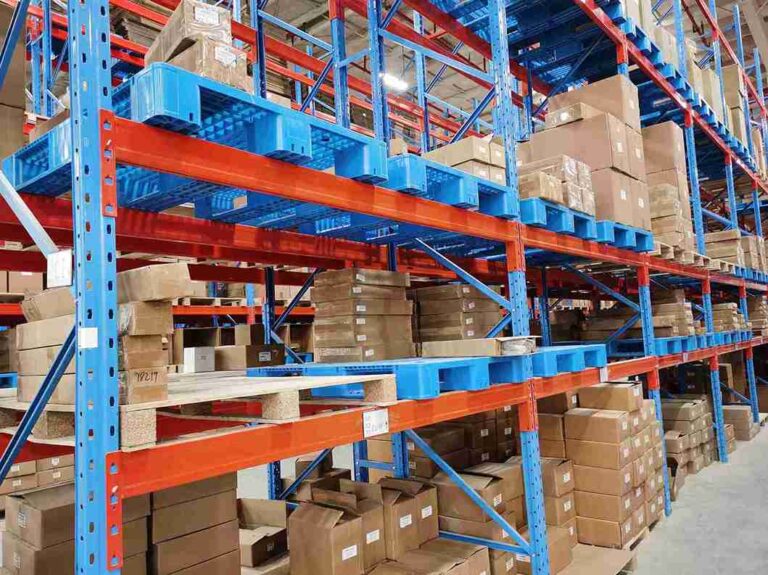
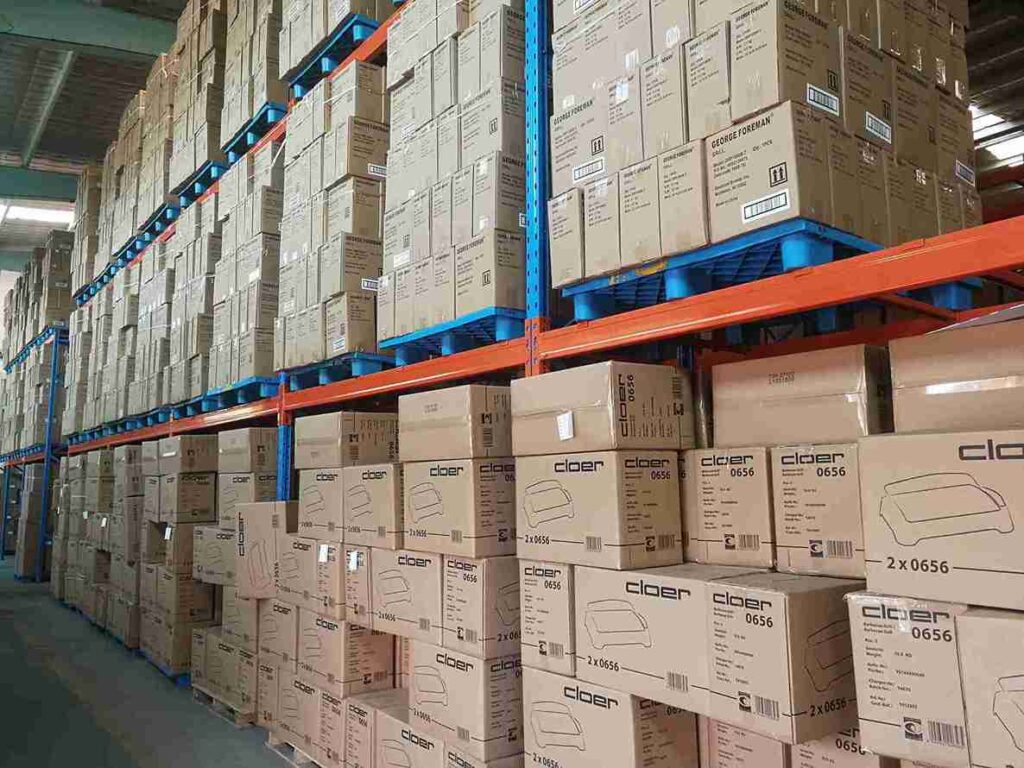
At its essence, a pallet racking system is a dynamic structure in constant dialogue with its inventory and material handling equipment. The pallet rack beam spacing is the primary adjustable parameter that mediates this relationship. Standard, uniformly spaced beam levels represent a compromise, often leading to the pervasive and costly “lost cube” phenomenon—significant wasted vertical space above stored pallets. This inefficiency is compounded when handling diverse product profiles, a common scenario in multi-sector distribution centers.
Strategic adjustment of pallet rack beam spacing addresses this by aligning the physical storage infrastructure with the exact dimensional characteristics of the inventory. The correct beam spacing ensures that the vertical clearance above each pallet is minimized to safe operational limits, thereby converting unused air into viable storage positions. This process requires a nuanced understanding of load dynamics, as the spacing directly influences the structural capacity of the upright frames and the beams themselves.
Closer beam spacing provides increased lateral support to upright columns, often enhancing the overall system’s load-bearing capability for a given frame profile. Conversely, wider spacing for oversized items must be carefully calculated to maintain integrity. Therefore, a scientifically planned pallet rack beam spacing configuration is a direct driver of both increased capacity and assured safety.
Conducting a Holistic Warehouse Audit: The Foundation for Custom Spacing
Implementing an optimized pallet rack beam spacing plan cannot begin with assumptions. It necessitates a meticulous, data-driven audit of the entire storage operation. This diagnostic phase is what separates a generic layout from a truly engineered solution.
SKU Dimensional Profiling and Velocity Classification: The first step involves creating a detailed database of every active SKU’s palletized footprint: exact height (including any potential load overhang), width, depth, and weight. Crucially, this dimensional data is then layered with inventory velocity analysis (ABC classification).
This combined view reveals patterns essential for planning beam spacing. Fast-moving ‘A’ items might benefit from ergonomically spaced levels in the “golden zone” for quick access, even if slightly less dense. Slow-moving ‘C’ items or bulk storage are ideal candidates for tightly optimized pallet rack beam spacing in higher or less accessible locations, maximizing cube utilization.
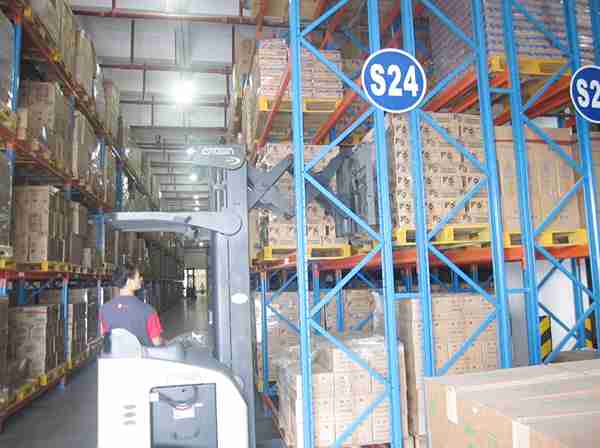
Material Handling Equipment (MHE) Interface Analysis: The racking system does not operate in isolation. The specifications of forklifts, reach trucks, and order pickers impose critical constraints on any beam spacing strategy. The mast height, fork dimensions, and lifting trajectory determine the maximum practical storage height and the necessary vertical clearance for safe load placement and retrieval.
Furthermore, planning for future automation—such as the integration of Autonomous Guided Vehicles (AGVs) or Automated Storage and Retrieval Systems (ASRS)—requires beam spacing to be designed with the precision and consistency these systems demand. An AGV’s lift mechanism may require different clearances than a human-operated forklift, making forward-looking pallet rack beam spacing a key element of scalable warehouse design.
Structural and Regulatory Compliance Verification: Any proposed change to pallet rack beam spacing must be validated against the structural capacity of the existing or planned upright frames. A professional engineering assessment is mandatory to recalculate the Safe Working Load (SWL) for each frame configuration under the new spacing plan.
This step ensures compliance with stringent international standards like those from the Rack Manufacturers Institute (RMI) or the Federation Européenne de la Manutention (FEM). In seismically active regions, which include parts of Latin America and Central Asia, the pallet rack beam spacing also affects the placement and effectiveness of seismic bracing, making this audit phase critical for risk mitigation and insurance compliance.
Advanced Configuration Strategies for Diverse Operational Needs
With robust audit data in hand, warehouse planners can deploy targeted pallet rack beam spacing strategies. These methodologies transform a static storage system into a dynamic, high-performance asset.
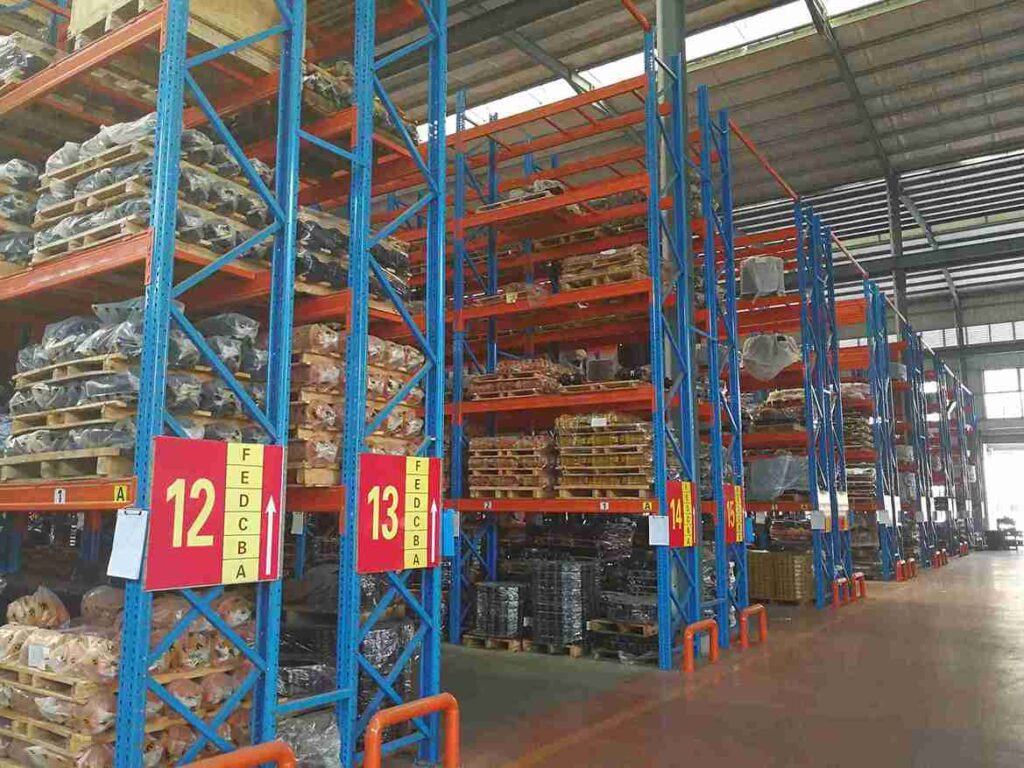
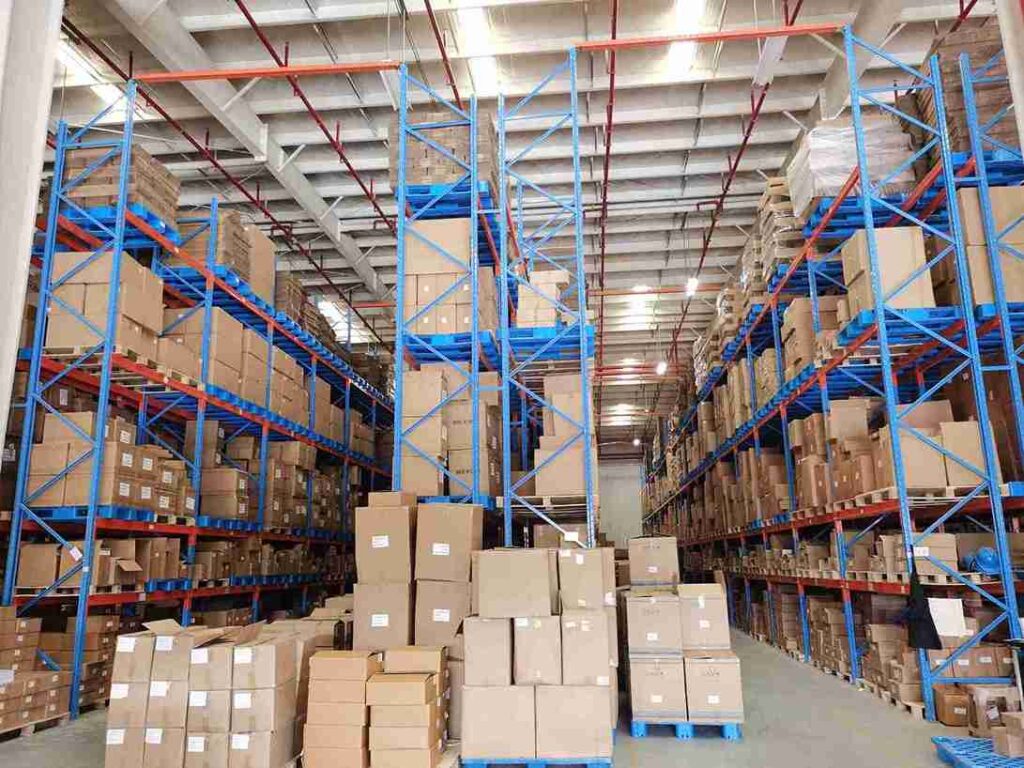
Tiered or Variable Beam Spacing: This is the most effective strategy for dramatically maximizing warehouse capacity. Instead of uniform spacing throughout the rack’s height, the structure is divided into distinct vertical zones. The lower and middle sections, which may handle a variety of SKU heights, employ tighter, more efficient pallet rack beam spacing. The top tier is then reserved for consistently tall, often slower-moving pallets, with spacing set accordingly. This tiered approach to beam spacing systematically eliminates wasted vertical space across the entire storage profile.
Optimized Spacing for Carton-Flow and Multi-Level Picking: In e-commerce fulfillment centers, particularly thriving in markets like Southeast Asia, pallet rack beam spacing is critical for supporting internal pick-face structures. When configuring racks for carton-flow rails or shelving decks within a pallet rack bay, the beam spacing must be precisely calculated to accommodate the height of the flow system, the pick face for operatives, and the reserve stock above it. A miscalculation in this beam spacing can render an entire pick module inefficient or unsafe.
Integration with Mezzanine Floors and Multi-Tier Systems: In facilities where land cost is prohibitive, mezzanines are a common solution. Here, pallet rack beam spacing must be intricately coordinated with the mezzanine deck height. The spacing below the deck must allow for clear access and loading, while the spacing above it must optimize the remaining vertical cube. This complex, three-dimensional planning makes a standardized beam spacing approach wholly inadequate, demanding a fully customized design.
Industry-Specific Spacing Protocols: Different sectors present unique challenges that inform pallet rack beam spacing.
Cold Storage Logistics: In freezer and chiller warehouses, where the cost of cooling every cubic meter is exorbitant, precision in pallet rack beam spacing is a direct financial imperative. Minimizing dead air space through tight, custom beam spacing reduces energy consumption significantly. Spacing must also account for potential ice buildup and thicker packaging.
Beverage and Dense Manufacturing: These industries deal with extremely heavy, uniform pallets. The pallet rack beam spacing can be very tight, but the structural engineering focus shifts to ensuring beam deflection is within limits and that point loads are properly managed. The configuration prioritizes extreme weight density.
Automotive and Aerospace: Storage of long, irregular components often uses cantilever racking. The principle of custom vertical support spacing remains, as the arms must be positioned to adequately support specific part profiles like exhaust systems or wing assemblies, preventing sagging and damage.
The Inseparable Link: Beam Spacing, Load Safety, and System Integrity
Optimizing pallet rack beam spacing is intrinsically linked to enhancing warehouse safety. Improper spacing is a leading contributor to load instability, rack damage, and potential collapse.
Ensuring Load Stability and Pallet Support: A fundamental rule is that a pallet must have sufficient bearing surface on the support beams. Industry guidelines typically require at least 75mm of the pallet’s stringer or block to rest on the beam. If the pallet rack beam spacing is too wide for a particular pallet’s construction, it can lead to deflection, cracking, or catastrophic failure. Customized beam spacing guarantees this support criterion is met for the specific pallet types in use.
Mitigating Forklift Impact and Operational Damage: Consistently and logically planned beam spacing can reduce the frequency of forklift impacts. When beam levels align predictably with pallet heights, operators develop muscle memory for maneuvering. Erratic or poorly thought-out pallet rack beam spacing creates visual confusion and increases the likelihood of mast-to-beam contact. Furthermore, well-planned spacing allows for the strategic installation of protective guards and column netting without sacrificing storage locations.
Facilitating Inspections and Maintenance: A warehouse with a logical, engineered layout featuring optimized pallet rack beam spacing is easier and safer to inspect. Clear sight lines and accessible spaces allow for regular checks for beam deflection, damaged connectors, or impacted uprights. This proactive maintenance culture, enabled by good design, is a hallmark of a world-class operation.
Quantifying the Return: The Tangible ROI of Optimized Beam Spacing
The investment in a professional pallet rack beam spacing analysis and reconfiguration delivers a clear and compelling financial return, making it one of the most cost-effective upgrades available.
Capital Expenditure (CAPEX) Deferral or Avoidance: The most significant financial benefit is the postponement or elimination of the need for costly expansion. By unlocking 15-30% or more additional storage positions within the existing building envelope, companies can delay the massive capital outlay required for new construction or leasing additional space. For a facility nearing capacity, optimized beam spacing can extend its usable life for years.
Operational Expense (OPEX) Reduction: The efficiencies cascade into daily running costs.
Energy Savings: In climate-controlled environments, reducing the volume of wasted, conditioned air through tight pallet rack beam spacing directly lowers HVAC expenses.
Labor Productivity: A denser, better-organized warehouse reduces travel time for put-away and picking cycles. Operators spend less time unnecessarily lifting forks to excessive heights, leading to faster throughput.
Damage and Maintenance Cost Reduction: Properly supported loads and reduced forklift incidents lower costs associated with product damage, pallet replacement, and rack repair.
The Throughput and Scalability Advantage: A warehouse that efficiently utilizes its cubic space through smart pallet rack beam spacing inherently flows better. Reduced congestion at ground level, logical placement of SKUs, and easier access contribute to faster order fulfillment cycles and improved truck turnaround times. This increased throughput capability allows the business to scale revenue without proportional increases in storage costs.
A Phased Implementation Blueprint for Minimized Disruption
Transitioning to an optimized pallet rack beam spacing configuration requires careful planning to maintain operational continuity.
Phase 1: Digital Simulation and Master Planning: Utilizing warehouse design and simulation software, a “digital twin” of the facility is created. Multiple pallet rack beam spacing scenarios are tested against real SKU and order history data. This simulation predicts not only capacity gains but also impacts on pick paths, equipment travel, and potential bottlenecks, validating the plan before physical work begins.
Phase 2: Phased Roll-Out by Zone: A full-scale, overnight reconfiguration is rarely feasible. A strategic plan sequences the work by logical zones—often starting with slower-moving inventory aisles. Detailed migration plans for inventory and clear communication schedules for staff are developed to ensure a smooth transition with minimal disruption to daily operations.
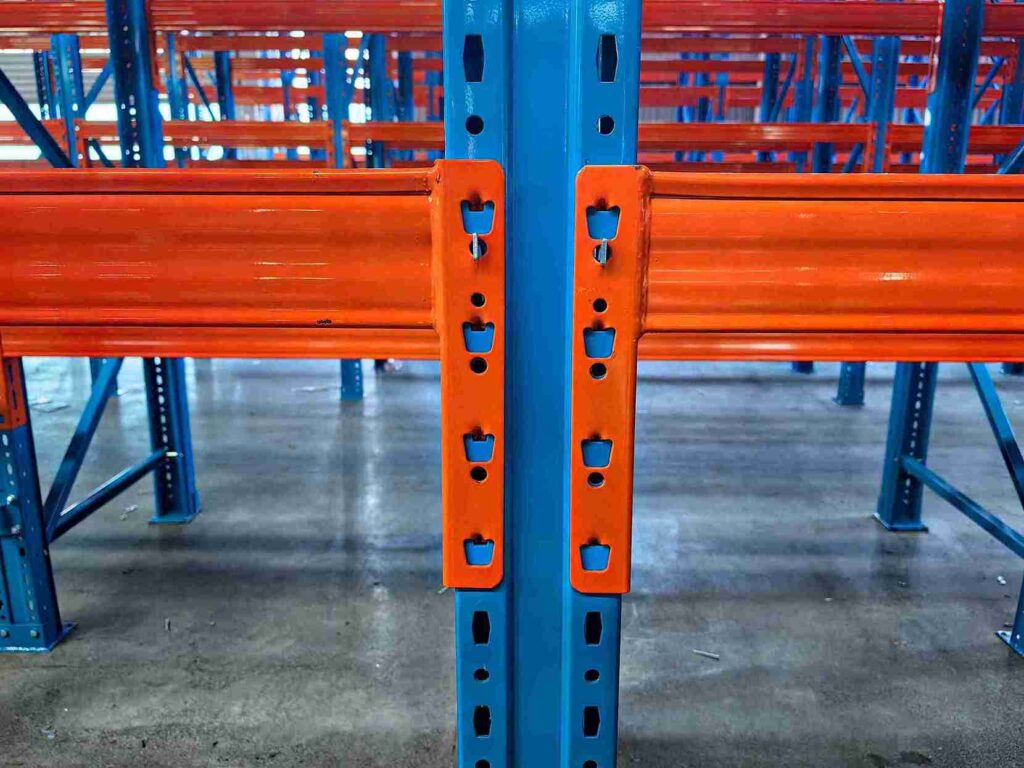
Phase 3: Precision Installation and Documentation: Execution by certified technicians is non-negotiable. Key quality checkpoints include verifying that all beams are securely locked at their designated heights using the correct safety locks, conducting post-installation alignment checks, and, most critically, generating and displaying updated load application and configuration drawings for every bay. This final documentation is vital for ongoing safety, training, and operations.
The Synergy with Automation: Beam Spacing as an Enabler
In the modern warehouse, pallet rack beam spacing is not a standalone consideration but a foundational enabler for advanced automation.
Precision Foundation for AS/RS: An Automated Storage and Retrieval System demands millimeter-level precision. The machine’s retrieval mechanism is programmed to interface with loads at exact heights. Custom pallet rack beam spacing that matches the pallet height ensures reliable, high-speed automated handoffs and maximizes the system’s storage matrix efficiency. Inconsistent spacing can cause jams, errors, and system downtime.
Optimizing for AGV and AMR Fleets: When deploying Autonomous Mobile Robots for pallet transport, the interface points at the rack face become critical. Pallet rack beam spacing in access aisles may need to be standardized to allow different robot types to service multiple locations. The spacing design must incorporate the “presentation height” logic required by the robotic picker or forklift attachment.
The Data-Driven Feedback Loop: In an integrated smart warehouse, the Warehouse Management System (WMS) can be empowered to make intelligent put-away decisions based on dimensional data. By knowing the height of an incoming pallet, the WMS can direct it to a location with the optimally tight beam spacing, dynamically managing storage density in real-time. This represents the pinnacle where physical design (beam spacing) and digital intelligence (WMS) converge for peak efficiency.
Regional Adaptations: Tailoring Beam Spacing Strategies for Global Markets
Optimal pallet rack beam spacing is not a universal template; it must be adapted to regional market conditions and challenges.
Southeast Asia: Characterized by rapid e-commerce growth, diverse pallet standards (often wooden with size variation), and high humidity. Pallet rack beam spacing solutions here must be robust, account for potential pallet wood deflection, and support a mix of manual and semi-automated operations in often vertically dense facilities.
Middle East: Operations face extreme ambient temperatures, demanding consideration of thermal expansion in steel components when planning beam spacing. The high-value logistics sector in the GCC requires impeccable safety standards and efficiency, often integrating advanced automation where precise beam spacing is critical.
Africa: Markets often contend with infrastructure variability. Solutions must be rugged, easily maintainable, and flexible. Pallet rack beam spacing designs might need to accommodate a wider range of manual handling equipment and prioritize simplicity and durability without sacrificing density.
Latin America: A blend of highly automated distribution centers and traditional warehouses. Seismic considerations are paramount in countries like Chile, Peru, and Mexico. Here, pallet rack beam spacing plans are inseparable from seismic bracing design, requiring rigorous engineering analysis to meet strict local building codes and insurance requirements.
Future-Proofing the Storage Asset: Designing for Adaptability
A truly intelligent approach to pallet rack beam spacing incorporates flexibility for future change.
Specifying for Reconfigurability: This involves selecting upright frames with a high frequency of connector slots (e.g., on 50mm or 2-inch centers). This provides maximum granularity for future adjustments to the pallet rack beam spacing without requiring frame replacement, protecting the long-term investment.
Modular and Zonal Planning: The warehouse is conceptualized in modular blocks or zones. As product profiles evolve or new lines are added, specific zones can be re-spaced independently. This modular approach to beam spacing allows the storage infrastructure to adapt organically to business growth with minimal operational disruption.
Conclusion: The Strategic Imperative of Precision in Storage Design
In the relentless pursuit of logistics excellence, competitive advantage is increasingly secured through the mastery of fundamental operational variables. Pallet rack beam spacing stands as a paradigm of such a variable—a deeply technical aspect of warehouse design that, when optimized through a customized, data-driven methodology, yields disproportionate returns in capacity, safety, and cost efficiency.
For decision-makers navigating the dynamic markets of Asia, Africa, the Middle East, and the Americas, investing in a scientific analysis and strategic implementation of custom pallet rack beam spacing is a clear demonstration of operational intelligence. It represents the critical shift from viewing storage as a static cost center to managing it as a dynamic, performance-driven asset. The result is a warehouse that is not merely a container for goods, but a finely tuned engine for profitability and growth.
Frequently Asked Questions (FAQs)
1. How does pallet rack beam spacing affect the overall seismic resilience of a storage system?
In seismic zones, the configuration of pallet rack beam spacing is integral to the rack’s lateral stability. Closer beam spacing generally provides more connection points between beams and uprights, contributing to a stiffer, more robust structure that can better dissipate lateral forces. The spacing directly influences where horizontal struts and diagonal braces are installed, forming part of the engineered seismic bracing scheme. A professional engineer must design the beam spacing and bracing plan together to meet specific local seismic code requirements, ensuring the system can withstand prescribed ground motion forces.
2. Can we optimize pallet rack beam spacing in a live warehouse without shutting down operations entirely?
Yes, through a meticulously phased implementation plan. The process typically involves auditing and redesigning the beam spacing for the entire facility, then executing the reconfiguration in sequential zones. Work is scheduled during low-activity shifts or weekends. Inventory is temporarily relocated within the warehouse using a predefined migration map. This approach, managed by experienced project teams, allows the majority of operations to continue uninterrupted while the new, optimized pallet rack beam spacing is installed section by section.
3. What are the most common mistakes made when attempting to adjust beam spacing without expert guidance?
The most critical errors include:
1) Ignoring Structural Recertification: Moving beams changes the load dynamics on upright frames, potentially invalidating the original SWL. New load capacity signs must be issued after engineering review.
2) Using Incompatible Components: Mixing beams and uprights from different manufacturers or generations can compromise the connection integrity.
3) Neglecting Safety Lock Engagement: Every beam must be secured with positive safety locks (e.g., teardrop locks) that fully engage in the column slot.
4) Overlooking Clearance for MHE: Failing to account for the forklift mast’s overhead guard or the lift path can create new collision hazards. 5) Creating Unstable Load Conditions: Spacing that does not provide adequate support for specific pallet types leads to load tipping or pallet failure.
4. How does beam spacing interact with warehouse lighting and fire suppression systems?
Pallet rack beam spacing and overall height must be planned in coordination with overhead infrastructure. Building and fire codes mandate clear space below sprinkler heads (typically a minimum of 18 inches/45cm) to ensure proper water dispersion. Beams or stored pallets must not encroach on this clearance. Similarly, lighting fixtures need to be positioned to provide adequate illumination in aisles, which can be affected by very high storage or dense beam configurations. A comprehensive pallet rack beam spacing design will include a review of these systems, sometimes necessitating collaboration with a fire protection engineer to adjust sprinkler locations.
5. For a new warehouse build, at what point in the planning process should pallet rack beam spacing be finalized?
Optimal pallet rack beam spacing should be determined during the detailed design phase, well before rack procurement and installation. It should follow, and be based upon, the completion of key analyses: the SKU and inventory profile forecast, the selection of material handling equipment, and the design of the overall warehouse layout (e.g., aisle widths, pick modules). Finalizing the beam spacing strategy at this stage ensures the racking system is specified correctly from the outset, avoiding costly modifications later. It also allows the building’s clear height and column spacing to be fully utilized, and ensures compliance documents are accurate from day one.
If you require perfect CAD drawings and quotes for warehouse racking, please contact us. We can provide you with free warehouse racking planning and design services and quotes. Our email address is: jili@geelyracks.com