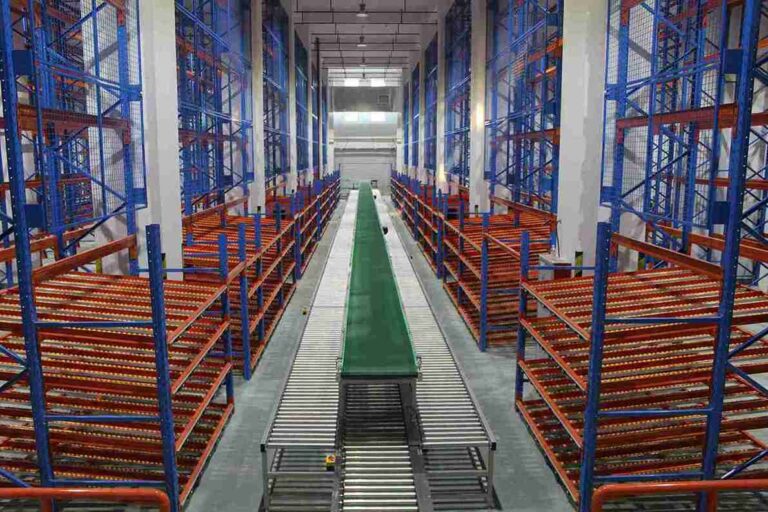
📐 "First 50 Enterprise Queries Get Custom 3D Warehouse Design" Plan















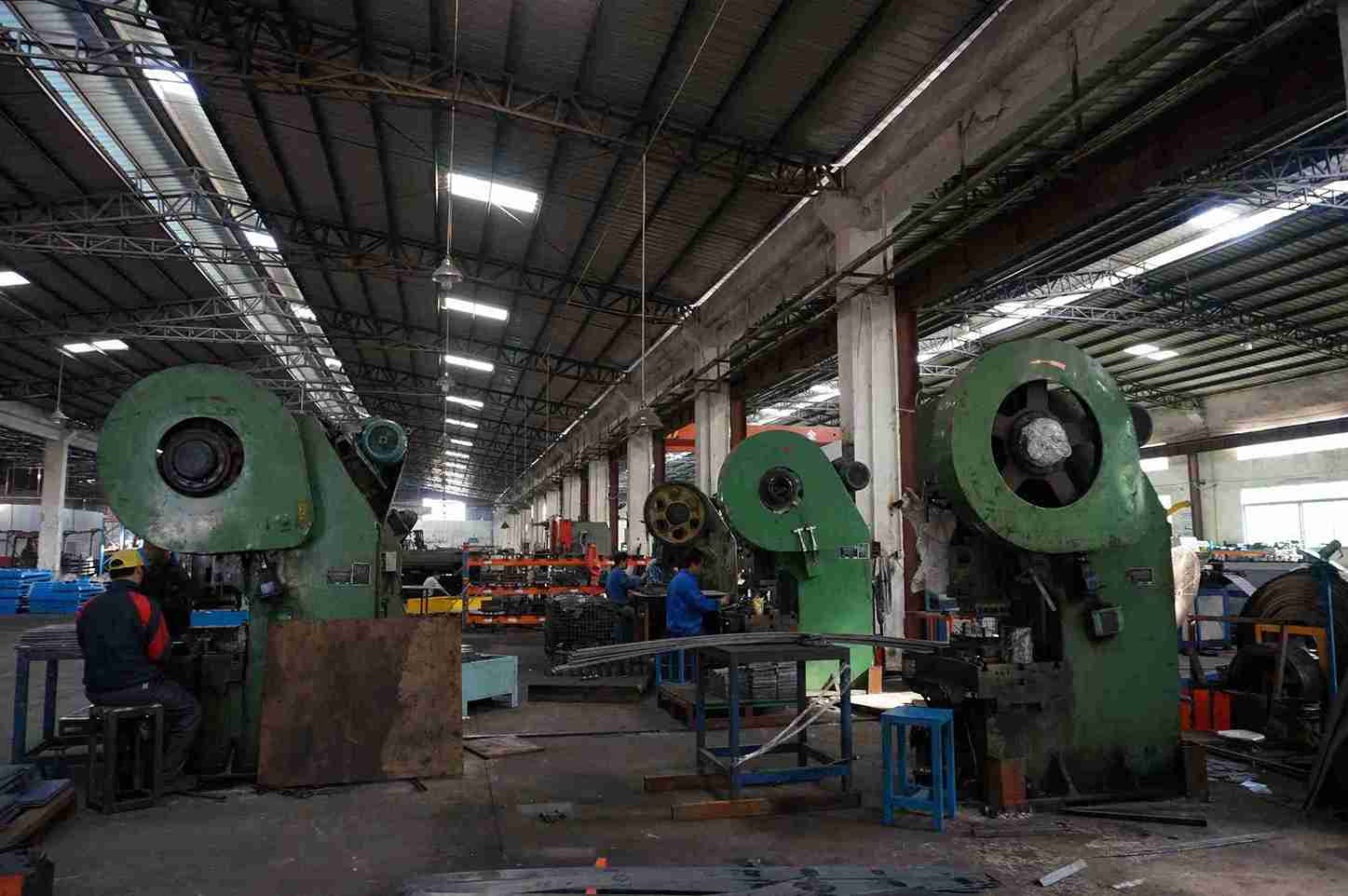
Unlocking Unprecedented Warehouse Density: The Strategic Mastery of Automated Mobile Pallet Racking Systems
In the high-stakes arena of global logistics and warehousing, space is not just a commodity—it is the ultimate constraint on growth, profitability, and competitive agility. For operations across Southeast Asia, the Middle East, Africa, and Latin America, where rapid economic expansion often outpaces industrial infrastructure, the challenge is acute. The solution, increasingly, is not found in sprawling new construction but in the intelligent, radical re-engineering of existing footprints through advanced storage technology. At the forefront of this revolution is the automated mobile pallet racking system.
Far more than a simple rearrangement of shelves, a fully realized mobile pallet racking system represents a fundamental reimagining of storage architecture, merging high-density physical design with sophisticated digital control to deliver transformational outcomes. This deep dive explores how a strategically implemented automated mobile pallet racking system can transcend basic storage functions to become a core driver of operational resilience, scalability, and bottom-line performance in diverse and demanding markets.

The Fundamental Flaw of Fixed Aisles: A Cost Analysis
To appreciate the paradigm shift offered by a mobile pallet racking system, one must first understand the profound inefficiency of conventional static racking. A traditional warehouse dedicates 40% to 50% of its precious floor space to access aisles. These permanent corridors, necessary for forklift traffic, represent non-revenue-generating real estate. In cities like Dubai, Bangkok, or Mexico City, where industrial land costs and lease rates are soaring, this translates into a continuous, substantial financial drain. Every square meter of aisle is a square meter not storing pallets, not holding inventory, and not contributing directly to throughput.
The mobile pallet racking system eliminates this flaw by collapsing multiple fixed aisles into a single, movable aisle. The entire rack structure is mounted on motorized carriages that glide along embedded floor rails. Access to a specific pallet location is created on-demand; the racks part to form an aisle only where needed, before closing again to form a solid, high-density storage block. This simple yet profound mechanical principle is the foundation of the system’s power. However, the true potential—moving beyond a mere 50% density increase—is unlocked when this mechanization is seamlessly fused with automation and intelligent software, creating an integrated automated mobile pallet racking system.
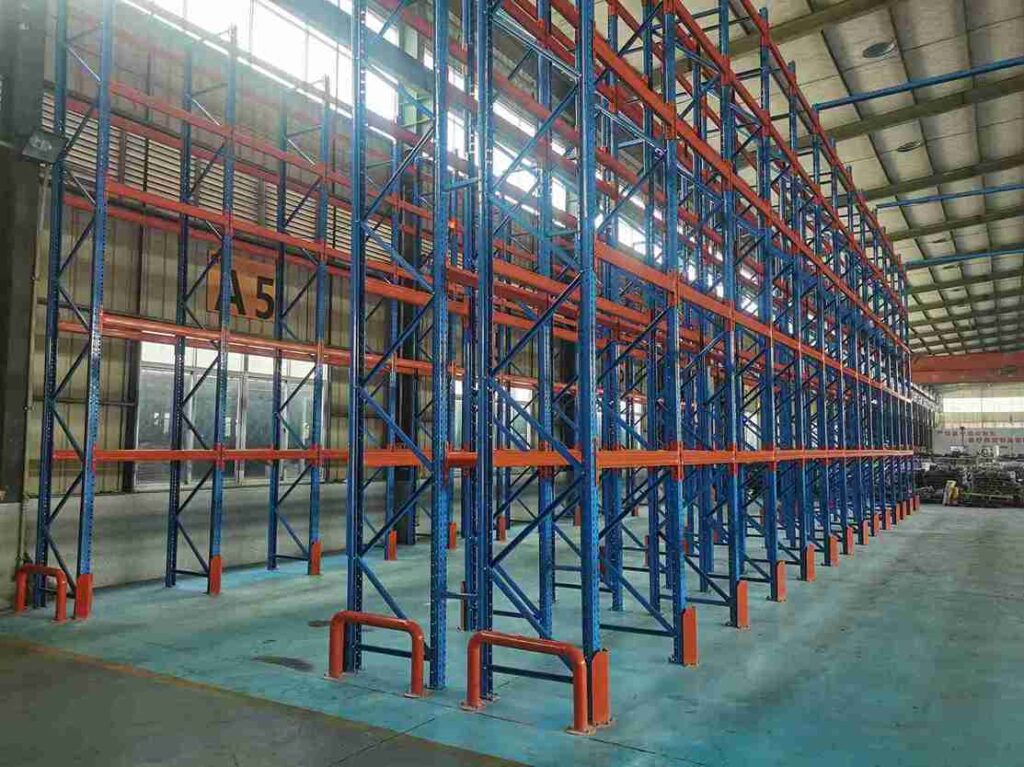
Deconstructing Excellence: The Core Components of a Superior System
A reliable mobile pallet racking system is an orchestra of precision engineering, where every component must perform flawlessly under constant stress. Understanding these components is key to discerning quality.
Structural Integrity: The Backbone of the System
The upright frames and beams of a mobile pallet racking system must withstand not only the static load of palletized goods but also the dynamic forces of carriage movement. Premium systems use high-grade, cold-rolled steel with a consistent yield strength, often with reinforced column designs. The integrity of this structure is non-negotiable, as it forms the literal backbone of the entire high-density storage solution.
The Drive and Carriage Mechanism: The Heart of Mobility
This is the defining subsystem of any mobile pallet racking system. Each carriage is powered by a dedicated, high-torque electric motor, typically equipped with a frequency inverter for smooth, controlled acceleration and deceleration. This prevents load shifting and system wear. Carriages run on hardened steel rails, precision-leveled during installation to tolerances often within +/-3mm over 10 meters. Key safety features integrated directly into the carriage design include:
Shear-pin safety releases to disengage the drive motor for manual movement in emergencies.
Anti-tilt locking devices that secure the carriage to the rail.
Emergency stop buffers at aisle ends.
Load-sensing devices that prevent movement if an uneven load distribution is detected.
For operations in regions with unstable power grids, a robust mobile pallet racking system will incorporate features like phase-loss protection, undervoltage releases, and optionally, capacitor banks that store and release energy to assist with peak starting currents.
The Control and Software Layer: The Central Nervous System
Transitioning from a manually operated mobile pallet racking system to an automated mobile pallet racking system is a leap in functionality, driven entirely by its control intelligence. This layer typically consists of a Programmable Logic Controller (PLC) or an industrial PC that manages all movement commands, safety interlinks, and communication protocols.
WMS/ERP Integration: The system ceases to be an island. Through APIs or direct middleware, the automated mobile pallet racking system receives put-away and retrieval orders directly from the warehouse management system (WMS). It then autonomously executes the most efficient sequence of movements.
Aisle Management Algorithms: Advanced software doesn’t just open the closest aisle. It performs real-time calculations considering pending tasks, energy consumption, and traffic flow from other material handling equipment (like AGVs), optimizing the overall workflow.
Diagnostics and Remote Monitoring: Modern systems provide a constant stream of operational data—motor cycles, travel distances, error logs. This enables predictive maintenance and allows for remote technical support, a critical feature for operations in remote locations or areas with limited local expertise.
Interface with Material Handling Equipment (MHE): The Delivery Mechanism
The mobile pallet racking system defines the storage matrix, but its utility is realized through interaction with MHE. Design considerations vary:
Forklift-Based Operations: For semi-automated setups, the system incorporates aisle-entry safety systems: traffic lights, physical barriers, and scanner gates that only permit forklift entry when the aisle is fully open and locked. Guide rails ensure precise forklift alignment within the narrow working aisle.
Fully Automated ASRS Integration: This represents the pinnacle of density and efficiency. Here, the automated mobile pallet racking system forms the high-density storage backbone, while a stacker crane or robotic shuttle operates within the single open aisle. The warehouse management system (WMS) coordinates both subsystems as one unified entity. This combination is ideal for high-value, high-throughput, or environmentally controlled applications, such as pharmaceuticals in Saudi Arabia or electronics in Vietnam.
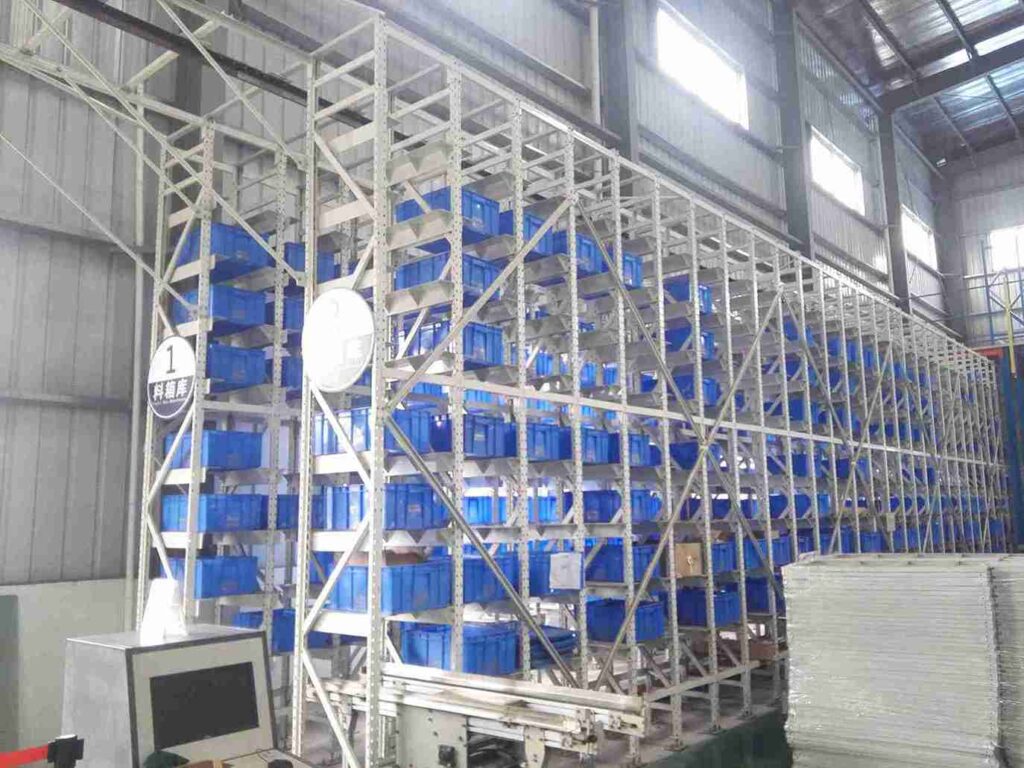
The Quantifiable Advantage: ROI Beyond Simple Density Claims
While a basic mobile pallet racking system can reliably increase storage capacity, an automated mobile pallet racking system generates a multifaceted return on investment that reshapes the business case.
1. Direct Real Estate and Capital Expenditure Avoidance:
The most immediate saving is the deferral or cancellation of costly expansion plans. Consider a facility in Jakarta storing 6,000 pallets on static racking. Implementing an automated mobile pallet racking system could increase capacity to 11,000+ pallets within the same envelope—an over 80% gain. The alternative of constructing a new 8,000 sqm warehouse is not only capital-intensive (construction, land, permits) but also introduces ongoing duplicate operational costs (utilities, security, taxes). The capital saved often exceeds the total investment in the automated mobile pallet racking system, creating an immediate positive net present value.
2. Operational Productivity Surge:
Density without speed is a bottleneck. Automation ensures speed.
Dramatically Reduced Travel Time: In a traditional warehouse, order pickers or forklifts spend significant time traversing long, fixed aisles. In an automated mobile pallet racking system, the system brings the stock to a consolidated pick face. Documented cases in automotive parts distribution in Monterrey, Mexico, show a 35-45% reduction in average pick cycle times.
Labor Optimization and Error Reduction: With the system handling location retrieval, labor is reallocated to value-added tasks. Integration with scanning and pick-to-light systems at the workstation eliminates mis-picks, driving inventory accuracy to 99.99%+ levels. This is invaluable for industries like aerospace components in South Africa or medical devices in Colombia.
3. Energy and Preservation Economics:
For temperature-controlled storage, the automated mobile pallet racking system is a game-changer. By minimizing the volume of open air space, the thermal load on refrigeration units is drastically reduced. A frozen food logistics operator in the Philippines reported a 30% drop in energy consumption after converting to an automated mobile pallet racking system for their -25°C chambers. The tightly packed pallets also provide superior protection for sensitive goods by minimizing temperature fluctuations and physical handling.
Strategic Deployment: Industry-Specific Applications
The versatility of the automated mobile pallet racking system allows it to solve unique challenges across sectors.
Cold Chain and Food Logistics
This is arguably the ideal application for an automated mobile pallet racking system. Maximizing pallet positions within expensive refrigerated space directly lowers cost per pallet. The system enforces strict FIFO (First-In, First-Out) or FEFO (First-Expired, First-Out) protocols through software, critical for perishables. The energy savings compound over time, making the automated mobile pallet racking system a cornerstone of sustainable and profitable cold chain operations from Chile to Indonesia.
Manufacturing and Automotive
Factories in India, Turkey, or Brazil often manage vast inventories of production parts. An automated mobile pallet racking system creates a central, ultra-dense raw materials and finished goods buffer. Integrated with factory floor AGVs, it enables precise just-in-time (JIT) or lean manufacturing workflows, reducing line-side inventory and freeing up production space.
E-commerce and Retail Fulfillment
The modern fulfillment center must handle an exploding SKU count with rapid delivery promises. An automated mobile pallet racking system is perfect for storing slow and medium-moving SKUs at high density. This reserves prime, fast-access areas for robotic picking of high-velocity items. The system’s software can batch multiple orders requiring items from the same aisle, dramatically improving pick efficiency—a crucial advantage for e-commerce hubs in Nigeria or Pakistan.
Archives, Libraries, and Records Management
While often using shelving instead of racking, the mobile storage principle is identical. Banks in the UAE, national archives in Kenya, and legal firms across Latin America use these systems to achieve space savings of 60-80% for documents, artifacts, or samples, with integrated access control and audit trails.
Implementation Philosophy: A Blueprint for Success
Deploying an automated mobile pallet racking system is a significant operational transformation. Success hinges on a meticulous, phased approach led by experienced partners.
Phase 1: Holistic Discovery and Digital Simulation
This phase goes beyond taking measurements. It involves a deep analysis of SKU master data, inventory velocity profiles, pallet specifications, and future growth projections. Leading providers will create a dynamic 3D simulation model of the proposed automated mobile pallet racking system within the client’s exact warehouse, allowing for virtual testing of different scenarios and throughput validation before commitment.
Phase 2: Site Preparation and Civil Works
The mobile pallet racking system demands a high-quality foundation. A detailed site survey assesses floor flatness and load-bearing capacity. Specifications for any necessary slab grinding, reinforcement, or drainage modifications are provided. Coordination with other trades (electrical, fire suppression, lighting) is critical, as these services must adapt to the moving storage block.
Phase 3: Precision Manufacturing and Quality Assurance
Components are manufactured in controlled environments to exacting standards. Pre-assembly of carriage units and rack bays is common to ensure quality and reduce on-site installation time—a vital factor for facilities that cannot afford extended downtime.
Phase 4: Supervised Installation and Mechanical Commissioning
Certified engineers supervise the entire installation process, ensuring rail alignment, structural bolt torque, and mechanical system calibration. This hands-on oversight is what separates a properly functioning mobile pallet racking system from one plagued by alignment issues and premature wear.
Phase 5: Software Configuration and Systems Integration
The control software is tailored to the specific operational logic of the warehouse. This includes defining location numbering, setting user access levels, and establishing a robust, bidirectional communication link with the client’s WMS. This phase turns hardware into an intelligent system.
Phase 6: Comprehensive Training and Knowledge Transfer
Training is delivered in tiers: operators for daily use, supervisors for system monitoring and basic troubleshooting, and maintenance staff for preventative care. Documentation is provided in the local language.
Phase 7: Phased Go-Live and Performance Optimization
Launching in stages mitigates risk. The system’s performance is closely monitored post-launch, with software settings fine-tuned based on real-world usage patterns to achieve peak efficiency.
Phase 8: Lifecycle Support and Continuous Improvement
A true partnership includes ongoing support. This ranges from remote monitoring and spare parts management to periodic system health checks and upgrades. For global clients, having access to regional service hubs in strategic locations like Singapore, Dubai, or Panama is essential.
Addressing Practical Concerns: Durability, Cost, and Complexity
Durability in Challenging Environments:
A common concern in markets with high humidity or dust is the longevity of the mobile pallet racking system. High-quality systems address this with powder-coated finishes for corrosion resistance, sealed bearings in carriage wheels, and IP-rated electrical components where necessary. Regular preventive maintenance, as outlined in the manufacturer’s protocol, is the key to decades of reliable service.
The True Cost Perspective:
The initial investment in an automated mobile pallet racking system is undeniably higher than static racking. However, the financial analysis must be holistic. The comparison is not against static racking alone, but against the total cost of the alternative: building a new warehouse. When factoring in avoided costs for land, construction, additional MHE, and long-term operational savings (energy, labor, taxes), the automated mobile pallet racking system typically demonstrates a compelling payback period of 2-4 years, followed by decades of superior efficiency.
Managing Perceived Complexity:
The operational complexity of an automated mobile pallet racking system is managed by its software and the project partner. For the warehouse team, the interface is simplified—often a scan, a screen, or a direct instruction from their familiar WMS. The partner’s role is to absorb the technical complexity during design, installation, and support, delivering a user-friendly outcome.
The Future-Proof Warehouse: Integration and Scalability
An automated mobile pallet racking system is designed to be the core of a broader smart logistics ecosystem. Its true power is realized when integrated seamlessly.
Inbound: Conveyors or AGVs can deliver pallets from receiving docks directly to the induction point of the automated mobile pallet racking system.
Outbound: Retrieved pallets can be transferred via automated pallet lifts or conveyors to sortation systems and staging lanes.
Data Flow: The system acts as a critical node in the Internet of Things (IoT) landscape of the smart warehouse, providing real-time inventory data and operational metrics to central dashboards.
A well-designed automated mobile pallet racking system is inherently scalable. Additional mobile carriages and rack bays can be added to extend the storage block. Its control architecture is built on open standards, ensuring compatibility with future automation technologies, protecting the client’s investment for the long term.
Conclusion: The Strategic Imperative of Intelligent Density
In the competitive landscapes of emerging global markets, warehousing and logistics operations face relentless pressure to do more with less—less space, less energy, less time, and less margin for error. The automated mobile pallet racking system has emerged as a singularly powerful answer to this challenge. It is a technology that transcends the category of “storage equipment” to become a strategic platform for intelligent density.
Choosing to implement an automated mobile pallet racking system is a decision to fundamentally optimize one of the most significant fixed assets in the supply chain: the warehouse itself. It is an investment not just in steel and software, but in future capacity, operational resilience, and sustained competitive advantage. For businesses across Southeast Asia, the Middle East, Africa, and Latin America looking to scale efficiently, control costs, and meet escalating customer demands, mastering the principles and potential of the automated mobile pallet racking system is no longer a luxury—it is a strategic imperative. The journey begins with partnering with experts who view the warehouse not as a static container, but as a dynamic, optimizable asset waiting to be unlocked.
Frequently Asked Questions (FAQs)
1: How does fire suppression work in a dense mobile pallet racking system where aisles are constantly opening and closing?
This is a critical safety design consideration. Standard in-rack sprinkler heads are not feasible in a moving system. The solution involves a combination of advanced ceiling-level sprinklers (often ESFR – Early Suppression Fast Response type) calculated for the higher storage density, and/or a dedicated external protection system. One common approach is to install a manifold with retractable sprinkler heads or hose reels at the end of each potential aisle location. When the automated mobile pallet racking system opens an aisle, the corresponding protection arm extends into the space. All designs must be reviewed and approved by local fire authorities and insurance providers.
2: What is the impact on inventory insurance premiums after installing a high-density automated system?
Insurance providers typically view an automated mobile pallet racking system positively, but with specific conditions. The enhanced security (limited access), superior seismic stability in earthquake-prone regions, and integrated fire protection can be mitigating factors. However, the increased value of inventory concentrated in a smaller area is also a consideration. A detailed risk assessment from the provider, showcasing safety features, system reliability, and disaster recovery protocols, is often required. Many clients find that the overall operational savings and avoided expansion costs far outweigh any neutral or slightly adjusted insurance costs.
3: Can an existing static racking warehouse be retrofitted into a mobile pallet racking system, or is a greenfield site required?
Retrofitting is technically possible and often a highly effective strategy. It involves carefully dismantling the existing static racks, preparing the floor (grinding, installing rails), and erecting the new mobile pallet racking system structure, often reusing suitable upright frames and beams if they meet the new specifications. The key advantage is leveraging the existing building shell. The process requires meticulous planning and phased execution to minimize disruption to ongoing operations, but it allows companies to achieve massive density gains without relocating.
4: How does the system handle very slow-moving or archival inventory that might be accessed only once a year?
The software managing the automated mobile pallet racking system is configurable for different storage policies. For archival stock, the system can be programmed to consolidate such pallets in specific zones or lanes. The optimization algorithm can then prioritize daily movement for fast-moving goods, minimizing unnecessary carriage travel to access dormant inventory. This ensures the system’s efficiency is focused on active SKUs while still providing secure, dense storage for archival items.
5: What are the cybersecurity considerations for an automated system that connects to our corporate network?
As with any industrial IoT system, cybersecurity is paramount. A reputable provider will implement several layers of protection. These include: employing a demilitarized zone (DMZ) network architecture to isolate the automated mobile pallet racking system‘s PLC/controllers from the corporate IT network; using virtual private network (VPN) tunnels for remote support; implementing role-based access controls with strong authentication; and ensuring all software components are regularly updated with security patches. Clients should discuss and review the vendor’s cybersecurity protocol as part of the procurement process.
If you require perfect CAD drawings and quotes for warehouse racking, please contact us. We can provide you with free warehouse racking planning and design services and quotes. Our email address is: jili@geelyracks.com