📐 "First 50 Enterprise Queries Get Custom 3D Warehouse Design" Plan
















From Order to Operation in 2 Weeks? A Case Study on Rapid Beam Racking Installation for High-Volume 3PLs
Executive Summary: The Two-Week Warehouse Transformation
In the fast-paced world of third-party logistics, time is quite literally money. Every day a warehouse sits empty or underutilized represents lost revenue and missed opportunities. For high-volume 3PLs serving multinational clients across automotive, electronics, food, and fashion sectors, the ability to rapidly deploy storage infrastructure can be the difference between winning a major contract or watching it go to a competitor.
This comprehensive case study examines how rapid beam racking installation in as little as two weeks from order confirmation is not just possible but achievable through meticulous planning, strategic inventory management, and experienced project execution. The analysis will walk through a real-world example of a 3PL entering the Australian market that required over 7,000 pallet locations combining selective racking and long-span shelving, designed, delivered, and fully operational within a compressed timeframe that most industry players would consider impossible .
More importantly, the universal principles, engineering considerations, and project management methodologies that make such rapid deployments repeatable across Southeast Asia, Central Asia, the Middle East, Africa, and Latin America will be extracted and examined in detail. Whether a logistics manager faces peak season capacity crunches or a facility owner plans a greenfield development, understanding the mechanics of accelerated beam racking installation will fundamentally change how warehouse projects are approached.

Understanding the Critical Nature of Beam Racking Installation Time in Modern 3PL Operations
The landscape of global logistics has undergone a seismic shift in the past decade. E-commerce penetration in emerging markets across Southeast Asia, Latin America, and the Middle East has created unprecedented demand for flexible, scalable warehousing solutions. Third-party logistics providers find themselves caught between two powerful forces: the escalating expectations of global brands and the physical constraints of traditional warehouse construction timelines. In this environment, beam racking installation time has emerged as one of the most critical metrics in project planning and execution.
The Financial Mathematics of Installation Delays
When a 3PL signs a contract with a new client—perhaps an automotive parts manufacturer requiring immediate distribution capacity or a food importer needing temperature-controlled storage—the clock starts ticking immediately. The client’s revenue depends on the 3PL’s ability to receive, store, and dispatch goods. Traditional wisdom suggested that a warehouse racking installation of significant scale required anywhere from eight to twelve weeks from design approval to operational readiness. In today’s competitive environment, that timeline represents a competitive disadvantage that few providers can afford.
Consider the mathematics of delay with precision: A 3PL with a 50,000-square-foot facility charging storage and handling fees loses thousands of dollars in potential revenue for every week the racking remains uninstalled. More critically, the client may seek alternative arrangements or penalize the logistics provider for service failures. This is why beam racking installation time has evolved from a logistical consideration into a core competitive metric that directly impacts bottom-line profitability.
Research from industry sources indicates that 22 percent of warehouse managers report beam racking installation time overruns due to permit delays alone . When combined with material shortages, site preparation issues, and installation crew availability, the cumulative effect on project timelines can be devastating. For 3PLs operating on thin margins, these delays can transform a profitable contract into a financial liability before a single pallet is stored.
The Multi-National 3PL Challenge: A Case Study Introduction
To illustrate these principles in action, a project executed for a multinational 3PL entering the Australian market deserves detailed examination. This particular provider already served over 2,500 customers globally across diverse industries including automotive, electronics, machinery, chemicals, oil refining, construction, distribution, food, energy, and fashion . Their expansion into Melbourne required a new Distribution Centre that would serve as their regional hub. The mandate from internal stakeholders and future clients was clear: the facility must be fully operational within two weeks of order confirmation.
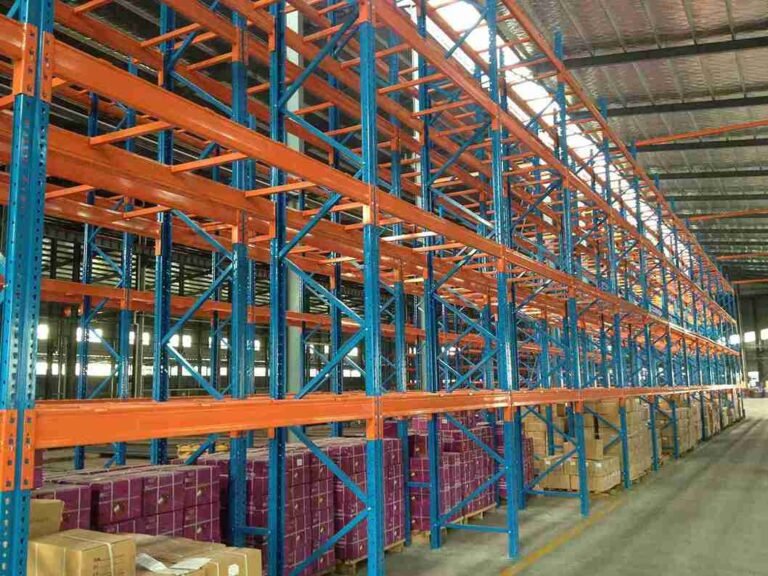
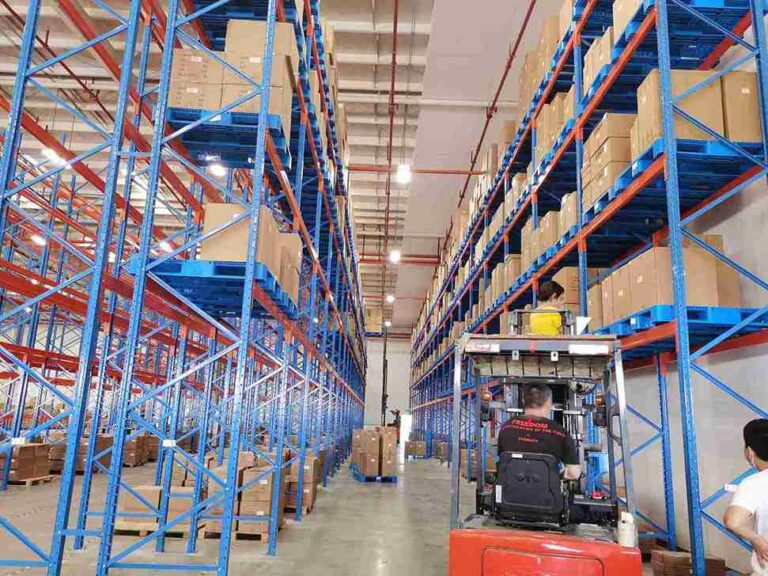
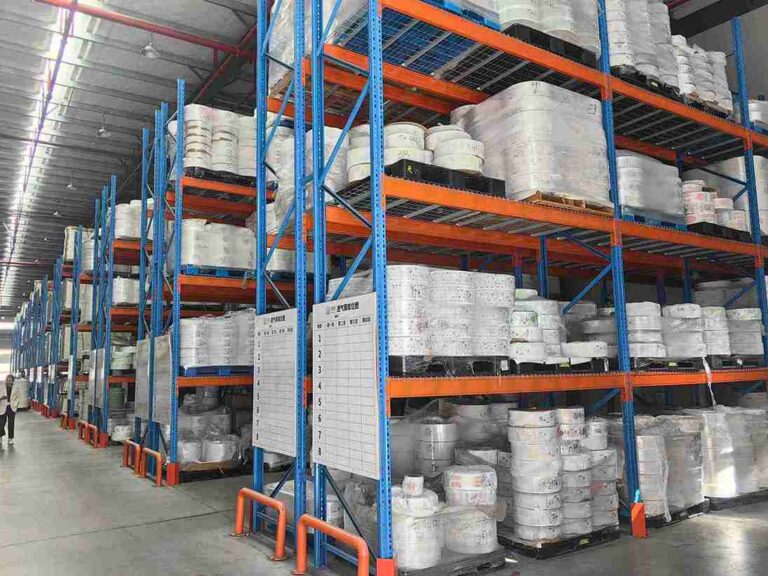
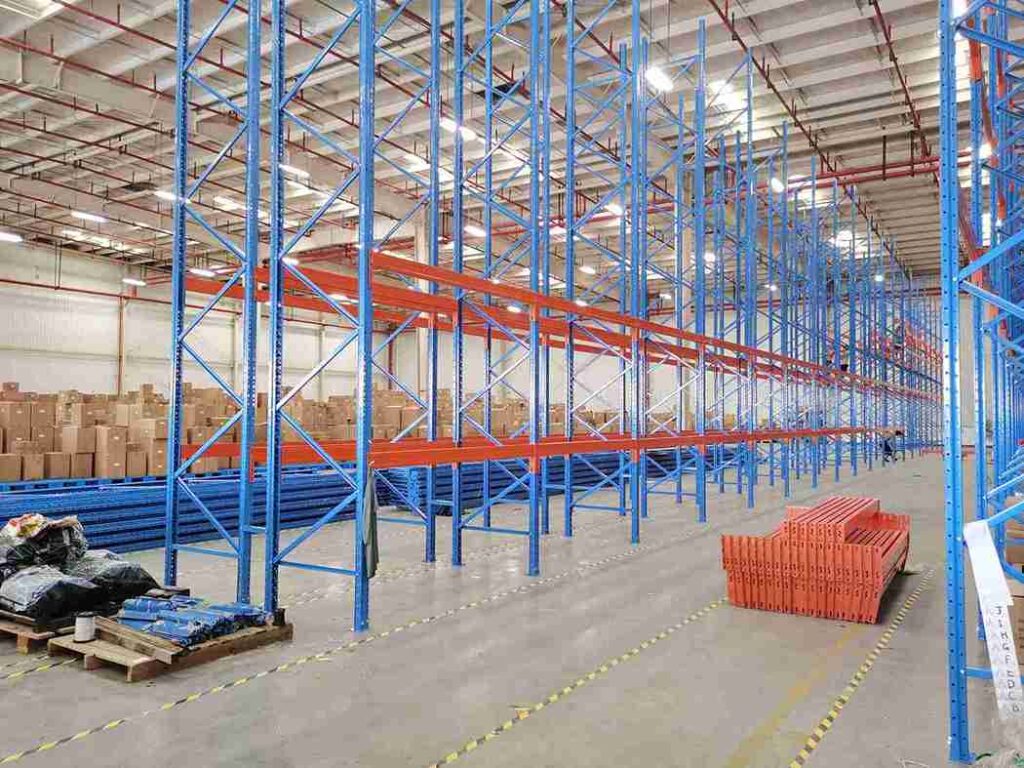
This was not a simple bolt-together operation. The scope included over 7,000 storage locations combining traditional selective racking for palletized goods and long-span shelving for smaller items. The specification demanded adjustable beam levels to accommodate varying load heights, mesh decks for safety and small-item storage, particle boards for specific applications, frame protectors to safeguard against impact damage, and even a safety fence to segregate pedestrian and machine traffic .
The immediate reaction from many industry veterans would be that such a timeline is unrealistic. Yet, through a combination of strategic stock positioning, rapid engineering response, and deployment of experienced installation crews, the project was delivered successfully. Detlev Goedbloed, Major Accounts Manager for the project, stated simply: “Speed is essential in our market and our ability to successfully install the complete racking solution in 2 weeks was a key factor in being selected as their trusted supplier” . This case study will dissect exactly how that was achieved and what lessons it holds for reducing beam racking installation time in other contexts.

Phase 1: The Pre-Construction Blueprint – Engineering for Speed
Rapid installation does not happen by accident. It is the direct result of intensive pre-construction planning that begins long before the first beam is bolted into place. For high-volume 3PLs, the design and engineering phase must be compressed without sacrificing accuracy or safety. Every decision made during this phase has downstream implications for beam racking installation time, and experienced suppliers understand how to optimize each element.
The 48-Hour Stock Response: Eliminating Manufacturing Lead Time
The single most significant factor enabling the two-week installation was the ability of the racking supplier to deliver all beam and frame components on-site from existing stock within 48 hours of order confirmation . This capability is extraordinary in an industry where lead times for manufactured components often stretch to four to six weeks. Understanding how this was achieved provides valuable insights for any organization seeking to minimize beam racking installation time.
How is this possible? It requires a fundamental shift in how racking suppliers manage inventory. Rather than operating on a just-in-time manufacturing basis, suppliers specializing in rapid deployment maintain strategic buffer stocks of critical components. Upright frames in standard heights, beams in common lengths, and all necessary connectors and accessories are held in regional warehouses, ready for immediate dispatch. When the Melbourne project was confirmed, the supplier was able to pull all required components from existing inventory and have them on-site within two days .
For 3PLs operating in markets like Southeast Asia or the Middle East, where supply chains can be disrupted by shipping delays or customs clearance issues, working with a supplier that maintains local stock is non-negotiable. The ability to eliminate manufacturing lead time from the project schedule is perhaps the single most powerful tool for reducing beam racking installation time. As demonstrated in a project for Prime Express in Peru, a supplier was able to activate an immediate response thanks to existing stock in country, completing a 1,400-pallet-position installation in just 30 days . While 30 days may seem lengthy compared to the two-week benchmark, it actually represents significant acceleration given the local market conditions.
CAD Modeling and Pre-Site Configuration
Before any steel arrives at the facility, the entire warehouse layout must be modeled with extreme precision. Modern Computer-Aided Design software allows engineers to create digital twins of the warehouse environment, accounting for every column, door, obstruction, and clearance requirement. This digital planning phase has a direct impact on beam racking installation time because it eliminates the need for on-the-fly decisions and modifications during the physical installation.
In the case of the Melbourne installation, the design process had to account for the specific combination of selective racking and long-span shelving within a single cohesive layout. Selective racking provides direct access to every pallet, making it ideal for fast-moving inventory, while long-span shelving accommodates smaller, non-palletized items. Integrating these two systems requires careful attention to aisle alignment, fire safety clearances, and material flow paths .
The CAD modeling phase also allows for pre-configuration of components. Rather than waiting until materials arrive on-site to determine which beam goes where, the installation team receives detailed pick lists and placement diagrams. Beams and frames can be pre-sorted and staged in the order they will be installed, minimizing time spent searching for components during the critical installation window. This attention to detail can reduce beam racking installation time by as much as 15 percent according to industry estimates .
Permit Navigation and Regulatory Compliance
One of the most common hidden delays in racking projects is the permitting process. Many jurisdictions require stamped engineering drawings and official approval before installation can begin, particularly for facilities classified as high-pile storage. The approval process alone can add two to six weeks to a project timeline if not managed proactively . For organizations focused on minimizing beam racking installation time, navigating this regulatory landscape efficiently is essential.
For the two-week Melbourne project, the racking supplier had to navigate these regulatory requirements while simultaneously mobilizing materials and labor. This was achieved through established relationships with local authorities and a deep understanding of Australian Standard AS4084, which governs pallet racking design and installation. Having stamped drawings ready at the time of order confirmation eliminated the typical back-and-forth with building departments that extends beam racking installation time for less-prepared suppliers.
For 3PLs operating across multiple countries—from Canada to Colombia to Indonesia—working with suppliers who understand local codes is essential. A project for a 3PL in Vaughn, Canada, required a supplier to secure all necessary permit documents and applications before installation could proceed . Their team managed this process while simultaneously engineering and manufacturing the system, resulting in a completed installation in just under eight weeks. While eight weeks may seem lengthy compared to the two-week benchmark, it actually represents significant acceleration given the complexity of Canadian regulatory requirements. The key insight is that parallel processing of permitting and material preparation can dramatically compress overall beam racking installation time.
Site Assessment and Preparation
Another critical factor that influences beam racking installation time is the condition of the installation site before work begins. Floor condition, in particular, can have a dramatic impact on installation speed. Uneven floors require shimming of upright bases, which adds time to every frame installation. Floors with cracks or significant slopes can add one to two days to overall beam racking installation time .
In the Melbourne project, the facility was new construction, which minimized site preparation requirements. However, for many projects in emerging markets, existing facilities may have floors that are less than ideal. In such cases, pre-installation site assessment and remediation can prevent delays during the critical installation window. A case study of a 50,000-square-foot warehouse demonstrated that pre-leveling floors and staging materials appropriately reduced beam racking installation time by four full days .
Beyond floor condition, other site factors that affect beam racking installation time include ceiling obstructions, column locations, existing utilities, and access constraints. In a project for a 3PL warehousing provider, the installation team encountered height restrictions due to structural beams along the back wall and a large pipe protruding along the back wall . Rather than allowing these obstacles to halt progress, the engineering team developed solutions that worked around the constraints while maintaining safety and compliance. This adaptability is a hallmark of experienced installation providers and a key factor in minimizing beam racking installation time when unexpected conditions arise.
Phase 2: Installation Methodology – Precision at Pace
Once materials arrive on-site and permits are secured, the physical installation begins. This phase is where theoretical planning meets practical reality, and where the difference between experienced installers and general contractors becomes most apparent. The methodology employed during installation has a direct and substantial impact on beam racking installation time.
On-Site Frame Assembly: The Foundation of Speed
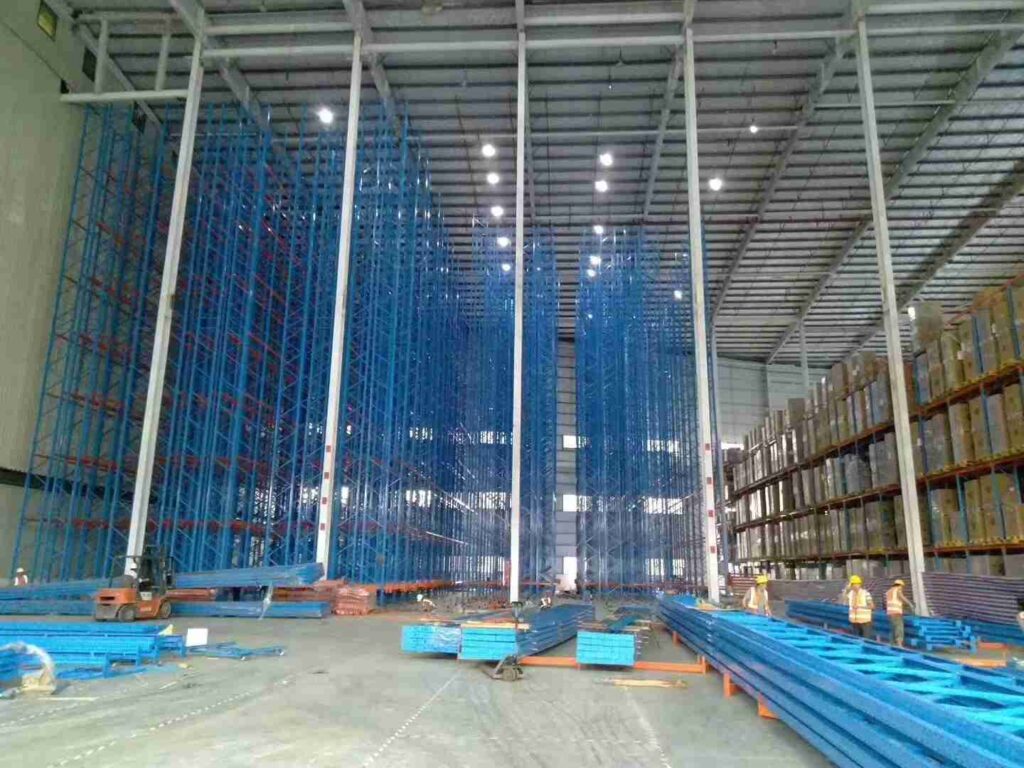
For large-scale installations, upright frames are typically shipped in a knocked-down state to maximize shipping efficiency. This means frames must be assembled on-site before they can be erected. The Melbourne project utilized an approach where frame assembly began immediately upon material arrival, with crews working in parallel to build and stand frames simultaneously . This parallel processing approach is essential for minimizing beam racking installation time.
Frame assembly involves connecting horizontal and diagonal bracing to upright columns using specialized bolts or welding, depending on the rack design. This process requires significant floor space and careful organization. In a facility that may still be under construction or receiving finishing touches, coordinating this space is critical. The installation team for the 3PL project began by staging materials in designated assembly areas, then systematically building frames and moving them into position. As each frame was completed, it was stood upright and temporarily braced before being permanently anchored to the floor. This continuous flow approach eliminates idle time and maximizes labor productivity, directly reducing beam racking installation time.
The experience level of the installation crew is a major determinant of how quickly this phase proceeds. Certified installation teams with extensive experience can complete projects 30 to 50 percent faster than less experienced crews . This is because experienced teams are better able to anticipate potential issues, make quick decisions, and troubleshoot problems on the spot. They also have a better understanding of safety procedures, which prevents accidents and delays during the installation process. For organizations seeking to minimize beam racking installation time, investing in certified installation providers is not an expense but a strategic investment in speed.
Phased Installation and Operational Handover
One of the most innovative aspects of modern racking installation is the concept of phased handover. Rather than waiting for 100 percent completion before the facility becomes operational, installation can be sequenced so that completed sections are handed over to the customer immediately. This approach transforms the relationship between beam racking installation time and operational readiness.
A excellent example of this approach comes from a project executed for a 3PL warehousing provider. The installation proceeded over a two-week period, but with a critical twist: as each row of racking was completed and anchored, it was signed off and immediately filled by the client . This allowed the 24-hour operation to continue with minimal disruption, as the client’s team worked ahead of the installation crew, filling completed racks to clear space for ongoing work.
This methodology requires exceptional coordination between the installation team and the client’s operations staff. Daily meetings, clear communication protocols, and shared schedules are essential. The result, however, is that the facility begins generating revenue days or even weeks earlier than traditional all-at-once completion approaches. In effect, this approach decouples operational readiness from total project completion, making beam racking installation time less critical because value is being generated continuously throughout the installation process.
The Melbourne project utilized a similar approach, with phased handover allowing the client to begin receiving stock and preparing for their opening while installation continued in other areas of the facility . This integration of installation and operations is a hallmark of sophisticated project management and a key strategy for maximizing the value of accelerated beam racking installation time.
Addressing Site Constraints During Installation
Every warehouse presents unique challenges that can derail installation timelines if not addressed proactively. In the Global Industrial project, the team encountered height restrictions due to structural beams along the back wall and a large pipe protruding along the back wall . Rather than allowing these obstacles to halt progress, the engineering team developed solutions that worked around the constraints while maintaining safety and compliance.
Similarly, the Melbourne installation had to accommodate the specific requirements of a facility operating 24 hours per day. The installation process was structured to minimize disruption, with work scheduled during periods of lowest activity and communication maintained constantly with facility management . This attention to the client’s operational needs helped ensure that beam racking installation time did not become a source of conflict or disruption.
For 3PLs in emerging markets, where warehouse infrastructure may not meet first-world standards, the ability to adapt to site conditions is paramount. Uneven floors require shimming of upright bases. Obstructed ceilings require modified rack heights. Narrow aisles require specialized installation equipment. Experienced installation teams anticipate these challenges and have solutions ready before they become problems that extend beam racking installation time.
Quality Assurance During Installation
Speed cannot come at the expense of quality and safety. Every beam racking installation must meet stringent structural and safety standards, and the installation process must include quality checks at every stage. These quality assurance activities, while essential, can add to beam racking installation time if not properly integrated into the workflow.
Key quality checks during installation include:
Plumbness verification ensures that uprights are perfectly vertical within specified tolerances, typically one-eighth inch per ten feet of height. Even a one-degree tilt risks collapse and must be corrected before proceeding . This verification must occur as frames are erected and before beams are installed.
Beam lock engagement verification ensures that all beam connectors are fully seated and safety locks engaged. This is particularly critical for boltless connections, where visual confirmation of proper engagement is essential. In the Melbourne project, this verification was integrated into the installation workflow, with installers checking each connection as it was made .
Anchor torque testing verifies that floor anchors are installed with proper torque to resist the forces they will encounter during operation. A percentage of anchors are typically tested, and any failures require investigation and correction. In the Canadian 3PL project, Hilti Kwik Hus anchors were used specifically because they allow for easy reconfiguration in the future while providing reliable performance .
Overall dimensional verification confirms that aisle widths, beam elevations, and clearances match design specifications. This is particularly critical for facilities planning to deploy automated equipment, where even small deviations can cause operational problems.
When quality assurance is integrated into the installation workflow rather than treated as a separate phase, its impact on beam racking installation time can be minimized. In the phased handover approach, each completed section was inspected and signed off immediately, allowing the client to begin using it while installation continued elsewhere .
Phase 3: The Automation Imperative – Preparing for AGV Integration
While rapid installation of static racking is impressive, the future of high-volume 3PL operations lies in automation integration. Autonomous Guided Vehicles and Autonomous Mobile Robots are transforming warehouse economics, but they place unprecedented demands on racking precision and installation quality. For organizations planning future automation, beam racking installation time must be balanced against the need for exceptional precision.
The Precision Standard for Robotic Environments
In a manual warehouse, operators can compensate for slightly misaligned racking. A forklift driver can adjust their approach if a beam is a few millimeters out of position. AGVs, however, operate on digital commands and cannot make such adjustments. Every component must be installed with near-perfect consistency .
This demands a fundamental shift in installation tolerances. A deviation of even a few millimeters across a long aisle can cause an AGV’s navigation system to accumulate error, potentially resulting in failed pallet engagements or collisions with the rack structure. Suppliers specializing in automation-grade racking implement rigorous quality control processes during installation, including laser verification of upright plumbness and beam level accuracy. These additional quality steps can extend beam racking installation time, but they are essential for facilities planning to deploy automation.
For the Melbourne 3PL, while the initial installation may have been manual, the precision required for future automation was baked into the installation specifications. Frames were installed with tolerances that would accommodate eventual AGV deployment, ensuring the facility could evolve without requiring racking replacement. This forward-thinking approach recognizes that decisions made during initial installation have long-term implications for future automation potential.
Clearance Calculations and Interface Design
The integration of AGVs with beam racking requires meticulous attention to operational clearances. This involves analyzing the AGV’s kinematic profile—how it turns, lifts, and positions loads—in relation to the exact dimensions of the racking and pallets. Factors that must be considered include:
Aisle width integrity is critical for AGV operation. AGVs operating in Very Narrow Aisles require racks to be perfectly vertical. Any leaning compromises the safe operating envelope and can lead to collisions or navigation failures .
Pallet overhang must be carefully managed. Standard pallets may extend beyond beam depths, reducing clearance between the load and adjacent racks. In automated environments, this reduced clearance can interfere with AGV movement and positioning.
Fork entry tolerances are more demanding for automated systems. AGV forks must engage pallets precisely, and misaligned beams can prevent successful pallet retrieval . This requires beam elevations to be maintained with exceptional accuracy across the entire installation.
The installation team must verify that every beam is positioned exactly as specified in the design drawings. This is particularly critical in multi-level installations where beams at different heights must maintain consistent relationships to the floor and to each other. Each of these verification steps adds to beam racking installation time but is essential for automation readiness.
Structural Considerations for Dynamic Loading
AGVs impose different forces on racking than manual forklifts. While a human operator might occasionally impact a rack, AGVs create repetitive, localized stresses through constant, precise engagement and withdrawal cycles. Beams and uprights must be designed for dynamic load fatigue over millions of cycles, not just static capacity .
This has implications for installation quality. Bolts must be torqued to exact specifications. Anchors must be set with precise depth and alignment. Frame splices, if required, must maintain perfect alignment to prevent stress concentrations. Installation crews working on automation-ready projects receive specialized training in these requirements and use calibrated tools to verify compliance. This specialized training and additional verification inevitably extends beam racking installation time compared to standard installations.
For 3PLs planning to deploy AGVs in the future—whether in Dubai, Jakarta, or Mexico City—specifying automation-grade racking and demanding precision installation is not optional. It is the foundation upon which successful automation is built. The additional beam racking installation time required for automation-ready installation must be viewed as an investment in future capability rather than a cost to be minimized.
Very Narrow Aisle Systems and Installation Complexity
Very Narrow Aisle (VNA) racking systems represent the intersection of high-density storage and automation readiness. These systems allow for much slimmer aisles and full use of building height, adding more pallet positions in the same footprint while keeping operations agile and safe . However, they also place exceptional demands on installation precision and can significantly extend beam racking installation time.
A recent project completed in the UK involved VNA pallet racking with heights between 16 and 18 meters and 3,000 locations . The installation included aisle ties at special heights, adapted to the building layout and the material handling equipment, plus sprinkler brackets according to site requirements. The total program took three weeks from receipt of materials . While three weeks is longer than the two-week benchmark for standard selective racking, it represents rapid installation given the complexity of the system.
As Gonzalo Crovetto, Sales Manager UK at AR Racking, noted: “This expansion shows how a well-sized VNA lets you grow upwards while maintaining safety and flexibility. Together with AVANTA we aligned engineering and installation to increase density and leave the system ready for future reconfiguration” . The key insight is that for complex systems, beam racking installation time must be evaluated in the context of the capabilities delivered, not simply as a number to be minimized.
Another landmark project in Morocco involves an extensive VNA racking system and a mezzanine structure capable of accommodating 30,000 boxes across four walking levels and 17 beam levels . This project is being executed in phases, with installation scheduled for completion over several months . While this timeline may seem lengthy, the phased approach ensures meticulous execution at every stage, adhering to top standards of precision and reliability. For organizations with complex requirements, beam racking installation time must be balanced against the need for quality and precision.
Phase 4: System Commissioning and Quality Assurance
Installation completion is not the end of the project. Before the facility can be declared operational, comprehensive commissioning and quality assurance processes must be completed. These final steps ensure that the installation meets all design specifications and safety standards, and they represent the last opportunity to identify and correct issues before the system enters service.
Structural Integrity Verification
Every racking installation must be verified against design specifications and applicable safety standards. This verification process is essential for ensuring long-term safety and performance, and it represents a critical phase in the overall beam racking installation time calculation.
Plumbness verification confirms that uprights are plumb within specified tolerances. This verification is typically performed using laser levels or plumb bobs, with measurements recorded for each upright. Any uprights found to be out of tolerance must be adjusted before proceeding, which can add to beam racking installation time.
Beam lock engagement verification ensures that all beam connectors are fully seated and safety locks engaged. This visual inspection is typically performed as beams are installed, but a final verification ensures that no connections were missed. In the Melbourne project, this verification was integrated with the phased handover approach, with each section inspected before being released to the client .
Anchor torque testing verifies that floor anchors are properly installed and torqued to specifications. A percentage of anchors are typically tested using torque wrenches, with results documented for quality records. Any anchors that fail testing must be replaced or reinstalled, potentially extending beam racking installation time.
Overall dimensional verification confirms that aisle widths, beam elevations, and clearances match design specifications. This verification is particularly important for facilities with automated equipment or narrow aisles, where even small deviations can cause operational problems. In the VNA project in the UK, dimensional verification was critical to ensuring that the system would accommodate the specialized material handling equipment .
Safety System Integration
Modern racking installations include numerous safety features that must be properly installed and tested. These features protect workers, equipment, and inventory, and their proper installation is essential for regulatory compliance and operational safety.
Wire mesh decks prevent items from falling through beam levels, protecting workers below and preventing damage to lower-level inventory. These decks must be properly seated and secured, which adds to beam racking installation time. In the Melbourne project, mesh decks were specified for all pick levels and had to be installed on completed beam runs .
Column protectors guard against impact damage from forklifts and other equipment. These protectors must be anchored at correct heights and positioned to protect the most vulnerable areas of the rack structure. In the Canadian 3PL project, front post protectors were installed to increase visibility and protect critical structural elements .
End-of-aisle protection alerts forklift operators to rack extremities and provides physical barriers to prevent impact. These systems must be properly positioned and anchored to be effective. In the Melbourne project, end-of-row protection was specified to enhance safety in high-traffic areas .
Safety fencing segregates pedestrian and equipment traffic, reducing the risk of worker injuries. Fencing must be installed according to fall protection standards if elevated, and gates must be properly aligned and secured. The Melbourne project included a safety fence as part of the overall installation scope .
Each of these safety elements requires proper installation and verification, and all contribute to overall beam racking installation time. In accelerated projects, safety feature installation is often sequenced to occur during periods when other activities are paused, such as between frame erection and beam installation, to minimize impact on critical path activities.
Load Testing and Operational Validation
For critical applications, load testing may be required to verify system performance. This involves applying design loads to representative rack sections and measuring deflection and structural response. While not always required for standard selective racking, load testing is common for high-bay systems, drive-in racks, or installations in seismic zones.
Load testing can add significantly to beam racking installation time because it requires specialized equipment and procedures. Test loads must be applied incrementally, deflections measured, and results compared to design predictions. Any anomalies must be investigated and resolved before the system can be released for service.
Operational validation goes beyond structural testing to confirm that the system functions as intended in daily use. This includes verifying that pallets can be placed and retrieved without interference, that aisle widths accommodate material handling equipment, and that all safety systems function correctly. In the Global Industrial project, operational validation occurred continuously as the client filled completed rack sections . Any issues were identified and addressed immediately, ensuring that when the installation was fully complete, the entire system was proven operational.
For 3PLs with demanding clients or complex operational requirements, this validation phase is essential for ensuring that the installed system will perform as expected. While it adds to overall beam racking installation time, it also provides confidence that the facility will operate safely and efficiently from day one.
Documentation and Handover
The final step in any racking installation is the formal handover to the client, including all required documentation. This documentation typically includes as-built drawings, anchor torque records, inspection reports, and operation and maintenance manuals. Proper documentation ensures that the client has all information needed to operate and maintain the system safely.
In the Melbourne project, documentation was integrated with the phased handover approach. As each section was completed and inspected, the associated documentation was provided to the client, allowing them to begin using that section immediately . This parallel processing of documentation and installation helped minimize the impact of administrative requirements on overall beam racking installation time.
For 3PLs operating in regulated industries such as food or pharmaceuticals, complete documentation is essential for compliance with industry standards and customer requirements. The Canadian 3PL project, which involved food-grade storage, required documentation of materials used, including certification that high-grade steel and pre-galvanized uprights were suitable for food contact applications .
Phase 5: The Economics of Speed – ROI Analysis
The decision to pursue accelerated racking installation must be justified economically. While faster installation typically commands a premium, the return on investment for high-volume 3PLs is compelling. Understanding the financial mathematics of beam racking installation time is essential for making informed decisions about project acceleration.
Revenue Acceleration
Consider a 3PL with a 100,000-square-foot warehouse capable of generating $1.50 per square foot per month in storage revenue, plus handling fees. Each week of delay in becoming operational represents nearly $40,000 in foregone storage revenue alone, not including handling fees or potential penalty payments from clients.
If accelerated installation costs an additional 20 percent but compresses the timeline from eight weeks to two weeks, the mathematics are straightforward: six weeks of additional revenue far exceeds the premium paid. For the Melbourne 3PL, becoming operational in two weeks rather than the industry average of eight weeks meant capturing nearly two months of revenue that would otherwise have been lost. This revenue acceleration alone justified any premium paid for rapid installation.
The financial impact extends beyond direct revenue. For 3PLs serving clients with seasonal peaks—such as retailers preparing for holiday seasons or agricultural producers during harvest—the ability to have capacity in place when needed can determine whether contracts are won or lost. In these contexts, beam racking installation time becomes a strategic competitive variable, not just an operational consideration.
Labor Productivity Gains
Rapid installation also impacts labor productivity during the construction phase. When projects stretch over many weeks, coordination costs increase, temporary facilities must be maintained longer, and management attention is diverted from core operations. Condensing the installation timeline concentrates these costs into a shorter period, reducing total overhead.
Additionally, when installation is completed quickly, the facility can begin capturing the labor productivity benefits of proper storage infrastructure sooner. In a manual operation, well-designed racking reduces travel time, improves pick accuracy, and enhances safety. Each day these benefits are delayed represents lost efficiency.
The productivity benefits of proper racking are substantial. In a well-designed facility, pickers spend less time traveling between locations, forklift operators can place and retrieve pallets more efficiently, and inventory is easier to locate and access. These efficiency gains translate directly into lower labor costs per unit handled. Accelerating beam racking installation time allows these benefits to be realized sooner, compounding the financial return on the racking investment.
The Automation Multiplier
For facilities planning automation deployment, rapid racking installation enables faster realization of automation benefits. A case study from Cyngn and Global Logistics & Fulfillment demonstrated that deploying autonomous vehicles alongside proper racking infrastructure produced a 33 percent increase in labor productivity and a 64 percent reduction in labor cost per pallet compared to manual operations .
If racking installation delays automation deployment by even a few weeks, the cumulative cost of foregone productivity gains can be substantial. For GLF, annual savings from automation exceeded $100,000 given sufficient pallet throughput . Every week of delay in achieving that throughput represents nearly $2,000 in lost savings.
For 3PLs in competitive markets like Southeast Asia or Latin America, where margins are tight and labor costs are rising, these productivity gains can be the difference between profitability and loss. Accelerating beam racking installation time to enable faster automation deployment is not just an operational decision—it is a strategic financial imperative.
Risk Mitigation Value
Accelerated installation also provides value through risk mitigation. When installation stretches over many weeks, the facility remains exposed to various risks for longer periods. Materials stored on-site are vulnerable to theft or damage. Partially completed racking may be unstable or unsafe. Construction activities may interfere with ongoing operations.
By compressing beam racking installation time, these risk exposures are minimized. Materials spend less time on-site before installation. Partially completed sections are completed and secured more quickly. The window for potential accidents or incidents is reduced. While difficult to quantify, this risk reduction has real value for facility owners and operators.
Additionally, rapid installation reduces exposure to external risks such as weather delays, labor disruptions, or material price increases. When a project is completed in two weeks rather than eight, there is simply less time for things to go wrong. This risk reduction is particularly valuable in emerging markets where external conditions may be less predictable.

Technical Deep Dive: Engineering Considerations for Rapid Installation
To truly understand what makes rapid beam racking installation possible, the engineering principles that govern system design and installation methodology must be examined in detail. These technical considerations have direct implications for how quickly installation can proceed without compromising quality or safety.
Material Selection and Manufacturing
The steel used in racking components must meet strict specifications for yield strength, ductility, and dimensional consistency. For rapid installation projects, material selection becomes even more critical because there is no time for rework or replacement of non-conforming components.
High-grade steel with consistent mechanical properties ensures that frames and beams fit together as designed. Pre-galvanized uprights, as used in the Canadian 3PL project, offer corrosion resistance while maintaining dimensional stability . This is particularly important for facilities storing food products or operating in challenging ambient conditions, as it eliminates the need for field painting or additional corrosion protection.
Manufacturing tolerances must be tighter for rapid installation projects. When components are manufactured to standard commercial tolerances, cumulative variations can cause fit-up problems during installation. For accelerated timelines, specifying precision manufacturing with documented quality control is essential. This ensures that every beam and frame will fit together as designed, eliminating the time-consuming adjustments that can extend beam racking installation time.
Connection Design and Beam Locking Mechanisms
The connections between beams and uprights are critical to both installation speed and long-term safety. Traditional bolted connections require multiple fasteners and precise alignment, slowing installation significantly. Modern boltless connections using keyhole slots and integrated locking mechanisms allow beams to be installed quickly without sacrificing strength.
These connections must be designed to resist both vertical loads from stored goods and horizontal loads from seismic events or forklift impacts. They must also provide clear indication that the lock is fully engaged, allowing installers and inspectors to verify proper installation at a glance. The speed advantage of boltless connections can be substantial, with some estimates suggesting they reduce beam racking installation time by 20 percent compared to bolted connections .
In the Melbourne project, the combination of selective racking and long-span shelving required different connection types for different system components . The installation team had to be thoroughly trained on each connection type and verify proper engagement on every beam. This training and verification are essential for ensuring that the speed advantages of modern connections are realized without compromising safety.
Anchor Design and Floor Interaction
The interface between racking and the warehouse floor is often overlooked in installation planning, yet it is critical to both speed and safety. Floor anchors transfer loads from the racking to the building structure and must be designed for the specific floor conditions encountered.
In new construction, floors are typically flat and predictable, allowing standard anchor patterns. In existing facilities, floors may be uneven, cracked, or contain embedded utilities requiring modified anchor placement. For rapid installation projects, the installation team must assess floor conditions immediately upon arrival and adapt anchor plans as needed. This adaptability is essential for maintaining beam racking installation time when unexpected floor conditions are encountered.
The Canadian 3PL project utilized Hilti Kwik Hus anchors, which allow for easy reconfiguration in the future . This forward-thinking approach recognizes that 3PL facilities rarely remain static; as client needs change, racking configurations may need to change as well. Anchors that can be removed and reinstalled without damaging the floor facilitate future modifications while maintaining installation speed.
Seismic Considerations
For facilities in seismic zones—including parts of Latin America, the Middle East, and Southeast Asia—racking must be designed and installed to withstand earthquake forces without collapse. This adds complexity to both design and installation, and can significantly impact beam racking installation time.
Seismic design involves calculating the dynamic response of the loaded racking system to ground motion and providing bracing and connections sufficient to resist the resulting forces. Installation must follow seismic details precisely, including specific anchor types, bracing configurations, and clearance requirements around expansion joints. Seismic bracing alone can add two to four days to overall beam racking installation time .
The Colombian project for Refax, while completed in four weeks rather than two, demonstrates how seismic considerations can be integrated into accelerated timelines. The three-level mezzanine solution was precisely adapted to local conditions while meeting all safety requirements . This balance of speed and safety is achievable when engineering teams have experience in both rapid deployment and seismic design.
Global Applications: Adapting Rapid Installation for Emerging Markets
While the Melbourne project occurred in Australia, the principles apply directly to the markets served by many 3PLs: Southeast Asia, Central Asia, the Middle East, Africa, and Latin America. However, each region presents unique challenges that must be addressed to achieve rapid beam racking installation time.
Southeast Asia: Density and Diversity
Southeast Asian markets including Indonesia, Vietnam, Thailand, and Malaysia are characterized by high population density, rapidly growing e-commerce sectors, and diverse regulatory environments. Warehouses in these markets often must maximize storage density while accommodating a wide variety of product types.
Rapid installation in Southeast Asia requires local supply chains to avoid shipping delays and customs clearance issues. Suppliers with regional warehouses in Singapore, Malaysia, or Thailand can respond faster than those shipping from Europe or North America. For organizations seeking to minimize beam racking installation time, working with suppliers who maintain local stock is essential.
Additionally, installation crews must be prepared for high-temperature environments where productivity may be affected by heat. Scheduling installation during cooler periods, providing adequate hydration and rest breaks, and using mechanical assistance for heavy lifts are essential for maintaining pace without compromising safety. These adaptations help ensure that beam racking installation time targets can be met despite challenging environmental conditions.
Middle East: Scale and Speed
The Middle East, particularly the Gulf Cooperation Council countries, is known for ambitious logistics projects on massive scales. Warehouses in Dubai, Riyadh, and Doha often exceed hundreds of thousands of square feet and require correspondingly large racking installations.
For these mega-projects, rapid installation requires phased mobilization of multiple installation crews working in parallel. Rather than a single team working sequentially, multiple teams are deployed to different zones simultaneously, compressing overall timeline. This parallel processing approach can dramatically reduce beam racking installation time for large facilities.
The region’s extreme temperatures during summer months require installation to occur primarily at night or in climate-controlled facilities. This shift work approach maintains productivity while protecting worker safety. Night shifts may actually increase productivity by eliminating the interruptions of daytime operations, potentially reducing beam racking installation time despite the unconventional schedule.
Latin America: Regulatory Navigation
Latin American markets including Mexico, Colombia, Peru, and Brazil have complex regulatory environments that can delay racking installation if not managed properly. Each country has its own seismic design requirements, fire safety codes, and permitting processes.
The Colombian project for Refax demonstrates how rapid installation can be achieved in Latin America through local engineering expertise. A supplier’s engineering team in Colombia worked closely with the client to design a solution that maximized space utilization while meeting all local requirements . The project was completed in four weeks—significantly faster than typical timelines for the region.
Similarly, the Peruvian project for Prime Express succeeded because the supplier maintained stock in country and had engineering resources familiar with local codes . For 3PLs operating across Latin America, partnering with suppliers who have local presence is essential for achieving accelerated beam racking installation time.
Africa: Infrastructure Challenges
African markets present unique infrastructure challenges that can impact racking installation. Power reliability, transportation networks, and skilled labor availability vary significantly across the continent.
Successful rapid installation in Africa requires self-sufficient installation teams capable of operating independently of local infrastructure. This may include mobile generators for power tools, satellite communications for coordination, and comprehensive logistics planning for material delivery. These additional requirements can extend beam racking installation time if not properly planned for.
Additionally, installation schedules must account for long lead times on materials that cannot be sourced locally. Forward planning and early ordering are essential to avoid delays at customs or during inland transportation. For organizations with aggressive timeline targets, these logistics considerations must be addressed well before installation begins.
Central Asia: Emerging Logistics Hubs
Central Asian markets including Kazakhstan, Uzbekistan, and Azerbaijan are emerging as important logistics corridors connecting China, Europe, and the Middle East. Warehousing infrastructure in these countries is developing rapidly, but local supply chains for racking components may be immature.
For projects in Central Asia, rapid installation requires careful logistics coordination to ensure materials arrive on schedule despite potential delays at border crossings or during inland transportation. Working with suppliers experienced in cross-border logistics is essential for maintaining beam racking installation time targets.
Additionally, installation teams must be prepared for extreme seasonal temperature variations, from bitter winter cold to summer heat. Scheduling installation during moderate seasons and providing appropriate protective equipment for workers maintains productivity and safety. These adaptations help ensure that beam racking installation time can be achieved despite challenging conditions.
Case Study Revisited: Deconstructing the Two-Week Melbourne Installation
With the technical foundations established, a return to the Melbourne project allows examination of exactly how each element contributed to the successful two-week timeline. This detailed deconstruction provides practical insights for any organization seeking to minimize beam racking installation time.
Day 1-2: Order Confirmation and Material Mobilization
Upon receiving order confirmation, the racking supplier immediately activated their stock response protocol. Within 48 hours, all beam and frame components required for the installation were pulled from inventory, loaded onto trucks, and dispatched to the Melbourne site .
This rapid mobilization was possible because the supplier maintained strategic stock of components in standard sizes. Rather than manufacturing to order—which would have added weeks to the timeline—they held inventory specifically for projects requiring accelerated delivery. This strategic inventory position is perhaps the single most powerful tool for reducing beam racking installation time.
Simultaneously, supporting materials including mesh decks, particle boards, frame protectors, and safety fencing were ordered from the supplier network and coordinated for delivery within the same timeframe . This parallel processing of multiple material streams ensured that everything arrived on-site together, avoiding the delays caused by partial shipments that can extend beam racking installation time.
Day 3-5: Site Preparation and Frame Assembly
As materials arrived, the installation team mobilized on-site and began frame assembly. The facility, while new, still required preparation work including marking anchor locations, clearing assembly areas, and coordinating with other trades that may have been finishing their work.
Frame assembly proceeded in a systematic fashion, with crews building frames in the order they would be installed. Completed frames were staged adjacent to their installation positions, minimizing travel time during the erection phase. This careful staging and sequencing helped minimize beam racking installation time by eliminating unnecessary material handling.
The project scope included both selective racking and long-span shelving, requiring different assembly techniques for different frame types. The installation team had to maintain separation between these component streams to prevent confusion during erection. This attention to detail prevented the kind of mistakes that can extend beam racking installation time through rework.
Day 6-10: Erection and Anchoring
With frames assembled and staged, the erection phase began. Frames were lifted into position, temporarily braced, and then permanently anchored to the floor. This phase required careful coordination to ensure that frames remained plumb and aligned as anchoring proceeded.
Beam installation followed frame erection, with beams placed at specified elevations and beam locks engaged. The adjustable beam levels specified in the design allowed for fine-tuning of elevations to accommodate varying pallet heights . This adjustability provided flexibility during installation while maintaining the precision required for safe operation.
As each row was completed, it was inspected and signed off, allowing the client to begin filling racks immediately. This phased handover approach kept the project moving while simultaneously generating operational value. It also demonstrated that effective project management can decouple operational readiness from total project completion, effectively reducing the impact of beam racking installation time on business operations.
Day 11-14: Safety Features, Finishing, and Final Inspection
The final phase focused on installing safety features including mesh decks, particle boards, frame protectors, and the safety fence . These elements, while often viewed as accessories, are critical to safe operation and must be installed correctly.
Mesh deck installation required placing decks on beam levels and securing them against displacement. Particle boards were installed in locations requiring solid surfaces for small-item storage. Frame protectors were anchored at impact points, and the safety fence was erected to separate pedestrian walkways from equipment traffic.
A final comprehensive inspection verified that all components were properly installed, all safety features were functional, and the entire system met design specifications and applicable standards. With inspection complete, the facility was handed over for full operation—exactly two weeks after order confirmation.
Key Success Factors
Several factors were critical to the success of this accelerated timeline:
Inventory availability: The supplier maintained stock of all required components, eliminating manufacturing lead time . This single factor had the greatest impact on beam racking installation time.
Experienced installation team: The installation crew was trained and experienced in rapid deployment methodologies. Their experience allowed them to work efficiently and avoid the mistakes that can extend timelines.
Parallel processing: Frame assembly, erection, and safety feature installation overlapped where possible, compressing the overall schedule.
Phased handover: The client began using completed sections immediately, generating value during installation and demonstrating that operational readiness can be achieved before full project completion.
Proactive coordination: Communication between supplier, installer, and client was constant and clear, preventing misunderstandings that could have delayed progress .
The 3PL’s Customer Representative Manager confirmed the success, stating: “We are very happy with stow. Their service was good, they did what they promised and we are now able to receive our stock and be ready for our opening” .
Comparative Analysis: Alternative Approaches to Rapid Installation
The Melbourne project represents one approach to achieving rapid beam racking installation time, but it is not the only model. Examining alternative approaches provides valuable perspective on the range of possibilities.
The RACKsteel Model: Seven-Day Relocation
A project executed by RACKsteel for a client merging two warehouses in British Columbia demonstrates a different approach to rapid installation. The client needed a teardown of 110 twenty-foot-high racking frames and associated beams, along with installation services of the same material in a new location, all by the end of the month .
The client’s usual supplier was not available until mid-August, creating a critical crunch that threatened significant downtime. RACKsteel was able to quote a competitive price with flexible start times using their in-house crew and foreman leadership. The solution involved working the project in stages, collaborating closely with the client’s project management team to minimize lost production and distribution revenue .
Ultimately, while the project was anticipated to take ten full days, the team accomplished everything in seven days, ahead of schedule . This case demonstrates that with experienced crews and careful planning, even complex relocation projects can achieve remarkably short beam racking installation time.
The key difference from the Melbourne project is that this involved reused materials rather than new components. This adds complexity because existing materials must be inspected and certified before reuse, but it also eliminates manufacturing lead time. For organizations with quality existing racking, relocation can be a faster path to operational capacity than new installation.
The Constructor Model: Eight-Week Comprehensive Solution
At the other end of the spectrum, the Canadian 3PL project completed by Constructor took just under eight weeks from initial engagement to operational system . This timeline included design, engineering, manufacturing, permit application filing, and installation—a comprehensive scope that extended beyond pure installation.
This project demonstrates that when beam racking installation time is measured from initial customer contact rather than order confirmation, the timeline expands to include design, engineering, and permitting phases. For organizations planning new facilities, understanding this broader timeline is essential for realistic project planning.
The Constructor project also highlights the importance of comprehensive project management. Their team managed everything from initial planning through to installation and ongoing service and support, including securing permit documents and applications . This integrated approach ensures that nothing falls through the cracks, even if it means a somewhat longer overall timeline.
Lessons from Comparative Analysis
Comparing these cases yields several insights for organizations seeking to minimize beam racking installation time:
Define the timeline boundary clearly: Is beam racking installation time measured from order confirmation, from material receipt, or from initial customer contact? Each definition yields different numbers and must be understood in context.
Consider the full project scope: A comprehensive solution that includes design, engineering, and permitting may take longer but reduces the burden on the client. A pure installation project can be faster but requires the client to manage other elements.
Reused materials can be faster: When quality existing racking is available, relocation can achieve remarkably short timelines by eliminating manufacturing lead time.
Experienced crews are essential: All successful rapid installations share one common element: experienced installation crews who can work efficiently and solve problems on the fly.
Future Trends: What Rapid Installation Means for Tomorrow’s Warehouses
As the logistics industry continues to evolve, several trends will further accelerate the demand for rapid racking installation and shape how beam racking installation time is measured and managed.
The Rise of Pop-Up Warehouses
E-commerce seasonal peaks—from Singles Day in Asia to Black Friday globally—create temporary capacity crunches that cannot be solved by permanent infrastructure alone. The concept of pop-up warehouses—temporary facilities deployed for peak seasons and then dismantled—is gaining traction.
Pop-up warehouses require racking that can be installed extremely quickly, used intensively for weeks or months, and then removed just as quickly without damage to components. This demands racking designed for rapid assembly and disassembly, with connection systems that facilitate multiple installation cycles. For these applications, beam racking installation time becomes the critical metric, often more important than long-term durability.
Suppliers are developing racking specifically for temporary applications, with lighter-weight components, tool-less connections, and modular designs that allow for rapid reconfiguration. For 3PLs serving seasonal industries like agriculture or fashion, pop-up warehouses enabled by rapid-install racking offer flexible capacity without long-term commitment. The ability to achieve minimal beam racking installation time for these temporary facilities will be a key competitive differentiator.
Automation-Ready Infrastructure
As AGV and AMR adoption accelerates, warehouses must be designed and installed to accommodate automation from day one. This means precision installation that meets robotic tolerances, even if automation is not deployed immediately.
The concept of automation-ready racking includes features like integrated guidance markers for AGV navigation, consistent beam elevations that facilitate robotic picking, and structural capacity for future automated systems. Installing automation-ready racking today positions facilities for seamless automation deployment tomorrow. While this may extend initial beam racking installation time slightly, it eliminates the need for future rework when automation is deployed.
For 3PLs in emerging markets, where automation adoption may lag developed markets by several years, specifying automation-ready racking during initial installation avoids the costly and disruptive process of replacing racking when automation is eventually deployed. This forward-thinking approach recognizes that decisions made during initial installation have long-term implications for future capabilities.
Digital Twins and Virtual Commissioning
The use of digital twins—virtual replicas of physical facilities—is transforming racking installation. By creating detailed digital models before installation begins, potential conflicts and issues can be identified and resolved virtually, reducing surprises during physical installation.
Virtual commissioning extends this concept to automation integration. Before any AGV operates in the physical facility, its performance can be simulated in the digital twin, verifying that clearances, navigation paths, and interaction points all function as designed. This virtual validation reduces the risk of problems during physical commissioning that could extend beam racking installation time.
For rapid installation projects, digital twins enable parallel engineering and construction. While physical installation proceeds, engineering teams can continue refining the digital model, identifying and resolving issues that might otherwise cause delays. This parallel processing approach helps maintain aggressive beam racking installation time targets.
Sustainable Materials and Circular Economy
Environmental sustainability is becoming increasingly important in warehouse design and construction. Racking manufactured from recycled steel with high recycled content reduces the carbon footprint of new facilities. Racking designed for disassembly and reuse supports circular economy principles by extending component lifecycles.
For 3PLs serving environmentally conscious clients, specifying sustainable racking with certified recycled content and end-of-life recyclability demonstrates commitment to sustainability. Rapid installation techniques that minimize energy consumption and waste during construction further enhance environmental performance.
These sustainability considerations may affect beam racking installation time in several ways. Sustainable materials may have different lead times or availability than conventional materials. Design for disassembly may require different connection systems that affect installation speed. Organizations pursuing sustainability goals must balance these considerations against timeline requirements.
Conclusion: Making the Impossible Possible
The question posed at the beginning of this case study—”From order to operation in two weeks?”—is no longer hypothetical. It has been answered definitively by projects like the Melbourne 3PL installation, where over 7,000 storage locations were designed, delivered, and installed within that compressed timeframe . Other projects, from seven-day relocations in British Columbia to three-week VNA installations in the UK, demonstrate that rapid beam racking installation time is achievable across a range of contexts and requirements .
Achieving this level of speed requires more than just efficient installation crews. It demands:
Strategic inventory positioning with components ready for immediate dispatch, eliminating manufacturing lead time from the project schedule . This single factor has the greatest impact on beam racking installation time.
Engineering excellence that produces accurate, buildable designs, minimizing the need for on-site modifications and adjustments.
Regulatory expertise that navigates permitting requirements proactively, avoiding the delays that plague less-prepared projects .
Experienced installation teams trained in rapid deployment methodologies, capable of working efficiently and solving problems without extending timelines .
Client collaboration that enables phased handover and parallel operations, decoupling operational readiness from total project completion .
Quality focus that ensures speed does not compromise safety or precision, protecting workers and inventory while maintaining compliance .
For high-volume 3PLs serving demanding clients across diverse industries, the ability to deliver operational warehouses in weeks rather than months is a competitive advantage that cannot be overstated. Whether expanding into new markets in Southeast Asia, establishing a presence in the Middle East, or optimizing operations in Latin America, rapid beam racking installation time should be a cornerstone of logistics strategy.
The technology, methodology, and expertise exist today to make the impossible possible. The question is not whether rapid installation can be achieved, but whether organizations are working with partners who have the capability and commitment to deliver it. As the Melbourne project demonstrated, when all elements align, two weeks from order to operation is not just possible—it is achievable.
In the fast-paced world of global logistics, that capability captures the essential truth: those who can deliver speed, while maintaining quality and safety, will win the trust—and the business—of the world’s most demanding 3PLs.
Frequently Asked Questions
How does warehouse size affect beam racking installation time estimates?
Warehouse size has a direct correlation with beam racking installation time. Small warehouses between 1,000 and 5,000 square feet typically require one to three days for complete installation. Medium facilities ranging from 5,000 to 20,000 square feet generally need three to seven days. Large warehouses exceeding 20,000 square feet often require one to three weeks, depending on system complexity and the number of pallet positions required . These estimates assume experienced installation crews and proper site preparation.
Can beam racking installation occur while the warehouse remains operational?
Yes, phased installation approaches allow racking to be installed while the facility continues operating, though some disruption is inevitable. The Global Industrial project demonstrated that by completing and handing over rows sequentially, the client was able to fill completed sections while installation continued elsewhere . This approach requires careful coordination, clear communication protocols, and a willingness from both parties to work around each other. For facilities with 24-hour operations, this phased approach is often the only viable option.
What impact do seismic requirements have on beam racking installation time?
Seismic bracing and compliance requirements typically add two to four days to overall beam racking installation time . This additional time accounts for more complex anchor patterns, specialized bracing configurations, and additional inspections required to verify seismic compliance. In high-seismic zones such as parts of Latin America, the Middle East, and Southeast Asia, these requirements are non-negotiable and must be factored into project planning from the beginning.
How does floor condition affect installation timelines?
Floor condition is one of the most significant site factors affecting beam racking installation time. Floors with cracks, significant slopes, or uneven surfaces can add one to two days to overall installation time . In extreme cases, floor remediation may be required before installation can begin, potentially adding weeks to the project timeline. Pre-installation site assessment is essential for identifying floor issues early and developing appropriate remediation plans.
What is the fastest type of beam racking system to install?
Selective pallet racking with boltless connections is generally the fastest system to install, with small warehouses achievable in one to three days . The simple geometry, standardized components, and quick-connect beam attachments minimize installation time. More complex systems such as drive-in racking, push-back racking, or VNA systems require additional time due to more complex layouts, tighter tolerances, and specialized components.
How do permit requirements affect beam racking installation time?
Permit requirements can add two to six weeks to project timelines if not managed proactively . The Canadian 3PL project demonstrated that parallel processing of permit applications during design and manufacturing can minimize this impact . Working with suppliers who understand local permitting requirements and have established relationships with authorities can significantly reduce permit-related delays.
Can reused components reduce beam racking installation time?
When quality existing components are available and properly inspected, reuse can reduce beam racking installation time by eliminating manufacturing lead time. The RACKsteel project demonstrated that a complex relocation involving 110 frames could be completed in seven days, ahead of the ten-day estimate . However, reused components must be carefully inspected and certified before installation to ensure they meet safety standards and will perform reliably.
What training do installers need for rapid deployment projects?
Installers working on rapid deployment projects require training beyond standard racking installation. This includes training in parallel work sequencing, phased handover procedures, and communication protocols for working in active facilities. Additionally, crews must be proficient in all connection types used in the project and familiar with specific safety requirements. Certified installation teams with extensive experience complete projects 30 to 50 percent faster than less experienced crews .
If you require perfect CAD drawings and quotes for warehouse racking, please contact us. We can provide you with free warehouse racking planning and design services and quotes. Our email address is: jili@geelyracks.com