📐 "First 50 Enterprise Queries Get Custom 3D Warehouse Design" Plan















The Engineering Behind Quality: Understanding Second Hand Racking Systems Certification
Load Capacity Verification Protocols
When warehouse operators across Southeast Asia and the Middle East evaluate second hand racking systems, the single most critical technical consideration involves load capacity verification. Unlike new equipment with factory-documented specifications, pre-owned industrial racks require systematic engineering assessment to confirm performance capabilities. This verification process, refined over decades of industry practice, transforms unidentified used components into certified storage solutions.
Professional suppliers of quality used warehouse racking employ structural engineers who calculate load capacities based on material properties, section dimensions, and connection configurations. These calculations reference established design standards—European EN 15512, American RMI specifications, or regional equivalents applicable to your facility location . For second hand pallet racking deployed across ASEAN markets, verification against recognized standards ensures compliance with local safety regulations and insurance requirements.
The engineering assessment examines each component’s contribution to overall system performance. Upright columns receive particular attention, as their slenderness ratios determine susceptibility to buckling under compressive loads. Beam capacities depend on section modulus and steel grade—information often stamped on original components or determined through laboratory testing when markings are illegible. Refurbished storage systems from reputable sources include comprehensive load documentation that removes guesswork from warehouse planning.
Material Integrity and Steel Grading
The structural steel comprising second hand racking systems typically originates from reputable mills, with material properties documented in original manufacturing records. However, years of service may affect material characteristics through fatigue loading or corrosion degradation. Professional refurbishment includes material verification that confirms continued suitability for intended applications.
Steel grading tests, when performed, measure yield strength and tensile properties that determine load-carrying capacity. For pre-owned industrial racks destined for heavy-duty applications, these tests provide confidence that materials meet or exceed minimum requirements. Ultrasonic thickness measurements detect corrosion-related section loss that might otherwise escape visual detection—a particular concern for used warehouse racking previously exposed to harsh environments.
Surface condition assessment evaluates both cosmetic appearance and protective coating integrity. Quality refurbishment includes complete cleaning—typically through shot blasting or chemical treatment—followed by fresh coating application that restores corrosion resistance. This process, documented in supplier quality records, distinguishes premium second hand racking systems from ordinary used equipment offered without refurbishment certification.
Connection Integrity and Component Compatibility
Beam-to-upright connections represent the most stressed interfaces in any rack structure, and their condition fundamentally affects second hand racking systems safety. Professional inspection examines connector locks for wear patterns indicating previous overloading or excessive insertion cycles. Connector hooks must engage upright slots with positive retention—typically confirmed through visual inspection and physical testing during refurbishment.
Component compatibility extends beyond obvious manufacturer matching to include subtle dimensional considerations. As industry experts note, some racking systems use imperial measurements while others follow metric standards—these systems cannot be safely intermixed regardless of apparent similarity . Quality used warehouse racking suppliers maintain detailed component inventories ensuring that all elements within each system share compatible dimensions and connection geometries.
The interaction between components determines overall structural behavior—a rack derives its stability through the collective performance of all connected parts rather than individual component capacity alone . Professional engineering verification considers these interactions, ensuring that second hand pallet racking assemblies perform as integrated systems rather than collections of unrelated components.
Sourcing Strategies for Premium Second Hand Racking Systems
Supplier Evaluation and Due Diligence
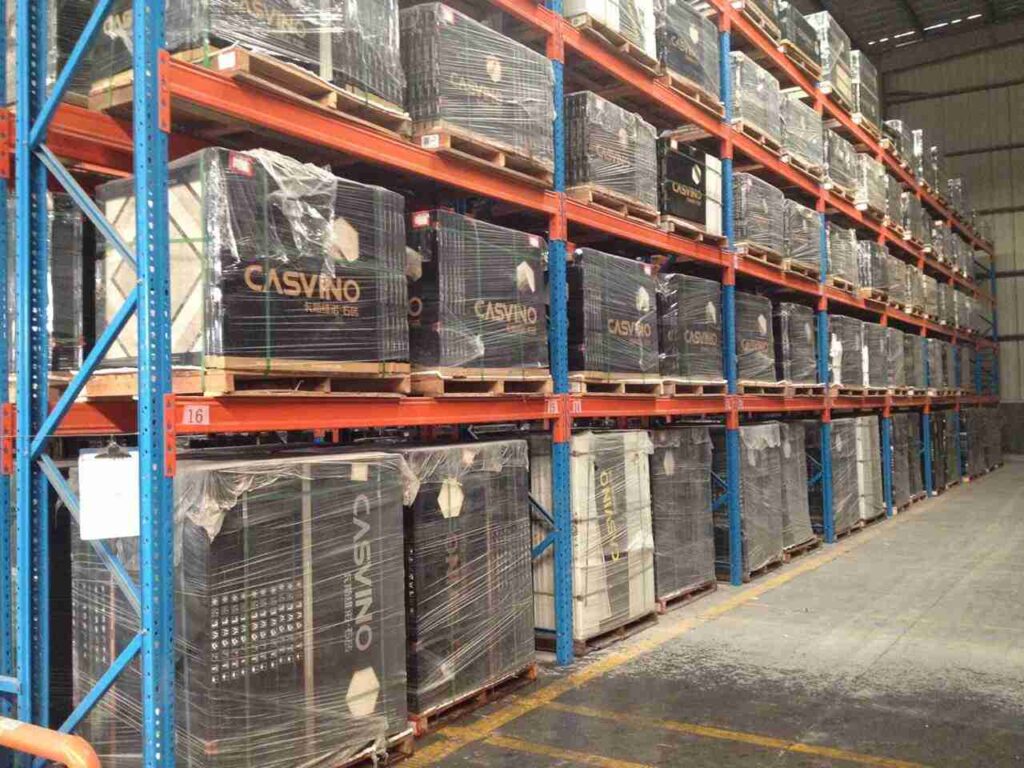
Identifying reliable sources for second hand racking systems requires systematic supplier evaluation extending beyond superficial price comparisons. Throughout China’s industrial hubs—particularly Jiangsu, Shandong, and Guangdong provinces—specialized reconditioning facilities have emerged that transform decommissioned warehouse equipment into certified storage solutions . These operations differ fundamentally from casual surplus dealers through their investment in inspection infrastructure, engineering capability, and quality documentation.
When evaluating potential suppliers, warehouse operators should examine refurbishment capabilities rather than merely inventory size. Leading facilities maintain integrated operations where cleaning, straightening, welding, surface treatment, and load testing occur under single management with documented quality controls. Pre-owned industrial racks from such sources include component grading—Class A for immediately reusable components, Class B for items requiring repair, and rejection for units beyond economic restoration.
Supplier performance metrics offer objective evaluation criteria beyond marketing claims. On-time delivery rates exceeding 97 percent indicate reliable production planning and inventory management. Reorder rates above 20 percent suggest customer satisfaction sufficient to generate repeat business. Response times under three hours typically reflect dedicated international sales teams capable of supporting cross-border transactions . These indicators, verified through reference checking and transaction records, identify suppliers capable of delivering consistent quality used warehouse racking.
Inspection Rights and Quality Verification
Before committing to second hand racking systems purchases, prudent buyers establish inspection protocols protecting their interests. For cross-border transactions common throughout Southeast Asia and Middle Eastern markets, physical inspection before shipment may prove impractical—requiring alternative verification methods that maintain quality assurance.
Photographic documentation provides baseline visibility when in-person visits aren’t feasible. Comprehensive image sets should show representative components from multiple angles, including close-ups of connection points where wear most commonly appears. Video walkthroughs offer perspective on overall component condition that still photographs cannot capture. Refurbished storage systems suppliers accustomed to international clients maintain comprehensive photo archives documenting each inventory item.
Third-party inspection services offer independent quality assessment for significant investments. Professional inspectors experienced with warehouse equipment evaluate components against recognized standards, providing unbiased condition reports that inform purchasing decisions. For large-scale second hand pallet racking acquisitions, sample approval—inspecting representative components before full order commitment—establishes quality benchmarks applicable to remaining inventory.
Documentation Requirements and Traceability
Comprehensive documentation distinguishes premium second hand racking systems from undocumented used equipment. Essential records include original manufacturer specifications when available, refurbishment reports documenting condition assessment and repairs, and load capacity certifications validated by structural engineering review.
Component traceability—knowing each item’s provenance and service history—provides confidence impossible to achieve with anonymous used components. Reputable suppliers maintain digital archives documenting each pre-owned industrial rack through photographs before refurbishment, during processing, and after final preparation. This transparency allows clients to verify condition firsthand, eliminating uncertainty that often accompanies cross-border equipment transactions .
For facilities subject to regulatory oversight or insurance audit, documentation proves essential for compliance verification. Used warehouse racking installations lacking proper certification may face operational restrictions or premium insurance rates. Professional suppliers understand these requirements and provide documentation packages satisfying regulatory and insurance expectations.
Installation Excellence: Professional Setup for Second Hand Racking Systems
Pre-Installation Site Assessment
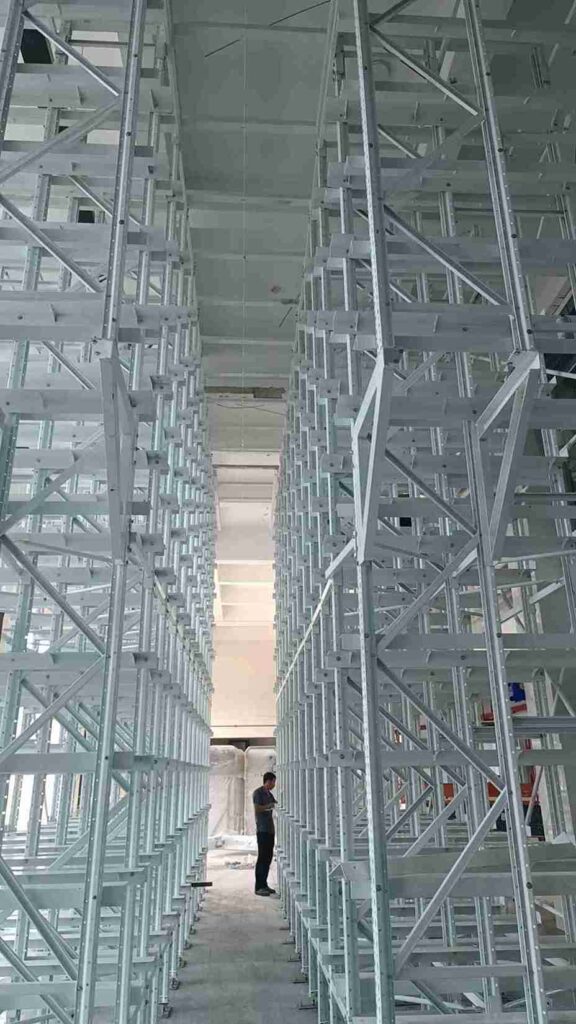
Successful second hand racking systems installation begins with thorough site assessment identifying conditions affecting system performance. Warehouse floors must meet flatness tolerances appropriate for selected rack configurations—typically within 1/4 inch over 10-foot spans for standard selective systems, with tighter requirements for automation-compatible installations.
Floor condition verification includes concrete strength assessment when heavy loads or unusual configurations are planned. Anchor performance depends on concrete capable of developing required holding forces—marginal slabs may require specialized anchoring or floor reinforcement before pre-owned industrial racks installation. Moisture evaluation identifies conditions promoting corrosion, particularly important for facilities in humid Southeast Asian environments or applications involving temperature cycling.
Layout planning translates storage requirements into physical configurations optimizing space utilization while maintaining operational clearances. Aisle widths must accommodate material handling equipment—standard counterbalanced forklifts require wider aisles than narrow-aisle reach trucks or VNA equipment. Quality used warehouse racking installation drawings should specify these dimensions clearly, ensuring that installed systems support efficient daily operations.
Professional Assembly Procedures
Installation of second hand racking systems demands expertise beyond general construction skills. Professional installers understand that used components may require adjustments beyond new equipment procedures—upright straightness verification, beam level confirmation, and connection engagement confirmation demand systematic attention throughout assembly.
Upright erection begins with precise positioning according to layout drawings, followed by temporary bracing maintaining alignment until permanent anchoring completes. Plumb verification using laser or transit measurements confirms vertical alignment within industry-standard tolerances—typically within 1/4 inch per 10 feet of height. Adjustments using shims accommodate minor floor variations while maintaining plumb requirements essential for proper load distribution.
Beam installation proceeds systematically from lowest levels upward, with each connection verified before proceeding. Beam locks must engage fully—partial engagement creates unacceptable safety risks that may escape later inspection if not verified during installation. Refurbished storage systems installers document connection verification, providing records supporting future safety audits.
Anchoring and Structural Integration
Proper anchoring transfers rack loads to building structures while resisting overturning forces from seismic events or impact loads. Anchor type, size, and spacing must match engineering specifications developed during system design—substitutions without engineering approval compromise structural integrity.
Anchor installation requires drilling equipment appropriate for floor conditions, with hole depth and diameter matching anchor specifications. Cleaning removes drilling debris that might prevent proper anchor engagement. Torque application follows manufacturer recommendations—under-torquing fails to develop design capacity; over-torquing may damage anchors or surrounding concrete.
For second hand pallet racking installed in seismic zones—portions of Southeast Asia and Middle East regions with earthquake risk—special anchoring considerations apply. Base plate details, column bracing, and row spacing may require seismic enhancement beyond standard configurations. Engineering review should verify that used warehouse racking installations meet applicable seismic design requirements.
Load Notice Requirements and Safety Compliance
Regulatory Framework for Storage Equipment
Throughout both regions served by this discussion, regulatory frameworks establish minimum safety requirements for warehouse storage equipment. While specific regulations vary by jurisdiction, common principles apply: employers must provide work equipment that is suitable for its intended use, properly maintained, and accompanied by adequate safety information .
In markets following European-influenced regulatory models, the Provision and Use of Work Equipment Regulations (PUWER) establishes requirements applicable to second hand racking systems. These regulations mandate inspection, maintenance, and operator training—requirements that apply regardless of equipment age or origin. Load notices form an essential component of compliance, communicating safe working loads and usage restrictions to all personnel.
SEMA Technical Bulletin No. 08 specifically addresses second-hand racking considerations, providing guidance for buyers evaluating used equipment. This publication emphasizes the importance of traceability and documentation—factors determining whether pre-owned industrial racks can be safely redeployed .
Load Notice Content and Placement
Every second hand racking systems installation requires clearly displayed load notices communicating essential safety information. According to industry guidance, these notices must state maximum allowable loads together with any necessary load configuration specifications . Beyond simple capacity figures, effective load notices include:
Beam load capacities indicating maximum weight per level, typically expressed in consistent units (kilograms or pounds). Upright frame capacities showing total load per bay, considering frame height and configuration. Configuration instructions specifying how loads may be arranged—uniform distribution requirements, point load limitations, or stacking restrictions.
Safety instructions remind personnel of proper usage practices: prohibitions against climbing, requirements to report damage, and warnings about unauthorized modifications. Manufacturer identification and installation date assist future maintenance planning and replacement part sourcing.
For used warehouse racking, load notice accuracy depends on engineering verification rather than manufacturer-supplied information. Professional suppliers provide replacement load notices reflecting verified capacities, ensuring compliance with regulatory requirements and insurance expectations.
Inspection and Maintenance Documentation
Beyond initial load notices, comprehensive safety programs for second hand racking systems include systematic inspection and maintenance documentation. Industry best practice recommends three-level inspection programs:
Daily operator inspections performed by personnel working in rack areas identify visible damage from recent impacts. This frontline observation catches developing issues before they progress to critical stages. Trained employees recognize common damage patterns—forklift impacts, overloading deflection, or loose connections—and report findings through established channels.
Monthly supervisory inspections examine systems more thoroughly, checking for gradual changes: increasing beam deflection, developing upright lean, or progressive corrosion. These inspections typically use simple measurement tools verifying alignment within acceptable ranges. Photographic documentation supports trend analysis identifying deterioration requiring intervention.
Annual expert inspections by qualified professionals provide comprehensive evaluation against industry standards. These inspectors—equivalent to SEMA Approved Rack Inspectors (SARI) in UK-influenced markets—identify subtle issues escaping routine checks and recommend corrective actions optimizing remaining service life .
Financial Analysis: Quantifying Second Hand Racking Systems ROI
Total Cost of Ownership Calculation
Comprehensive return on investment analysis for second hand racking systems extends beyond initial purchase price to consider total ownership costs throughout equipment service life. This broader perspective reveals advantages that simple price comparisons may miss.
Purchase price differential between new equipment and quality used warehouse racking typically ranges from 40 to 60 percent—a $200,000 new system investment compares to $80,000-$120,000 for equivalent refurbished equipment. This $80,000-$120,000 capital preservation funds other business priorities while delivering identical storage capacity.
Installation costs for pre-owned industrial racks generally match new equipment requirements, as labor hours depend on system complexity rather than component age. However, availability advantages may reduce associated costs—expedited projects completed with second hand pallet racking avoid premium charges for rushed new manufacturing.
Maintenance costs throughout service life depend more on component condition than original age. Well-maintained used warehouse racking from reputable sources performs similarly to new equipment, with comparable inspection and repair requirements. Poorly maintained used equipment, conversely, may require earlier replacement or more frequent repairs—emphasizing the importance of quality selection.
Opportunity Cost of Delayed Capacity
Beyond direct cost comparisons, opportunity cost analysis reveals hidden advantages of second hand racking systems. When new equipment lead times delay warehouse expansion, revenue losses from constrained capacity often exceed equipment cost differences.
Consider a distributor facing peak season demand exceeding current storage capacity. New racking requiring 12-16 week procurement would arrive after peak demand passes—missing revenue opportunity entirely. Second hand racking systems installed within 2-4 weeks capture full peak season benefit. The revenue differential, potentially hundreds of thousands of dollars, dwarfs equipment cost differences.
Similar analysis applies to new facility startups, where every week of occupancy delay adds carrying costs without offsetting revenue. Used warehouse racking accelerating occupancy by 8-12 weeks directly improves project ROI through earlier revenue generation and reduced holding costs.
Tax Treatment and Depreciation Considerations
Regional accounting treatments for capital equipment affect second hand racking systems economics. Throughout Southeast Asia and the Middle East, depreciation schedules, investment incentives, and tax treatments vary significantly—requiring location-specific analysis.
In jurisdictions favoring capital investment through accelerated depreciation, the lower basis of used equipment reduces tax benefits proportionally. Conversely, in regions where equipment expensing limits apply, lower-cost pre-owned industrial racks may allow full current-year deduction when new equipment costs would require capitalization.
Some markets offer investment incentives targeting specific industries or regions—free zone operators in GCC countries may access benefits unavailable to mainland facilities. Professional accounting advice, considering specific jurisdiction and business structure, optimizes financial treatment of second hand racking systems investments.
International Logistics for Second Hand Racking Systems
Shipping Considerations and Packaging
Cross-border transportation of second hand racking systems requires specialized logistics coordination exceeding new equipment simplicity. Component organization, packaging, and loading affect arrival condition and installation efficiency—making these details critically important for international buyers.
Packaging specifications should protect components throughout transport. Beam bundles require secure banding preventing shifting during vessel motion. Upright ends benefit from protective caps or padding preventing edge damage. Hardware—connectors, bolts, and anchors—requires organized packaging with clear labeling ensuring installation teams find needed components when required.
Container loading optimization affects shipping costs significantly. Flat-packed configurations maximize container utilization, reducing per-unit freight expense. Professional suppliers calculate container loads precisely, providing packing lists that identify each container’s contents for efficient receiving and staging.
For used warehouse racking shipments to Southeast Asian archipelagic destinations—Indonesia, Philippines, Malaysia—transshipment through multiple ports increases handling requirements and damage risk. Packaging must withstand these additional transfers, and insurance should cover potential in-transit damage.
Import Regulations and Documentation
International buyers of second hand racking systems must navigate import regulations varying significantly across target markets. Some jurisdictions restrict used equipment imports entirely; others require specific certifications or inspections before release.
HS code classification affects duty rates and regulatory requirements. Used racking typically falls under steel structure classifications, with duties varying by country of origin and destination. Accurate classification ensures proper duty payment and avoids customs delays.
Documentation packages must satisfy destination country requirements. Commercial invoices describing equipment accurately, packing lists detailing container contents, and certificates of origin establishing preferential tariff eligibility where applicable. Some markets require additional documentation—used goods permits, radiation testing certificates for metal items, or fumigation certificates for wooden packaging materials.
Middle Eastern importers should verify GCC common customs requirements and any UAE-specific regulations applicable to their free zone or mainland location. Southeast Asian buyers must understand ASEAN member state requirements, which vary despite regional economic integration efforts.
Receiving Inspection and Claims
Upon arrival, receiving inspection confirms second hand racking systems quantities and condition before acceptance. This verification protects buyers against transit damage or supplier shortfalls that might otherwise become expensive problems.
Visual inspection identifies obvious damage—crushed components, bent beams, or missing hardware. Photographic documentation of discrepancies provides evidence supporting claims against carriers or suppliers. Count verification confirms that received quantities match packing lists and commercial invoices.
Damage discovered after acceptance becomes difficult to attribute correctly. Prompt inspection—ideally before carriers release shipments—establishes condition at delivery, supporting claims when necessary. Professional buyers include inspection provisions in purchase terms, specifying notification periods for discrepancy reporting.
When damage occurs, documentation determines responsibility. Carrier-caused damage requires freight claim filing with deadlines typically measured in days from delivery. Supplier-caused damage—improper packaging or pre-existing condition—requires commercial claim resolution through purchase agreement provisions.
Compatibility with Automation: Future-Proofing Second Hand Racking Systems
AGV and AMR Integration Requirements
Across Southeast Asia and the Middle East, automated guided vehicles and autonomous mobile robots are transforming warehouse operations. Singapore leads regional adoption, with Malaysia and Thailand following rapidly. In the GCC, Dubai’s logistics zones showcase automated facilities setting new efficiency benchmarks. This automation trend raises critical questions for businesses considering second hand racking systems: Will pre-owned equipment accommodate tomorrow’s robotic operations?
The answer, supported by extensive retrofit experience, depends on selection criteria specifically addressing automation requirements. Second hand racking systems intended for automated environments must meet tighter tolerances than those serving manual operations. AGVs and AMRs navigate using guidance systems that assume consistent rack alignment throughout facilities—variations exceeding acceptable limits cause navigation errors and potential collisions.
Automation-compatible used warehouse racking maintains consistent column spacing across all bays, with variations limited to 1/4 inch or less. Beam elevation adjustability allows fine-tuning for varying load profiles while maintaining level requirements essential for automated picking. Floor anchoring provisions accommodate precise positioning that automated equipment requires for consistent operation.
Retrofit Modifications for Automation Readiness
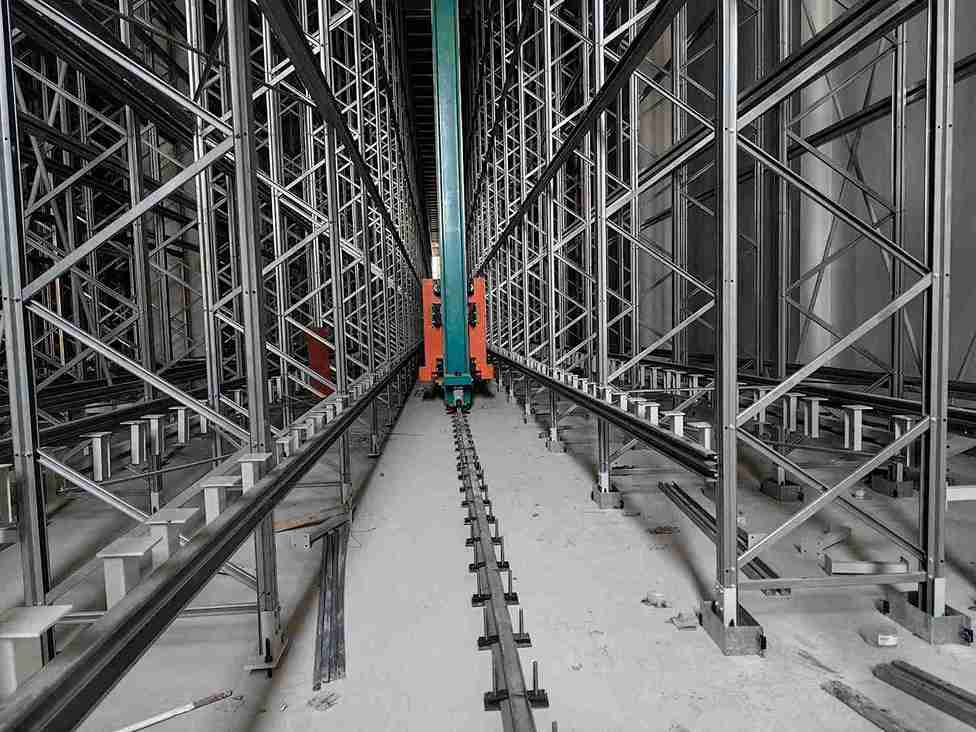
Growing practice of automation retrofitting demonstrates that pre-owned industrial racks can successfully integrate with modern material handling equipment. Success stories throughout the region include facilities where refurbished storage systems support automated storage and retrieval operations with performance indistinguishable from new installations.
Retrofit modifications typically include guide rail attachment for AGV navigation pathways, photoelectric sensor brackets for position verification, and selective upright reinforcement for automated crane interfaces. These modifications prove far more economical when applied to second hand racking systems purchased at significant discount from new equipment costs.
For facilities planning phased automation adoption, hybrid approaches prove particularly effective. High-turnover zones receive automation-compatible quality used warehouse racking during initial implementation, while bulk storage areas utilize conventional configurations. As automation expands, additional zones receive similar upgrades—spreading costs over multiple budget cycles while building automation-ready infrastructure incrementally.
Sensor Integration and Digital Connectivity
Modern warehouses increasingly require connectivity infrastructure supporting real-time inventory visibility and equipment monitoring. Second hand racking systems can accommodate this technology through thoughtful retrofit design.
Sensor mounting provisions—brackets for photoelectric sensors, ultrasonic distance sensors, or load detection cells—integrate with rack structures without compromising structural integrity. Cable routing pathways conceal wiring protecting it from damage while maintaining accessibility for maintenance. Wireless technology reduces wiring requirements but may require signal propagation analysis ensuring reliable communication throughout rack structures.
For facilities pursuing digital transformation, used warehouse racking with integrated sensing creates the physical foundation for warehouse execution system optimization. Real-time occupancy data, temperature monitoring for sensitive goods, and impact detection for safety management become possible through appropriately equipped storage infrastructure.
Sustainability Benefits: Environmental ROI of Second Hand Racking Systems
Carbon Footprint Reduction
Beyond financial returns, second hand racking systems deliver environmental benefits increasingly valued by stakeholders throughout Southeast Asia and the Middle East. These sustainability advantages enhance corporate reputation and may qualify for green business recognition or preferential customer treatment.
Steel production carries significant environmental footprint—each ton of new steel generates approximately 1.8 tons of CO2 through mining, transportation, and manufacturing processes. Second hand racking systems extending equipment service life avoid this footprint entirely. A typical warehouse using 50 tons of refurbished racks instead of new equipment prevents roughly 90 tons of CO2 emissions—equivalent to removing 20 passenger vehicles from roads for one year.
Beyond carbon benefits, pre-owned industrial racks conserve virgin materials and reduce mining impacts. Each ton of reused steel eliminates approximately 1.5 tons of iron ore extraction, 0.5 tons of coal consumption, and significant water usage associated with virgin steel production. These resource conservation benefits align with circular economy principles increasingly adopted throughout global supply chains.
Waste Reduction and Landfill Avoidance
Warehouse equipment disposal historically contributed to industrial waste streams. Steel racking, while technically recyclable, often entered landfills when disposal costs exceeded recycling value—particularly in regions with underdeveloped scrap metal markets. Second hand racking systems markets interrupt this waste stream, keeping functional equipment in service rather than occupying landfill capacity.
Even at ultimate end of useful service life, used warehouse racking components typically enter recycling streams rather than landfills. Steel’s inherent recyclability—approaching 100 percent with no quality degradation through multiple cycles—means ultimate disposal has minimal environmental impact when properly managed. But extending service life through second-hand use delays recycling indefinitely, maximizing material utility and minimizing replacement demand.
ESG Reporting and Stakeholder Communication
Environmental, Social, and Governance (ESG) reporting increasingly influences investor perceptions and customer decisions throughout both regions. Multinational corporations operating in Southeast Asia and the Middle East often maintain global sustainability commitments extending to regional facilities—creating expectations for responsible supply chain practices.
Second hand racking systems procurement contributes positively to ESG metrics—reducing scope 3 emissions (indirect emissions in supply chains), supporting circular economy principles, and demonstrating responsible resource management. These contributions, properly documented and communicated, enhance sustainability credentials valued by stakeholders ranging from corporate customers to financial institutions.
For facilities seeking specific certifications—LEED for green buildings, BREEAM for sustainable construction, or ISO 14001 for environmental management—documented use of quality used warehouse racking may contribute to certification requirements. Professional suppliers provide documentation supporting these claims, including equipment provenance, refurbishment processes, and estimated environmental benefits compared to new equipment alternatives.
Frequently Asked Questions
How do I verify that second hand racking systems meet current safety standards?
Verification requires documented engineering assessment against applicable design standards—European EN 15512, American RMI specifications, or regional equivalents. Reputable suppliers provide load capacity calculations certified by structural engineers, inspection reports documenting component condition, and load notices communicating safe working loads to warehouse personnel. Request these documents before purchase and verify that assessing engineers hold appropriate qualifications for the standards referenced .
What is the typical lead time for second hand racking systems delivery?
Available inventory typically ships within days of order confirmation, with delivery times depending on origin and destination. From Chinese suppliers to Southeast Asian ports, transit averages 2-3 weeks. Middle Eastern destinations require 3-4 weeks depending on routing. Large orders requiring component selection from multiple sources may extend preparation time, while customization—repainting, resizing, or modification—adds 1-2 weeks to processing .
Can I expand existing second hand racking installations with additional components?
Expansion is possible when compatible components are available—matching manufacturer, model, and dimensional specifications. Maintaining detailed records of existing systems simplifies future expansion by documenting required specifications. When exact matches unavailable, engineering review may identify compatible alternatives, though mixing manufacturers requires careful verification .
How should second hand racking systems be inspected upon delivery?
Receiving inspection should verify quantities against packing lists, examine components for transit damage, and confirm that critical items—beams, uprights, connectors—match specifications. Photograph any damage immediately, noting conditions on delivery receipts. Count hardware packages to ensure sufficient connectors and anchors for installation. Report discrepancies promptly to suppliers and carriers according to purchase agreement timelines.
What warranty coverage is typical for quality second hand racking systems?
Reputable suppliers typically provide 1-3 year warranties covering structural defects and workmanship—terms comparable to new equipment warranties from many manufacturers. Coverage should specify remedies for covered failures, typically repair or replacement at supplier option. Beyond formal warranty, established suppliers support used warehouse racking through ongoing technical assistance and replacement part availability .
If you require perfect CAD drawings and quotes for warehouse racking, please contact us. We can provide you with free warehouse racking planning and design services and quotes. Our email address is: jili@geelyracks.com