📐 "First 50 Enterprise Queries Get Custom 3D Warehouse Design" Plan
















Introduction: Why Cantilever Racking Dominates Industrial Storage
In warehouses and industrial facilities across the globe, cantilever racking has become the gold standard for storing long, bulky, or irregularly shaped materials. Unlike conventional pallet racking systems that struggle with oversized inventory, cantilever racking provides unmatched versatility through its unique arm-based design. From steel manufacturers to lumber yards, businesses rely on cantilever racking systems to optimize space, improve workflow efficiency, and safely handle heavy loads that would overwhelm traditional shelving.
This definitive guide explores every aspect of cantilever racking, from its engineering fundamentals to real-world applications across industries. Warehouse managers, operations directors, and procurement specialists will discover how to select, configure, and maintain cantilever racking systems for maximum return on investment. With insights from material handling experts and case studies from leading facilities, this resource provides the knowledge needed to implement cantilever racking solutions that transform storage operations.
The Engineering Behind Cantilever Racking Systems
Core Components That Define Cantilever Racking
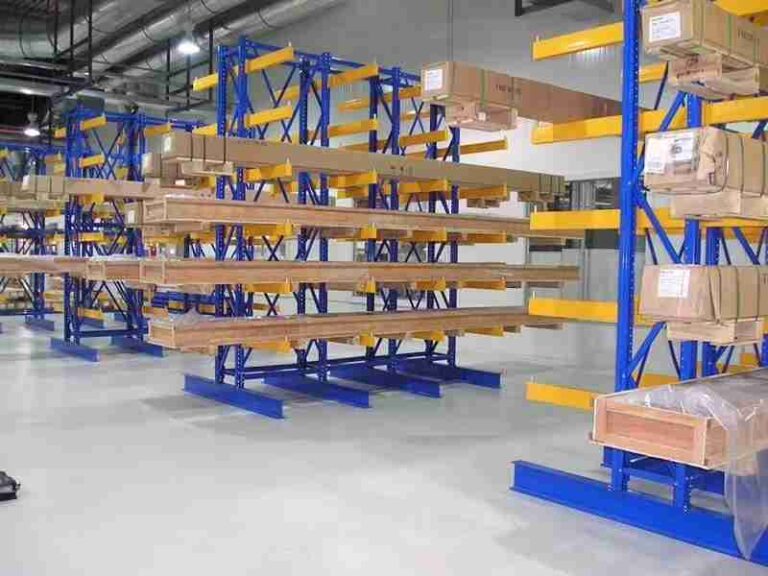
Every cantilever racking system consists of three primary structural elements working in concert:
Vertical Upright Columns: Heavy-duty steel posts that form the backbone of the system, typically ranging from 3 to 30 feet in height. These columns feature precision-engineered bolt patterns for secure arm attachment.
Load-Bearing Arms: The defining feature of cantilever racking, these horizontal extensions come in various lengths (commonly 3-10 feet) and capacities (up to 10,000 lbs per arm). Arms attach at multiple height levels along the columns.
Stabilizing Base Assembly: A reinforced foundation system including:
Anchor plates for concrete floor mounting
Diagonal bracing for lateral stability
Counterbalance designs for freestanding configurations
The Physics of Load Distribution in Cantilever Racking
What makes cantilever racking uniquely capable of handling long, heavy items lies in its mechanical advantage:
Lever Principle: The arms act as levers, transferring weight directly to the vertical columns
Moment Resistance: Heavy-duty base designs counteract the rotational forces created by extended loads
Dynamic Load Capacity: Engineering calculations account for both static weight and movement forces during loading/unloading
Industry standards like ANSI MH16.1 and EN 15620 govern the structural requirements for cantilever racking systems, ensuring safety across various applications.
Comprehensive Guide to Cantilever Racking Types
1. Structural Cantilever Racking: The Heavyweight Champion
Fabricated from hot-rolled steel with continuous welds
Typical applications:
Steel service centers storing 40-foot beams
Pipe distributors handling large-diameter materials
Precast concrete component storage
2. Roll-Formed Cantilever Racking: The Cost-Effective Workhorse
Cold-formed from high-tensile steel
Advantages:
Lighter weight for easier reconfiguration
Pre-galvanized finishes for corrosion resistance
Ideal for medium-duty applications like furniture warehouses
3. Portable Cantilever Racking: Flexible Storage Solutions
Wheel-mounted systems with locking casters
Perfect for:
Job site material organization
Seasonal inventory fluctuations
Facilities requiring frequent layout changes
4. Hybrid Cantilever Systems: Custom Engineering
Combination designs integrating:
Cantilever arms with pallet rack beams
Mezzanine-supported cantilever levels
Automated retrieval system interfaces
Industry-Specific Applications of Cantilever Racking
Construction Material Storage Revolution
Leading building supply distributors report 40% space utilization improvements after implementing cantilever racking systems for:
Dimensional lumber organization
Drywall panel storage
Rebar and mesh stacking
Roofing material handling
Metal Service Center Case Study
A Midwest steel distributor increased throughput by 28% after transitioning to cantilever racking with these features:
30-foot-high double-sided configuration
RFID-tagged arms for inventory tracking
Dedicated crane aisles between rows
Furniture & Home Goods Distribution
Major retailers utilize cantilever racking to solve unique challenges:
Mattress storage without compression damage
Flat-pack furniture component organization
Oversized decor item accessibility
The Economic Advantages of Cantilever Racking
Space Utilization Metrics
Compared to floor stacking, cantilever racking systems deliver:
300% more storage capacity in same footprint
60% reduction in product damage
45% faster loading/unloading cycles
ROI Calculation Framework
A typical cantilever racking investment pays for itself in:
18-24 months through labor savings
12-18 months via reduced product loss
6-12 months from improved inventory turnover
Lifecycle Cost Analysis
Properly maintained cantilever racking systems offer:
25+ year service life
5-7 year recertification intervals
<1% annual maintenance costs
Technical Specifications & Selection Guide
Load Capacity Tables
| Arm Length | Steel Thickness | Max Capacity |
|---|---|---|
| 4′ | 7 gauge | 4,000 lbs |
| 6′ | 3/16″ | 6,500 lbs |
| 8′ | 1/4″ | 8,000 lbs |
| 10′ | 5/16″ | 10,000 lbs |
Configuration Worksheet
Use this checklist when specifying cantilever racking:
Measured longest item length
Calculated peak weight requirements
Determined necessary clearance heights
Verified floor load capacity
Selected appropriate safety accessories
Safety Engineering & Compliance
OSHA-Required Features
All cantilever racking systems must include:
Visible load capacity placards
Column protectors at impact zones
Anti-sway bracing configurations
Proper anchor bolt specifications
Advanced Safety Systems
Leading-edge cantilever racking now incorporates:
Laser-guided load positioning
Smart overload sensors
Automated impact monitoring
Seismic-rated designs
The Future of Cantilever Racking Technology
Industry 4.0 Integration
Next-generation cantilever racking systems feature:
IoT-enabled load monitoring
Automated inventory drones
AI-powered space optimization
Blockchain-based maintenance records
Sustainable Material Advances
Manufacturers are developing:
High-strength recycled steel alloys
Self-healing protective coatings
Modular designs for easy reconfiguration
Implementation Roadmap
Step-by-Step Installation Guide
Site Preparation: Floor leveling and anchor point marking
Column Erection: Plumb and alignment verification
Arm Installation: Torque-controlled assembly
Load Testing: Progressive weight verification
Operator Training: Safe handling protocols
Maintenance Schedule
Daily: Visual inspection for damage
Monthly: Anchor bolt tension checks
Annual: Professional structural assessment
5-Year: Full engineering recertification
Conclusion: Transforming Storage With Cantilever Racking
The evolution of cantilever racking systems continues to redefine industrial storage capabilities. From its fundamental engineering principles to cutting-edge smart technologies, cantilever racking remains the optimal solution for handling challenging inventory profiles. Facilities investing in properly specified cantilever racking gain measurable advantages in space utilization, operational efficiency, and inventory control that directly impact profitability.
As material handling demands grow increasingly complex, cantilever racking systems adapt through innovative designs that meet tomorrow’s storage challenges today. Industry leaders recognize cantilever racking not just as storage equipment, but as a strategic asset that drives competitive advantage in logistics and distribution operations.
Cantilever Racking FAQ
1. How does cantilever racking handle seismic activity?
Modern cantilever racking systems incorporate seismic bracing and flexible connection points that allow controlled movement during earthquakes while maintaining structural integrity.
2. What’s the ideal aisle width for cantilever racking?
Standard recommendations suggest 8-12 feet for forklift access, but this varies based on equipment type and load dimensions. A professional space analysis ensures optimal layout.
3. Can cantilever racking be used in cold storage?
Specialized cantilever racking with low-temperature steel alloys and cold-resistant coatings performs reliably in freezer applications down to -40°F.
4. How do you calculate required cantilever racking capacity?
Professional designers use the formula:
(Peak Inventory Weight) × (Safety Factor of 1.5) = Minimum System Capacity
5. What alternatives exist for extremely long items (40+ feet)?
For ultra-long materials, engineered cantilever racking with intermediate support columns or bridge-style configurations provides necessary stability.