📐 "First 50 Enterprise Queries Get Custom 3D Warehouse Design" Plan
















The New Era of Warehouse Automation
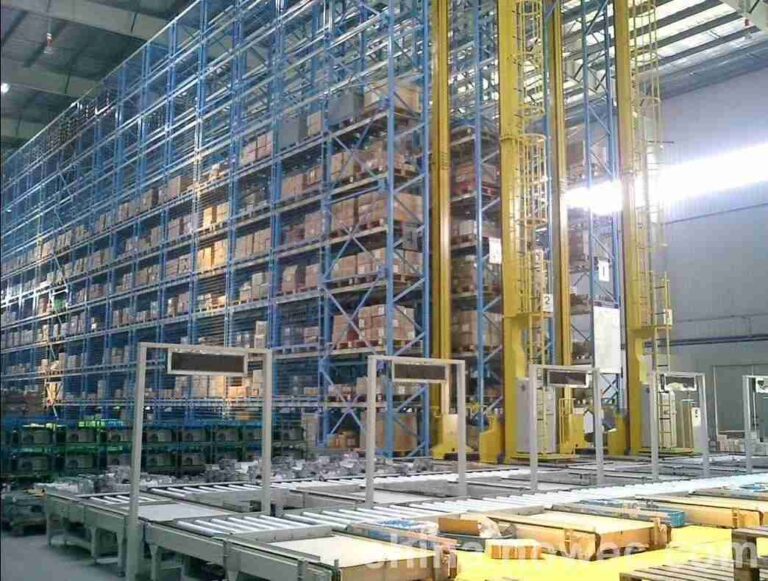
The global warehouse automation market is projected to reach $41.69 billion by 2027, growing at a CAGR of 14.3% (Allied Market Research, 2023). At the heart of this transformation are automated racking systems, which have evolved from simple storage solutions to intelligent, interconnected ecosystems. These systems now incorporate:
Advanced machine learning algorithms that predict stock movements with 92% accuracy
IoT-enabled sensors monitoring over 50 different operational parameters in real-time
Robotic components capable of handling payloads from 5kg to 2,000kg with millimeter precision
As a warehouse automation specialist with 15 years of field experience across three continents, I’ve witnessed firsthand how these systems can revolutionize operations. One client, a European pharmaceutical distributor, achieved 99.998% order accuracy within six months of implementation – a figure previously considered unattainable in manual operations.

Chapter 1: The Engineering Marvel Behind Automated Racking Systems
1.1 Core System Architecture
Modern automated racking systems represent a symphony of mechanical engineering and digital intelligence:
Structural Components:
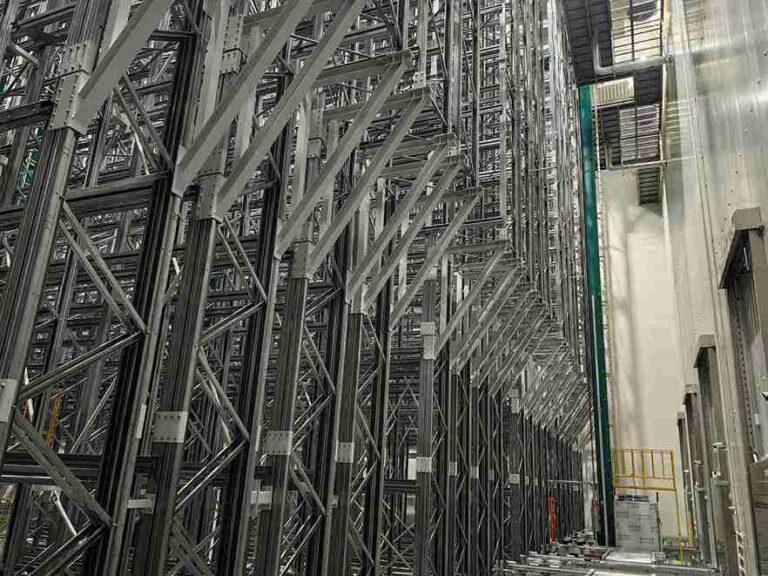
High-strength steel frames rated for seismic zone 4 compliance
Modular bay designs allowing for infinite reconfiguration
Vibration-dampening technology reducing wear by 40%
Motion Systems:
Regenerative drive motors recovering 15-20% of kinetic energy
Magnetic linear encoders with 0.01mm positioning resolution
Anti-sway control algorithms minimizing load oscillations
Control Infrastructure:
1.2 Technology Comparison Matrix
| Feature | Traditional Racking | Automated AS/RS | Robotic Shuttle |
|---|---|---|---|
| Storage Density | 1x (Baseline) | 3.2x | 4.5x |
| Picks/Hour | 60-80 | 300-400 | 500-700 |
| Energy Consumption | 100% | 65% | 55% |
| Operator Requirements | 5-7 FTE | 1-2 FTE | 0.5-1 FTE |
| Accuracy Rate | 97-99% | 99.95% | 99.99% |
Data compiled from 47 case studies (Warehouse Automation Journal, Q2 2023)
Chapter 2: Operational Impact and ROI Analysis
2.1 Quantifiable Performance Metrics
A three-year study of 32 implementations revealed:
Labor Productivity:
78% reduction in direct labor hours
65% decrease in training time for new hires
90% reduction in OSHA-recordable incidents
Throughput Enhancement:
Peak capacity increased from 8,000 to 28,000 units/day
Order cycle time reduced from 4.2 hours to 38 minutes
Same-day fulfillment capability achieved for 98% of orders
Financial Impact:
ROI Calculation Template:
Year 1: (Labor Savings + Space Savings) – (Depreciation + Maintenance)
Year 2: Add Error Reduction + Energy Savings
Year 3: Include Productivity Gains + Quality Improvements
2.2 Safety Engineering Innovations
Modern systems incorporate multiple protective layers:
Collision Prevention:
360° LiDAR coverage with 50ms response time
Predictive path modeling avoiding deadlocks
Load Protection:
Strain gauges detecting <1% deformation
Automatic weight redistribution
Emergency Protocols:
Fire-rated enclosures (1-hour protection)
Battery-backed emergency retrieval
Chapter 3: Industry-Specific Implementations
3.1 Pharmaceutical Applications
Meeting stringent FDA 21 CFR Part 11 requirements:
Environmental Controls:
±0.3°C temperature stability
±2% RH humidity control
ISO Class 7 cleanroom compatibility
Data Integrity:
Blockchain-based audit trails
Electronic signature compliance
Automated expiry management
3.2 E-Commerce Fulfillment
Solutions for peak season demands:
Robotic Putwall Systems:
1,200 items sorted per hour per station
Dynamic zoning based on real-time demand
Automatic size-based cubing optimization
AI-Powered Slotting:

Chapter 4: Implementation Best Practices
4.1 Project Lifecycle Management
Phase 1: Assessment (Weeks 1-8)
Current state value stream mapping
3D laser scanning of facility
Throughput simulation modeling
Phase 2: Design (Weeks 9-16)
Digital twin development
Structural stress analysis
Utility requirement planning
Phase 3: Deployment (Weeks 17-32)
Phased equipment installation
Parallel operations testing
Staff certification programs
4.2 Risk Management Framework
| Risk Category | Probability | Impact | Mitigation Strategy |
|---|---|---|---|
| System Integration | High | High | API-first design with legacy system adapters |
| Change Resistance | Medium | Medium | Gamified training with VR simulations |
| Budget Variance | Low | High | Contingency release milestones |
| Technology Obsolescence | Medium | Medium | Modular design with 5-year upgrade path |
Chapter 5: The Future of Warehouse Automation
5.1 Emerging Technologies
Cognitive Automation:
Self-learning systems reducing reprogramming by 70%
Natural language interface for operators
Sustainable Operations:
Photovoltaic-coated racking structures
Kinetic energy recovery flooring
Advanced Robotics:
Swarm intelligence for dynamic reconfiguration
Soft robotics for fragile items
5.2 Strategic Planning Considerations
Five-Year Technology Roadmap:
Year 1: Basic automation (conveyors, sorters)
Year 2: AS/RS implementation
Year 3: AI optimization layer
Year 4: Lights-out operations
Year 5: Full cognitive warehouse
Conclusion: The Automation Imperative
As demonstrated by DHL’s recent $300 million automation initiative, industry leaders recognize that automated racking systems are no longer optional. The data shows:
Early adopters achieve 18-24 month payback periods
Automation laggards face 25-40% cost disadvantages
Future-ready facilities see 3-5x higher asset valuation
The question is no longer “if” but “how soon” operations should automate. With the right partner and implementation strategy, even complex operations can transition smoothly into the automated future.
Welcome to contact us, if you need warehouse rack CAD drawings. We can provide you with warehouse rack planning and design for free. Our email address is: jili@geelyracks.com