📐 "First 50 Enterprise Queries Get Custom 3D Warehouse Design" Plan
















Double-Deep Racking Systems: The Strategic Guide to Maximizing Warehouse Storage Density and Efficiency
In the high-stakes world of modern logistics and warehousing, space is not just a physical asset; it is a direct determinant of profitability and scalability. For distribution centers, third-party logistics (3PL) providers, and manufacturing warehouses across burgeoning markets in Southeast Asia, the Middle East, Latin America, and Africa, the pressure to do more within the same four walls is immense. The quest for a storage solution that bridges the critical gap between high accessibility and high density leads industry leaders to one compelling answer: double-deep racking systems.
These sophisticated storage infrastructures represent a fundamental evolution from basic selective pallet racking, offering a transformative approach to warehouse layout and inventory management. This comprehensive exploration delves into the engineering, operational, and economic facets of double-deep racking systems, providing a masterclass for operations managers, warehouse planners, and business owners determined to optimize their storage footprint.
The following analysis will cover the intricate design principles, the tangible return on investment, the seamless synergy with automation technologies like AGVs and driverless forklifts, and the critical implementation protocols that separate a successful project from a costly misstep. Understanding the full potential and specific requirements of double-deep racking systems is the first step toward building a warehouse that is not only full but also intelligently and efficiently organized.
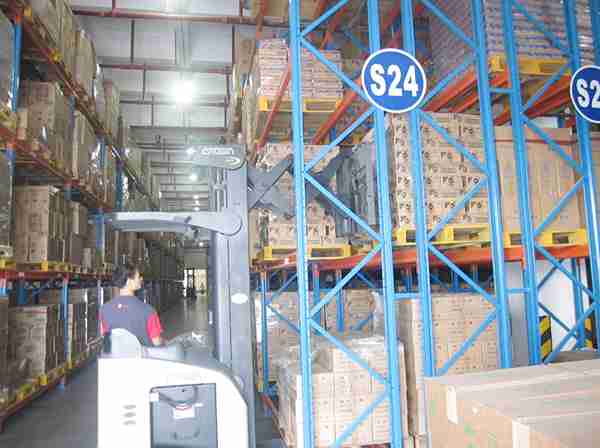
High-density double-deep racking systems in a modern warehouse
Deconstructing the Design: The Core Engineering of Double-Deep Racking Systems
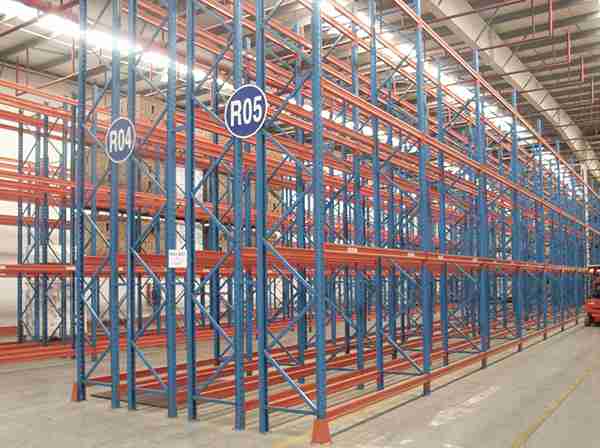
A double-deep racking system is conceptually elegant yet engineered for robustness. At its essence, this configuration involves storing pallets two rows deep on a single side of a warehouse aisle, effectively doubling the storage depth of a standard selective racking bay. The architectural genius of double-deep racking systems lies in their nested design, where two rows of upright frames are paired, and the intermediate vertical members are eliminated. This creates a continuous storage lane that can accommodate two pallets—one in the front position and one in the rear.
The operational viability of double-deep racking systems is wholly dependent on specialized material handling equipment. A standard counterbalance forklift is incapable of accessing the second pallet position. Instead, the system requires a double-reach truck or a deep-reach truck. These forklifts are equipped with a telescoping mechanism that allows the forks to extend beyond the first pallet to securely engage and retrieve the second. This necessitates slightly wider aisles than those found in very-narrow-aisle (VNA) systems, but still significantly narrower than those required for selective racking. The entire operational flow of double-deep racking systems is built around the precise interaction between the fixed racking structure and the mobile reach truck, a dance of engineering and ergonomics.
An Anatomy of Strength: Key Components of Double-Deep Racking Systems
The integrity and performance of any double-deep racking systems installation hinge on the quality and specification of its core components. Unlike simpler systems, every part must be calculated to handle not just static loads, but the dynamic forces of frequent load retrieval.
Heavy-Duty Upright Frames: The vertical uprights in double-deep racking systems are subject to greater torsional and compressive stresses. Consequently, they are typically fabricated from higher-grade steel and may feature a more robust cold-formed or structural steel column design. The bolt-hole patterns are engineered for maximum connectivity and load transfer between components.
Reinforced Load Beams: These horizontal elements are the workhorses of the system. In double-deep racking systems, the beams must support the load of the pallets while also being designed to interface with pallet supports or decking. They often have a specific profile to prevent pallets from shifting and to provide a secure locking point with the upright frames.
Critical Pallet Supports and Decking: This is a defining feature of double-deep racking systems. Since the second pallet has no rear beam for support, a continuous support surface is required. This is achieved through one of two methods: individual, heavy-gauge pallet support bars that span the bay width, or welded wire mesh decking. The decking provides a stable platform for the rear pallet and is a non-negotiable safety component in any professional double-deep racking systems installation.
Integrated Safety and Guidance Systems: To protect both the racking and the equipment, double-deep racking systems are almost always outfitted with a suite of protective features. Low-level guide rails running the length of the aisle ensure the reach truck operates in a precise path, preventing collisions with the upright bases. Column guards, aisle-end protectors, and reinforced footplates are standard inclusions, forming a critical line of defense in a high-traffic storage environment.
The Compelling Business Case: Quantifiable Advantages of Double-Deep Racking Systems
The decision to invest in double-deep racking systems is a strategic one, driven by a clear and compelling financial and operational calculus. The benefits extend far beyond simply “fitting more in,” touching every aspect of warehouse productivity and cost-management.
A Direct Path to Maximized Storage Density
The primary driver for adopting double-deep racking systems is the profound increase in storage capacity. By configuring pallets two deep, the number of access aisles in a warehouse can be reduced by approximately 50% compared to a selective layout. In practical terms, this translates to a 60% to 90% increase in pallet positions within the same floor area. For a facility struggling with space constraints, double-deep racking systems effectively create new storage capacity out of thin air, deferring or eliminating the need for a costly facility expansion or relocation. This is particularly valuable in industrial parks in Manila, Dubai, or Sao Paulo, where real estate premiums are a significant operational burden.
Substantial Reduction in Operational Expenditure
The efficiency gains from double-deep racking systems directly impact the bottom line. The increased storage density lowers the cost per pallet position, maximizing the return on investment for the building itself. Furthermore, while double-deep racking systems require specialized equipment, the number of trips required for put-away and retrieval is optimized within a denser footprint, potentially reducing travel time for operators. When integrated with a Warehouse Management System (WMS), double-deep racking systems contribute to reduced labor costs per pallet handled and minimize the errors associated with chaotic storage practices.
Superior Inventory Accessibility and Management Control
A common misconception is that high-density storage necessitates poor accessibility. Double-deep racking systems shatter this myth by offering an excellent balance. Unlike LIFO (Last-In, First-Out) systems like drive-in racking, double-deep racking systems can be effectively managed on a FIFO (First-In, First-Out) basis. With disciplined warehouse processes and a competent WMS that tracks the location of every pallet (front vs. back), inventory rotation can be maintained with high accuracy. This makes double-deep racking systems ideal for industries with date-sensitive products, such as food and beverage, pharmaceuticals, and certain chemicals.
The Foundational Platform for Warehouse Automation
Perhaps the most forward-thinking advantage of double-deep racking systems is their innate compatibility with automated technologies. The structured, predictable nature of these systems makes them an ideal physical platform for Automated Guided Vehicles (AGVs) and driverless forklifts. Modern double-deep racking systems can be designed with precise tolerances to interface with these robotic workhorses. Automated double-deep racking systems enable lights-out operations in certain zones, with machines reliably retrieving and storing pallets from both positions with unerring accuracy, 24/7. This fusion of density and automation is the future of logistics, and double-deep racking systems are at the very heart of this evolution.
A Comparative Analysis: How Double-Deep Racking Systems Stack Up Against Alternatives
To truly appreciate the value proposition of double-deep racking systems, one must place them in the context of the broader storage solution landscape. Each system has its niche, and the optimal choice is always application-specific.
Double-Deep Racking Systems vs. Selective Pallet Racking
Selective racking is the ubiquitous workhorse of the industry, offering 100% immediate access to every pallet. Its simplicity is its strength. However, this comes at the cost of low storage density. Double-deep racking systems strategically sacrifice a marginal degree of direct selectivity for a massive gain in storage capacity. For operations with a high number of SKUs but with multiple pallets per SKU, double-deep racking systems present a far more space-efficient and cost-effective solution without plunging into the deep storage complexities of push-back or drive-in systems.
Double-Deep Racking Systems vs. Push-Back Racking Systems
Push-back racking is a dynamic, LIFO-based system that stores pallets on nested carts on inclined rails. It can achieve great depth (3-5 pallets deep) and density. However, double-deep racking systems generally offer superior stock rotation control. While push-back is excellent for high-volume, low-SKU scenarios, double-deep racking systems provide better item-level selectivity and reliable FIFO operation at a two-deep depth, often with a lower maintenance profile due to their static design.
Double-Deep Racking Systems vs. Drive-In/Drive-Through Racking Systems
Drive-in racking is the ultimate density solution for high-volume, single-SKU operations, like a cold store holding thousands of pallets of the same product. It is, however, a LIFO system with slow throughput and requires highly skilled forklift drivers to navigate the racking structure itself. Double-deep racking systems offer significantly faster throughput, inherent FIFO capability, and a much safer operating environment, as forklifts never need to enter the racking structure. For the vast majority of distribution centers requiring a balance of density, speed, and inventory control, double-deep racking systems are the more versatile and operationally agile choice.
The Implementation Imperative: A Phased Approach to Deploying Double-Deep Racking Systems
The successful deployment of double-deep racking systems is a complex, multi-disciplinary project that cannot be left to chance. It requires meticulous planning, precise engineering, and flawless execution. A phased methodology is critical for managing risk and ensuring the system performs as intended for years to come.
Phase 1: Foundational Discovery and Data-Driven Feasibility Study
This initial phase is the most critical. It involves a deep dive into the client’s operational data. Experts will analyze SKU velocity (ABC analysis), pallet dimensions and weights, inventory turnover rates, and current peak throughput capacities. This data is used to build a digital twin or simulation model of the proposed double-deep racking systems to validate its performance and calculate a precise ROI. This phase answers the fundamental question: Are double-deep racking systems the right technical and economic fit for this operation?
Phase 2: Meticulous Engineering and Customized Design Development
Once the feasibility is confirmed, the project moves into detailed engineering. Using advanced CAD and structural analysis software, engineers create a complete bill of materials and layout drawings for the double-deep racking systems. This stage specifies the exact beam levels, upright sizes, decking type, and safety accessories. Load calculations are certified by a structural engineer, and the design is tailored to integrate seamlessly with the client’s chosen material handling equipment, whether manual reach trucks or a fully automated fleet of driverless forklifts.
Phase 3: Strategic Integration with Automation and Software Systems
For operations incorporating automation, this phase is where the double-deep racking systems are transformed from a passive structure into an intelligent node in the automated workflow. The racking design is coordinated with the control systems of the AGVs to ensure perfect alignment and communication. The WMS is configured with specific logic to manage the double-deep storage lanes, directing equipment to the correct sequence for retrieval and minimizing the need for “shunting” (moving a front pallet to access a rear one).
Phase 4: Professional Installation, Commissioning, and Operator Training
The physical installation of the double-deep racking systems is carried out by certified technicians following strict safety protocols. Upon completion, the system is thoroughly commissioned—a process that involves load testing, equipment calibration, and system integration checks. Concurrently, comprehensive training is provided to warehouse operators and managers, covering the safe operation of equipment within the double-deep racking systems, the new WMS procedures, and daily safety inspection protocols.
Navigating the Challenges: Critical Considerations for Double-Deep Racking Systems
While the advantages are significant, a clear-eyed view of the potential challenges associated with double-deep racking systems is essential for making an informed decision. Acknowledging and mitigating these factors is the hallmark of a well-planned project.
Capital Investment in Specialized Equipment
The requirement for double-reach trucks or automated alternatives represents a significant capital outlay beyond the cost of the racking itself. Companies must factor this into their total cost of ownership analysis for the double-deep racking systems. The productivity gains and space savings must justify the combined investment in both the infrastructure and the equipment.
The Imperative of Inventory Discipline and WMS Capability
Double-deep racking systems demand a higher level of process discipline than selective racking. A poorly managed system can lead to “trapped stock,” where a slow-moving pallet in the front position blocks access to a high-priority pallet behind it. A robust WMS with dedicated functionality for managing double-deep lanes is not a luxury; it is a necessity for unlocking the full potential of double-deep racking systems.
Pallet Quality and Uniformity as a Prerequisite
The integrity of the entire system relies on the use of strong, standardized, and undamaged pallets. A weak or broken pallet in the rear position poses a severe safety hazard, as it is supported only by the decking. Implementing a pallet quality control process at the receiving dock is a highly recommended best practice for any facility operating double-deep racking systems.
The Future-Forward Trajectory of Double-Deep Racking Systems
The evolution of double-deep racking systems is intrinsically linked to the trends shaping the future of logistics: greater intelligence, deeper integration, and heightened flexibility. The next generation of double-deep racking systems is already emerging, featuring designs optimized for the specific performance characteristics of autonomous mobile robots (AMRs). Research is underway into double-deep racking systems with embedded sensors to provide real-time data on load presence, racking health, and even environmental conditions.
This data can feed into a digital twin of the warehouse, enabling predictive analytics and dynamic optimization. By investing in double-deep racking systems today, companies are not just solving a current storage problem; they are building a scalable, automatable foundation for the data-driven supply chains of tomorrow.
Conclusion: Strategic Density as a Competitive Advantage
In conclusion, double-deep racking systems represent a pinnacle of engineered storage efficiency, offering a powerful solution to the universal challenge of space utilization. They are not merely a product but a comprehensive storage strategy that, when correctly applied, delivers profound gains in capacity, cost-efficiency, and operational control.
The journey to implementing a successful double-deep racking system requires expertise, from the initial data analysis and custom engineering to the integration with automation and workforce training. For businesses across global growth markets, mastering their storage footprint with double-deep racking systems is no longer an option but a strategic imperative to secure a sustainable and profitable future in the competitive world of logistics and distribution.

Frequently Asked Questions About Double-Deep Racking Systems
1. What specific fire safety regulations apply to warehouses using double-deep racking systems?
Due to the increased density, double-deep racking systems can impede the effectiveness of standard ceiling sprinklers. Most local fire codes and insurance providers will mandate the installation of in-rack sprinkler systems. These are integrated directly within the double-deep racking systems at specific vertical intervals to ensure water can reach a fire at its source, regardless of the stored pallets. A professional design will always include coordination with fire safety experts to ensure full compliance.
2. Can a double-deep racking system be combined with other storage systems in the same warehouse?
Absolutely. A hybrid approach is often the most efficient solution. Many facilities successfully integrate double-deep racking systems for their medium-to-slow moving palletized goods with other systems, such as carton-flow picking shelves for fast-moving items or bulk storage areas for oversized products. This creates a tiered storage strategy that maximizes both space and picking efficiency.
3. How does the cost of a double-deep racking system compare to a mobile shelving system?
This is a comparison of two different density paradigms. Double-deep racking systems are typically more cost-effective for storing standard palletized loads in a medium-to-high density configuration. High-density mobile shelving systems (where entire rows of racking move on rails) can achieve even greater density but at a significantly higher cost per square foot, both for the structure and the mechanical carriage system. Double-deep racking systems offer a superior balance of cost, density, and accessibility for most pallet storage applications.
4. What are the lead times typically associated with the procurement and installation of a large-scale double-deep racking system?
Lead times can vary significantly based on project scope, material availability, and manufacturing capacity. A standard turnkey project for a double-deep racking system, from design to installation, can range from 8 to 16 weeks. For highly customized or automated double-deep racking systems, this timeline can extend to 20 weeks or more. It is crucial to engage with a supplier early in the planning process to establish a realistic project schedule.
5. Are there any specific floor condition requirements for installing double-deep racking systems?
Yes, the floor is the foundation of the system. The warehouse floor must be level and possess sufficient compressive strength to support the concentrated point loads of the double-deep racking systems uprights, especially when fully loaded. An uneven floor can lead to racking misalignment, premature wear, and safety risks. A professional site assessment, including floor flatness and strength verification, is a standard part of the pre-installation process for any major double-deep racking systems project.
Welcome to contact us, if you need warehouse rack CAD drawings. We can provide you with warehouse rack planning and design for free. Our email address is: jili@geelyracks.com