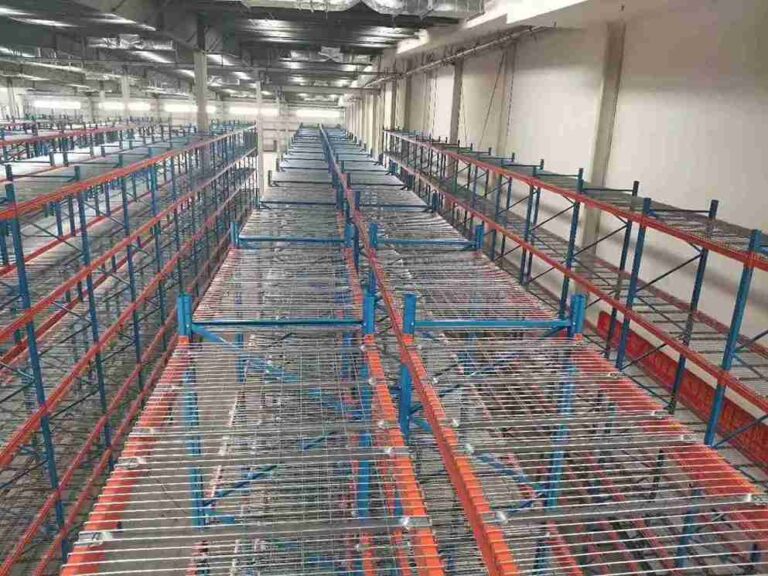
📐 "First 50 Enterprise Queries Get Custom 3D Warehouse Design" Plan
















Beam Deflection Limits: The Ultimate Guide to Safe, High-Performance Storage Systems
This definitive guide delves into the critical engineering principle of beam deflection limits for warehouse storage systems. We move beyond basic definitions to explore why controlling deflection is the non-negotiable foundation for structural integrity, operator safety, and operational efficiency in any warehouse, especially those utilizing automation like AS/RS, AGVs, and forklifts.
You will gain a deep understanding of the international standards (FEM, RMI), the hidden costs of excessive deflection, and how to specify the right tolerances for your specific loads and equipment. This knowledge is essential for warehouse managers, logistics planners, and project engineers investing in pallet racking, cantilever racking, and selective pallet racking to ensure a safe, optimized, and future-proof storage layout.

Introduction: More Than Just a Number – Why Beam Deflection is Your Silent Warehouse Guardian
Walk into any warehouse, and you see the obvious: racks, pallets, and machinery. What you don’t see is the invisible framework of engineering precision that keeps the entire operation safe and productive. At the heart of this framework lies a concept that, while technical, is absolutely fundamental: beam deflection limits.
Many warehouse operators and even some suppliers view beam deflection limits as a mere technicality, a box to be checked on a spec sheet. Industry leaders understand that this perspective is not just outdated; it’s dangerously short-sighted. Properly understanding and applying beam deflection limits is what separates a cost-effective, long-lasting storage asset from a liability waiting to happen. These specific beam deflection limits are the bedrock upon which all other safety calculations are built.
Think of your storage rack beams as the backbone of your entire logistics operation. Every time a pallet is placed on a beam, the beam will naturally bend slightly under the load. This bending is “deflection.” A controlled, minimal amount of this bending is expected and accounted for in good design. However, when deflection exceeds the specified safe beam deflection limits, it sets off a chain reaction of problems that can lead to catastrophic racking collapse, product damage, and severe safety hazards. Ignoring established beam deflection limits is an invitation to operational failure.
In this guide, we will demystify the science, the standards, and the practical implications of beam deflection limits. The goal is to empower you with the knowledge you need to make informed decisions, ask the right questions to your suppliers, and ultimately, build a warehouse that is not just a space for storage, but a high-performance, safe, and efficient component of your supply chain. A deep dive into beam deflection limits is an investment in your operation’s future.
What Exactly Are Beam Deflection Limits? A Practical Definition
In simple engineering terms, beam deflection is the degree to which a structural element (like your storage rack beam) displaces under a load. The beam deflection limit is the maximum allowable displacement that has been deemed safe and functional by engineering standards. Understanding these specific beam deflection limits is the first step in specifying a safe system.
It’s crucial to visualize this. When you place a fully loaded pallet onto a beam, the beam will sag in the middle. This sag is the deflection. We measure it vertically at the beam’s midpoint. The limit is the point where this sag stops being a harmless physical property and starts becoming a risk. The entire purpose of defining beam deflection limits is to prevent this transition from safe to hazardous.
The Critical Measurement: Span-to-Deflection Ratio
Internationally, beam deflection limits are not expressed in fixed measurements like millimeters or inches. Instead, they are expressed as a ratio relative to the beam’s span (the unsupported length between the uprights). The most common standard you will encounter is the span/180 ratio. This ratio is the universal language for communicating beam deflection limits.
What does this mean? If a beam has a span of 180 inches (15 feet), a span/180 deflection limit means the beam should not deflect more than 1 inch under its maximum rated load (180 / 180 = 1). This calculation defines the operational beam deflection limits for that specific component.
Span/180: This is the most widely adopted standard for uniformly distributed loads (like a full pallet) under normal warehouse conditions, as per the Rack Manufacturers Institute (RMI) and FEM standards. These beam deflection limits represent the industry baseline.
Span/240 (or stricter): This stricter limit is often recommended or required in environments with clinker racking, where loads are exceptionally dense and heavy, or in situations where sensitive, high-value goods are stored. It is also critical for warehouses using Automated Storage and Retrieval Systems (AS/RS) where precision is non-negotiable. These more stringent beam deflection limits are essential for high-performance applications.
The Domino Effect of Failure: Consequences of Ignoring Beam Deflection Limits
Choosing a racking system based purely on price, without scrutinizing its deflection performance, is a high-stakes gamble. Excessive deflection is not a standalone issue; it triggers a cascade of operational and safety failures. Disregarding proper beam deflection limits is the root cause of many warehouse incidents.
1. Immediate Safety Hazards and Structural Integrity Compromise
This is the most severe risk. Beams that deflect beyond their beam deflection limits are under immense stress. This can lead to:
Fatigue and Cracking: The repeated cycling of loading and unloading on an over-stressed beam creates metal fatigue, leading to hairline cracks that can propagate and result in sudden, catastrophic failure. This failure occurs precisely because the beam deflection limits were consistently violated.
Connection Failure: The beam end connectors, which lock into the upright frame, are subjected to forces they were not designed to handle. This can cause them to deform, dislodge, or fail, causing a beam to simply drop. This is a direct mechanical consequence of exceeding the design beam deflection limits.
Progressive Collapse: The failure of a single beam can overload adjacent beams and uprights, leading to a progressive, “domino effect” collapse of multiple rack bays. The human and financial costs of such an event are immeasurable. Adherence to beam deflection limits is the primary defense against this scenario.
2. The Silent Profit Killer: Inefficiency and Downtime
Even if a collapse doesn’t occur, the daily inefficiencies cost you money. Systems operating near or beyond their beam deflection limits are inherently inefficient.
Forklift Operator Hesitation: A visibly sagging beam is alarming. Operators will naturally slow down, double-check, and become hesitant, reducing your overall pallet moves per hour (PMPH) and increasing labor costs. This sag is a visual indicator that beam deflection limits are being challenged.
Difficult Pallet Placement and Retrieval: A deflected beam changes the geometry of the pallet opening. Pallets can become stuck, bind, or require multiple attempts to be put in or taken out. This wastes time and increases the risk of impact damage from the forklift. This functional problem is a direct result of inadequate beam deflection limits.
System-Wide Downtime: If a beam needs to be replaced or a section of racking needs to be shut down for safety reasons, the disruption to your workflow is significant. This downtime directly impacts your bottom line. This costly interruption could have been prevented by specifying appropriate beam deflection limits from the outset.
3. The Automation Achilles’ Heel: Incompatibility with AS/RS and AGVs
If you are investing in or planning for warehouse automation, beam deflection limits become your single most important specification. Automated Guided Vehicles (AGVs), stacker cranes in AS/RS, and robotic pallet shuttles operate with millimeter precision. Their entire operation depends on the racking system adhering to strict beam deflection limits.
Navigation and Sensor Errors: Excessive beam deflection can misalign pallet positions, causing sensors to fail and automated equipment to abort missions or, worse, collide with the racking. These errors are a direct consequence of the racking failing to meet the required beam deflection limits for automation.
Systemic Reliability Issues: An automated system is only as reliable as its least reliable component. Racking with poor deflection control will be a constant source of errors, maintenance calls, and system downtime, destroying the ROI of your automation investment. The stringent beam deflection limits required for automation are not a suggestion; they are a prerequisite for functionality.
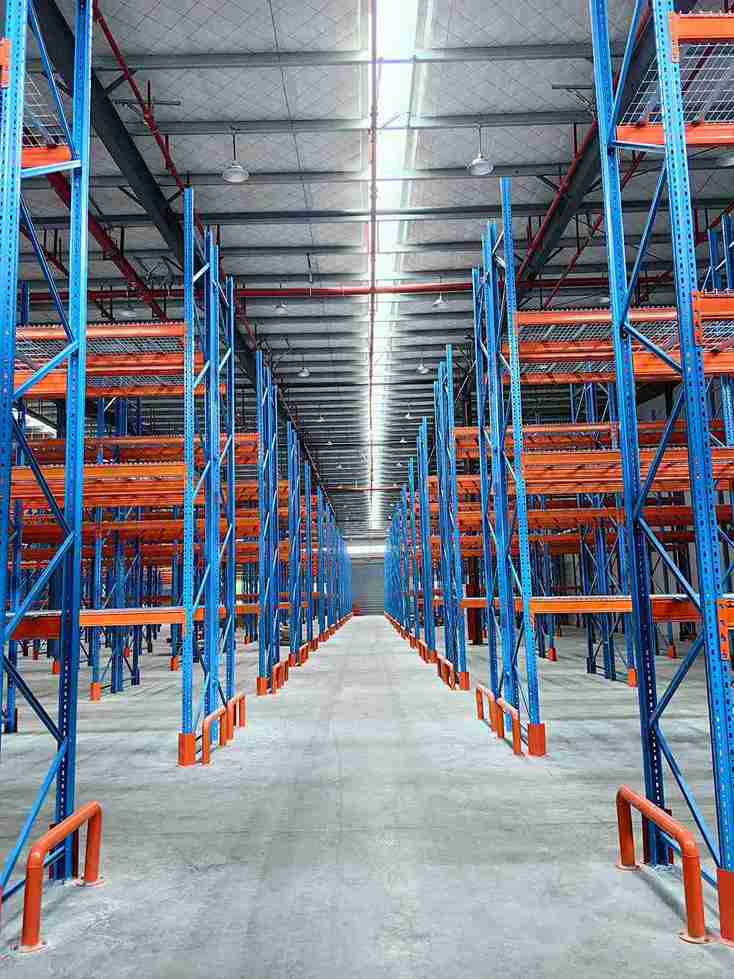
Navigating the Rulebook: Key International Standards (FEM 10.2.02 and RMI)
You don’t have to take our word for it. The importance of controlling deflection is codified in major international design standards. These standards provide the definitive framework for beam deflection limits. Two of the most critical are:
FEM 10.2.02: The European Benchmark
The Federation Européenne de la Manutention (FEM) is a preeminent European standard that is widely adopted across the globe, including in your target markets in the Middle East, Africa, and Asia. FEM 10.2.02 explicitly outlines the design principles for storage equipment. It mandates the span/180 deflection limit for beams under uniformly distributed loads to ensure serviceability and safety. For any professional supplier, compliance with FEM’s defined beam deflection limits is not an option; it’s the baseline for any project. These beam deflection limits have been proven over decades of use.
RMI: The American Standard
The Rack Manufacturers Institute (RMI) is the leading authority in North America, and its influence is global. The ANSI/RMI MH16.1 specification provides comprehensive guidance on the design, testing, and utilization of storage racks. Like FEM, it upholds the span/180 ratio as the standard for beam deflection limits under full load. Working with a supplier who understands and rigorously applies RMI standards for beam deflection limits is a sign of professional credibility. The RMI’s beam deflection limits are a cornerstone of safe warehouse design in the Americas and beyond.
Beyond the Pallet: How Load Type Radically Impacts Deflection
Not all loads are created equal. The type of load your racking will support is a primary factor in determining the required beam deflection limits. The standard beam deflection limits are based on specific assumptions that can be invalidated by unusual load types.
Uniformly Distributed Loads (UDL) vs. Point Loads
Uniformly Distributed Loads (UDL): This is the ideal scenario for which most rack beams are designed. The weight of the pallet and its goods is spread evenly across the entire length of the beam. This creates a predictable, even stress distribution and is the basis for the standard span/180 beam deflection limits.
Point Loads: This is where things get dangerous. A point load concentrates the weight on a very small area of the beam. A common example is a heavy piece of machinery or an awkwardly shaped item that doesn’t sit on a full pallet. Point loads can cause localized deflection and stress that far exceed the beam’s capacity, even if the total weight is below the rated capacity. In such cases, the standard beam deflection limits may not be sufficient, and special reinforcement or a completely different beam design with different beam deflection limits is often required.
The Special Case of Cantilever Racking
Cantilever racking, used for long, bulky items like lumber, steel bars, or piping, presents a unique deflection challenge. The load is supported at only one end, creating a much larger lever arm and potential for deflection. For cantilever arms, the beam deflection limits are even more critical and are typically calculated differently, often with a stricter tolerance. Failure here doesn’t just cause sag; it can lead to the entire arm pivoting downward with disastrous consequences. The beam deflection limits for cantilever systems are a specialized field of engineering in their own right.
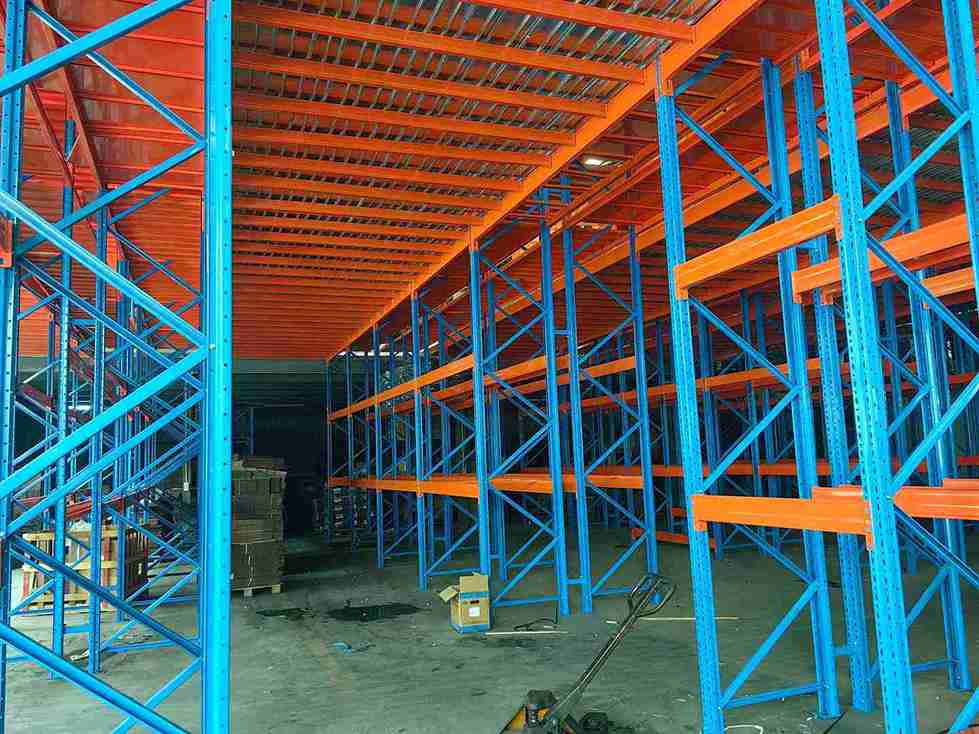
Specifying for Success: A Checklist for Your Next Storage Project
Armed with this knowledge, you can now approach your next racking purchase or warehouse design project with confidence. Use this checklist to ensure your supplier is delivering a safe, high-performance system built around correct beam deflection limits.
Ask for the Deflection Standard: Don’t just ask for the load capacity. Explicitly ask, “What beam deflection limits standard do your beams comply with? Is it span/180 or something stricter?” Get this in writing.
Declare Your Load Types: Be transparent with your supplier about what you will be storing. Are they all uniform pallets, or will there be point loads? This information is crucial for their calculations to determine the correct beam deflection limits.
Future-Proof for Automation: Even if you are not implementing AS/RS or AGVs today, specify beams that meet stricter beam deflection limits (e.g., span/240) if there is a possibility of automation in the next 5-7 years. Retrofitting later is far more expensive. Proactive specification of beam deflection limits saves capital in the long run.
Request Engineering Calculations: A reputable supplier will be able to provide certified engineering drawings and calculations that prove their beam design meets the stated beam deflection limits under your specified loads. These calculations are the proof of performance for the promised beam deflection limits.
Consider the Entire System: Deflection isn’t just about the beams. Inquire about the upright frame design, the robustness of the beam-end connectors, and the floor anchoring system. All these components work together to ensure the overall system performs within the specified beam deflection limits.
The High Cost of “Close Enough”: Why Deflection Tolerances Are Not a Place to Cut Corners
In a competitive bidding process, it can be tempting to choose a supplier whose price is significantly lower. Often, this cost savings is achieved by using lighter-gauge steel, less robust beam designs, or simply designing to the absolute minimum (and sometimes questionable) standards. A beam that is “close to” the beam deflection limits is already a compromised beam. It has no safety margin for unexpected point loads, slight overloading, or the natural degradation of materials over time. Compromising on beam deflection limits is a false economy.
Investing in a system with rigorously controlled beam deflection limits is an investment in:
Asset Longevity: Your racking will last for decades, not years. Proper beam deflection limits prevent premature metal fatigue.
Operational Consistency: You avoid the hidden costs of slowdowns and inefficiencies. Systems designed with appropriate beam deflection limits operate smoothly.
Risk Mitigation: You protect your workforce, your inventory, and your business from the devastating impact of a racking collapse. Adherence to beam deflection limits is your primary risk mitigation strategy.
Automation Readiness: You build a physical infrastructure that can seamlessly integrate with the technologies of tomorrow. The correct beam deflection limits are the entry ticket for automation.
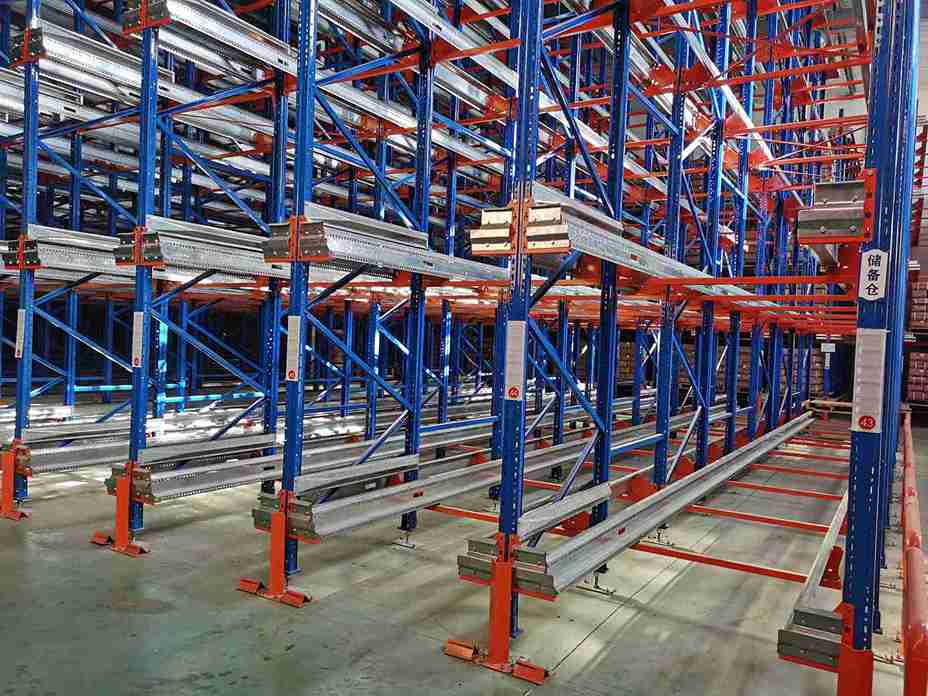
Case Study: Solving a Deflection Crisis in a Dubai Beverage Distribution Center
A major beverage distributor in Dubai approached us with a critical problem. Their existing selective pallet racking, supplied by a low-cost provider, was showing visible sag on the second and third levels. Forklift operators were reporting that pallets were getting stuck, and one beam had developed a crack at the connector. The existing system was clearly operating outside of safe beam deflection limits.
The Problem Analysis
Our site audit and engineering analysis revealed the root cause: the beams were significantly under-specified, deflecting beyond span/150 under full load, well outside the safe FEM 10.2.02 standard for beam deflection limits. The constant, high-frequency loading and unloading in the fast-paced environment had accelerated metal fatigue. The violation of fundamental beam deflection limits had put the entire operation at risk.
The Engineering Solution
We did not simply replace like-for-like. We designed a complete beam replacement package using our heavy-duty cold-rolled steel beams, engineered to a span/240 beam deflection limit. This not only solved the immediate safety crisis but also provided a significant upgrade in performance. The new, stricter beam deflection limits future-proofed the investment.
The Result
Elimination of Downtime: Pallet moves became smooth and predictable, eliminating the sticking issue. The new beam deflection limits ensured consistent operational geometry.
Operator Confidence: The visible assurance of straight, rigid beams improved operator morale and efficiency. The beams now operated well within their designed beam deflection limits.
Future-Proofing: The new system’s superior rigidity, courtesy of its enhanced beam deflection limits, made it an ideal candidate for the AGV system the client was planning to implement the following year.
Conclusion: Deflection Control – The Foundation of Modern Warehousing
Beam deflection limits are far more than an obscure engineering metric. They are the fundamental design parameter that dictates the safety, efficiency, and longevity of your entire storage operation. In an era of rising automation and supply chain demands, ignoring this principle is a risk that no serious business can afford to take. A sophisticated understanding of beam deflection limits is what separates industry leaders from the rest.
By partnering with a supplier who possesses deep engineering expertise and a commitment to international standards, you are not just buying racking; you are investing in peace of mind and building a resilient, high-performance logistics asset. Your warehouse is the backbone of your supply chain. Ensure its backbone is strong, rigid, and built to last by insisting on verifiable and appropriate beam deflection limits for every single project. The correct application of beam deflection limits is the hallmark of true professionalism in the material handling industry.
Frequently Asked Questions (FAQs)
1. Can beam deflection be fixed or corrected after installation if it’s excessive?
No, once a beam is permanently deformed beyond its yield point, it cannot be safely straightened. The molecular structure of the steel has been compromised. The only safe course of action is immediate unloading and replacement of the beam with a correctly specified one that meets the required beam deflection limits. Attempting to fix it is an extreme safety hazard and violates all principles of maintaining safe beam deflection limits.
2. How does seismic activity or high-wind regions (like the Middle East) affect beam deflection requirements?
In seismic or high-wind zones, the design considerations go beyond static load beam deflection limits. Dynamic forces can cause the entire rack structure to sway. While beam deflection limits under load remain critical, the overall design must include factors like increased bracing, specific upright frame designs, and stronger floor anchors to resist these lateral forces, as per local building codes and standards. The dynamic beam deflection limits and overall stability become the primary concern.
3. Is there a simple, visual way to check for problematic beam deflection during routine inspections?
Yes. During a routine visual inspection, look along the line of a loaded beam. A slight sag is normal, but if the deflection is clearly visible to the naked eye (e.g., you can easily see a curve), it is likely exceeding safe beam deflection limits. A more precise method is to use a taught string line along the bottom of the beam and measure the gap at the center. Compare this measurement to the beam’s span to calculate the ratio and see if it violates the specified beam deflection limits.
4. Do beam deflection limits change for used or second-hand racking?
The standard beam deflection limits do not change, but the capacity of the beam might. Used racking must be professionally inspected and re-certified. Scratches, dents, corrosion, or any deformation can significantly reduce a beam’s load-bearing capacity and increase its deflection under load, meaning it can exceed beam deflection limits even at lower weights. It is dangerous to assume a used beam will perform to its original beam deflection limits specifications.
5. How does temperature variation in a warehouse (e.g., in non-climate-controlled facilities) affect beam deflection?
Standard steel racking is designed to perform within a wide range of ambient temperatures. However, extreme heat can slightly reduce the steel’s yield strength, while extreme cold can increase its brittleness. For the vast majority of warehouses, this effect is negligible and is factored into the material safety margins of the stated beam deflection limits. However, for facilities with extreme temperature swings (e.g., foundries, cold storage), it is essential to discuss these conditions with your racking engineer during the design phase, as the effective beam deflection limits may need to be adjusted.
If you require perfect CAD drawings and quotes for warehouse racking, please contact us. We can provide you with free warehouse racking planning and design services and quotes. Our email address is: jili@geelyracks.com