📐 "First 50 Enterprise Queries Get Custom 3D Warehouse Design" Plan
















Beyond OSHA: The Global Warehouse’s Definitive Guide to Beam Racking Safety & Compliance
For global warehouse operators, navigating the complex web of beam racking safety standards is a non-negotiable aspect of modern logistics. While foundational frameworks like OSHA provide a starting point, they are not globally applicable. This definitive guide delves deep into the engineering, operational, and compliance imperatives that define true rack safety.
It moves beyond basic checklists to explore the physics of load dynamics, the rigors of systematic inspection, and the critical nuances of regional beam racking safety standards in Southeast Asia, the Middle East, Africa, and Latin America. The objective is to provide a holistic resource that empowers businesses to build an unshakeable culture of safety, protecting personnel, assets, and supply chain integrity against the severe consequences of racking failure.

The Critical Imperative: Why Basic Beam Racking Safety Standards Are a Global Liability
A warehouse manager in Vietnam and another in Brazil might share the same daily challenges, but their adherence to local beam racking safety standards separates a resilient operation from a catastrophic liability. The common search for a simple “beam racking safety checklist” reveals a universal recognition of risk. However, this search also highlights a dangerous gap in understanding. True safety is not a document to be filed away; it is a living, breathing system integrated into every facet of warehouse operations.
Racking failures are rarely instantaneous acts of God. They are most often the final, violent result of a cascade of smaller failures: an un-inspected dent from a forklift, a pallet loaded beyond its point load capacity, a beam connector weakened by repeated minor impacts, or a fundamental misunderstanding of the specific beam racking safety standards mandated by the local jurisdiction. A generic checklist can identify obvious damage, but it cannot impart the deep, contextual knowledge required to assess risk in a dynamic environment.
It cannot explain how the corrosive humidity of a Ho Chi Minh City warehouse demands a different corrosion inspection protocol than the dry heat of Dubai. It won’t clarify whether the beam racking safety standards in Chile require specific seismic bracing certifications. This article exists to bridge that knowledge gap, transforming the concept of beam racking safety standards from a vague compliance task into a strategic advantage for global supply chains.
Deconstructing the Framework: The Engineering Principles Underpinning All Beam Racking Safety Standards
At their core, all beam racking safety standards, from OSHA to EN 15635, are built upon immutable principles of physics and structural engineering. Understanding this “why” is fundamental to effective implementation.
Load Dynamics: UDL, PAL, and the Critical Calculations
Misunderstanding load capacity is a primary catalyst for structural failure. The listed capacity on a rack’s placard is not a simple number but a precise engineering specification.
The Rule of Uniformly Distributed Load (UDL): This is the cornerstone of all beam racking safety standards. A beam rated for a 2,500 kg UDL assumes the weight is spread evenly across its entire length. Concentrating that same weight in the center creates a bending moment that can exceed the beam’s yield strength, leading to deformation and collapse. Beam racking safety standards explicitly require that loads are stored to comply with the UDL.
Point Load Limitations: Every beam has a maximum permissible weight for any single point along its span. This is often a fraction of the UDL. Professional beam racking safety standards audits always verify that point loads, often from heavy, concentrated items on a pallet, are within the manufacturer’s specified limits.
Permissible Average Load (PAL) for Bays: This is a systems-level calculation. The PAL considers the total weight distributed across all levels of a single bay. Overloading the lower tiers, a common temptation, can overload the upright frames and compromise the entire structure’s stability. Comprehensive beam racking safety standards like EN 15635 provide detailed guidance on calculating and adhering to PAL.
The Structural Triad: Uprights, Beams, and the Connectors That Hold Everything Together
The integrity of a racking system is a chain, and its weakest link will determine its failure point. A deep dive into the components reveals where vigilance must be focused.
Upright Frames: The Vertical Backbone: The capacity of an upright is determined by its steel gauge, column depth, and the design of its bracing. The footplate, however, is its most critical vulnerability. Beam racking safety standards universally mandate that footplates are anchored to the concrete floor with bolts rated for both dynamic loads (e.g., forklift impacts) and, where applicable, seismic loads. The pull-out strength of these anchors is a frequent point of inspection.
Load Beams: The Horizontal Workhorses: These members bear the direct brunt of the weight. The beam end connector—the device that locks the beam into the upright—is arguably the most sophisticated component. Engineered with a specific “failure mode,” it is designed to deform or release under catastrophic load in a controlled manner, potentially preventing a progressive collapse. Damaging a connector is a severe violation of beam racking safety standards.
Shims and Leveling: The Devil in the Details: Using makeshift shims like wood blocks or metal scraps to level a beam is a profoundly dangerous practice condemned by all beam racking safety standards. This creates an unstable point load on the connector and can disengage the locking mechanism. Only manufacturer-approved leveling systems should ever be used.
The Human Factor: Operational Disciplines Dictated by Beam Racking Safety Standards
Engineering sets the safety ceiling, but daily operations determine the floor. The majority of damage to racking systems stems from operational activities, making human factors a central theme in all beam racking safety standards.
Material Handling Equipment: The Necessary Evil
Forklifts, reach trucks, and order pickers are essential but represent the greatest threat to racking integrity.
Comprehensive Operator Training: Effective training extends far beyond basic vehicle operation. It must include a dedicated “rack awareness” module, teaching operators to navigate aisles with the same caution they would use around pedestrians. This is a fundamental requirement in modern beam racking safety standards.
Investment in Physical Protections: Beam racking safety standards strongly recommend, and in many cases mandate, the use of physical protectors in high-traffic areas. Column guards, post protectors, and full-column armor systems are not optional expenses; they are a critical capital investment in risk mitigation. Their cost is negligible compared to the business interruption caused by a single collapsed bay.
Aisle Management and Traffic Flow: Enforcing strict speed limits, ensuring clear visibility, and using technologies like wire-guided paths for forklifts or AGVs can drastically reduce impact frequency. A well-organized traffic plan is a proactive application of beam racking safety standards.
The Science of Pallet Placement and Load Management
How a load is placed on the racking is as critical as the load’s weight itself. This is a daily test of an organization’s commitment to beam racking safety standards.
Pallet Integrity as a Precondition: A compromised or damaged pallet cannot provide a stable, uniform base. Its failure can cause a load to shift, creating an unpredictable and dangerous point load on the beams. Beam racking safety standards implicitly require the use of pallets in good condition.
Managing Load Overhang: All major beam racking safety standards specify the maximum allowable overhang of a pallet beyond the beam (typically no more than 2-3 inches). Excessive overhang creates a lever arm, dramatically increasing the stress on the beam end connectors and can lead to a “peel-off” failure.
Full Engagement and Alignment: A pallet must be fully seated on both supporting beams. A partially engaged pallet is a common and severe hazard. Furthermore, pallets must be aligned straight on the beams to ensure the load is distributed as intended by the UDL calculation.
The Sentinel System: Advanced Inspection Protocols Under Modern Beam Racking Safety Standards
A systematic inspection regime is the central nervous system of any rack safety program. It provides the early warnings that prevent minor issues from escalating into disasters.
The Formalized Visual Inspection (FVI) by a Competent Person
The FVI is a structured, documented process conducted by a person deemed “competent” through specific training on racking systems and their failure modes. This is a formal audit, not a casual walk-through, and is a core requirement of advanced beam racking safety standards like EN 15635.
A competent person conducting an FVI goes far beyond a simple list. They use a detailed beam racking safety checklist that scrutinizes:
Upright Frames: Checking for plumb (vertical alignment), impact damage (with special attention to the high-risk zone 0-48 inches from the floor), integrity of baseplate anchors and concrete, and any deformation or missing bracing.
Load Beams: Inspecting for level (horizontal alignment), checking for deflection or deformation of the beam deck, and conducting a microscopic-level examination of the beam end connectors for cracks, deformation, or signs of disengagement.
Load Conditions: Verifying compliance with UDL and PAL, checking for proper placement and overhang, and assessing pallet condition.
Site and Environment: Identifying floor cracks or settlement that could affect upright plumb, and looking for signs of corrosion, water damage, or other environmental degradation.
The “Red Tag” System: Operationalizing the Findings
An inspection is useless without a clear, actionable response protocol. The industry-standard “Red Tag” system is the engine that drives corrective action.
Identification and Tagging: The inspector immediately places a highly visible red tag on any damaged component.
Detailed Documentation: The tag records the nature, location, and severity of the damage, along with the date and inspector’s name.
A Triaged Response Protocol:
Green (Monitor): Superficial damage like minor paint scratches. Document and monitor.
Yellow (Action Required): Damage like a bent brace or moderately dented upright. The affected section must be offloaded promptly, and a qualified engineer must assess it for repair or replacement.
Red (Immediate Danger): Severe damage—a critically bent upright, cracked beam, or failed connector. The entire bay and adjacent bays must be offloaded immediately and cordoned off. The racking cannot be used until certified repairs are completed by an authorized professional.
This system transforms observation into decisive, safe action, embodying the proactive spirit of modern beam racking safety standards.
The Global Compliance Maze: Navigating International Beam Racking Safety Standards
For a company operating across borders, a one-dimensional understanding of compliance is a significant liability. The specific beam racking safety standards enforced in Malaysia are distinct from those in the UAE or Brazil.
The Foundational International Benchmarks
EN 15635: The European Benchmark: This standard for the “use and maintenance of storage equipment” is arguably the most comprehensive international reference. Its core innovation is the mandatory appointment of a “Person Responsible for Storage Equipment” (PRSE), a designated competent person who owns the entire safety lifecycle. This model of single-point accountability is a best practice that transcends geography.
SEMA Codes (UK): The Storage Equipment Manufacturers’ Association provides deeply detailed, globally respected codes of practice that offer practical guidance on installation, inspection, and use.
RMI/ANSI MH16.1 (USA): The Rack Manufacturers Institute standard, incorporated by reference into OSHA, is the primary benchmark in the United States and influences markets with strong US trade links.
Regional Deep Dive: Applying Beam Racking Safety Standards in Key Growth Markets
Southeast Asia (Singapore, Malaysia, Indonesia, Vietnam): A complex patchwork. There is rarely a single, specific code titled “beam racking safety standards.” Instead, safety is governed by overarching legislation like a Factories Act or Occupational Safety and Health Act, which imposes a general “duty of care.” To demonstrate compliance, companies must adopt and follow internationally recognized codes like EN 15635. In seismically active regions like Indonesia, local building codes will impose additional seismic design requirements on the racking structures.
The Middle East (UAE, Saudi Arabia, Qatar): Regulatory frameworks are rapidly maturing. Authorities like Dubai Municipality and Saudi Arabia’s SASO are increasingly formalizing requirements, often drawing from European or American beam racking safety standards. A professional engineer’s certification is frequently required for new installations. The trend is toward stricter, more codified enforcement.
Latin America (Brazil, Mexico, Chile): Brazil’s NRs (Normas Regulamentadoras) are the key regulatory instruments. While no NR is exclusively for racking, NR-11 (Transport, Movement, Storage) and NR-12 (Machine Safety) are applied. In Chile, high seismic activity dictates that beam racking safety standards must incorporate rigorous seismic design principles from the outset. As in other regions, using EN 15635 as an internal management standard provides a robust framework for demonstrating due diligence.
When the Ground Shakes: Seismic and Environmental Considerations in Beam Racking Safety Standards
In vast portions of the target markets, static load calculations are insufficient. The forces of nature must be engineered into the racking system from the design phase.
Seismic Certification and Design: In countries like Chile, the Philippines, and Japan, and in regions of the US, beam racking safety standards mandate specific seismic performance. This involves:
Using components certified to withstand defined seismic forces (e.g., per RMI or AISC standards).
Employing specialized anchor bolts (often epoxy) installed at precise torques to resist pull-out forces.
Utilizing load bars or wire mesh decking to prevent pallets from dynamically “walking” off the beams during an earthquake.
Wind Load Considerations: For warehouses with large open doors or semi-exposed structures, wind can exert significant pressure on racking structures, acting like a sail. This is a critical factor for tall narrow aisle racking and must be calculated by a structural engineer, a requirement in many coastal or wind-prone regions’ beam racking safety standards.
The Automated Frontier: Integrating Beam Racking Safety Standards with AS/RS and AGVs
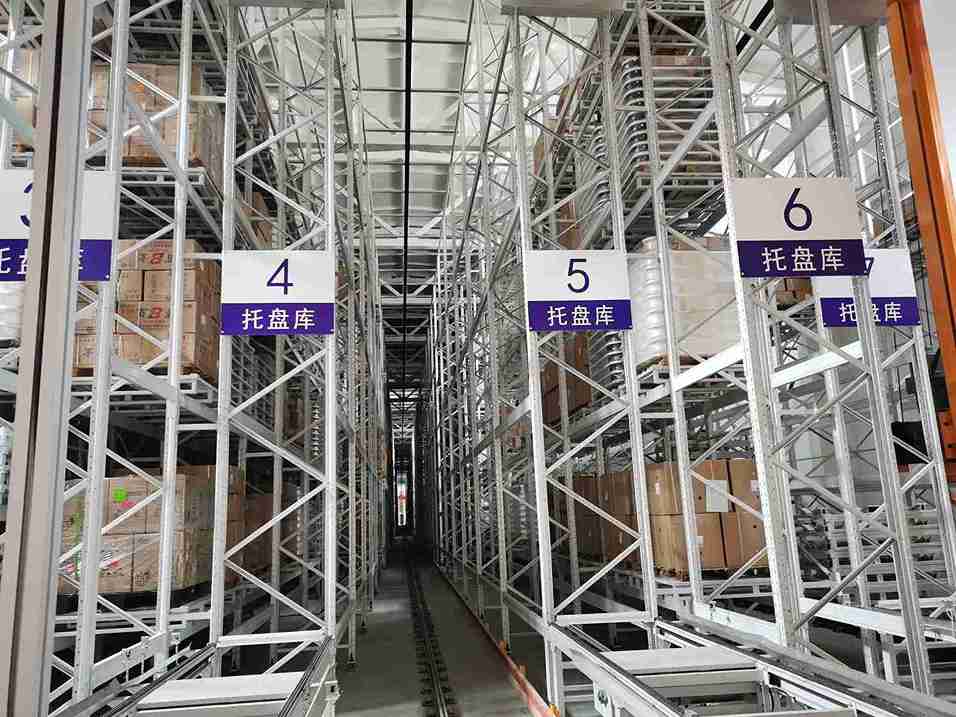
The rise of automation introduces a new layer of precision and risk, demanding an evolution of traditional beam racking safety standards.
The Tolerance Tightrope: Automated systems like AS/RS and AGVs operate with millimeter precision. This demands that racking is installed and maintained to incredibly tight tolerances. A lean that a human operator could compensate for might cause a continuous AS/RS machine to fault or collide, halting operations.
Evolving Damage Profiles: While AGVs reduce the frequency of impacts, they are not infallible. When collisions occur, they may produce different damage patterns than those from a human-operated forklift. Inspection protocols, a core part of beam racking safety standards, must be updated to identify these new risk patterns.
Systemic Integration for Safety: The ultimate expression of modern beam racking safety standards is the integration of the Warehouse Management System (WMS) with inspection data. If a bay is red-tagged, the WMS should automatically lock it out, preventing the automation from retrieving or storing product in that location, creating a digital safety barrier.
Forging a Culture of Safety: The Human Element Beyond the Beam Racking Safety Standards Document
The most sophisticated racking and the most detailed inspection protocol are ultimately dependent on the people who execute them daily. A robust safety culture is the force multiplier.
Visible Leadership Commitment: Safety must be visibly and consistently prioritized from the highest levels of management. The message that safety trumps speed must be unambiguous and reinforced through action.
Universal Empowerment: Every employee, from the newest hire to the most seasoned operator, must be trained, encouraged, and empowered to identify and report potential hazards without fear of reprisal. A “see something, say something” culture is the most effective real-time inspection network.
Continuous, Engaging Education: Training on beam racking safety standards cannot be a monotonous, annual checkbox exercise. It must be an ongoing, engaging process that uses real-world examples, near-miss reports, and hands-on demonstrations to keep safety at the forefront of everyone’s mind.
Conclusion: Elevating Safety from a Compliance Task to a Strategic Imperative
Adherence to comprehensive beam racking safety standards is not merely about avoiding regulatory fines; it is a fundamental strategic imperative for any business that relies on an efficient, resilient warehouse operation. It is a continuous journey that blends engineering excellence, operational discipline, and an unwavering cultural commitment.
By embracing the holistic framework outlined in this guide—one that understands load dynamics, enforces rigorous inspections, navigates global compliance mazes, and integrates seamlessly with both human and automated systems—organizations can transform their warehouse from a potential point of failure into a bastion of reliability and efficiency. Protecting your personnel, your inventory, and your supply chain continuity is the ultimate return on investment that superior beam racking safety standards provide.
Frequently Asked Questions (FAQs)
1. We have a mix of old and new racking from different manufacturers. How does this affect our compliance with beam racking safety standards?
This is a common and high-risk scenario. Mixing components from different manufacturers, known as “mixed rack,” is strongly discouraged by all major beam racking safety standards. Connectors and beams are engineered as a system, and incompatibility can lead to reduced load capacity and unpredictable failure modes. The definitive course of action is to consult a qualified racking engineer who can assess the compatibility. Often, the only safe solution is to phase out the older, non-compatible components to ensure the entire system meets a unified, certifiable beam racking safety standards specification.
2. What specific qualifications should we look for in a “competent person” to conduct our Formal Visual Inspections?
The definition is precise in standards like EN 15635. A “competent person” must have specific training and proven experience in the inspection of storage equipment. This typically means certification from a recognized industry body (e.g., a SEMA Approved Inspectors course, an RMI certification, or an equivalent accredited training program). They must possess a thorough understanding of the specific beam racking safety standards you follow, the failure modes of racking components, and the use of detailed inspection tools and checklists. Internal forklift trainer certification is not sufficient for this specialized role.
3. Are there different beam racking safety standards for specific types of racking, like cantilever or drive-in systems?
Yes, absolutely. While the core principles of physics and safety apply universally, specialized racking types have unique risks and requirements. Cantilever racking for long goods has specific standards regarding arm deflection and column anchorage. Drive-in/drive-through racking, due to its high-density nature and the guides rails used, has distinct beam racking safety standards related to guide rail integrity, impact protection, and specific fire safety considerations. It is critical to consult the manufacturer’s documentation and the specific appendices in overarching standards that address these specialized configurations.
4. How frequently should we replace our beam racking safety checklist or update our inspection protocols?
Your beam racking safety checklist and inspection protocols are living documents. They should be formally reviewed and updated at least annually, or immediately following any of these events: a significant racking incident or near-miss, a change in the type of products stored or material handling equipment used, the introduction of automation, or the publication of an updated version of the core beam racking safety standards you adhere to (e.g., a new SEMA code or EN standard revision).
5. In a region with less explicit regulations, what is the single most important document we can produce to prove due diligence with beam racking safety standards?
The single most powerful document is a comprehensive “Racking Safety Management System” manual. This goes beyond a simple checklist. It should document your company’s policy, the appointment of the PRSE (Person Responsible for Storage Equipment), the detailed inspection schedules and protocols (including the Red Tag system), records of all employee training, and the complete historical log of all Formal Visual Inspections and the corrective actions taken. This manual, built around a recognized international standard like EN 15635, demonstrates a systematic, professional, and defensible approach to beam racking safety standards that will satisfy the “due diligence” requirement of any general safety law.
If you require perfect CAD drawings and quotes for warehouse racking, please contact us. We can provide you with free warehouse racking planning and design services and quotes. Our email address is: jili@geelyracks.com