📐 "First 50 Enterprise Queries Get Custom 3D Warehouse Design" Plan















Optimizing Heavy-Duty Eardrop Beam Racking for Harsh Environments: Custom Solutions for Latin America & Central Asia
For supply chain and warehouse management professionals operating across the demanding industrial landscapes of Latin America and Central Asia, storage infrastructure is not a passive asset; it is the first line of defense against some of the world’s most challenging environmental and operational conditions.
Standard warehouse storage solutions, designed for benign, temperature-controlled environments, are fundamentally inadequate for the corrosive salt air of a Colombian port, the seismic volatility of the Chilean coast, the abrasive dust of a Kazakhstani plain, or the heavy, dynamic loads of a Brazilian mining operation. These forces do not merely inconvenience operations; they actively degrade structural integrity, compromise safety, and impose a crippling total cost of ownership through relentless maintenance and premature failure.
The definitive solution to this universal challenge lies in the strategic implementation of custom-engineered heavy-duty eardrop beam racking. This specific type of eardrop beam racking transcends the definition of simple storage; it represents a fully integrated structural system, engineered from the ground up for resilience, adaptability, and longevity.
Leading providers, drawing upon decades of specialized experience, do not simply sell this eardrop beam racking—they deliver a guaranteed performance outcome, a fortress of storage integrity designed to ensure operational continuity where it matters most. This deep-dive exploration will unpack why a properly specified eardrop beam racking system is the most critical investment a business can make to secure its logistics backbone in these high-stakes regions.
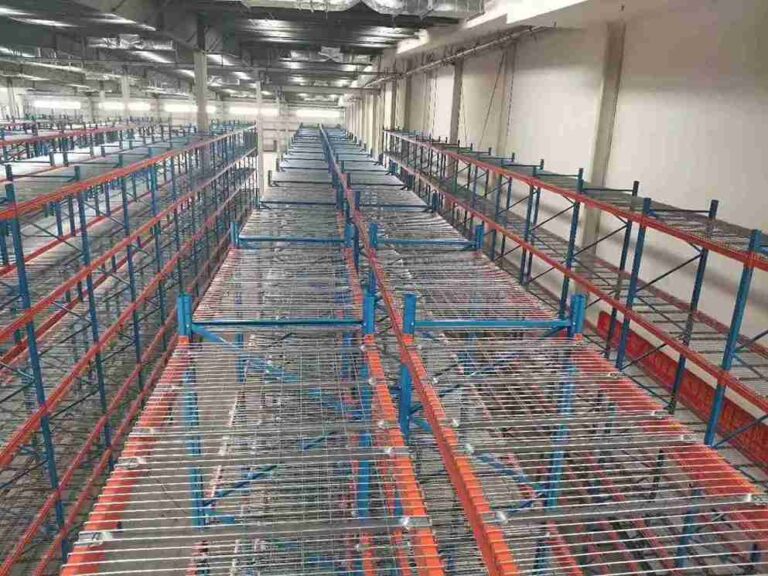
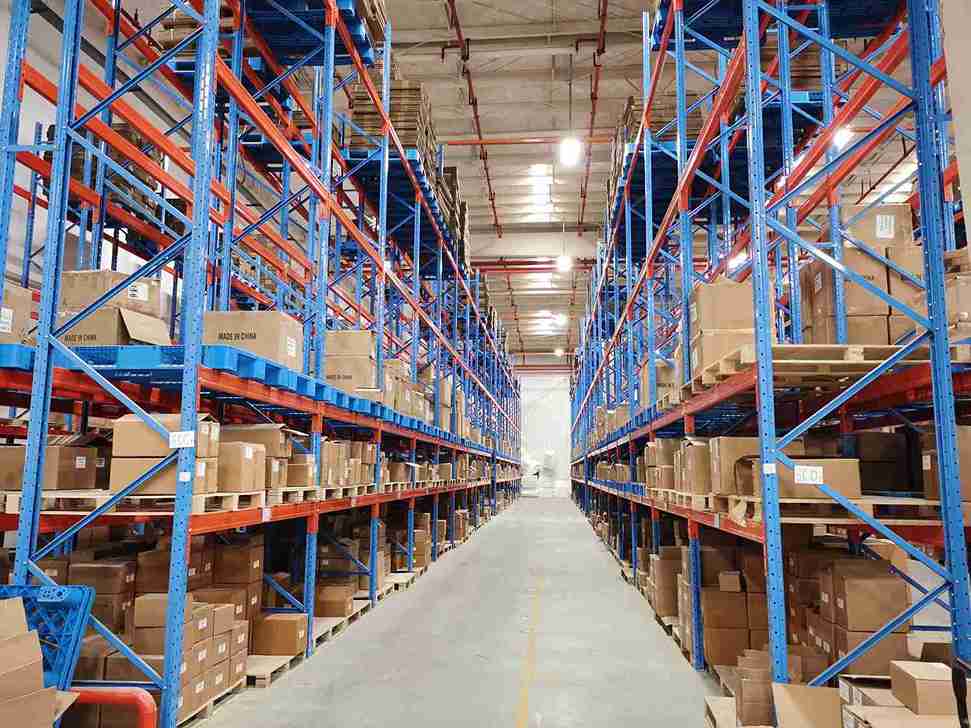
teardrop beam racking warehouse storage system
The Anatomical Superiority of Heavy-Duty Eardrop Beam Racking
To understand why a specialized eardrop beam racking system outperforms conventional alternatives, one must examine its core components and the engineering philosophy behind each. A true heavy-duty eardrop beam racking solution is a symphony of reinforced materials, intelligent design, and protective science.
Deconstructing the Eardrop Connection: The Heart of the System
The namesake of the eardrop beam racking system is its defining feature: the connection between the horizontal beam and the vertical upright. This is not a minor detail; it is the epicenter of the system’s strength and reliability. The mechanism involves a precision-formed, teardrop-shaped hole in the upright column that accepts a corresponding hook or tab on the beam end. This elegant design offers profound advantages for a **heavy-duty eardrop beam racking** application in harsh environments.
First and foremost, the eardrop beam racking connection is a shear-force connection. The immense weight of the palletized load is transferred from the beam directly into the upright frame through direct metal-to-metal contact in the most robust manner possible. This eliminates the reliance on shear pins or bolts as the primary load-bearing elements, which are common points of failure in inferior systems.
Once engaged, the connection in a quality eardrop beam racking system is secured with an automatic safety lock, a spring-loaded pin that prevents accidental dislodgement. This feature is invaluable in high-vibration environments or in regions prone to seismic activity, ensuring that the integrity of the eardrop beam racking remains intact under dynamic stress.
Advanced Metallurgy and Multi-Stage Corrosion Protection
The structural skeleton of a heavy-duty eardrop beam racking system begins with high-tensile, cold-rolled steel. This material provides a superior strength-to-weight ratio, allowing the eardrop beam racking to support colossal loads without unnecessary bulk. However, the steel is only as good as its protection. For a heavy-duty eardrop beam racking system destined for a corrosive environment, a multi-stage defensive strategy is non-negotiable.
The gold standard is a foundation of hot-dip galvanization. In this process, every component of the eardrop beam racking is immersed in a bath of molten zinc, creating a metallurgical bond that provides sacrificial, cathodic protection. This means that even if the coating is gouged or scratched, the zinc will corrode preferentially, preserving the underlying steel.
On top of this galvanized base, a thick, durable epoxy-polyester hybrid powder coating is applied electrostatically and cured under heat. This dual-layer defense makes the eardrop beam racking resistant not just to rust, but to chemical splashes, abrasive dust, and UV degradation, ensuring the eardrop beam racking system’s appearance and structural soundness for decades.
Reinforced Uprights and Impact Resilience
The upright frames in a heavy-duty eardrop beam racking system are its backbone. These are not standard C-channel columns. They are often fabricated from heavier-gauge steel and feature continuous-rod or solid-welded truss bracing patterns. This creates an exceptionally rigid frame that resists the lateral forces imposed by forklift impacts, seismic events, or the natural sway of a fully loaded structure.
Furthermore, integral to the design of a professional eardrop beam racking system are robust column guards and reinforced base plates. These components are engineered to absorb the kinetic energy of impacts, protecting the critical structural elements of the eardrop beam racking from damage that could compromise its load-bearing
capacity.Regional Application Deep Dive: Customizing Eardrop Beam Racking for Maximum Impact
The concept of a one-size-fits-all eardrop beam racking system is antithetical to effective logistics engineering. The true value of a specialist provider is their ability to customize every aspect of the heavy-duty eardrop beam racking to the precise realities of the client’s location and industry.
Latin American Applications: From Coastline to Cordillera
The geographic and industrial diversity of Latin America demands an equally diverse approach to eardrop beam racking design.
Coastal & Port Logistics: In port-side facilities in Peru, Ecuador, or Mexico, the constant, salt-saturated air is a relentless corrosive agent. Here, the specification for eardrop beam racking must prioritize the full hot-dip galvanization process. The design may also need to account for higher wind loads in semi-open storage yards, potentially requiring closer upright spacing and specialized bracing in the eardrop beam racking configuration.
Mining & Heavy Industry: In the mining sectors of Chile or Colombia, the eardrop beam racking must withstand not only immense, irregular loads but also exposure to corrosive chemicals and abrasive particulate matter. Custom cold-formed beam sections with capacities exceeding 5,000 kg per level are common, and the powder coating specification for the eardrop beam racking is selected for exceptional chemical and abrasion resistance.
High-Density Seismic Zones: In countries like Chile, a world leader in seismic building codes, the engineering of the eardrop beam racking is a matter of public safety. Providers must perform detailed seismic calculations, often designing the eardrop beam racking with moment-resisting frames and specific bracing configurations to dissipate energy and prevent a progressive collapse during an earthquake.
Central Asian & Middle Eastern Industrial Challenges
The vast, continental climates and heavy industries of Central Asia present a different, yet equally demanding, set of challenges for storage infrastructure.
Temperature Extremes & Abrasive Dust: From the freezing winters to the scorching summers, the steel used in eardrop beam racking undergoes significant thermal expansion and contraction. Engineering calculations must account for this movement. Furthermore, in arid regions, the powder coating on the eardrop beam racking must be formulated for high thermal stability and extreme abrasion resistance to combat the effect of fine, sandblasting dust.
Oil, Gas, and Heavy Manufacturing: Supporting the weight of massive pipeline components, machinery parts, and industrial raw materials requires a heavy-duty eardrop beam racking system of a different caliber. Uprights are often custom-designed with thicker walls and deeper sections, and the eardrop beam racking connections are scrutinized for fatigue resistance under dynamic loading conditions common in these sectors.
The Synergy of Eardrop Beam Racking and Modern Automation
A modern warehouse is an ecosystem, and the storage structure is the terrain upon which efficiency is built. The precision and robustness of heavy-duty eardrop beam racking make it the ideal foundational partner for automation technologies, creating a seamless and highly resilient operational flow.
The Framework for Automated Guided Vehicles (AGVs)
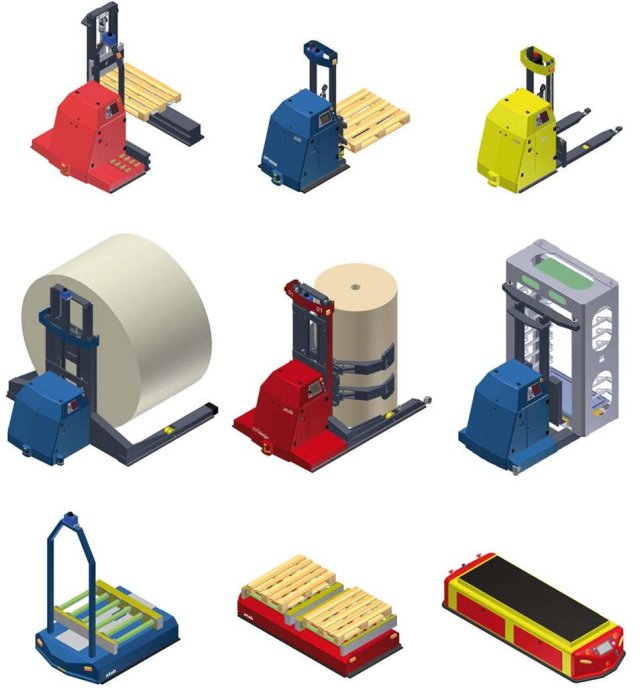
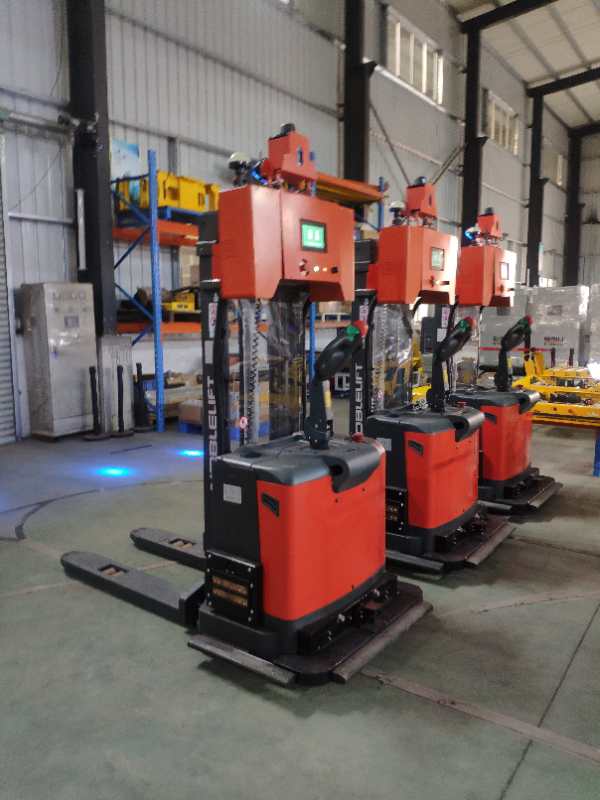
The integration of eardrop beam racking with AGVs is a masterclass in precision engineering. Automated Guided Vehicles rely on predictable, unchanging spatial dimensions to navigate aisles and place pallets with millimeter accuracy. The inherent stability and minimal deflection of a properly installed eardrop beam racking system provide this critical, stable environment. The clean profile of the eardrop beam racking, free from protruding bolts and pins, also creates a safer operating corridor for these robotic systems, minimizing the risk of snagging or collision.
Enabling Very Narrow Aisle (VNA) and ASRS Solutions
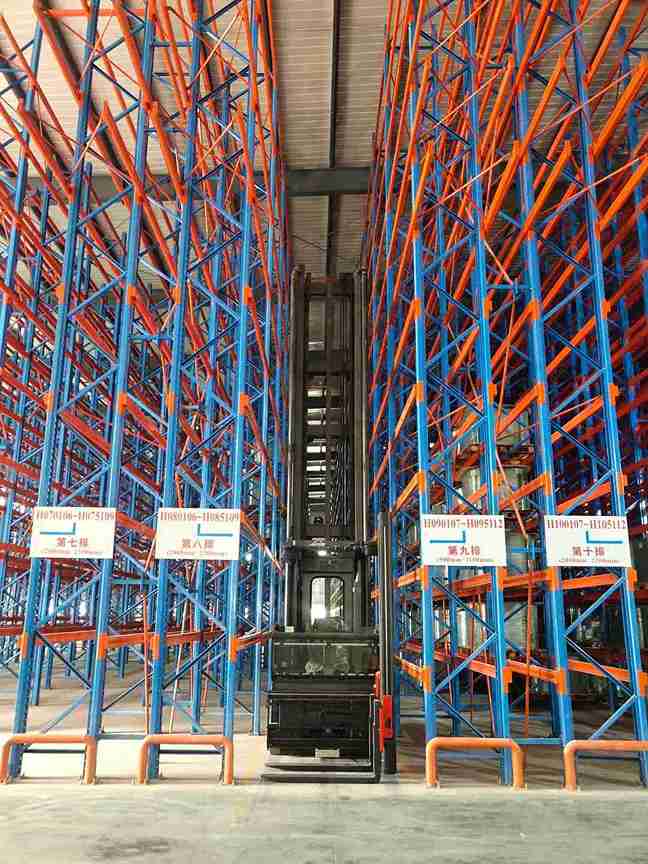
For operations seeking maximum storage density,eardrop beam racking forms the literal guide path for VNA forklifts or the support structure for fully automated storage and retrieval systems (AS/RS). In these applications, the absolute vertical alignment and unwavering rigidity of the **eardrop beam racking** are paramount. Any deviation can cause guide rail damage, system malfunctions, and dangerous operational failures. The engineering and installation tolerances for a eardrop beam racking system destined for VNA or AS/RS are exceptionally tight, a task that only seasoned specialists can guarantee.
The Unassailable Business Case: Total Cost of Ownership for Eardrop Beam Racking
The decision to invest in a custom heavy-duty eardrop beam racking system must be evaluated not on its initial purchase price, but on its Total Cost of Ownership (TCO). A cheaper, standard racking solution in a harsh environment is a false economy with devastating hidden costs.
A premium eardrop beam racking system, with its advanced corrosion protection and robust construction, is engineered for a service life of 25 to 30 years with minimal maintenance. In contrast, a standard system may require costly repainting within a few years and could face structural degradation requiring full replacement in under a decade. The operational downtime, inventory loss, and safety hazards associated with a racking failure dwarf the initial investment in a superior eardrop beam racking system. When viewed through the lens of TCO, the heavy-duty eardrop beam racking emerges not as an expense, but as a long-term asset that actively protects profitability and ensures supply chain resilience.
Conclusion: Forging Resilient Supply Chains with Engineered Storage Solutions
In the high-stakes world of industrial logistics across Latin America and Central Asia, the choice of storage infrastructure is a strategic decision that reverberates through every aspect of safety, efficiency, and cost-control. Standard racking represents a persistent vulnerability, a ticking clock counting down to its own failure. In its place, the custom-engineered heavy-duty eardrop beam racking system stands as a bastion of reliability. It is the product of a sophisticated engineering process that harmonizes material science, structural dynamics, and deep regional expertise.
By partnering with a provider who specializes in this caliber of eardrop beam racking, businesses are not just purchasing steel; they are investing in operational certainty, securing their assets, and fortifying their supply chain against the inevitable challenges of their environment. The question is not whether you can afford a premium eardrop beam racking system, but whether you can afford the catastrophic cost of being without one.
Frequently Asked Questions (FAQs)
1. Beyond the eardrop connection, what other design features differentiate a heavy-duty system from a standard one?
A true heavy-duty eardrop beam racking system incorporates numerous enhancements. These include thicker-gauge steel in the uprights and beams, reinforced base plates that are welded (not bolted) to the uprights, continuous bracing patterns for superior lateral stability, and often, custom beam designs for specific pallet types or exceptionally heavy loads. The entire system is designed as an integrated unit for maximum strength.
2. How does the procurement and installation process work for a remote site with limited local expertise?
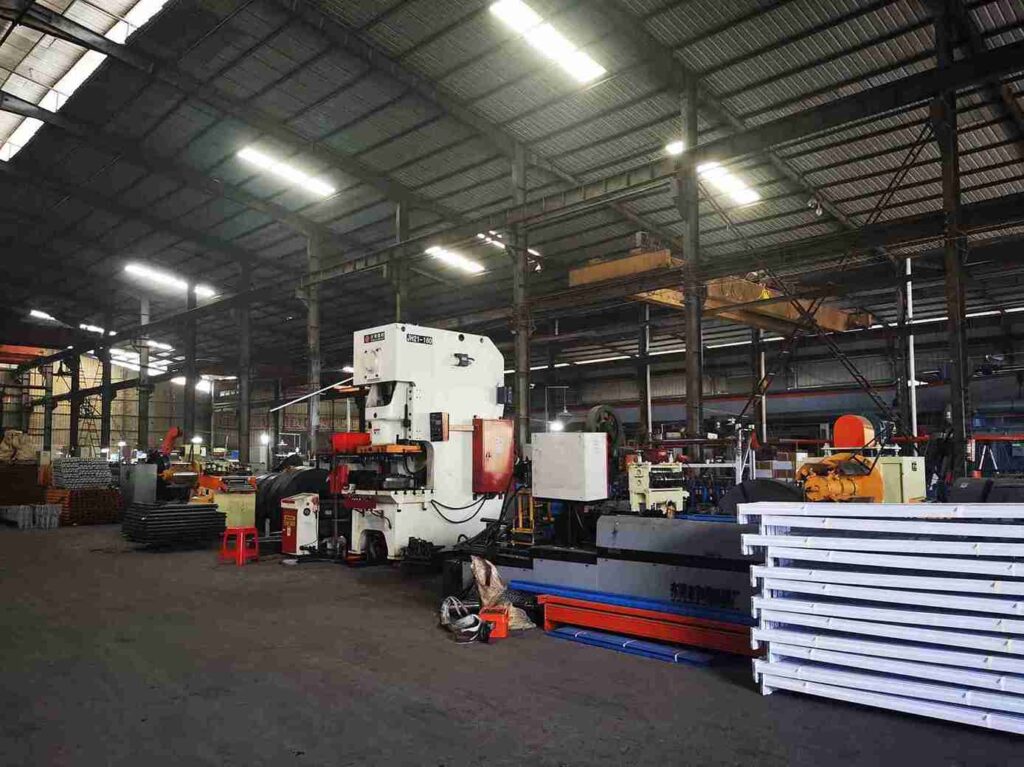
Reputable providers operate as turnkey solution partners. This includes a remote or on-site initial assessment, detailed engineering and design approval, fabrication, and comprehensive logistics management to deliver the eardrop beam racking system to your site. They typically provide or supervise a certified installation team to ensure the eardrop beam racking is erected precisely to specification, guaranteeing performance and safety regardless of local expertise.
3. Can your eardrop beam racking be designed for specific non-standard pallet sizes or load types, like long-span storage?
Absolutely. The versatility of the eardrop beam racking system is one of its key strengths. Engineers can design long-span eardrop beam racking solutions using reinforced box beams or truss beams to accommodate oversized pallets, industrial pipes, or textile rolls. The eardrop beam racking configuration can be entirely customized for the unique load profile, which is common in industries like aerospace, timber, and manufacturing.
4. What specific documentation and certification do you provide with the system?
A professional provider will supply a comprehensive certification package. This includes mill certificates for the raw steel, coating thickness reports, full static and dynamic load calculations stamped by a qualified engineer, assembly drawings, and a final structural integrity certificate for the installed eardrop beam racking system. This documentation is often essential for insurance, regulatory compliance, and future safety audits.
5. We have a mixed fleet of manual and automated equipment. Is eardrop beam racking suitable for this environment?
Yes, in fact, eardrop beam racking is ideal for hybrid environments. The system’s strength and impact-resistant features protect it from manual forklift operations, while its precision and consistency provide the stable, predictable framework required for automated systems to function efficiently. This makes a robust eardrop beam racking system a future-proof investment as operations gradually transition toward higher levels of automation.
If you require perfect CAD drawings and quotes for warehouse racking, please contact us. We can provide you with free warehouse racking planning and design services and quotes. Our email address is: jili@geelyracks.com