📐 "First 50 Enterprise Queries Get Custom 3D Warehouse Design" Plan
















Strategic Warehouse Expansion: Achieving 200% Capacity Growth with Cost-Effective Structural Beam Racking
For logistics managers, warehouse operators, and business owners across the burgeoning industrial landscapes of Southeast Asia, the Middle East, Africa, and Latin America, the physical constraints of a warehouse often pose the single greatest barrier to growth. The challenge is universal: how to store more inventory, handle greater throughput, and improve operational efficiency without incurring the prohibitive costs of constructing new facilities or leasing additional space.
The solution, increasingly recognized as the industry standard for intelligent warehouse design, is the strategic implementation of cost-effective structural beam racking. This comprehensive guide delves deep into the engineering superiority, financial mechanics, and strategic implementation of structural beam racking systems. It provides a definitive blueprint for transforming storage operations, demonstrating not just the feasibility of a 200% boost in storage capacity within existing footprints, but the tangible pathway to achieving it.
By exploring system integration, future-proofing with automation, and detailing rigorous safety protocols, this resource establishes why structural beam racking is the foundational investment for any business aiming to dominate its market in the world’s most dynamic economies.

The Engineering Backbone of Modern Warehousing: Deconstructing Structural Beam Racking
To appreciate the transformative potential of structural beam racking, one must first understand what distinguishes it from conventional storage solutions. At its essence, structural beam racking is not merely shelving; it is a engineered system comprised of vertical frames and horizontal beams, fabricated from high-tensile structural steel. The term “structural” is the operative differentiator. Unlike lighter-duty, roll-formed alternatives, the components of a true structural beam racking system are designed to bear immense loads with minimal deflection, creating a storage framework that is both incredibly strong and remarkably adaptable.
The genius of its design lies in the connection between the beam and the upright frame. Utilizing a patented safety lock or a boltless connector, the beam end engages securely into the frame’s column. This creates a connection that is both immensely strong and infinitely adjustable. This adjustability is a critical feature for warehouses in emerging markets, where inventory profiles can shift seasonally and operational flexibility is paramount. The ability to reconfigure storage heights in minutes, without specialized tools or significant downtime, makes structural beam racking a dynamic asset, not a static fixture.
The Critical Components of a Superior Structural Beam Racking System
A best-in-class structural beam racking system is defined by the quality and design of its core components. Each part plays a vital role in ensuring the system’s overall integrity, safety, and performance.
Heavy-Duty Upright Frames: The vertical backbone of the system, these frames are constructed from structural steel C-channels. For enhanced stability in regions prone to seismic activity or in high-traffic environments, additional bracing is integrated into the frame design. The columns are precision-punched with a standardized hole pattern, facilitating the tool-less adjustability that is a hallmark of versatile structural beam racking.
High-Capacity Load Beams: These are the workhorses of the system. The load beams in a structural beam racking system are typically of a box-shaped, tubular design. This closed-section profile provides superior resistance to bending and torsional forces compared to standard roll-formed C-channel beams. This engineering allows each pair of beams to support palletized loads ranging from 8,000 to 12,000 pounds or more, making this form of structural beam racking ideal for heavy industrial applications.
Integrated Safety Locks: A small but non-negotiable component. These locks automatically engage when the beam is properly seated into the frame, creating a positive mechanical lock that prevents accidental dislodgement due to forklift impact. This feature is a fundamental aspect of a safe structural beam racking installation.
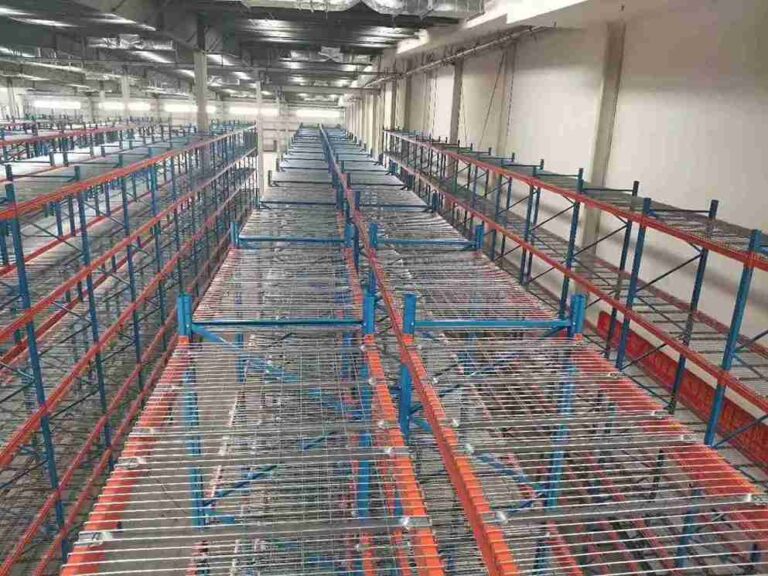
Ancillary Components for Enhanced Functionality: The system’s versatility is extended with accessories like wire mesh decking, which provides a safe surface for storing non-palletized items and improves fire safety by allowing sprinkler water to pass through, or pallet support bars for added security. The robust nature of the primary structural beam racking components ensures that these additions can be integrated seamlessly and reliably.
The Compelling Financial Calculus: Quantifying the ROI of Structural Beam Racking
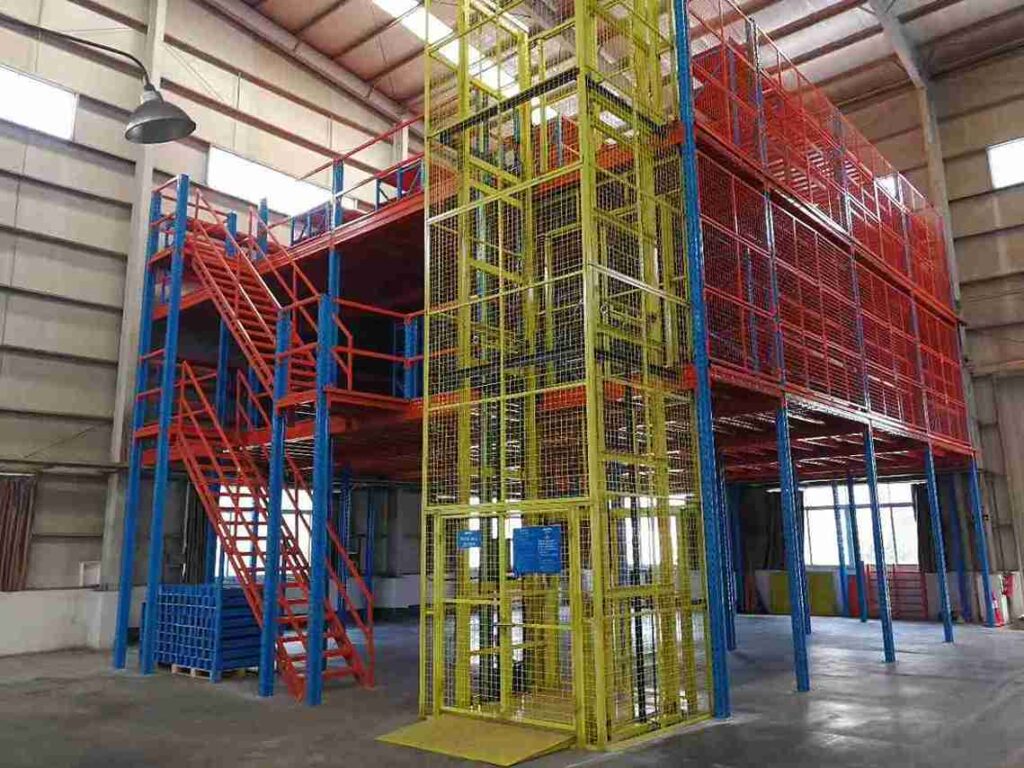
For any business decision-maker, the ultimate metric is return on investment. The financial argument for deploying structural beam racking is not merely compelling; it is often transformative. The core value proposition revolves around converting unused vertical airspace into highly organized, accessible storage, thereby achieving a dramatic 200% boost in storage capacity without expanding the building’s footprint.
The economics are best understood through a direct comparison of Capital Expenditure (CAPEX) versus long-term Operational Expenditure (OPEX). The initial outlay for a high-quality structural beam racking system is a strategic capital investment that delivers recurring operational savings and cost avoidances.
The Avoided Cost of Expansion: The most significant financial benefit. By tripling storage density within an existing warehouse, businesses can completely avoid the monumental costs associated with constructing a new building or leasing additional space. In developing markets where industrial real estate prices are rising rapidly, this avoidance represents a massive saving.
Labor Efficiency Gains: A well-planned structural beam racking system is designed with workflow optimization in mind. By creating logical storage lanes, optimizing aisle widths, and reducing travel distances for material handling equipment, businesses routinely document a 15-25% increase in forklift productivity and order-picking efficiency. This translates directly into lower labor costs per unit handled.
Inventory Damage Reduction: The inherent stability and strength of structural beam racking drastically minimize the risk of racking failure and product damage. Protecting inventory from loss is a direct protection of profit margins.
A Illustrative Case Study from Indonesia:
A consumer goods distributor in Jakarta was facing a severe space crunch. Leasing an additional 5,000 sq. meter warehouse would cost approximately $120,000 annually. Instead, they invested $250,000 in a comprehensive structural beam racking system for their existing facility.
Result: Storage capacity increased from 1,500 to over 4,500 pallet positions—a 300% gain.
Payback Period: The investment paid for itself in just over two years through avoided lease costs alone. Subsequent years yielded pure profit enhancement. This powerful ROI is the definitive proof point for cost-effective structural beam racking.
Navigating the Procurement Process: A Guide to Smart Investment in Structural Beam Racking
Selecting the right supplier for a structural beam racking system is as critical as the decision to invest in one. A discerning buyer should look beyond initial price and evaluate potential partners on several key criteria to ensure they are investing in a solution, not just a product.
Engineering and Design Capability: The provider must have in-house engineering expertise to perform load calculations, create certified layout drawings, and ensure the proposed structural beam racking design complies with international standards like RMI (Rack Manufacturers Institute) or FEM.
Material Quality and Sourcing: Inquire about the grade and source of the steel. Reputable suppliers use certified, high-tensile steel and will provide mill certificates. The quality of the powder coating, including its thickness and anti-corrosion properties, is vital for longevity, especially in humid or coastal climates.
Project Management and Installation Prowess: The complexity of a large-scale structural beam racking installation requires meticulous project management. The supplier should provide a clear project plan, have experienced and trained installation crews, and demonstrate a proven methodology for working in live warehouse environments to minimize disruption.
After-Sales Support and Service: The partnership should not end at installation. A reliable provider offers ongoing services, such as annual safety inspections, readily available spare parts, and load capacity audits to ensure the structural beam racking system continues to perform safely and efficiently for its entire lifespan.
The Blueprint for Success: A Phased Methodology for Structural Beam Racking Implementation
Achieving a guaranteed outcome with a structural beam racking project requires a disciplined, phased approach. Rushing the process or skipping critical steps leads to suboptimal performance, safety risks, and wasted investment.
Phase 1: The Comprehensive Discovery and Data Analysis
This foundational phase is about converting operational reality into quantifiable data. It involves a collaborative deep-dive into the client’s business.
Facility Audit: Precise laser measurements of the warehouse’s internal dimensions, including clear ceiling height, column locations, door and sprinkler positions, and floor flatness.
Inventory Profiling: A detailed analysis of all SKUs, focusing on pallet dimensions and weights, turnover velocity (using ABC analysis), and special handling requirements.
Operational Workflow Mapping: Understanding daily, weekly, and seasonal throughput patterns, material handling equipment (MHE) specifications (e.g., forklift turning radii), and peak capacity demands.
This data forms the absolute bedrock upon which a successful structural beam racking design is built.
Phase 2: Dynamic 3D Modeling and Layout Simulation
With robust data in hand, the engineering team employs advanced warehouse design software to create a dynamic 3D model of the proposed facility. This is where the promise of a 200% boost in storage capacity is visually validated. The model allows stakeholders to:
Virtually “walk through” the new layout.
Verify aisle widths and ensure MHE maneuverability.
Analyze picking paths for efficiency.
Evaluate different configurations of the structural beam racking system, such as selective, double-deep, or drive-in, to find the optimal mix for their inventory profile.
This collaborative visualization step ensures client and provider are perfectly aligned before manufacturing begins.
Phase 3: Seamless Installation and Operational Migration
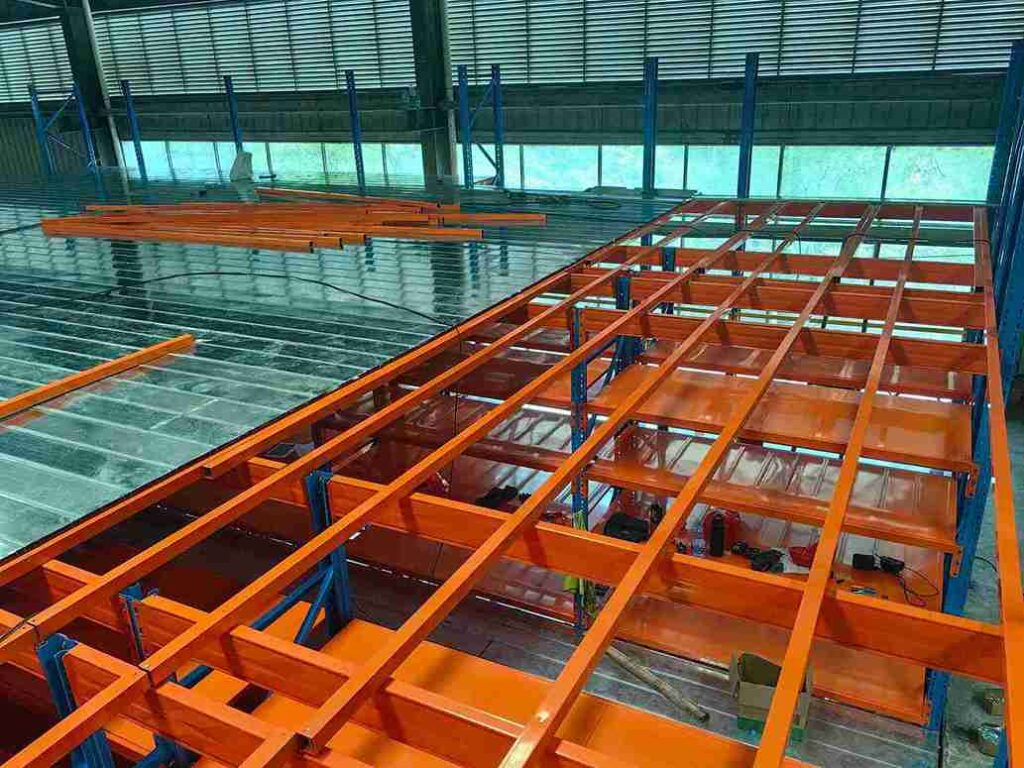
A professional installation is critical to the structural integrity and safety of the structural beam racking system. Expert installers use laser levels to ensure perfect alignment and calibrated torque wrenches to secure anchors to the concrete floor. For businesses that cannot afford to halt operations, a phased installation and inventory migration plan is executed. This involves systematically emptying a section of the warehouse, installing the new structural beam racking, relocating inventory into the new system, and then moving to the next section. This methodical approach ensures business continuity throughout the transformation.
Building the Bridge to Automation: Structural Beam Racking as the Foundational Platform
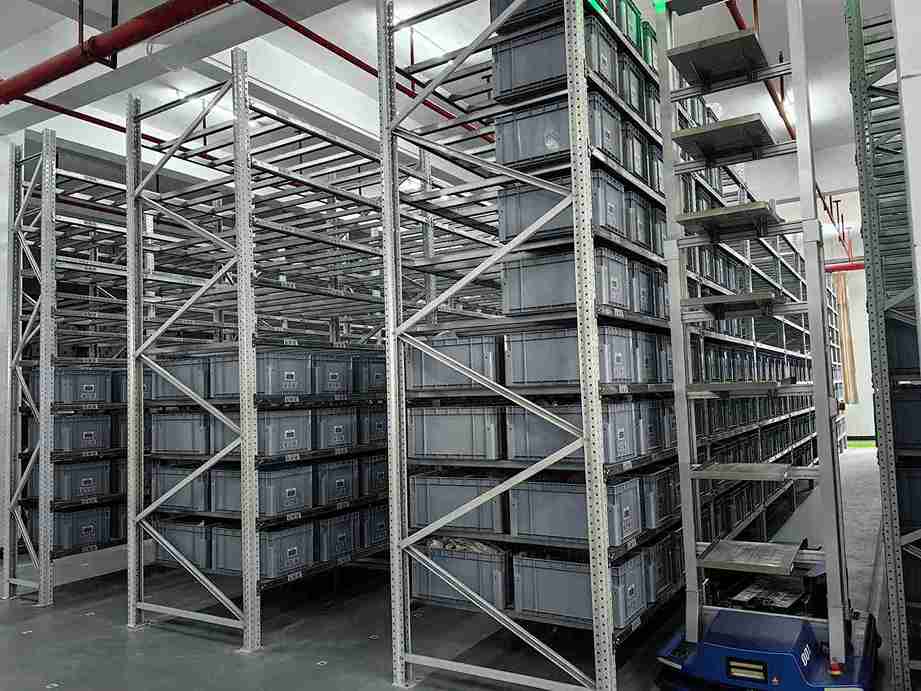
A significant strategic advantage of investing in a high-precision structural beam racking system is that it inherently future-proofs the warehouse. It creates the perfect physical grid for the integration of automation technologies, such as Automated Guided Vehicles (AGVs) and unmanned forklifts.
The Synergy Between Structural Beam Racking and Automated Guided Vehicles (AGVs)
Automation systems thrive on predictability and precision. The rigid, consistently aligned environment created by a properly installed structural beam racking system is a prerequisite for the efficient and safe operation of AGVs.
Precision Navigation: AGVs rely on pre-programmed paths. The laser-guided installation of the structural beam racking ensures that every aisle is dimensionally identical, providing the consistent pathways that AGV navigation software requires.
Stable Load Interaction: The minimal deflection and rock-solid stability of structural beam racking mean that when an AGV’s lift mechanism interfaces with a pallet, the entire structure remains stable. This predictability is essential for the machine’s control algorithms.
Digital Twin Integration: The layout of the structural beam racking system is digitally mapped into the Warehouse Management System (WMS) and the AGV’s control software. This creates a “digital twin” of the warehouse, allowing for optimized tasking and real-time inventory tracking within the rigid physical framework of the structural beam racking.
By choosing a robust structural beam racking system today, a business is not just solving a current storage problem; it is laying down the essential infrastructure for a fully automated, lights-out warehouse of tomorrow. This forward-thinking approach is what separates market leaders from followers in competitive emerging economies.
Material Science and Durability: The Unseen Value in Structural Beam Racking
The long-term cost-effectiveness of a structural beam racking system is directly tied to the quality of its raw materials and the integrity of its finishing process. Cutting corners on material quality is a catastrophic false economy that compromises safety and longevity.
The steel used in premium structural beam racking is a high-tensile, low-carbon steel, formed under immense pressure to create its structural shape. This process aligns the grain structure of the metal, enhancing its strength. The corrosion protection system is equally vital. Components undergo a multi-stage pre-treatment process that includes phosphating for corrosion resistance and improved paint adhesion. This is followed by an electrostatic application of a thick, epoxy-polyester powder coat, which is then thermally cured.
This finish is highly resistant to chipping, chemicals, and UV degradation, ensuring the structural beam racking can withstand the harsh conditions of an industrial warehouse environment for decades. This durability is a core tenet of the value proposition for structural beam racking.
Safety as a Design Principle: Engineering Structural Beam Racking for Risk Mitigation
In warehouse operations, safety is the highest priority. A professionally engineered and installed structural beam racking system is designed from the ground up to mitigate risk. Compliance with international standards like those from RMI and FEM is not optional; it is the baseline.
Designing for Seismic and Impact Resilience
In geographically diverse markets spanning from the Philippines to Chile, accounting for environmental forces is crucial. The engineering behind the structural beam racking system includes specific calculations for seismic (earthquake) and wind loads. This may involve using thicker-gauge steel, incorporating specific cross-bracing patterns, or employing specialized anchor bolts that can withstand both vertical uplift and horizontal shear forces.
Furthermore, for areas with high forklift traffic, additional protective measures can be integrated directly into the structural beam racking design. This includes column guards, reinforced foot plates, and protective barriers that absorb impact energy, preventing damage to the critical upright frames and ensuring the ongoing structural integrity of the entire structural beam racking installation.
Conclusion: The Strategic Imperative of Structural Beam Racking for Growth-Focused Businesses
In the dynamic and often constrained industrial environments of Southeast Asia, the Middle East, Africa, and Latin America, the ability to scale operations efficiently is the defining characteristic of a market leader. The challenge of limited space is a universal constraint, but it is no longer an insurmountable barrier. The strategic implementation of cost-effective structural beam racking represents a paradigm shift in warehouse management.
It is a proven, financially astute, and engineer-approved methodology for unlocking the latent capacity within existing facilities. By delivering a proven 200% boost in storage capacity, enhancing operational efficiency, providing a platform for future automation, and ensuring the highest standards of safety, structural beam racking is more than a storage solution—it is a powerful engine for growth. For any enterprise serious about capitalizing on the opportunities in the world’s most promising emerging markets, the investment in a high-quality structural beam racking system is not just advisable; it is indispensable.
Frequently Asked Questions (FAQs)
1. What is the fundamental difference between structural beam racking and roll-formed pallet racking?
The difference is foundational. Structural beam racking is fabricated from high-tensile structural steel channels and tubes, making it significantly stronger and more rigid, designed for heavy-duty industrial loads. Roll-formed racking is made from lighter-gauge steel that is cold-formed into shape, making it more suitable for lighter loads. The structural beam racking system offers superior load capacity, impact resistance, and long-term durability, justifying its position as the premium, cost-effective choice for serious warehouse operations.
2. Can a structural beam racking system be reconfigured after the initial installation?
Absolutely. The inherent adjustability is a primary advantage of structural beam racking. The upright frames feature a standardized hole pattern that allows the horizontal beams to be relocated to different heights quickly and without specialized tools. This allows a warehouse to easily adapt its structural beam racking layout to accommodate changing inventory profiles, seasonal goods, or new product lines, ensuring the storage system evolves with the business.
3. How do you ensure the structural beam racking is safe for use with our existing forklifts?
Safety is engineered into the system. The design process for the structural beam racking includes accounting for the specific dimensions and weights of the client’s material handling equipment. Aisle widths are calculated based on forklift turning radii. Furthermore, protective elements like column guards and aisle-end protectors can be specified to form an integral part of the structural beam racking installation, creating a resilient environment that minimizes damage from incidental impact.
4. What is the typical lead time for a large-scale structural beam racking project in a market like Vietnam or Egypt?
Lead time is a function of engineering, manufacturing, and logistics. A typical timeline for a major structural beam racking project involves 2-3 weeks for detailed engineering and design, 6-8 weeks for manufacturing and ocean freight shipping, and 2-4 weeks for on-site installation, depending on the project’s scale. Reputable suppliers manage this process through experienced project managers who provide clear timelines and communication throughout the lifecycle of the structural beam racking project.
5. Do you provide ongoing maintenance and inspection services for the structural beam racking systems you install?
Yes, comprehensive post-installation support is a critical service. We strongly recommend and offer scheduled professional inspections to ensure the ongoing safety and performance of the structural beam racking system. These inspections check for any damage, verify anchor integrity, and ensure load capacities are being adhered to. This proactive maintenance service is essential for maximizing the lifespan and safeguarding the investment in the structural beam racking infrastructure.
If you require perfect CAD drawings and quotes for warehouse racking, please contact us. We can provide you with free warehouse racking planning and design services and quotes. Our email address is: jili@geelyracks.com