📐 "First 50 Enterprise Queries Get Custom 3D Warehouse Design" Plan
















Mastering the Double Deep Equation
The pursuit of the best forklifts for double deep racking is a complex strategic initiative, far removed from a simple procurement task. This decision sits at the critical intersection of storage density, operational throughput, and workplace safety. A misstep in selecting the wrong equipment for a double deep racking system doesn’t merely result in subpar performance; it actively introduces significant financial and safety risks, including catastrophic racking collisions, product damage, and operational bottlenecks.
This comprehensive guide is engineered to serve as an indispensable resource for logistics managers, warehouse planners, and procurement specialists. It moves beyond superficial comparisons to deliver a forensic analysis of the technical, operational, and economic factors that define the true best forklifts for double deep racking. By dissecting the nuances of machine-to-rack compatibility, duty cycles, and future-proofing technologies, this document empowers decision-makers to transform their double deep racking investment from a static storage solution into a dynamic, high-velocity asset. The goal is unequivocal: to provide the insights necessary to identify the best forklifts for double deep racking that will deliver unparalleled ROI and operational excellence.

Deconstructing the Double Deep Racking Ecosystem: A Realm of Precision
Identifying the best forklifts for double deep racking demands a fundamental understanding of the environment in which they will operate. A double deep racking system is a high-precision storage methodology, and the equipment chosen must be its perfect mechanical counterpart.
The Operational Imperative: Navigating Confined Spaces with Pinpoint Accuracy
The core principle of double deep racking—storing pallets two loads deep—introduces a unique set of operational challenges that directly inform the selection of the best forklifts for double deep racking. The primary challenge is spatial precision. The forklift must be capable of reliably and safely retrieving the second pallet by reaching over the first, all within an aisle width that is significantly narrower than those found in traditional selective racking systems.
This requires a machine with exceptional stability and a specialized reach mechanism. The margin for error is minimal; an incorrect approach angle or a slight miscalculation can lead to a cascade of inefficiencies or a damaging impact. Therefore, the search for the best forklifts for double deep racking is inherently a search for machines engineered for unwavering accuracy in constrained spaces. The synergy between the racking and the truck is absolute, making the integration of the double deep racking design and the forklift’s specifications a non-negotiable first step in the procurement process for the best forklifts for double deep racking.
The Synergy Factor: Why Racking and Forklift are an Inseparable Unit
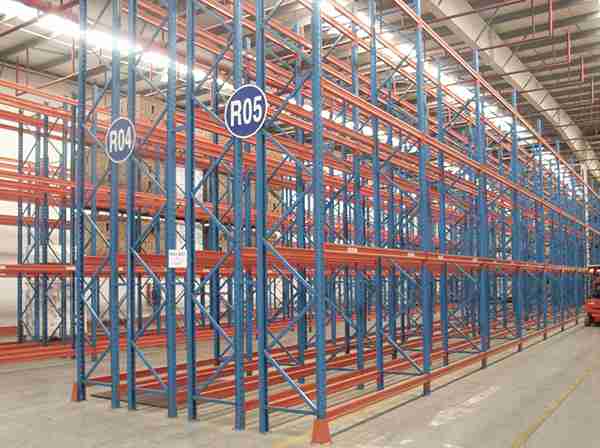
A critical error often made in warehouse planning is the siloed procurement of racking and material handling equipment. In a double deep racking environment, this is a recipe for costly incompatibility. The double deep racking structure and the forklift are not separate entities; they function as two integrated components of a single storage and retrieval system. The load capacities, beam heights, and overall structural tolerances of the double deep racking must be perfectly synchronized with the forklift’s lift capacity at specific heights, its fork reach dimensions, and its overall stability profile.
Companies seeking the best forklifts for double deep racking must adopt an integrated design approach from the outset. This involves collaborative planning between the racking supplier and the forklift provider to ensure that the specific model identified as one of the best forklifts for double deep racking for that operation can perform its duties without compromising the integrity of the double deep racking system itself. This proactive collaboration is the bedrock upon which a safe and efficient double deep racking operation is built.
The Machinery of Density: An In-Depth Analysis of Forklift Types
The market offers several types of forklifts, but only a few possess the specific capabilities to be considered contenders for the title of the best forklifts for double deep racking. Understanding the distinct operational profiles of these machines is crucial.
The Double Reach Truck: The Purpose-Built Champion
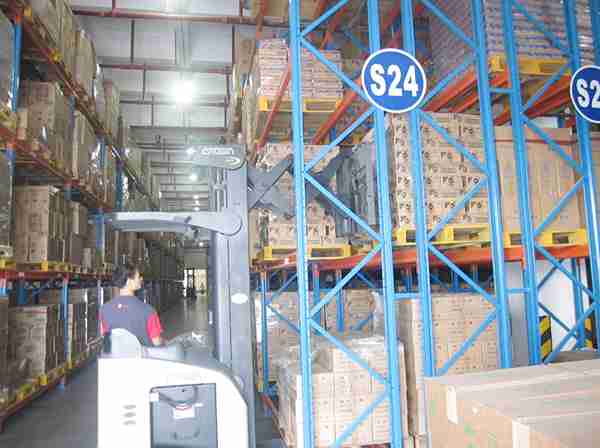
For a vast majority of applications, the Double Reach Truck stands as the benchmark and one of the best forklifts for double deep racking.* Operational Mechanics: Unlike a standard forklift, the operator of a Double Reach Truck does not drive into the racking structure. The truck is positioned in the aisle, and a sophisticated pantograph mechanism allows the forks to extend first into the first pallet position and then further into the second. This “double reach” action is what makes it uniquely suited for double deep racking.
Defining Advantages for Double Deep Racking:
Unmatched Aisle Narrowing: These trucks are the best forklifts for double deep racking when the primary goal is maximizing storage density. They can operate in aisles as narrow as 1.5 to 1.8 meters, directly translating into more storage positions within the same footprint.
Superior Operator Visibility: The design often provides the operator with a clear, direct line of sight to the fork tips and load, a critical safety and efficiency feature when handling the second position in a double deep racking bay.
Exceptional Aisle Maneuverability: Their compact design and tight turning radius make them highly agile within the narrow confines of a double deep racking warehouse layout.
Critical Performance Limitations:
Practical Lift Height Cap: Traditional models often have maximum lift heights around 12-13 meters, which may be insufficient for very high-bay warehouses. However, modern high-lift models are pushing these boundaries.
Floor Condition Dependency: As one of the best forklifts for double deep racking, its performance is highly contingent on a flawlessly flat and level concrete floor. Any significant deviation can adversely affect stability and placement precision.
The Turret Truck: The High-Bay Automation Leader
When double deep racking systems extend towards the ceiling of a high-bay warehouse, the Turret Truck emerges as a prime candidate for the best forklifts for double deep racking in such demanding environments.
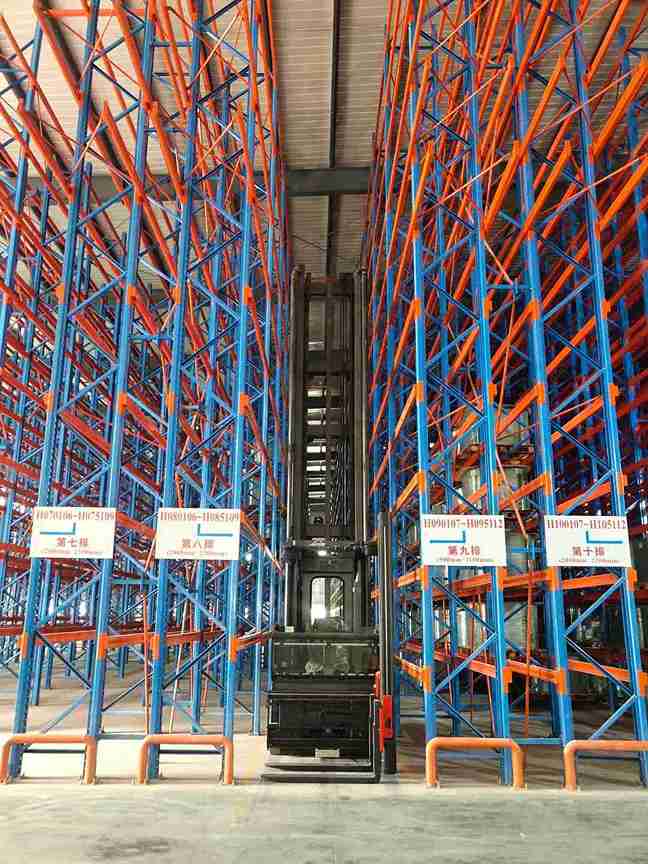
Operational Mechanics: In a Turret Truck, the operator’s compartment elevates with the load. The key differentiator is a rotating mast (the turret) that can turn 180 degrees, allowing the forks to service both sides of the aisle without the truck needing to turn around. This enables it to handle double deep racking on both sides of a single aisle.
Defining Advantages for Double Deep Racking:
High-Velocity Operation at Extreme Heights: These are unequivocally the best forklifts for double deep racking applications requiring lifts of 15 meters and beyond. The operator ascends with the load, allowing for direct visual confirmation and precision placement at heights where a ground-level operator would be guessing.
Dual-Sided Aisle Operation: A single Turret Truck can service two rows of double deep racking, effectively doubling its utility and improving the return on investment in high-density layouts.
Integration with Automation: The design of Turret Trucks makes them highly amenable to semi- and full-automation, positioning them as the best forklifts for double deep racking systems that are on a path toward a lights-out warehouse future.
Critical Investment Considerations:
Higher Capital Expenditure: The advanced technology and complexity of a Turret Truck command a significantly higher initial investment compared to a Double Reach Truck.
Aisle Width Compromise: While still a narrow-aisle truck, it requires a slightly wider aisle than a Double Reach Truck to accommodate its rotating mast.
Advanced Operator Training: The complexity of operating at height with a rotating mast necessitates extensive and specialized training.
The Counterbalanced Forklift: The Ill-Advised Compromise
Some operations consider using a standard counterbalanced forklift for double deep racking, often due to its versatility or existing availability. This is almost universally a critical error that disqualifies it from any list of the best forklifts for double deep racking.
The Fundamental Flaws:
Aisle Width Incompatibility: To maneuver and position its forks for the second pallet in a double deep racking system, a counterbalanced forklift requires an aisle width often exceeding 3.5 meters. This single factor completely negates the core space-saving advantage of implementing double deep racking in the first place.
Unacceptable Collision Risk: The long protruding load and the bulk of the truck itself create an extremely high probability of impacting the double deep racking uprights, leading to structural damage and severe safety hazards.
Operational Inefficiency: The process is slow, clumsy, and entirely unsuitable for the precision demands of a high-throughput double deep racking environment.
The Forensic Selection Checklist: 7 Non-Negotiable Factors
Selecting the best forklifts for double deep racking requires a data-driven audit of your specific operational landscape. This checklist serves as a forensic tool to guide that process.
1. Aisle Width and Overall Warehouse Layout Geometry
The search for the best forklifts for double deep racking begins with a tape measure. Precise measurements of the aisle width, end-of-aisle turning radii, and clearances for obstacles like fire protection systems are paramount. The outcome of these measurements will immediately narrow down the field, determining whether a Double Reach Truck or a Turret Truck is the viable candidate for the best forklifts for double deep racking in that specific layout.
2. Lift Height and Dynamic Load Capacity Analysis
This is a two-tiered investigation for anyone determining the best forklifts for double deep racking. First, what is the maximum lift height required to service the top beam of the double deep racking? Second, and more critically, what is the forklift’s rated capacity at that maximum height? The nameplate capacity is often for a lower lift. A thorough review of the truck’s load capacity chart is essential. A machine that can lift 1.5 tons at 6 meters might only be rated for 1 ton at 12 meters, a critical distinction when identifying the truly best forklifts for double deep racking for a high-bay application.
3. Comprehensive Pallet and Load Profiling
The best forklifts for double deep racking are matched to the loads they will handle. A detailed profile must be created, including:
Dimensional Consistency: The length, width, and height of all pallets. Inconsistent pallets create massive inefficiencies and safety risks in a double deep racking system.
Pallet Construction and Type: The design of the pallet (e.g., block vs. stringer, wood vs. plastic) affects how the forks engage and the stability of the load during the reach sequence.
Weight and Center of Gravity: Understanding the maximum and average weight, as well as how the weight is distributed, is fundamental to selecting from the best forklifts for double deep racking with the appropriate stability and power.
4. Floor Condition: The Critical Foundation
The performance of the best forklifts for double deep racking is directly tied to the quality of the floor they operate on. A professional floor survey is recommended to assess flatness and levelness. Double deep racking systems, particularly those using Double Reach Trucks, are highly sensitive to floor deviations. A poor floor will lead to operator fatigue, inaccurate placements, and accelerated wear on the forklift and the double deep racking itself.
5. Duty Cycle and Operational Intensity Scrutiny
The term best forklifts for double deep racking is context-dependent on the operation’s intensity. A forklift for a single-shift, low-volume operation has different requirements than one for a 24/7 distribution center. Key questions include: How many hours per day will it operate? How many lifts per hour are required? The answers influence the choice of power source, battery capacity, and the required durability, ultimately pointing toward the specific models that are the best forklifts for double deep racking for that duty cycle.
6. Power Source: The Electric Imperative
For indoor double deep racking applications, the discussion around power source for the best forklifts for double deep racking is unequivocally centered on electric power.
Electric Powertrains: Zero emissions, lower noise, reduced heat output, and less maintenance make electric models the standard and the best forklifts for double deep racking for indoor environments. The decision then shifts to battery technology: traditional lead-acid versus advanced Lithium-ion, which offers faster charging, opportunity charging, and longer life but at a higher upfront cost.
Internal Combustion (ICE): ICE forklifts are virtually never the best forklifts for double deep racking in an enclosed warehouse due to fume emissions and noise, making them unsuitable for the narrow, often poorly ventilated aisles of a double deep racking system.
7. The Technology and Safety Package Mandate
Modern contenders for the best forklifts for double deep racking are equipped with sophisticated technology packages that are no longer optional luxuries but operational necessities.
Precision Control Systems: Electronic damping systems that smooth out all movements, protecting both the delicate double deep racking structure and the integrity of the load.
Rack Interface Systems: Proximity sensors that prevent the mast from extending unless the truck is perfectly aligned and at the correct height, virtually eliminating impact damage to the double deep racking.
Enhanced Visibility Systems: Fork-mounted cameras and mast-mounted displays give the operator a clear view of the second pallet position, a critical feature for the best forklifts for double deep racking.
Telematics and Fleet Management: Integrated sensors that monitor impacts, utilization, and maintenance needs, providing data to optimize the operation of the best forklifts for double deep racking and prevent downtime.
The High Cost of Compromise: Quantifying the Risks of a Poor Selection
Failing to select from the truly best forklifts for double deep racking has dire consequences that extend far beyond mere underperformance.
Structural Integrity Failures: An incompatible forklift will repeatedly collide with the double deep racking. A single significant impact can compromise the structural integrity of an entire bay, leading to a potential collapse that carries astronomical costs in repair, lost inventory, and human safety.
Chronic and Systemic Product Damage: Inaccurate placements in a double deep racking system lead to crushed pallets and damaged goods. This creates a silent profit leak through constant inventory write-offs.
Crippled Productivity: A forklift that is too slow, requires multiple attempts for a single store/retrieve cycle, or has insufficient battery life for a full shift becomes a bottleneck that strangles the entire supply chain’s velocity.
Unsustainable Maintenance and Repair Costs: Using a truck outside its design parameters for double deep racking leads to accelerated wear on tires, reach mechanisms, and mast components, resulting in frequent, costly breakdowns and shortened equipment life.
Safety Incidents and Corporate Liability: The ultimate cost. An unstable or poorly suited truck in the precise environment of a double deep racking aisle is a recipe for a serious accident involving the operator, other staff, or the infrastructure itself.
Future-Proofing Your Investment: The Automation Trajectory
The best forklifts for double deep racking today are those that offer a pathway to tomorrow’s automated warehouse. Forward-thinking operations must consider the automation compatibility of their equipment.
Semi-Automation Features: Many modern best forklifts for double deep racking, including both Double Reach and Turret Trucks, can be equipped with semi-automated functions. These can include automated fork positioning, guided aisle navigation, or pre-programmed height selection. These features reduce operator cognitive load, improve consistency, and lay the groundwork for fuller automation.
Full Automation with AGVs: For the pinnacle of efficiency, Automated Guided Vehicles (AGVs) configured as forklifts for double deep racking represent the ultimate evolution. These driverless systems operate with sub-millimeter accuracy, 24/7, integrated directly with the Warehouse Management System (WMS). While representing a higher capital investment, they are, for many high-volume, predictable operations, the undisputed best forklifts for double deep racking in terms of long-term labor savings, accuracy, and throughput. Global leaders are already deploying these AGV solutions for double deep racking in markets across Southeast Asia, the Middle East, and Latin America.
Case Study: A Strategic Pivot to the Optimal Solution
A prominent consumer goods distributor in Southeast Asia was commissioning a new facility featuring a 14-meter high double deep racking system. The initial plan, based on a legacy mindset, was to use high-capacity counterbalanced forklifts, perceived as a robust and familiar solution.
A pre-implementation audit and simulation conducted by our specialists demonstrated that this approach would:
Necessitate aisle widths that would sacrifice over 25% of the planned storage positions within the double deep racking layout.
Present an unacceptably high probability of racking impacts, with projected annual damage costs running into six figures.
Result in cycle times 40% slower than the operational targets required for the business to be viable.
The solution implemented was a fleet of high-lift Double Reach Trucks, selected as the best forklifts for double deep racking for this specific scenario. These trucks were equipped with integrated camera systems and advanced stability control. The result was a system that achieved the designed storage density within the double deep racking, met all target throughput rates, and has maintained a perfect safety record with zero racking damage for over two years. The correct selection of the best forklifts for double deep racking paid for itself within the first 18 months through operational savings and completely avoided damage costs.
From Analysis to Action: The Path to a Tailored Solution
Understanding the theoretical framework for identifying the best forklifts for double deep racking is the foundational step. The critical next phase is to translate this knowledge into a concrete, data-driven specification for a unique operation. To move beyond analysis and into implementation, a hands-on evaluation is essential.
We strongly recommend engaging with our specialist engineering team for a comprehensive, no-obligation site assessment. This evaluation is designed to definitively identify the best forklifts for double deep racking for your facility and will include:
Laser-Precise Dimensional Analysis: Capturing exact aisle widths, racking clearances, and floor condition metrics.
Operational Workflow Diagnostics: Analyzing your pallet data, peak flow rates, and shift patterns to model the required duty cycle.
Total Cost of Ownership Modeling: Providing a transparent financial analysis comparing the relevant candidates for the best forklifts for double deep racking in your context, factoring in acquisition, operation, and maintenance costs.
Live Demonstration in a Controlled Environment: Arranging a hands-on demonstration with the shortlisted models of the best forklifts for double deep racking to validate performance claims in a simulated double deep racking setup.
Allowing a suboptimal forklift selection to undermine a major warehouse investment is an avoidable strategic error. The correct partnership ensures that a double deep racking system operates at its theoretical peak, delivering the promised density, efficiency, and safety. The journey to procure the best forklifts for double deep racking is a complex one, but it is a journey that yields exponential returns.
Conclusion: The Confluence of Data and Engineering
The quest to secure the best forklifts for double deep racking is a disciplined exercise in applied engineering and operational logistics. It is a multi-variable challenge where intuition must be replaced by data, and where the lowest upfront cost often carries the highest long-term price. The truly best forklifts for double deep racking are those that create a seamless, high-performance synergy between the mechanical capabilities of the truck, the physical parameters of the racking, and the dynamic demands of the business’s supply chain.
By prioritizing this holistic integration and a clear-eyed analysis of total cost of ownership, decision-makers can confidently select the best forklifts for double deep racking that will serve as a durable and powerful accelerator for their logistics and distribution capabilities for years to come. The best forklifts for double deep racking are, in the final analysis, those that become an invisible, reliable, and potent force multiplier within the warehouse.
Frequently Asked Questions (FAQs)
1. What is the typical cost difference between a double reach truck and a turret truck for double deep racking applications?
While prices vary by region and specification, a turret truck generally requires a 40-70% higher initial investment than a double reach truck. However, this must be evaluated against its dual-sided operation and higher lift capabilities, which can reduce the total number of trucks needed and maximize cube utilization in very high-bay warehouses, offering a compelling long-term ROI. The context of the double deep racking system’s height and layout ultimately determines which represents the best forklifts for double deep racking from a financial perspective.
2. Can we retrofit our existing standard reach trucks to work in a new double deep racking system?
Almost never. Standard reach trucks are designed to place pallets only one position deep. Their fork extension length and mast design are not capable of safely or reliably handling the second position. Attempting to do so is extremely dangerous and will certainly damage both the truck and the double deep racking. Retrofitting is not a viable path to creating the best forklifts for double deep racking; purpose-built equipment is required.
3. How does the training for a double deep forklift operator differ from a standard forklift?
The training is significantly more advanced. Beyond basic operation, it focuses on spatial awareness in narrow aisles, mastering the specific reach mechanisms, interpreting load capacity charts at height, and utilizing the onboard technology (cameras, rack interfaces). Certification should be specific to the truck type and involve extensive supervised practice in the actual double deep racking environment. Proper training is a critical component of maximizing the investment in the best forklifts for double deep racking.
4. What is the lead time for procuring a specialized double deep forklift?
For standard models, lead times can range from 12 to 20 weeks, depending on global supply chains. For custom-configured trucks with specific lift heights, capacities, or automation features for double deep racking, it can extend to 6 months or more. This makes advanced planning an absolute necessity for any new warehouse project or retrofit involving double deep racking.
5. How do we maintain and service these specialized trucks to ensure longevity and safety?
A proactive, scheduled maintenance program is critical. This goes beyond standard forklift checks to include detailed inspection of the reach mechanism’s rails and rollers, calibration of sensors and control systems, and structural integrity checks of the mast. Partnering with a supplier that offers a robust local service and parts support network in your region (e.g., Southeast Asia, Middle East) is non-negotiable for minimizing downtime and protecting your investment in the best forklifts for double deep racking.
If you require perfect CAD drawings and quotes for warehouse racking, please contact us. We can provide you with free warehouse racking planning and design services and quotes. Our email address is: jili@geelyracks.com