📐 "First 50 Enterprise Queries Get Custom 3D Warehouse Design" Plan
















Unlock 30%+ Warehouse Efficiency: The Definitive Guide to Automated Pallet Racking Systems
(Meta Description: This definitive guide explores how Automated Pallet Racking systems revolutionize storage. Get a FREE, custom warehouse layout design to boost density, throughput, and ROI. Expert solutions for global markets.)
In the bustling logistics hubs of Southeast Asia, the manufacturing centers of the Middle East, and the growing distribution networks of Africa and Latin America, a silent revolution is reshaping the landscape of storage and fulfillment. The challenge is universal: escalating consumer demand, shrinking available space, and the pressing need for accuracy and speed. The conventional warehouse, with its wide aisles and manual processes, is rapidly becoming a relic. The future, and the present competitive advantage, lies in intelligent, dynamic storage solutions.
At the heart of this transformation is Automated Pallet Racking, a technology that is fundamentally redefining what a warehouse can be. This isn’t merely about adding more steel shelving; it’s about integrating a responsive, high-density storage backbone that works in perfect synchrony with automation. A well-engineered Automated Pallet Racking system is the cornerstone upon which modern logistics empires are built, delivering measurable efficiency gains that often exceed 30%. The journey begins with a strategic, data-backed plan, often initiated through a comprehensive, free custom layout design that visualizes this transformation.
Beyond Static Storage: Deconstructing the Automated Pallet Racking Ecosystem
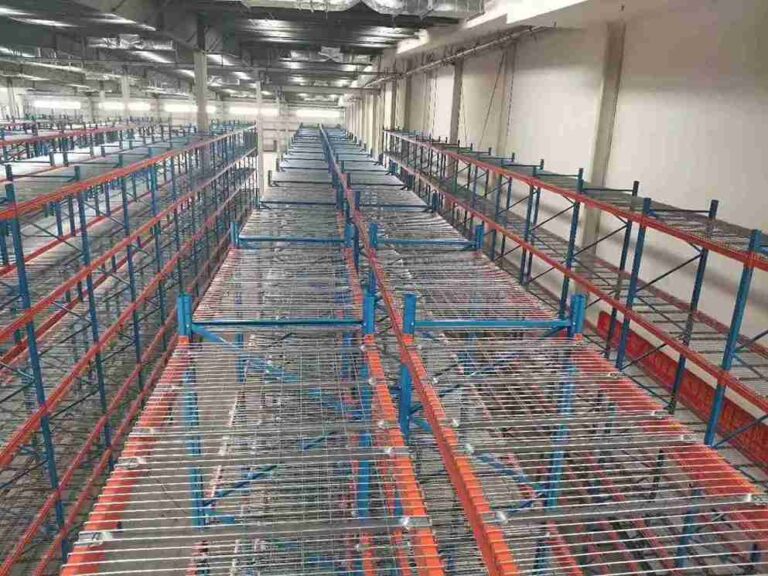
To truly appreciate its impact, one must understand that Automated Pallet Racking is not a single product but a sophisticated ecosystem. It represents a paradigm shift from static storage to a dynamic, integrated material handling solution. In a traditional setup, racking is a passive recipient of goods. In an Automated Pallet Racking system, the storage structure is an active participant in the workflow. It is designed from the ground up to interface seamlessly with robotic cranes, shuttle systems, and guided vehicles, which perform the tasks of storing and retrieving pallets with unwavering precision and speed.
The core operational philosophy that makes Automated Pallet Racking so transformative is the “Goods-to-Person” (GTP) principle. Instead of dispatching warehouse personnel on time-consuming and physically demanding journeys across vast storage areas, the system itself delivers the required pallet directly to a stationary picker at an ergonomic workstation. This single operational shift is the primary driver behind the dramatic improvements in productivity, order accuracy, and employee safety that these systems provide. The entire concept of Automated Pallet Racking is built on this inversion of the traditional workflow, creating a more humane and immensely more efficient operating environment.
The Core Components of a Modern Automated Pallet Racking System
A robust and reliable Automated Pallet Racking installation is a symphony of engineered components working in unison. Each element is critical to the system’s overall performance and reliability.
The Engineered Racking Structure: The Backbone of the System
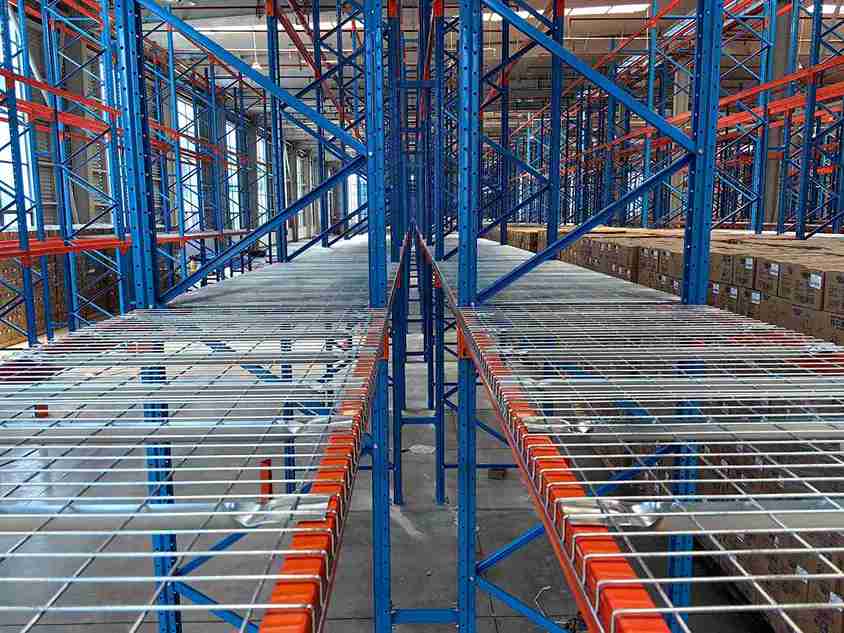
The physical framework of an Automated Pallet Racking system is a far cry from standard selective racking. It is a custom-engineered structure, calculated to specific load capacities, heights, and seismic profiles relevant to its geographical location. The upright frames, beams, and bracing are manufactured from high-tensile steel and are designed to withstand the constant, dynamic loads and micro-vibrations imposed by the automated retrieval equipment. The integrity of this structure is non-negotiable, forming the literal backbone of the entire Automated Pallet Racking operation.The Automated Storage and Retrieval System (AS/RS): The Workhorse
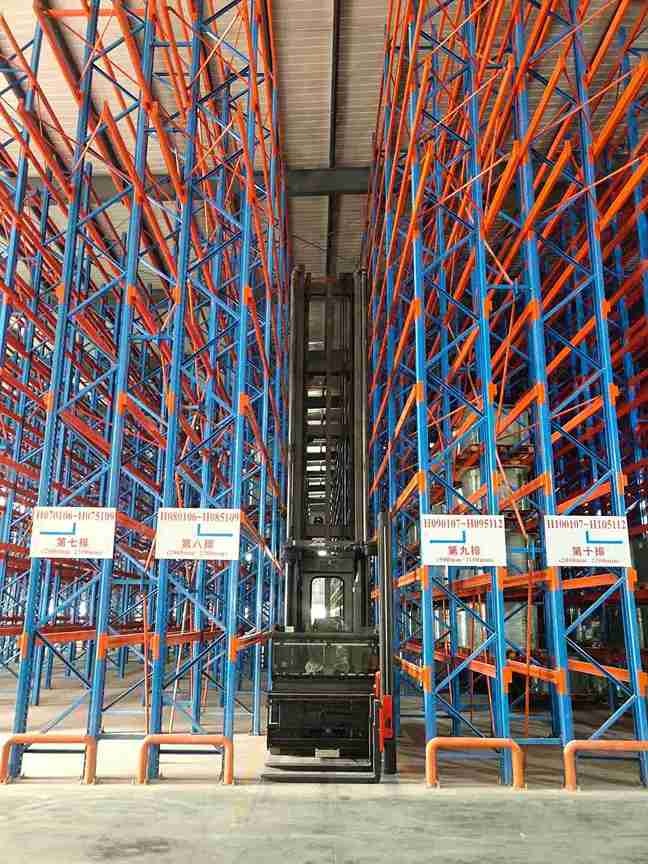
This is the robotic element that operates within the aisles of the Automated Pallet Racking. For full-pallet, or unit-load, handling this typically takes the form of a stacker crane. These cranes run on precisely aligned rails on the floor and ceiling, traveling at high speeds to store and retrieve pallets from locations that can be over 40 meters high. For applications requiring even greater density and flexibility, satellite or shuttle-based systems are deployed. These smaller robots operate on rails within a single level of the Automated Pallet Racking, moving pallets deep into the storage structure, often in a last-in-first-out (LIFO) or first-in-first-out (FIFO) sequence.The Warehouse Management System (WMS): The Intelligent Brain
If the racking is the backbone and the AS/RS is the muscle, the WMS is the brain of the operation. This sophisticated software is what transforms a collection of mechanical components into an intelligent Automated Pallet Racking system. It does far more than just track inventory. It uses complex algorithms to determine the most optimal storage location for every incoming pallet based on its size, weight, turnover rate (ABC classification), and even its expiry date. It sequences retrieval orders to create efficient batch picks, manages order fulfillment in real-time, and provides a flawless, auditable trail of every stock-keeping unit (SKU) within the Automated Pallet Racking matrix.Conveyance and Integration Modules: The Circulatory System
To create a truly seamless flow of materials, the Automated Pallet Racking system must be integrated with other automation technologies. This is where Automated Guided Vehicles (AGVs) and conveyor systems come into play. These systems act as the circulatory system, transporting pallets from receiving docks to the input points of the Automated Pallet Racking system and from the output points to shipping or value-added processing areas. This level of integration creates a closed-loop, continuous material flow that minimizes touch points and human intervention, maximizing the ROI of the entire Automated Pallet Racking investment.
The Hidden Cost of Inaction: Why Your Current Storage is a Liability
For companies hesitant to invest in Automated Pallet Racking, the status quo carries a significant, often uncalculated, financial burden. Operating a manual warehouse in today’s competitive environment means incurring daily losses that directly impact the bottom line.
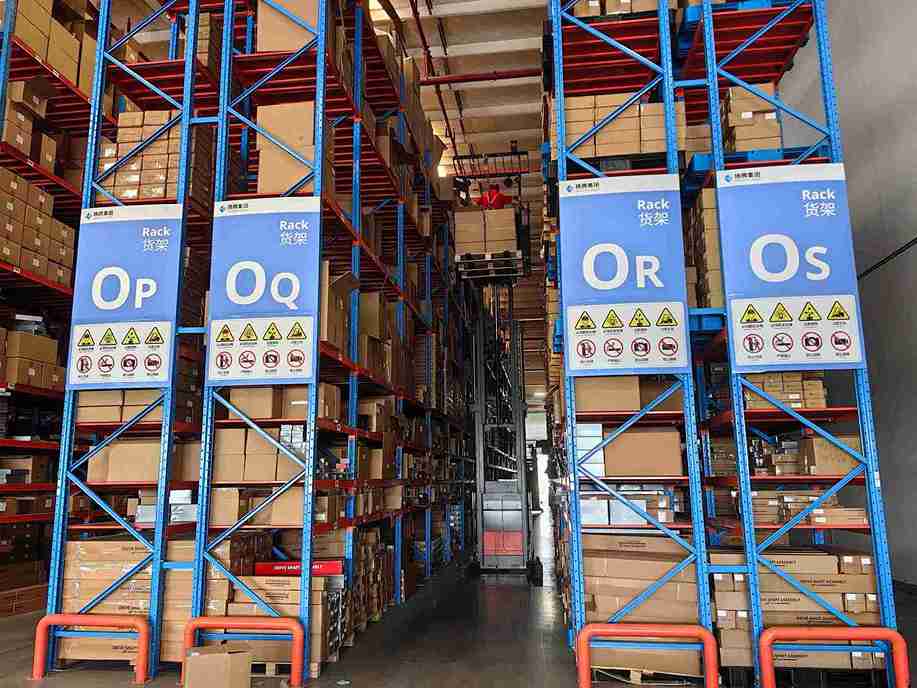
The Profligate Waste of Cubic Space: Traditional warehouses, designed around forklift operations, are monuments to inefficiency. Aisles consuming 10 to 12 feet of width represent pure lost opportunity. An Automated Pallet Racking system eliminates this waste through narrow-aisle or, in the case of certain AS/RS, aisle-less configurations. By soaring upwards and compacting storage lanes, a properly implemented Automated Pallet Racking solution can increase storage density by 60% to over 100%. This directly translates into the ability to store more goods without expanding the facility’s footprint or to free up precious floor space for production, cross-docking, or other revenue-generating activities.
The Human Bottleneck and Escalating Labor Costs: Manual operations are inherently variable and limited by human physiology. Forklift operators require breaks, are subject to fatigue, and have a finite maximum pace. They are also prone to errors—mis-picks, mis-placements, and product damage—that have cascading costs. An Automated Pallet Racking system operates with machine consistency, 24 hours a day, 7 days a week if required. It doesn’t just reduce labor costs; it reallocates human capital. Employees are elevated from repetitive, physically taxing tasks to roles in system supervision, maintenance, exception handling, and customer service, thereby increasing the overall skill level and value of the workforce.
The Illusion of Inventory Accuracy: Relying on manual cycle counts and basic barcode scanning is a recipe for inventory inaccuracy. Discrepancies are inevitable, leading to stock-outs, overstocking, and frustrated customers. The WMS that is integral to a modern Automated Pallet Racking system provides unparalleled inventory integrity, often achieving accuracy rates of 99.99% or higher. Every single movement into and out of the Automated Pallet Racking is tracked and recorded in real-time. This visibility eliminates guesswork, reduces shrinkage, and allows for precise demand forecasting and financial planning.
The Unacceptable Safety Risk: The interaction between heavy, fast-moving forklifts and human workers in congested spaces is one of the most significant safety hazards in any industrial setting. By containing the high-density storage and high-speed retrieval within the confines of an Automated Pallet Racking structure, this hazard is virtually eliminated. Personnel work in designated, safe zones, leading to a dramatic reduction in workplace accidents, lower insurance premiums, and a stronger, more positive safety culture.
Engineering Excellence: The Blueprint Behind a Free Custom Layout Design
The promise of a “30% efficiency boost” from an Automated Pallet Racking system is not a hollow marketing claim; it is the direct result of a meticulous, engineering-driven design process. When a company engages with experts for a free custom layout design, it is initiating a comprehensive partnership aimed at unlocking this value.
Phase 1: Deep-Dive Data Interrogation: The process begins with an exhaustive analysis of operational data. This goes beyond simple SKU dimensions and weights. Experts delve into turnover velocity, seasonality patterns, order profiles (e.g., number of lines per order, average units per line), and future growth projections. This data forms the genetic code for the entire Automated Pallet Racking system, ensuring it is tailored not just to today’s needs, but to tomorrow’s ambitions.
Phase 2: Digital Twin Creation via 3D Laser Scanning: To eliminate design assumptions and costly installation errors, advanced 3D laser scanning is employed. This technology captures a millimeter-accurate, as-built model of the existing facility. This “digital twin” becomes the sandbox in which the new Automated Pallet Racking system is designed, simulated, and validated, accounting for every structural column, overhead pipe, and electrical conduit.
Phase 3: System Simulation and Financial Modeling: Before any metal is cut, the proposed Automated Pallet Racking layout is subjected to rigorous computer simulation. Software models simulate weeks or months of operational activity, stress-testing the system under peak loads and identifying potential bottlenecks. This virtual proving ground allows for optimization before installation and generates a data-backed, transparent financial model that clearly outlines the projected Return on Investment (ROI) and payback period.
Phase 4: Collaborative Design Refinement: The proposed design, simulation results, and financial model are presented to the client’s team in a collaborative workshop. This session incorporates frontline operational knowledge, ensuring the final Automated Pallet Racking design is not only technically sound but also perfectly aligned with the company’s unique workflows and long-term strategic vision.
Case Study: Transforming an E-Commerce Giant in Southeast Asia
A major e-commerce fulfillment center in Malaysia was grappling with unsustainable order cycle times and a 6% error rate during sales peaks. Their manual picking operation in a conventional racking system was a critical bottleneck. The free custom layout design process revealed a classic 80/20 SKU distribution. The solution was a hybrid Automated Pallet Racking strategy:
A high-density, shuttle-based Automated Pallet Racking block was deployed for slow and medium-moving items (B and C items).
A separate, high-speed, pallet-to-person Automated Pallet Racking module was dedicated to the fast-moving A-items.
The results were transformative. Order cycle times were slashed from over 3 hours to just 45 minutes. The picking error rate plummeted to 0.05%. Most impressively, the facility achieved a 50% increase in daily order throughput without expanding its building or increasing its headcount. This case exemplifies the power of a custom-designed Automated Pallet Racking system to solve specific, pressing operational challenges.
Selecting the Right Automated Pallet Racking Architecture
The term Automated Pallet Racking encompasses a family of technologies. Selecting the right type is a strategic decision based on SKU profile, throughput requirements, and capital expenditure parameters.
Unit-Load AS/RS: The High-Volume Powerhouse
This is the classic image of an Automated Pallet Racking system: tall aisles served by dedicated stacker cranes. It is the ideal solution for facilities with high volumes of full-pallet movements, such as in manufacturing raw material storage or finished goods distribution for consumer-packaged goods. The density and throughput of a Unit-Load AS/RS are exceptional, and it integrates perfectly with AGV systems for end-to-end automation from production line to storage location within the Automated Pallet Racking matrix.
Shuttle-Based Automated Pallet Racking Systems
Offering tremendous flexibility, shuttle-based Automated Pallet Racking systems use independent robots that operate on rails within the racking levels. A separate lift mechanism moves shuttles between tiers. This architecture is perfect for high-density storage of mixed-SKU pallets and offers excellent scalability. Because multiple shuttles can operate within a single Automated Pallet Racking structure, throughput can be easily increased by adding more robots, making it a very popular and cost-effective choice for growing businesses.
Moving Aisle Systems: The Semi-Automated Bridge
For operations not yet ready for a fully automated retrieval system, a moving aisle Automated Pallet Racking system offers a compelling intermediate step. In this setup, the racking itself is mounted on mobile carriages that move laterally on rails, eliminating all but one aisle. A forklift or a simplified retrieval machine then accesses the opened aisle. This type of Automated Pallet Racking provides significant density gains over static systems while offering a lower entry point into automation.
The Symphony of Integration: Connecting AGVs, Conveyors, and Automated Pallet Racking
The ultimate expression of warehouse efficiency is a fully integrated system where different automation technologies hand off materials seamlessly. The Automated Pallet Racking system is the central hub in this network, and its ability to interface with other systems is paramount.
The AGV & Racking Handshake: The interaction between an AGV and an Automated Pallet Racking system is a ballet of precision. An AGV, having transported a pallet from the receiving dock, arrives at a designated transfer point. Through a standardized communication protocol (often via the WMS), the Automated Pallet Racking system’s AS/RS is instructed to receive the load. The AGV deposits the pallet, and the AS/RS immediately accepts it and transports it to its assigned location within the Automated Pallet Racking structure. This process, in reverse, fulfills retrieval orders. This creates a decoupled, just-in-time flow that allows both the transportation and storage systems to operate at their independent, optimal capacities.
High-Velocity Conveyor Integration: For distribution centers where speed is paramount, conveyor systems are integrated directly with the input/output stations of the Automated Pallet Racking system. This creates a high-speed, continuous-flow pipeline that moves goods from truck to storage to picking to shipping with minimal manual intervention, maximizing the throughput potential of the Automated Pallet Racking installation.
This deep level of integration is what enables the guaranteed 30%+ efficiency improvements. It systematically eliminates the delays, errors, and friction that are inherent in manual interfaces between different functional areas of a warehouse.
The Investment Rationale: A Clear-Cut ROI for Automated Pallet Racking
Capital investment in an Automated Pallet Racking system requires a compelling business case. The financial justification, however, is often robust and multi-faceted, encompassing both hard cost savings and significant revenue-enhancing opportunities.
Quantifiable Cost Reductions:
Labor Optimization: A well-designed Automated Pallet Racking system can reduce dependency on forklift operators by 50-70%, allowing for strategic workforce reallocation.
Real Estate Deferral or Savings: By dramatically increasing storage density within the existing footprint, companies can avoid the multi-million dollar expense of constructing or leasing additional warehouse space.
Error and Damage Elimination: The financial impact of a single mis-picked order or a forklift-damaged product can be substantial. The accuracy and inherent safety of an Automated Pallet Racking system virtually erase these costs.
Energy Efficiency: The automated storage area requires minimal lighting and can have reduced climate control requirements, leading to lower utility bills.
Tangible Revenue Enhancements:
Increased Throughput and Scalability: The ability to fulfill more orders per day directly translates into the capacity to capture more market share and handle seasonal surges without operational breakdowns.
24/7 Operational Capability: An Automated Pallet Racking system can operate around the clock, enabling night-shift fulfillment without the premium labor costs and supervision challenges, thus better serving global customers.
Enhanced Customer Service: Faster, more accurate order fulfillment leads to higher customer satisfaction, improved retention, and a stronger brand reputation.
The amalgamation of these savings and enhancements typically results in a compelling ROI, with payback periods for an Automated Pallet Racking investment often falling between 1.5 and 3 years. Industry bodies like the Material Handling Institute of America (MHI) provide extensive data and case studies that validate these financial models.
Future-Proofing the Warehouse: The Automated Pallet Racking as a Strategic Platform
Investing in an Automated Pallet Racking system is not merely a tactical fix for current pain points; it is a strategic decision to build a platform for future growth. This infrastructure represents the foundational layer for the increasingly automated “warehouse of the future.” Once a GTP Automated Pallet Racking system is in place, the integration of adjacent technologies—such as robotic palletizers, automated packaging machines, and AI-powered predictive analytics for maintenance and demand sensing—becomes a logical and significantly simpler progression.
A company that installs a robust Automated Pallet Racking system is not just solving today’s storage problem; it is building a resilient, scalable, and intelligent logistics operation capable of competing on a global stage for the next decade and beyond.
Conclusion: The Strategic Imperative of Automated Pallet Racking
The evolution from passive storage to intelligent, dynamic Automated Pallet Racking represents the most significant leap in warehouse efficiency in a generation. For businesses operating in the high-growth, competitive markets of Southeast Asia, the Middle East, Africa, and Latin America, it has moved from a luxury to a strategic imperative. It is the definitive answer to the universal challenges of space constraints, labor shortages, and accuracy demands.
The promise of a 30% or greater efficiency gain is a measurable, achievable outcome delivered through engineering precision and a deep mastery of material flow science. The journey toward this transformative improvement begins with a single, no-obligation step: engaging with experts for a free custom layout design. This collaborative process provides a clear, data-driven vision of the pathway to a faster, denser, and more profitable warehouse operation, built upon the robust foundation of a modern Automated Pallet Racking system.
Frequently Asked Questions (FAQs)
1. How does automated pallet racking handle non-standard or unstable pallet loads?
This is a common concern in industries like agriculture or bulk goods. Modern Automated Pallet Racking systems with AS/RS or shuttles are equipped with intelligent load-handling attachments. These can include sensors to detect load stability, adjustable forks for different pallet stringer configurations, and even vacuum or clamp mechanisms for handling slip-sheets or unstable loads. The WMS can be programmed with the specific handling requirements for each load type, ensuring the Automated Pallet Racking system adapts to the product, not the other way around.
2. What are the lead times for a typical automated pallet racking system from design to operational launch?
Lead times vary significantly based on the scale and complexity of the Automated Pallet Racking project. A standard timeline might encompass 4-8 weeks for detailed design and simulation, 12-16 weeks for manufacturing of the racking and automated components, and 4-12 weeks for on-site installation, commissioning, and software integration. A total project duration of 6 to 9 months is common for a mid-sized system. Reputable providers offer detailed project plans from the outset.
3. Can an automated pallet racking system be retrofitted into an existing live warehouse operation?
Yes, phased implementations are a standard practice for experienced providers of Automated Pallet Racking. The installation is typically planned in zones, allowing the client to continue operating in one section of the warehouse while the new Automated Pallet Racking system is built in another. Careful logistics planning and temporary operational procedures ensure a smooth transition with minimal disruption to daily business, making the upgrade to an Automated Pallet Racking system a manageable process.
4. How is fire protection and suppression addressed within a high-density automated pallet racking system?
Fire safety is a critical engineering consideration for any high-density storage, especially an Automated Pallet Racking installation. Standard in-rack sprinkler systems are designed and installed within the Automated Pallet Racking structure itself, creating vertical barriers to contain a fire. Additionally, early smoke detection systems (ESD) are often integrated, and some facilities opt for advanced oxygen-reduction systems. Compliance with local building and fire codes is a fundamental part of the Automated Pallet Racking design process.
5. What kind of maintenance is required, and what is the typical operational lifespan of an automated pallet racking system?
An Automated Pallet Racking system requires a scheduled preventive maintenance program, similar to other heavy industrial equipment. This includes regular inspections of mechanical components (wheels, bearings, drives), electrical systems, and software updates. Most providers offer annual maintenance contracts. With proper care, the structural components of an Automated Pallet Racking system can last 25+ years, while the mechatronic AS/RS components typically have a lifespan of 15-20 years, making it a long-term asset.
If you require perfect CAD drawings and quotes for warehouse racking, please contact us. We can provide you with free warehouse racking planning and design services and quotes. Our email address is: jili@geelyracks.com