📐 "First 50 Enterprise Queries Get Custom 3D Warehouse Design" Plan
















Maximize Warehouse Storage: Achieve Over 90% Space Utilization with Custom Big Rack Shuttle Systems
In the high-stakes arena of global supply chains, warehouse space has transcended its role as a mere asset; it is now the central nervous system of logistics profitability. The relentless pressures of e-commerce, rising real estate costs, and complex inventory demands have rendered traditional storage methods obsolete. The critical metric for modern operations is no longer square footage but volumetric efficiency—the intelligent use of every cubic meter.
This definitive guide explores how industry-leading Big Rack Shuttle Systems are the engineered solution to this challenge, systematically enabling businesses to achieve and sustain warehouse space utilization rates exceeding 90%. This is not a marginal improvement but a fundamental transformation of storage density and operational intelligence.
The following sections will provide a comprehensive dissection of these systems, from their core mechanics and unparalleled economic advantages to the strategic implementation process that guarantees a return on investment. The promise of a free, no-obligation custom storage analysis is the first step in a data-driven partnership, offering a precise blueprint to unlock the full, latent potential within a company’s existing four walls.

The Modern Warehouse Dilemma: Confronting the True Cost of Inefficient Space
Global logistics networks are operating at an unprecedented strain. Fluctuating consumer demand, port congestions, and the insatiable need for faster delivery windows have exposed the fragility of conventional warehouse designs. The knee-jerk reaction of expanding a facility’s footprint is often a financial and strategic misstep, ignoring the vast reservoir of untapped capacity within. A warehouse relying on standard selective racking and forklift aisles typically languishes at a 50-65% space utilization rate. This staggering inefficiency means that a significant portion of capital allocated for rent, utilities, and taxes is spent on conditioned air and empty space.
The wide aisles necessary for forklift navigation are not just pathways; they are monuments to wasted potential, directly contributing to extended travel times, elevated energy consumption, and a higher probability of product damage. This operational model is no longer tenable. The paradigm must shift from horizontal sprawl to vertical, high-density precision—a shift that is the very foundation of every Big Rack Shuttle Systems deployment. These advanced Big Rack Shuttle Systems are designed specifically to attack and eliminate the root causes of spatial waste.

Deconstructing the Powerhouse: What Exactly is a Big Rack Shuttle System?
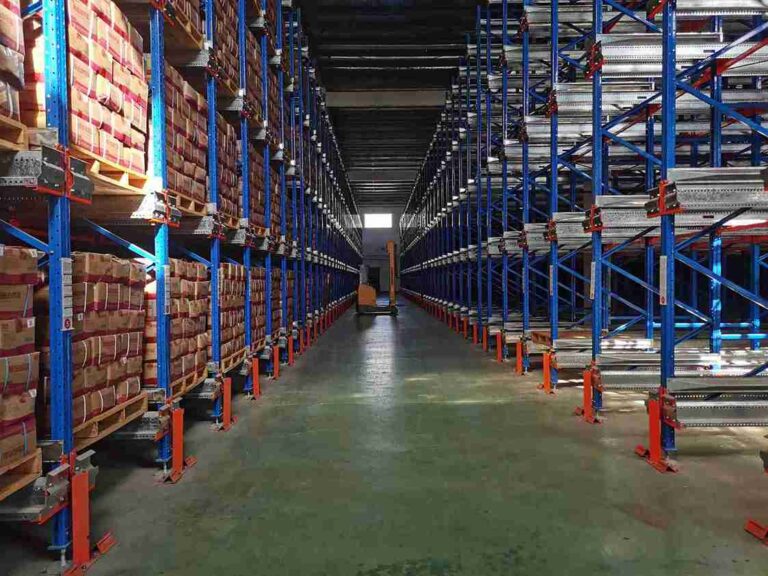
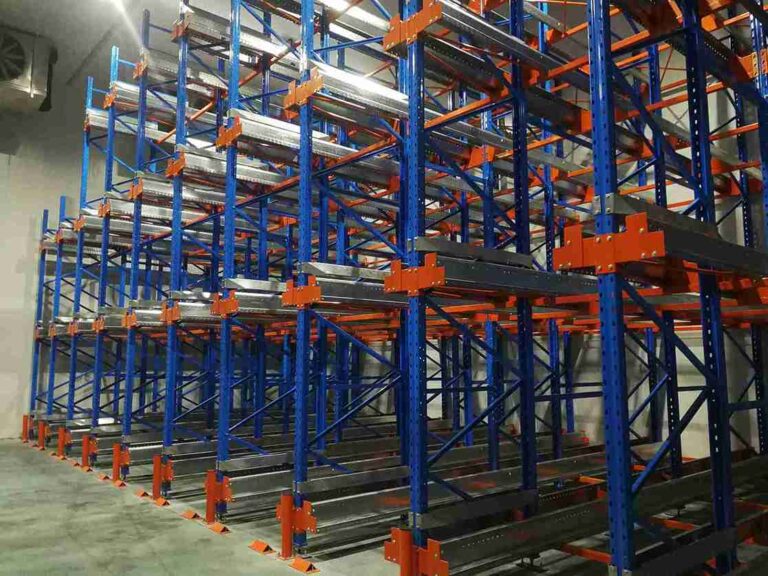
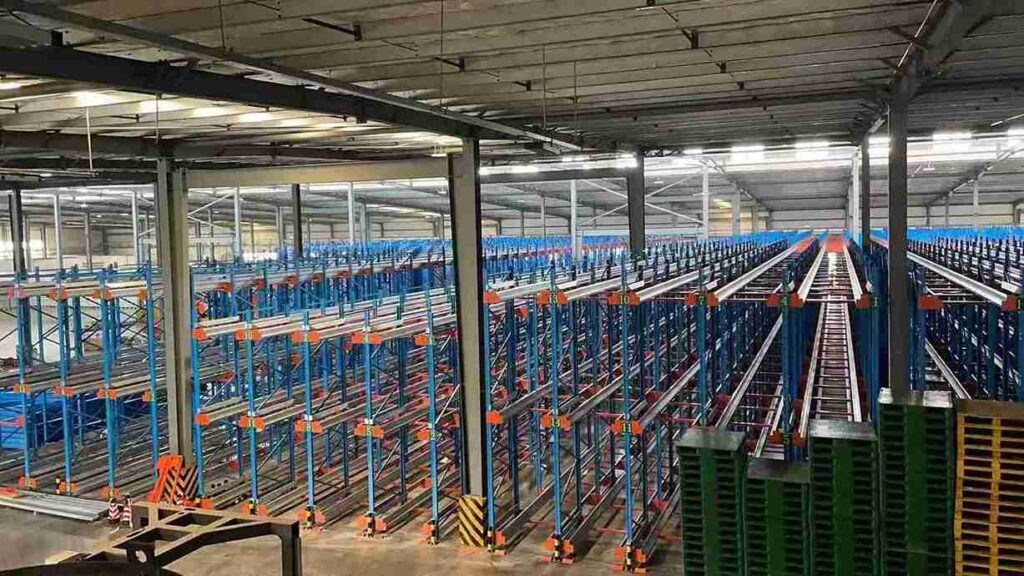
A Big Rack Shuttle System is far more than a storage rack; it is an integrated, automated storage and retrieval ecosystem engineered for palletized goods. It represents a quantum leap beyond static racking and even first-generation semi-automated solutions. The operational genius of a Big Rack Shuttle Systems lies in its elegant simplicity: a high-density, dedicated rack structure features multiple deep storage lanes, within which a battery-powered, wireless shuttle vehicle operates autonomously on each level. This shuttle, acting as a robotic internal transporter, navigates the rack’s internal rails to deposit and retrieve pallets with sub-millimeter accuracy, all without the need for a human operator or forklift inside the storage block.
Imagine a fleet of these dedicated, tireless machines, each assigned to a specific tier of the racking, managing the entire depth of storage lanes that were previously inaccessible without manual intervention. The entire operation is orchestrated by a sophisticated Warehouse Control System (WCS) or a fully integrated Warehouse Management System (WMS). This software acts as the central intelligence, commanding the shuttles, optimizing inventory placement based on real-time turnover data, and providing a complete, transparent overview of every asset’s status and location. The reliability and performance of these Big Rack Shuttle Systems are what set them apart in the market.
The Anatomy of Reliability: Core Components of a Big Rack Shuttle System
The robustness of any Big Rack Shuttle Systems is a direct result of its component quality and system integration.
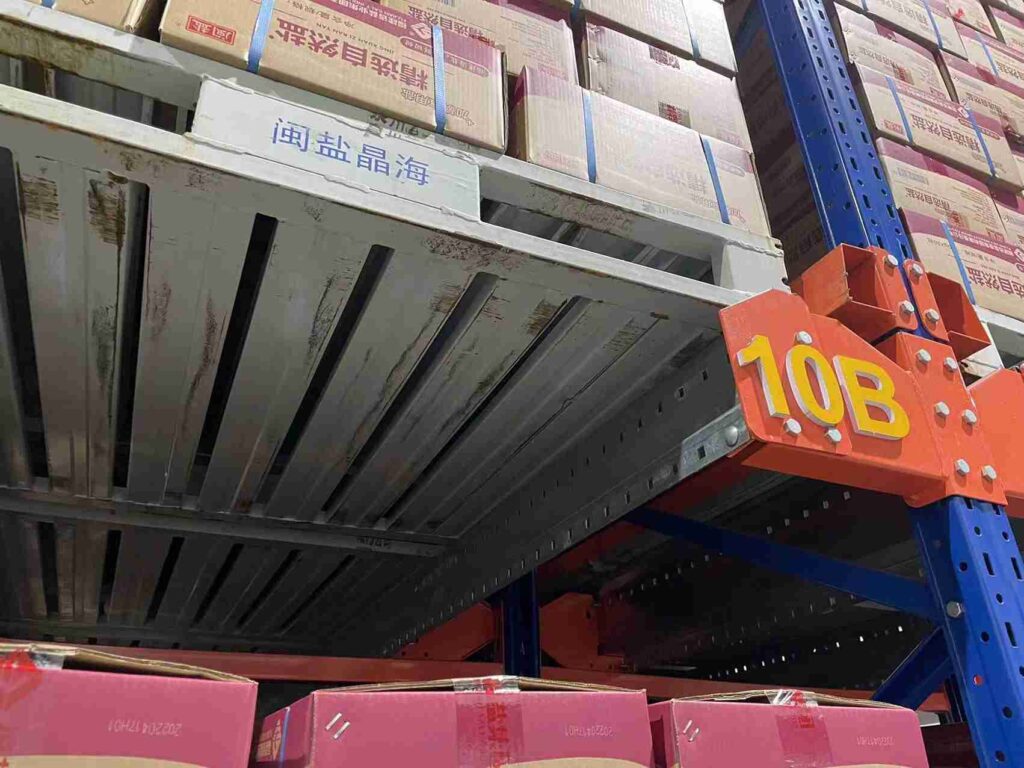
The Shuttle Vehicle: This is the heart of the Big Rack Shuttle Systems. Engineered for endurance, these vehicles feature high-torque motors for smooth, rapid movement, advanced lithium-ion batteries for extended shift life, and a suite of optical and mechanical sensors for flawless pallet handling and positioning. They are built to withstand the rigors of 24/7 operation in diverse environments, from ambient warehouses to demanding cold storage facilities.
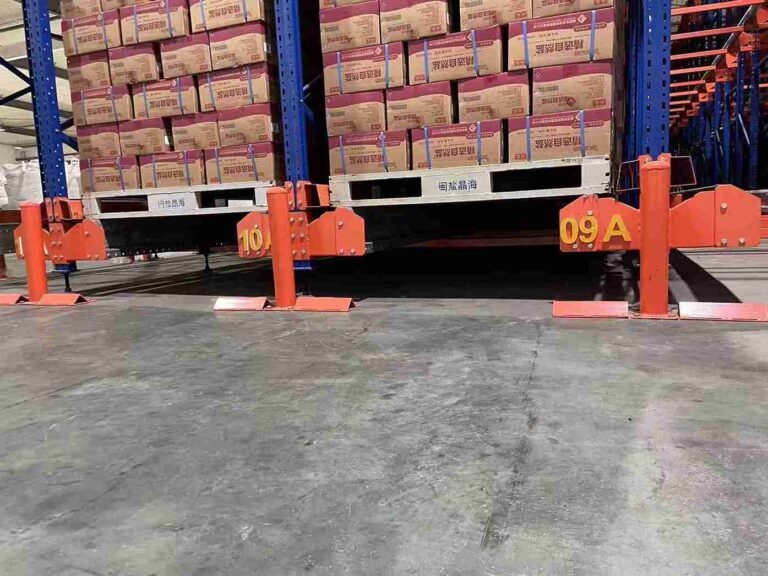
The High-Density Racking Structure: The backbone of the entire system, this is a custom-engineered structure that serves as both the storage framework and the guided pathway for the shuttles. It is calculated to bear dynamic loads and is constructed to maximize the building’s clear height, often transforming previously unused overhead space into high-value storage.
The Pick-Up and Drop-Off (P&D) Stations: These critical interface points are the bustling gateways between the automated Big Rack Shuttle Systems and the rest of the warehouse’s material flow. Here, pallets are seamlessly transferred from external equipment like AGVs, forklifts, or conveyor systems onto the waiting shuttle.
The Intelligent Control Software: The true brain of the Big Rack Shuttle Systems. It transcends simple command-and-control, employing complex algorithms for dynamic lane assignment, battery management, and system health monitoring. It provides a user-friendly dashboard that grants operators unparalleled visibility and control.
The Engineering Behind the 90%+ Space Utilization Claim
The assertion that Big Rack Shuttle Systems can achieve over 90% space utilization is not marketing hyperbole; it is a verifiable outcome of deliberate engineering principles applied to warehouse design.
1. The Revolutionary Elimination of Internal Aisles
The most significant spatial saving delivered by a Big Rack Shuttle Systems comes from the near-total removal of internal forklift aisles. While a Very Narrow Aisle (VNA) setup might reduce aisle width, it still dedicates a substantial portion of the floor plan to access. In contrast, a Big Rack Shuttle Systems requires only a single, front-facing aisle for pallet transfer at the P&D stations. The shuttle itself, operating from within the rack structure, accesses all pallets, regardless of how deep they are stored. This fundamental redesign is the primary catalyst for the dramatic increase in storage density that Big Rack Shuttle Systems are renowned for.
2. The “Cube-Out” Philosophy: Conquering Vertical Space
A proficient Big Rack Shuttle Systems installer doesn’t just plan in two dimensions. They employ a “cube-out” strategy, meticulously designing the racking to exploit the entire available vertical volume of the building, right up to the structural and safety limits. This approach ensures that companies are not paying for expensive industrial real estate only to leave a void of unused air above their existing racking. The vertical reach of Big Rack Shuttle Systems is a key differentiator.
3. Adaptive Lane Depth for Dynamic Inventory
Unlike static racking with fixed lane depths, a intelligently configured Big Rack Shuttle Systems offers dynamic adaptability. The system’s software can manage lanes of varying depths simultaneously. Fast-moving SKUs can be stored in shallower lanes for rapid cycling, while slow-moving, bulk items can be placed in ultra-deep lanes. This intelligent flexibility, inherent in a well-designed Big Rack Shuttle Systems, ensures the storage architecture is perpetually aligned with the actual inventory profile, eliminating internal configuration waste.
A Data-Driven Comparison: Big Rack Shuttle Systems vs. Conventional Storage
To illustrate the transformative impact, consider a practical scenario: a distribution center covering 1,200 sqm with a 12-meter clear height.
Scenario A: Traditional Selective Pallet Racking: With necessary cross-aisles and access aisles, this setup might accommodate approximately 2,200 pallet positions.
Scenario B: A Custom Big Rack Shuttle Systems: By eliminating most aisles and building racking to the ceiling, the same footprint could efficiently store over 5,800 pallet positions. This represents a 163% increase in storage capacity, effectively allowing the business to avoid the cost of constructing or leasing an additional warehouse of equal size. The quantitative advantage of deploying Big Rack Shuttle Systems is undeniable.
The Compound ROI: More Than Just Unprecedented Space Savings
While the spatial economics of Big Rack Shuttle Systems are compelling enough, the total return on investment is magnified by a cascade of synergistic operational benefits that these advanced Big Rack Shuttle Systems deliver.
Strategic Labor Optimization and Cost Mitigation: The automation inherent in Big Rack Shuttle Systems drastically reduces dependency on a large fleet of forklift operators. A single controller can manage the storage and retrieval of thousands of pallets, overseeing multiple shuttles. This not only converts variable labor costs into a fixed, manageable investment but also provides a strategic shield against the pervasive challenges of labor shortages and rising wages.
A New Standard in Operational Safety: By removing forklifts from the high-density storage area, Big Rack Shuttle Systems virtually eliminate the risks of racking impacts, collisions with personnel, and related product damage. The automated environment is predictable, controlled, and inherently safer, reducing insurance premiums and enhancing workplace morale.
Perfect Inventory Integrity and Traceability: Every single pallet movement within a Big Rack Shuttle Systems is digitally recorded. This results in 100% real-time inventory accuracy, eliminating costly manual count errors and shrinkage. The data integrity provided by Big Rack Shuttle Systems forms the bedrock for advanced supply chain analytics and reliable promise-to-customer capabilities.
Substantial and Sustainable Energy Reductions: High-density storage means a significantly smaller volume of air requires lighting and temperature control. Furthermore, the all-electric shuttle vehicles have a much lower energy footprint compared to the constant combustion or charging of a large forklift fleet. The environmental and cost savings from Big Rack Shuttle Systems are a significant advantage, especially in energy-intensive cold chain applications.
Accelerated Throughput and Order Fulfillment: Big Rack Shuttle Systems are engineered for speed, capable of executing storage and retrieval cycles much faster than human-operated equipment, particularly for deep-lane storage. This acceleration of internal logistics directly translates to shorter order cycle times, improved responsiveness to market demands, and a stronger competitive position.
Strategic Fit Analysis: Is a Big Rack Shuttle System Your Competitive Advantage?
The formidable capabilities of Big Rack Shuttle Systems deliver maximum impact in specific operational contexts. A reputable provider will always commence with a rigorous suitability assessment. A business is an prime candidate for Big Rack Shuttle Systems if its operations are characterized by:
High-Volume Pallet Handling: Operations involving thousands of pallet movements monthly or annually.
Complex SKU Profiles with Mixed Turnover: A wide variety of products with differing sales velocities, from fast-moving consumer goods to slow-moving spare parts.
Geographical or Financial Expansion Constraints: Operations that are landlocked or where the cost of new construction is prohibitive.
Specialization in Temperature-Controlled Logistics: For cold storage and freezer applications, the space and energy efficiencies of Big Rack Shuttle Systems are not just beneficial—they are transformative, offering an exceptionally rapid payback period.
A Strategic Commitment to Data-Driven Logistics: Companies that require real-time, accurate inventory visibility and predictable, auditable operational performance to meet modern supply chain standards.

The Integration Ecosystem: Weaving Big Rack Shuttle Systems into the Automated Warehous
A Big Rack Shuttle Systems achieves its full potential as the central hub of an integrated automated material handling ecosystem. The most successful implementations involve seamless connectivity with other technologies.
Synergy with AGVs (Automated Guided Vehicles): AGVs are the natural logistics partners for Big Rack Shuttle Systems. They provide the flexible, unmanned horizontal transport of pallets from receiving to the P&D stations of the Big Rack Shuttle Systems, and from the Big Rack Shuttle Systems to dispatch or production lines. This creates a continuous, “lights-out” pallet handling loop.
Interface with Conveyor and Sortation Systems: For operations requiring high-speed sortation or direct line-feeding, conveyor systems can be directly integrated with the P&D stations of the Big Rack Shuttle Systems, ensuring a smooth, uninterrupted flow of goods.
The Critical Layer of Software Unification: The most vital integration is digital. The control software for the Big Rack Shuttle Systems must feature robust, well-documented APIs for seamless bidirectional communication with the host WMS and ERP systems (e.g., SAP, Oracle). This ensures that the physical movement of goods is in perfect lockstep with the digital financial and inventory records.
The Provider’s Pledge: A Free, In-Depth, and Custom Warehouse Analysis
The theoretical benefits of Big Rack Shuttle Systems are universal, but their practical application must be hyper-specific. This is the rationale behind the offer of a free, comprehensive, and custom storage analysis, a service that separates serious solution providers from equipment vendors.
This analytical process, conducted by seasoned storage engineers, involves:
Deep-Dive Data Acquisition: A meticulous review of current layouts, pallet data, SKU master files (including dimensions, weight, and velocity), and current/future throughput KPIs.
Predictive 3D Simulation and Digital Twin Modeling: Using advanced simulation software to create a digital twin of the operation. This model tests the proposed Big Rack Shuttle Systems design under real-world conditions, predicting performance, identifying potential bottlenecks, and validating throughput capacity before installation.
Transparent, Granular ROI and TCO Modeling: A detailed financial analysis that outlines the total cost of ownership (TCO) against the projected savings in labor, real estate, energy, and operational improvements, clearly illustrating the payback period for the Big Rack Shuttle Systems investment.
A Phased, Risk-Mitigated Implementation Roadmap: A clear, stage-gated project plan for the installation and commissioning of the Big Rack Shuttle Systems, designed to ensure minimal disruption to ongoing business activities and a smooth transition to automated operations.
This analysis is a strategic consultancy service, designed to provide the clarity and confidence needed to make a capital decision based on irrefutable data.
Case Study: Revolutionizing a 3PL’s Regional Hub in Southeast Asia with Big Rack Shuttle Systems
A prominent third-party logistics (3PL) provider in Vietnam faced a critical inflection point. Their contract with a major multinational retailer was expanding, but their flagship warehouse in Ho Chi Minh City was at absolute capacity, and local expansion was financially unviable. The provider engaged with experts for a free custom analysis of a multi-aisle Big Rack Shuttle Systems solution.
The Outcome: The implementation of the Big Rack Shuttle Systems was transformative. Pallet storage capacity skyrocketed from 4,500 to over 10,500 within the same building envelope. Labor costs associated with put-away and retrieval were reduced by 70%, and order cycle times were slashed by 55%. This strategic enhancement of their Big Rack Shuttle Systems empowered the 3PL not only to seamlessly service the expanded retail contract but also to onboard two additional high-value clients, dramatically increasing their market share and profitability without any geographical expansion. The Big Rack Shuttle Systems became the core of their competitive value proposition.
Conclusion: The Future of Warehousing is Dense, Automated, and Intelligent
The age of the inefficient, spatially wasteful warehouse is conclusively over. In its place, the high-performance logistics center must be dense, automated, and data-rich. The Big Rack Shuttle Systems stands as the definitive technological answer to the intertwined challenges of space constraints, rising costs, and the demand for flawless execution. It is a strategic investment that redefines the economic model of storage, turning wasted space into a engine for profit and resilience.
The path to achieving and sustaining over 90% warehouse space utilization is a clear and proven one, paved by the implementation of robust Big Rack Shuttle Systems. This journey begins with a commitment to understanding the specific opportunity, through a free, no-obbligation custom warehouse analysis. Let data, not speculation, guide the next evolution of your storage operations. Inquire today to schedule your analysis and position your enterprise at the forefront of logistics efficiency.
Frequently Asked Questions (FAQs)
1. What is the typical lead time for the design, manufacturing, and installation of a Big Rack Shuttle System?
The total project timeline for a comprehensive Big Rack Shuttle Systems typically ranges from 20 to 30 weeks, depending on the system’s scale and complexity. This includes 8-12 weeks for detailed engineering and design, 12-16 weeks for manufacturing and factory acceptance testing, and 4-6 weeks for on-site installation and commissioning. We provide a critical path schedule from day one to ensure clear expectations.
2. How does the system handle different pallet types and non-standard loads in the same aisle?
Our Big Rack Shuttle Systems are highly adaptable. We can configure shuttles and racking to handle multiple pallet types (e.g., EUR, CHEP, GMA) within the same system by using adjustable width and depth settings on the shuttle vehicle and adaptive racking design. For non-standard loads, we engineer custom support cradles or attachments for the shuttle to ensure secure handling.
3. What happens if the shuttle vehicle breaks down or has a low battery? How does this affect throughput?
System redundancy is a key part of our Big Rack Shuttle Systems design. For critical high-throughput applications, we can design systems with multiple shuttles operating on the same level or across levels, ensuring one shuttle’s maintenance does not halt operations. The shuttles are designed for fast battery swap or opportunity charging at designated stations during idle moments, ensuring near-continuous operation.
4. Can your Big Rack Shuttle System be integrated with our existing Warehouse Management System (WMS)?
Absolutely. Our Big Rack Shuttle Systems come with a robust middleware control software that features a well-documented API (Application Programming Interface). This allows for seamless bidirectional communication with virtually all major WMS and ERP platforms (like SAP, Oracle, Manhattan), ensuring real-time data exchange on inventory levels, storage locations, and movement commands.
5. What kind of ongoing maintenance and technical support is required, and do you offer local support in our region?
We recommend a scheduled preventive maintenance program for all Big Rack Shuttle Systems, typically conducted quarterly or semi-annually, which includes rail inspection, sensor calibration, and mechanical checks. We offer comprehensive remote monitoring and diagnostics support. Furthermore, we have a network of trained local partners and technicians across Southeast Asia, the Middle East, Africa, and Latin America to provide rapid on-site support when needed, ensuring your Big Rack Shuttle Systems operations remain uninterrupted.
If you require perfect CAD drawings and quotes for warehouse racking, please contact us. We can provide you with free warehouse racking planning and design services and quotes. Our email address is: jili@geelyracks.com