📐 "Первые 50 корпоративных запросов получают индивидуальный дизайн 3D-хранилища" План
















The Definitive Guide to Beam Racking Load Capacity: Engineering Safety and Maximizing Warehouse Potential
In the intricate ecosystem of a modern warehouse, few elements are as fundamentally critical yet as frequently misunderstood as the Грузоподъемность балочных стеллажей. This single specification forms the bedrock upon which operational safety, storage density, and long-term profitability are built. A profound and nuanced understanding of Грузоподъемность балочных стеллажей is not merely an engineering formality; it is a strategic imperative for any logistics professional operating in the dynamic markets of Southeast Asia, the Middle East, Africa, and Latin America.
This comprehensive guide delves far beyond the surface-level data found on a specification sheet. It offers a masterclass in the engineering principles, operational variables, and strategic management protocols that govern Грузоподъемность балочных стеллажей. The objective is to empower decision-makers with the knowledge to transform their storage infrastructure from a passive cost center into a dynamic, safe, and highly optimized asset. Misjudging the true Грузоподъемность балочных стеллажей of a system is a gamble with catastrophic consequences, while mastering it unlocks unprecedented levels of efficiency and security.

Deconstructing the Myth of the “Maximum Load” Sticker
A pervasive and hazardous misconception in warehouse management is the treatment of the stated “maximum load capacity” as a routine operational target. This perspective is fundamentally flawed and represents the most common precursor to structural failure. The published figure for Грузоподъемность балочных стеллажей is an ultimate threshold, derived under controlled, ideal laboratory conditions. It does not account for the relentless, unpredictable variables of daily warehouse operations.
The authentic, real-world Грузоподъемность балочных стеллажей is a dynamic value, invariably lower than the theoretical maximum. It is continuously influenced by factors such as the kinetic energy of forklift impacts, the subtle corrosion from environmental humidity, and the inevitable material fatigue from countless loading cycles. Reputable manufacturers integrate a significant safety factor into their Грузоподъемность балочных стеллажей calculations precisely to buffer against these realities.
Therefore, a beam rated for a 2,500 kg Грузоподъемность балочных стеллажей is engineered not for daily loading at 2,500 kg, but to withstand the cumulative stresses of a harsh industrial environment while safely supporting loads that should consistently remain well below that limit. Recognizing this distinction is the foundational step in cultivating a culture of warehouse safety and integrity.
The Structural Symphony: An In-Depth Analysis of Load-Bearing Components
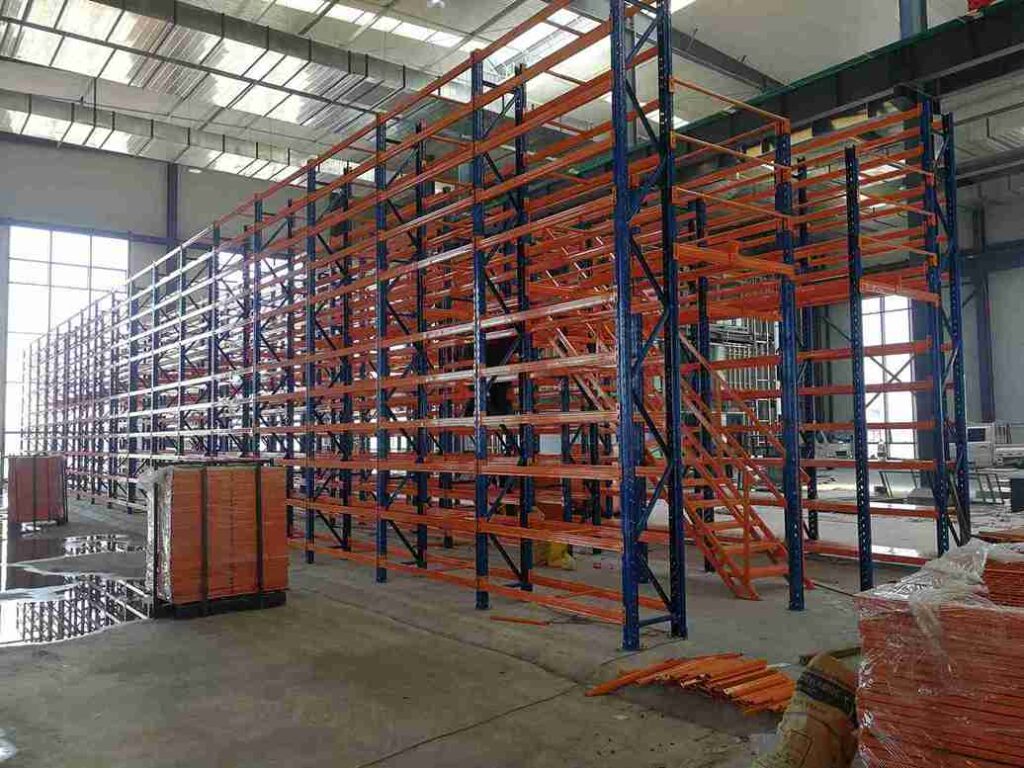
To truly command the principles of Грузоподъемность балочных стеллажей, one must view the storage system as a singular, interdependent structural entity. The failure of any single component compromises the integrity of the whole. The overall system’s Грузоподъемность балочных стеллажей is dictated by its weakest link, making the understanding of each part’s role paramount.
Upright Frames: The Vertical Pillars of Integrity
Upright frames form the vertical backbone, channeling the entire gravitational load of stored goods down to the foundation. Their contribution to the system’s Грузоподъемность балочных стеллажей is determined by a symphony of engineering choices:
Steel Metallurgy and Gauge: The use of high-tensile, structural-grade steel is non-negotiable. The material’s yield strength and the thickness of the steel (measured by gauge) are primary determinants of the frame’s resistance to buckling and deformation. A minor reduction in gauge can precipitate a major reduction in permissible Грузоподъемность балочных стеллажей.
Column Profile Engineering: The geometric shape of the column—whether a standard C-section, a more robust L-section, or a closed-box design—directly influences its moment of inertia, a key property in resisting lateral and forward bending forces. Deeper and wider frames inherently provide a greater Грузоподъемность балочных стеллажей and system stability.
Connector Hole Pattern: The pattern and design of the holes punched into the upright for beam connections are carefully engineered to minimize stress concentration. Poorly designed hole patterns can create critical failure points that drastically undermine the advertised Грузоподъемность балочных стеллажей.
Beams: The Horizontal Guardians of Load Distribution
Beams are the direct bearers of the palletized load, and their design is crucial for maintaining the specified Грузоподъемность балочных стеллажей. Their performance hinges on their ability to resist bending (deflection) under stress.
Profile and Structural Dynamics: Modern racking beams are typically roll-formed into I-beam or box-beam profiles. This shape strategically places more material at the top and bottom flanges, where stress is highest, maximizing strength while managing weight. The precise geometry is calculated to achieve a specific Грузоподъемность балочных стеллажей with a minimal safety deflection limit, often set at a ratio of the beam’s length.
The Criticality of the Connector: The beam end connector is arguably the most critical component in the system. A high-quality connector, such as a patented step-up or teardrop design, creates a positive mechanical lock with the upright frame. This connection must be infallible, ensuring the beam’s Грузоподъемность балочных стеллажей is fully transferred to the upright without slippage or disengagement, even in the event of a minor impact.
Footplates and Floor Anchorage: The Non-Negotiable Foundation
The most meticulously engineered racking system is rendered dangerous if improperly anchored. The foundation’s role in achieving the designed Грузоподъемность балочных стеллажей is absolute. Anchor bolts must be specified to withstand specific pull-out and shear forces, calculated based on the system’s height, weight, and potential seismic loads. The warehouse floor itself is part of this foundation; it must possess sufficient compressive strength and be level to prevent anchor loosening and frame tilt, which can initiate a progressive failure by redistributing loads in ways the Грузоподъемность балочных стеллажей calculations never intended.
The Art and Science of Accurate Load Calculation
Selecting a system with an appropriate Грузоподъемность балочных стеллажей is a deliberate, data-driven process, not an exercise in estimation. miscalculations at this stage have long-term, often irreversible consequences.
Mastering Unit Load Dynamics
The “unit load”—typically a pallet—is the fundamental variable in the Грузоподъемность балочных стеллажей equation. Comprehensive data is required for every SKU or load type:
Gross Weight and Dimensions: The exact weight and footprint of each pallet type must be known.
Load Distribution Analysis: This is frequently the most overlooked factor. A pallet with a 2,000 kg load concentrated in its center imposes a dramatically different stress profile on a beam than the same weight evenly distributed. This point loading can cause localized failure even if the total weight is within the Грузоподъемность балочных стеллажей.
Pallet Integrity and Compatibility: A damaged or non-standard pallet can deflect significantly, creating unstable load-bearing points that effectively reduce the practical Грузоподъемность балочных стеллажей and pose a major safety risk.
Uniformly Distributed Load (UDL) vs. Point Load: The Core Engineering Distinction
The published Грузоподъемность балочных стеллажей is universally expressed as a Uniformly Distributed Load (UDL). A beam rated for 3,000 kg UDL is engineered to support that weight spread perfectly evenly across its entire span.
In practice, a standard pallet creates two point loads at the points of contact with the beams. A beam’s resistance to point loads is a different engineering property. A professional Грузоподъемность балочных стеллажей assessment always involves calculating the bending moments and shear forces created by these point loads to ensure they fall within the beam’s safe working limits. Failure to bridge this gap between UDL theory and point load reality is a common source of structural compromise.
The Silent Erosion: Operational Factors That Degrade Load Capacity Over Time
A racking system’s Грузоподъемность балочных стеллажей is not a static value throughout its lifespan. A multitude of operational factors act to silently and progressively erode the original safety margin.
The Pervasive Impact of Forklift Interactions
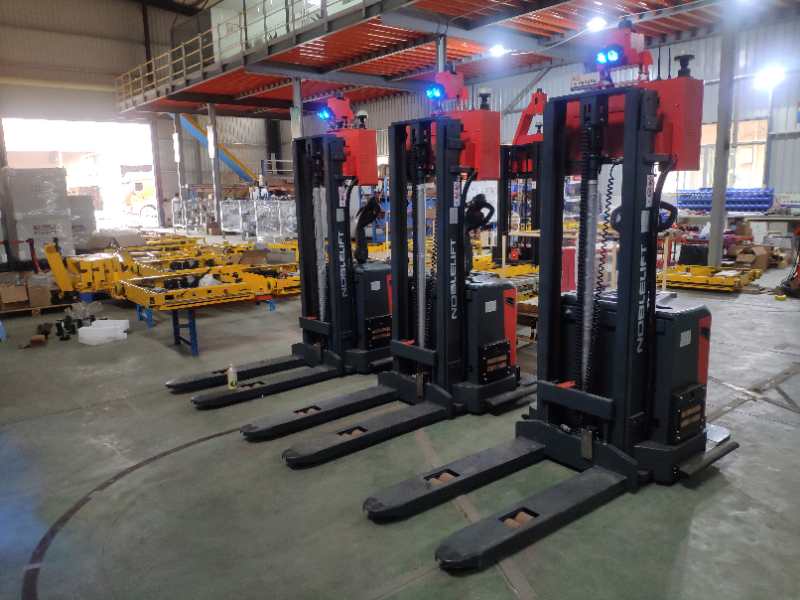
Every interaction with a forklift is a dynamic event. The act of placing or removing a load generates impact forces that are multiples of the static load weight. Furthermore, accidental collisions, however minor, are an operational certainty. The force of a 3-ton forklift impacting a racking upright at just 3 mph can generate a force equivalent to several thousand kilograms. This is a primary reason why forward-thinking operations are integrating AGVs and unmanned forklifts into their high-density storage areas. These automated systems eliminate the human error factor, drastically reducing impact events and preserving the long-term structural integrity and designed Грузоподъемность балочных стеллажей of the storage system.
Environmental and Seismic Stresses
The operating environment plays a crucial role in the longevity of the Грузоподъемность балочных стеллажей. In coastal regions, salt-laden air accelerates corrosion, gradually thinning structural members. In such environments, specifying hot-dip galvanized finishes is not an option but a necessity to protect the Грузоподъемность балочных стеллажей. In seismically active zones, standard racking is perilously inadequate. Systems must be engineered with specific bracing and connection details that allow them to flex and dissipate seismic energy without collapsing, maintaining a residual Грузоподъемность балочных стеллажей during and after an event.
The Peril of Unauthorized Modifications and Improper Repairs
Perhaps the most dangerous practice is the unauthorized modification of racking components. Welding, drilling, or cutting any part of the structure is strictly forbidden. The heat from welding alters the steel’s crystalline structure, creating brittle zones that can fail catastrophically under load. Drilling holes compromises the cross-sectional integrity of a beam or upright, creating new stress concentration points. The only safe and sanctioned method for addressing damage is the complete replacement of the compromised component with an OEM-approved part, thereby restoring the original Грузоподъемность балочных стеллажей.
A Proactive Regimen: The Pillars of Racking Inspection and Maintenance
Safeguarding the designed Грузоподъемность балочных стеллажей requires an active, disciplined, and systematic approach to inspection and maintenance. Complacency is the ally of failure.
Implementing a Tiered Damage Assessment Protocol
A best-practice inspection system operates on multiple tiers. Daily visual checks by trained warehouse staff are supplemented by weekly or monthly formal inspections by a supervisor, all culminating in a comprehensive annual audit by a qualified engineer. Central to this protocol is a clear, visual Damage Threshold Guide that categorizes defects:
Green (Monitor): Cosmetic damage like paint scuffs.
Yellow (Action Required): Measurable damage, such as a beam deflection exceeding L/180 or a connector bent 3-5mm. Requires scheduled repair.
Red (Immediate Action): Critical damage, including any visible crack, a bent upright frame, or a disconnected beam. The area must be immediately off-loaded, cordoned off, and the component replaced.
This protocol empowers every employee to become a guardian of the system’s Грузоподъемность балочных стеллажей.
The Frontier of Racking Integrity: IoT and Predictive Monitoring
The future of Грузоподъемность балочных стеллажей management is predictive and digital. For high-value automated facilities, the integration of IoT sensors represents a quantum leap in safety. Wireless strain gauges can monitor load in real-time, ensuring that the operational Грузоподъемность балочных стеллажей is never exceeded. RFID tags on components can log impact events, and tilt sensors can detect frame movement. This data feeds into a warehouse management system, providing a live health monitor of the storage infrastructure and enabling predictive maintenance long before a visible problem threatens the Грузоподъемность балочных стеллажей.
Transcending Traditional Limits: Advanced Solutions for Extreme Demands
There is a tangible ceiling to the practical Грузоподъемность балочных стеллажей achievable with traditional selective pallet racking. When business growth pushes against this ceiling, attempting to over-stress an existing system is a recipe for disaster. This is the strategic inflection point where a transition to more advanced, high-density storage solutions becomes imperative.
High-Density Dynamic Systems: Push-Back and Pallet Flow
For operations requiring deep lane storage, systems like push-back and pallet flow racking offer superior density. However, their Грузоподъемность балочных стеллажей considerations are more complex. In push-back racking, the structural frame must support not only the vertical load but also the horizontal forces generated by the moving carts. The Грузоподъемность балочных стеллажей calculation must account for the entire carriage structure’s weight and the dynamic loads during push-back and retrieval. Similarly, in pallet flow systems, the Грузоподъемность балочных стеллажей involves the strength of the wheel tracks or flow rails and their supporting structure, which must endure constant dynamic friction and loading.
The Apex of Storage Technology: Automated Storage and Retrieval Systems (AS/RS)
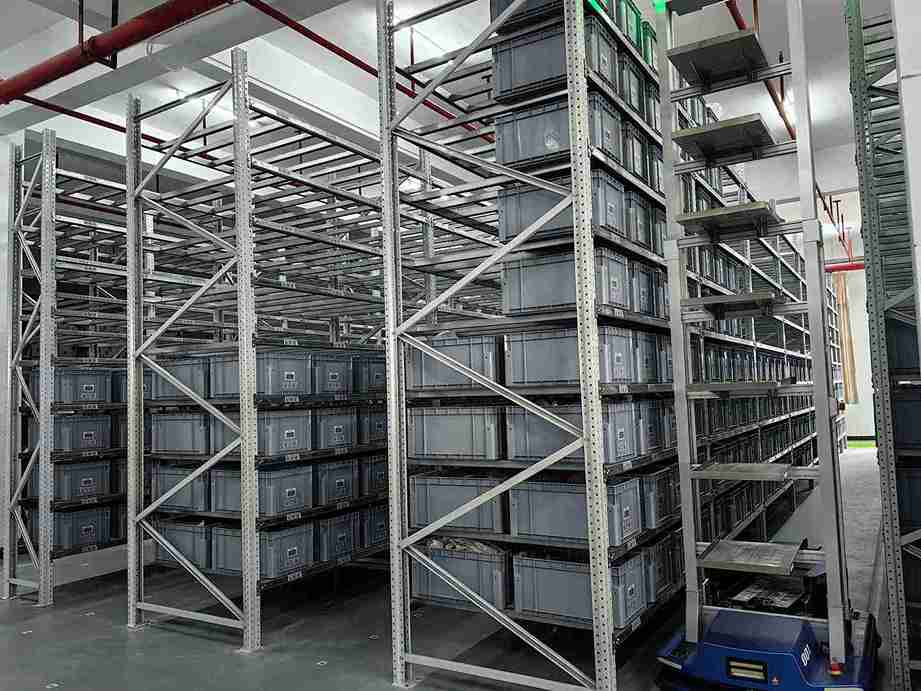
When the priorities are maximum density, absolute safety, and unparalleled throughput, the solution converges on the Automated Storage and Retrieval System (AS/RS). In these monumental structures, the concept of Грузоподъемность балочных стеллажей is elevated to a new dimension. The racking itself forms the building’s structure, requiring engineering of phenomenal precision.
Сайт Грузоподъемность балочных стеллажей calculations for an ASRS must encompass not only the static weight of the goods but also the immense dynamic forces imposed by the high-speed acceleration and deceleration of the retrieval machines within the aisles. The margin for error is zero. This is the ultimate expression of storage engineering, where Грузоподъемность балочных стеллажей, automation, and structural integrity are fused into a single, ultra-efficient asset that operates beyond human limitations.
Conclusion: Forging a Culture of Capacity Consciousness
Ultimately, mastering Грузоподъемность балочных стеллажей is about forging a culture of unwavering discipline and professional awareness within a logistics operation. It is a continuous commitment that spans from the initial system design and precise calculation to daily operational diligence and rigorous preventative maintenance. From the metallurgy of the steel to the algorithms of an automated retrieval system, every aspect of warehouse management is connected to the fundamental principle of Грузоподъемность балочных стеллажей.
By embracing this holistic view, businesses do more than just avoid catastrophic collapse; they build a resilient, scalable, and highly efficient logistics backbone capable of supporting sustainable growth in the world’s most demanding markets. The journey toward true warehouse excellence begins with a deep and respectful understanding of the forces at play, centered on the critical metric of Грузоподъемность балочных стеллажей.
Часто задаваемые вопросы (FAQ)
1. How does the frequency of loading and unloading cycles affect the long-term beam racking load capacity?
Pallet racks are designed for static storage, not as dynamic machinery. While they are built to withstand a very high number of loading cycles, excessive, high-speed activity contributes to material fatigue over a period of years. This gradual fatigue can microscopically weaken the steel, particularly at stress points like welds and connector holes, effectively reducing the long-term reliable Грузоподъемность балочных стеллажей. A system in a cross-docking facility will have a different lifecycle than one in a slow-moving archive.
2. What role does the warehouse lighting and visibility play in maintaining the intended beam racking load capacity?
This is an often-overlooked human factor. Poor lighting creates shadows and blind spots, increasing the likelihood of forklift impacts. A single impact can instantly compromise a component’s Грузоподъемность балочных стеллажей. Therefore, a well-lit warehouse is not just an operational efficiency measure; it is a direct and cost-effective investment in protecting the structural integrity and Грузоподъемность балочных стеллажей of the storage system.
3. Can the addition of decking (wire mesh or plywood) to beam levels influence the overall beam racking load capacity?
Yes, significantly. Adding decking changes the load dynamics. While it can help contain small items and improve safety, it adds dead weight to the level, which must be subtracted from the usable Грузоподъемность балочных стеллажей. Furthermore, if the decking is used to support distributed loads of small items, the beam’s Грузоподъемность балочных стеллажей is still governed by its UDL rating. The combined weight of the decking and the stored goods must not exceed the beam’s rated Грузоподъемность балочных стеллажей.
4. For a multi-level racking system, how is the vertical cumulative load managed in relation to the beam racking load capacity?
The design of a multi-level system is a complex top-down calculation. The upright frames must be engineered to support the cumulative weight of all loaded beams above a given level. The Грузоподъемность балочных стеллажей for the highest level beams is critical, but the Грузоподъемность балочных стеллажей for the lower-level beams must account for the possibility of them bearing the weight of collapsed loads from above in a failure scenario. The entire structure’s design, from the footplates up, is based on the total potential load and its distribution.
5. Are there specific training or certification programs for staff regarding beam racking load capacity management?
While there is no single global license, reputable racking manufacturers and industry associations offer specialized training programs. These programs educate warehouse managers, safety officers, and forklift operators on the principles of Грузоподъемность балочных стеллажей, how to conduct visual inspections, how to identify damage that compromises Грузоподъемность балочных стеллажей, and the critical importance of reporting incidents. Investing in such training is a direct contribution to risk mitigation and operational excellence.
Если вам нужны идеальные чертежи CAD и предложения по складским стеллажам, пожалуйста, свяжитесь с нами. Мы можем предоставить вам бесплатные услуги по планированию и проектированию складских стеллажей, а также расценки. Наш адрес электронной почты: jili@geelyracks.com