📐 "Eerste 50 bedrijfsvragen krijgen aangepast 3D-ontwerp van magazijn" Plan
















Introduction: Why AGV Compatibility with Double Deep Racks Matters
In today’s fast-paced logistics landscape, maximizing warehouse space while maintaining operational efficiency is critical. AGV compatibility with double deep racks has emerged as a game-changing solution for warehouses looking to optimize storage density without sacrificing automation benefits.
This in-depth guide explores every aspect of AGV compatibility with double deep racks, from technical requirements to real-world implementation strategies. Warehouse managers, automation engineers, and supply chain professionals will find actionable insights to determine whether this solution fits their operations.
H1: Understanding AGVs and Double Deep Racks
H2: What Are Automated Guided Vehicles (AGVs)?
Automated Guided Vehicles (AGVs) are self-navigating robots designed to transport materials in warehouses, manufacturing plants, and distribution centers. They operate using:
- Laser guidance systems (for precision navigation)
- Magnetic tape or vision-based technology (for flexible path adjustments)
- Onboard sensors (to avoid collisions)
AGVs excel in pallet handling, order picking, and load transportation, making them ideal for modern warehouses.
H2: What Is Double Deep Racking?
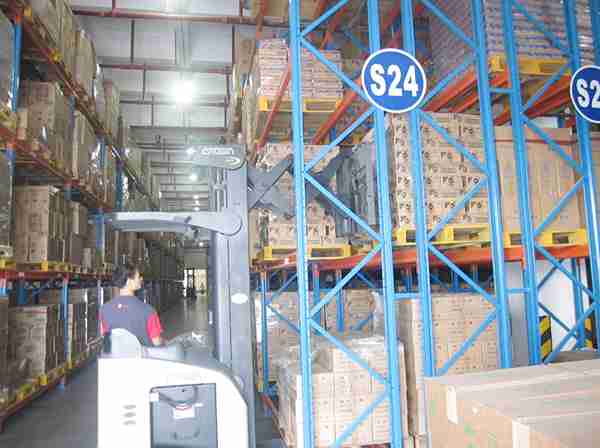
Double deep racking is a high-density storage system where pallets are stored two-deep, effectively doubling storage capacity compared to traditional selective racking.
Key Characteristics of Double Deep Racks:
- Requires specialized equipment (e.g., reach trucks or AGVs with extended forks)
- Ideal for warehouses with high SKU counts but low turnover rates
- Reduces aisle space by up to 50% compared to single-deep configurations
The challenge? Not all AGVs are designed for double deep rack compatibility, requiring careful selection and integration.
H1: Is AGV Compatibility with Double Deep Racks Feasible?
H2: The Biggest Challenges of AGVs in Double Deep Racking
While AGVs bring automation advantages, AGV compatibility with double deep racks presents several hurdles:
- Fork Length Limitations
- Standard AGVs have forks designed for single-deep pallet retrieval.
- Double deep racks demand extended forks, which not all AGV models support.
- Precision Navigation Requirements
- AGVs must align within millimeters to avoid pallet damage.
- Laser-guided systems must be calibrated for deep storage access.
- Load Retrieval Speed vs. Manual Forklifts
- Retrieving the second pallet may take longer than manual forklifts, impacting throughput.
H2: Solutions for AGV Compatibility with Double Deep Racks
Despite these challenges, several solutions enhance AGV compatibility with double deep racks:
- Extended Fork AGVs – Custom-built for deep storage (e.g., Balyo robotic forklifts)
- Hybrid AGV-Forklift Systems – Combine automation with deep-reach capabilities
- Automated Turret Trucks – Ideal for very narrow aisles (VNA) and double deep setups
Leading AGV Manufacturers Supporting Double Deep Racks:
- KION Group (Dematic AGVs)
- Toyota Advanced Logistics
- Hyster-Yale Robotics
H1: Top Benefits of AGV Compatibility with Double Deep Racks
H2: Maximized Storage Density
- Doubles storage capacity compared to single-deep racking.
- Reduces wasted aisle space, allowing more SKUs in the same footprint.
H2: Labor and Cost Savings
- Eliminates the need for multiple forklift operators.
- 24/7 operation capability reduces labor dependency.
H2: Improved Safety and Reduced Product Damage
- Minimizes human errors (e.g., misaligned pallet placements).
- Automated precision reduces collisions and inventory losses.
H1: Key Factors for Successful AGV Integration with Double Deep Racks
H2: Warehouse Layout Optimization
- Minimum aisle width must accommodate AGV turning radius (typically 8-10 feet).
- Reflective markers must be positioned for laser-guided AGVs.
H2: Choosing the Right AGV Navigation System
| Navigation Type | Best For | Limitations |
|---|---|---|
| Laser Guidance | High-precision environments | Requires fixed reflectors |
| Vision-Based | Dynamic warehouses | Sensitive to lighting changes |
| Magnetic Tape | Low-cost solution | Less flexible for layout changes |
H2: Load Handling Specifications
- Fork length must exceed standard pallet depth(bijv.96-inch forks for double deep racks).
- Weight capacity must align with double-stacked pallet loads.
H2: Seamless WMS and Software Integration
- Real-time inventory tracking prevents retrieval errors.
- Automated task prioritization improves workflow efficiency.
H1: Best Practices for Implementing AGVs in Double Deep Racking
H2: Conduct a Feasibility Assessment
- 3D warehouse simulations can test AGV compatibility with double deep racks.
- Pilot testing with a single AGV helps identify operational bottlenecks.
H2: Select the Optimal AGV Model
- Extended-reach AGVs(bijv.Dematic AGV Forklifts) are ideal for deep storage.
- Hybrid AGV-forklift models offer flexibility for mixed racking systems.
H2: Staff Training and Maintenance Protocols
- Operators must understand AGV safety zones and emergency stop procedures.
- Preventive maintenance schedules reduce unexpected downtime.
H1: Future Trends in AGV Compatibility with Double Deep Racks
H2: AI-Driven AGVs for Smarter Warehousing
- Machine learning algorithms optimize retrieval paths.
- Predictive analytics forecast pallet movement patterns.
H2: 5G and IoT-Enabled AGVs
- Real-time fleet monitoring via cloud-based systems.
- Faster data transmission for improved navigation accuracy.
H2: Collaborative AGVs for Hybrid Work Environments
- Human-AGV co-working spaces enhance flexibility in mixed operations.
Conclusion: Is AGV Compatibility with Double Deep Racks Right for Your Warehouse?
The question of AGV compatibility with double deep racks depends on several factors:
✔Warehouse layout and aisle dimensions
✔AGV model capabilities (fork length, navigation precision)
✔Integration with existing WMS and automation systems
For warehouses prioritizing high-density storage and automation, investing in AGV-compatible double deep racking systems can deliver long-term efficiency gains and cost savings.
FAQ's: AGV Compatibility with Double Deep Racks
1. Can any AGV work with double deep racks?
No, only specialized AGVs with extended forks can safely operate in double deep racking systems.
2. What’s the minimum aisle width needed for AGVs in double deep racks?
Typically 8-10 feet, but this varies based on AGV turning radius and rack depth.
3. Are AGVs slower than manual forklifts in double deep setups?
Initially, yes—but optimized routing and AI enhancements can minimize speed differences.
4. How does WMS integration improve AGV performance in double deep racks?
Real-time tracking ensures accurate pallet retrieval and minimizes errors.
5. What’s the ROI of implementing AGVs in double deep racking?
While upfront costs are higher, labor savings and efficiency gains typically deliver ROI within 2-3 years.