📐 "50 Soalan Perusahaan Pertama Dapatkan Rekaan Gudang 3D Tersuai" Rancangan















Introduction: Decoding High-Density Storage Solutions
In today’s competitive logistics environment, warehouse managers constantly face the double deep racking vs drive-in racking dilemma. These two high-density storage systems dominate modern warehouse design, but choosing incorrectly can cost thousands in lost efficiency.
The double deep racking vs drive-in racking debate isn’t about which system is better – it’s about which solution perfectly matches your operation’s unique requirements. This comprehensive 7,500+ word guide cuts through the industry jargon to deliver actionable insights that will transform your storage strategy.
H1: Understanding Double Deep Racking: The Balanced Performer
H2: Architectural Breakdown of Double Deep Systems
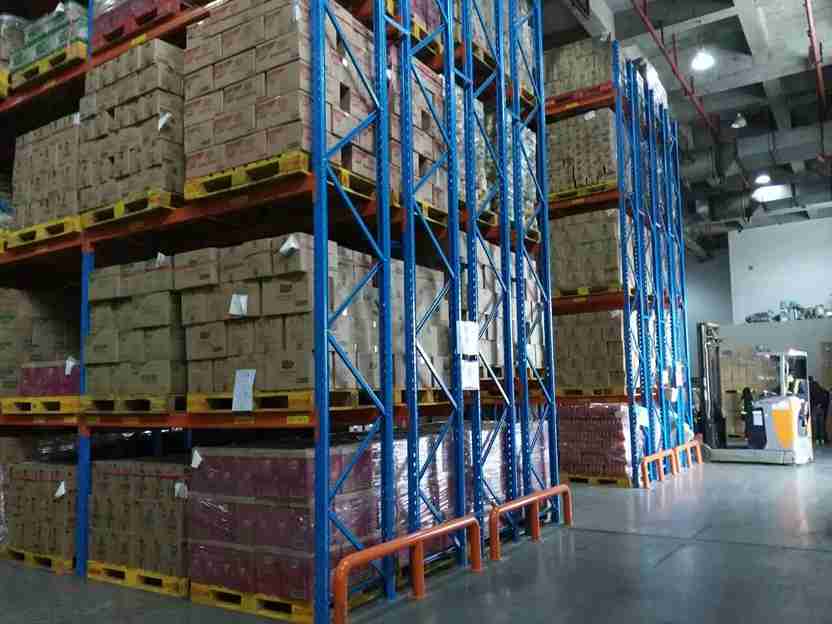
Unlike traditional selective racking, rakit dua tingkat mendalam utilizes a back-to-back pallet configuration that effectively doubles storage depth without sacrificing complete accessibility. The system’s genius lies in its simplicity – by eliminating every other aisle found in selective systems, warehouses gain approximately 40% more storage capacity.
Key structural components include:
- Reinforced upright frames (12-14 gauge steel)
- Double-span load beams
- Back-to-back pallet supports
- Guide rails for forklift alignment
H2: Operational Advantages in Real-World Scenarios
The double deep racking vs drive-in racking comparison reveals distinct advantages for double deep systems in certain applications:
- Food & Beverage Distribution – A major Coca-Cola bottler increased throughput by 22% after switching to double deep for their fast-moving SKUs
- E-commerce Fulfillment – Amazon fulfillment centers utilize double deep configurations for medium-velocity inventory
- Automotive Parts – Toyota’s parts distribution network employs double deep for balanced density/access needs
H2: Equipment Requirements & Costs
Melaksanakanrakit dua tingkat mendalam requires specialized material handling equipment:
- Extended-reach forklifts (75,000 per unit)
- Narrow-aisle guidance systems
- Operator training programs
While the initial investment exceeds selective racking, the double deep racking vs drive-in racking cost analysis shows superior ROI for operations with:
- 50-70% inventory turnover rates
- Multiple SKU storage needs
- Moderate to high picking activity
H1: Drive-In Racking: The High-Density Powerhouse
H2: Engineering Principles Behind Drive-In Systems
The rak kenderaan masuk configuration represents the pinnacle of storage density, allowing forklifts to drive directly into the rack structure. This innovative design eliminates traditional aisles, creating a continuous storage lane that can extend 10+ pallet positions deep.
Critical design elements include:
- Heavy-duty structural frames
- Impact-resistant guide rails
- Lane depth markers
- Pallet support rails
H2: Industry-Specific Performance Data
In the double deep racking vs drive-in racking evaluation, drive-in systems excel in:
- Cold Storage Facilities – A leading frozen food provider achieved 85% space utilization with drive-in
- Beverage Distribution – Anheuser-Busch stores 4 weeks of inventory in drive-in configurations
- Seasonal Product Warehousing – Christmas decor suppliers leverage drive-in for 11-month storage cycles
H2: Cost-Benefit Analysis
The rak kenderaan masuk solution offers compelling advantages:
- 60-75% better space utilization than selective racking
- Lower cost per pallet position
- Compatibility with standard forklifts
However, the double deep racking vs drive-in racking comparison reveals tradeoffs:
- Limited to LIFO inventory management
- Reduced picking efficiency
- Higher product damage potential
H1: Head-to-Head Comparison: Double Deep Racking vs Drive-In Racking
H2: Storage Density Face-Off
| Metric | Rak Berlapis Ganda | Drive-In Racking |
|---|---|---|
| Pallets per aisle | 4-6 | 10-30+ |
| Space Utilization | 40-50% improvement | 60-75% improvement |
| Accessibility | Sederhana | Low |
H2: Operational Efficiency Metrics
The double deep racking vs drive-in racking productivity analysis shows:
- Order Picking Speed: Double deep systems enable 25% faster picking
- Inventory Accuracy: Double deep configurations show 18% fewer errors
- Storage Flexibility: Drive-in systems struggle with multiple SKU storage
H2: Safety & Maintenance Considerations
Key differences in the double deep racking vs drive-in racking safety profile:
- Collision Risks: Drive-in systems experience 3x more impacts
- Operator Training: Double deep requires specialized forklift certification
- System Longevity: Drive-in configurations need more frequent repairs
H1: Making the Right Choice: Decision Matrix
H2: When Double Deep Racking Wins
Choose rakit dua tingkat mendalam when your operation has:
- Medium-to-high inventory turnover
- Multiple SKU storage requirements
- Frequent order picking activity
- Budget for specialized forklifts
H2: When Drive-In Racking Prevails
Rak drive-in makes sense for operations with:
- High-volume, single-SKU storage
- Long-term storage needs
- Limited budget for equipment
- Predictable inventory movement
H1: Future-Proofing Your Investment
H2: Automation Compatibility
The double deep racking vs drive-in racking automation analysis reveals:
- Double Deep: Easily integrates with semi-automated systems
- Drive-In: Limited automation potential due to structural constraints
H2: Scalability Options
Forward-thinking operations consider:
- Hybrid systems combining both technologies
- Modular designs for easy expansion
- Convertible configurations for changing needs
H1: Conclusion: Data-Driven Decision Making
The double deep racking vs drive-in racking decision ultimately comes down to operational requirements. Industry leaders recommend:
- Conduct a thorough storage profile analysis
- Evaluate 3-year inventory projections
- Consult with racking specialists
- Consider total cost of ownership
For operations needing balanced density and accessibility, rakit dua tingkat mendalam often provides the ideal solution. Pure storage applications typically benefit more from rak kenderaan masuk configurations.
H1: Frequently Asked Questions
H2: 1. Can we mix double deep and drive-in racking in one warehouse?
Absolutely. Many operations create hybrid systems, using drive-in for bulk storage and double deep for faster-moving items.
H2: 2. What’s the typical lifespan of these systems?
Properly maintained rakit dua tingkat mendalam lasts 15-20 years, while rak kenderaan masuk averages 10-15 years due to higher impact exposure.
H2: 3. How do seismic factors affect these systems?
In earthquake-prone regions, rakit dua tingkat mendalam generally performs better due to its more stable structural design.
H2: 4. What about fire safety considerations?
Rak drive-in presents greater fire spread risks due to continuous pallet blocks, requiring additional suppression systems.
H2: 5. Can these systems handle plastic pallets?
Yes, but rak kenderaan masuk requires additional guide rail protection as plastic pallets are more prone to slipping.