📐 "50 Soalan Perusahaan Pertama Dapatkan Rekaan Gudang 3D Tersuai" Rancangan















Introduction: The Strategic Value of Double Deep Racking
For warehouse managers and logistics professionals, optimizing storage space is a constant challenge. Double deep racking has emerged as a compelling solution—but is it a smart investment for your operation? This double deep racking investment guide provides a data-driven analysis to help businesses determine whether this high-density storage system delivers real ROItitik.
Why This Double Deep Racking Investment Guide Matters
- Comprehensive cost-benefit analysis of double deep racking
- Comparison with alternative storage systems (selective, drive-in, push-back)
- Real-world case studies proving efficiency gains
- Expert recommendations for seamless implementation
By the end of this double deep racking investment guide, readers will have a clear, actionable understanding of whether this system aligns with their warehouse needs.
What Is Double Deep Racking? A Deep Dive into the System
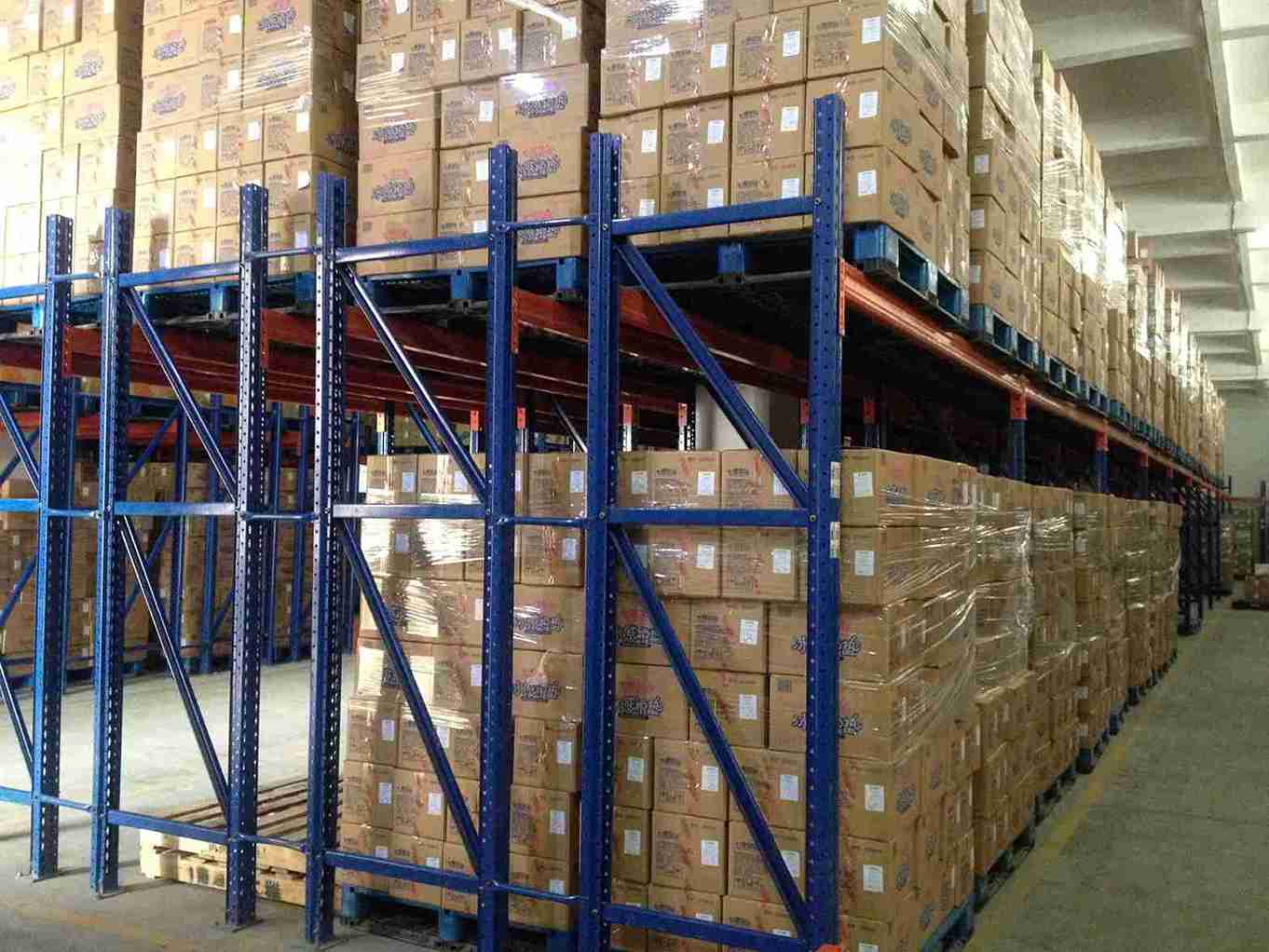
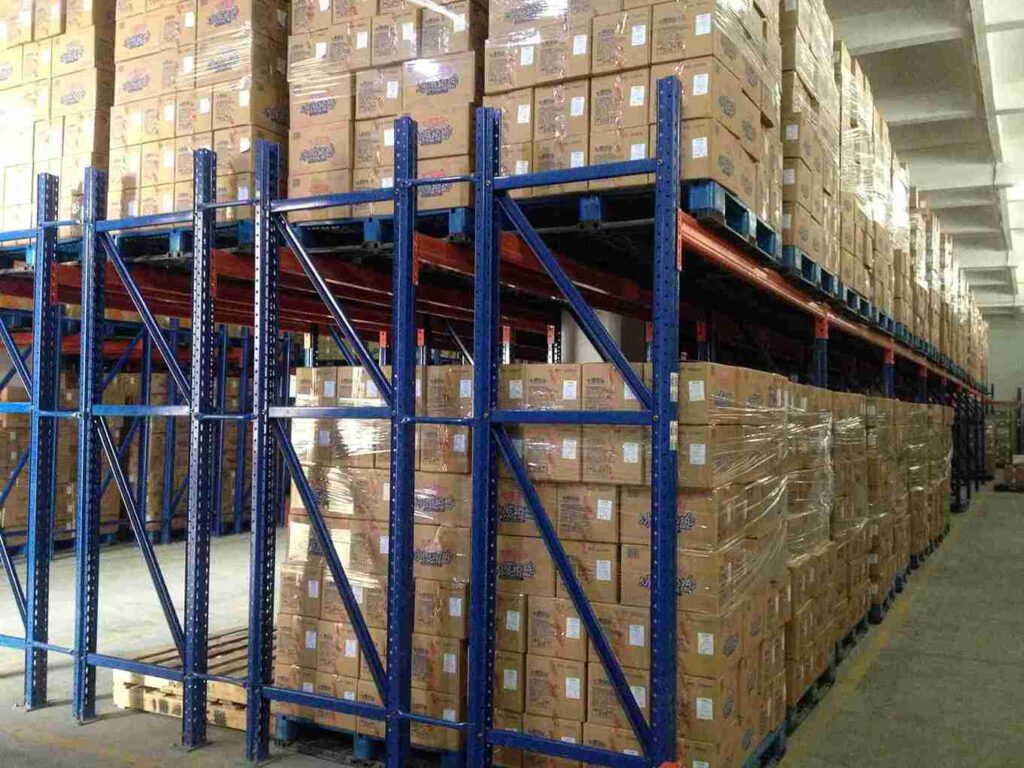
Double deep racking is a high-density pallet storage solution where pallets are stored two-deep, effectively doubling storage capacity compared to traditional single-deep setups. Unlike selective racking, which allows direct access to every pallet, rakit dua tingkat mendalam requires specialized forklifts to retrieve rear pallets.
How Double Deep Racking Works in Real-World Warehousing
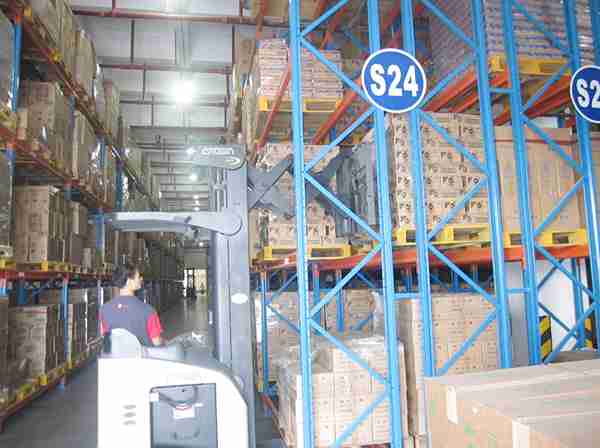
- Forklift Requirements: Only extended-reach forklifts can operate efficiently in this system.
- Load Uniformity: Works best with standardized pallet sizes to prevent misalignment.
- Storage Philosophy: Operates on a LIFO (Last-In, First-Out) basis, which may not suit all inventory types.
This double deep racking investment guide will explore whether these operational nuances make it a worthy investment for different warehouse scenarios.
Key Benefits of Double Deep Racking: Why Businesses Are Investing
1. Maximized Storage Density Without Expansion
One of the strongest arguments for rakit dua tingkat mendalam is its ability to increase storage capacity by 40-50% without requiring additional warehouse space. For businesses in high-rent urban areas, this can translate to massive cost savingstitik.
2. Lower Real Estate Costs Compared to Single-Deep Systems
Since rakit dua tingkat mendalam reduces aisle space, companies can store more pallets in the same square footage, delaying the need for costly expansions.
3. Improved Workflow for High-Turnover SKUs
If a warehouse handles fast-moving, uniform products, this system reduces forklift travel time, leading to faster loading and unloadingtitik.
4. Seamless Integration with Existing Racking
Tidak sepertidrive-in or push-back racking, rakit dua tingkat mendalam can often be retrofitted into existing selective racking setups, making it a flexible investmenttitik.
Potential Drawbacks: When Double Deep Racking Isn’t the Best Investment
1. LIFO Limitations: A Dealbreaker for Some Industries
Because rakit dua tingkat mendalam operates on a last-in, first-out basis, it’s not ideal for businesses requiring FIFO (First-In, First-Out) inventory rotation, such as food, pharmaceuticals, or chemicalstitik.
2. Higher Forklift Costs: A Hidden Expense
Standard forklifts cannot operate efficiently in a rakit dua tingkat mendalam system. Companies must invest in specialized reach trucks, which can increase capital expendituretitik.
3. SKU Uniformity is Non-Negotiable
If pallet sizes vary significantly, misalignment and product damage risks rise, making rakit dua tingkat mendalam a poor investment for warehouses with inconsistent loads.
4. Slower Picking Times for Mixed SKUs
Tidak sepertiselective racking, where every pallet is immediately accessible, rakit dua tingkat mendalam can slow down order picking if rear pallets are frequently needed.
Double Deep Racking vs. Alternative Storage Systems: Which Offers the Best ROI?
Double Deep Racking vs. Selective Racking: A Side-by-Side Comparison
| Feature | Double Deep Racking | Selective Racking |
|---|---|---|
| Storage Density | High (40-50% more) | Lower |
| Accessibility | LIFO only | FIFO or LIFO possible |
| Forklift Type | Extended-reach trucks | Standard forklifts |
| Best For | Bulk storage, uniform SKUs | High-selectivity needs |
Double Deep Racking vs. Drive-In Racking: Which is the Smarter Investment?
- Rak drive-in allows deeper storage (4-6 pallets deep) but sacrifices accessibilitytitik.
- Double deep racking provides a middle ground—better density than selective racking, better accessibility than drive-in.
Double Deep Racking vs. Push-Back Racking: Which Delivers Better Efficiency?
- Push-back racking offers dynamic LIFO storage (up to 6 pallets deep).
- Double deep racking is simpler and more cost-effective for two-deep storage needs.
Real-World ROI: Case Studies Proving Double Deep Racking’s Value
Case Study 1: E-Commerce Fulfillment Center Boosts Capacity by 45%
A mid-sized e-commerce warehouse transitioned from selective rackingkerakit dua tingkat mendalam, achieving:
- 45% increase in pallet positions
- 20% reduction in forklift travel time
- Full ROI in 2.5 years
Case Study 2: Automotive Parts Supplier Cuts Real Estate Costs
A manufacturing warehouse implemented rakit dua tingkat mendalam, allowing them to:
- Avoid a $500K expansion by maximizing existing space
- Reduce labor costs with faster pallet retrieval
When Does Double Deep Racking Deliver the Best ROI?
✅High-volume, uniform SKUs (e.g., beverages, packaged goods)
✅Limited expansion options (urban warehouses, high real estate costs)
✅LIFO inventory management is acceptable
When Should Businesses Avoid Double Deep Racking?
❌ FIFO requirements (perishable goods, pharmaceuticals)
❌ Highly variable pallet sizes (mixed SKU warehouses)
❌ Budget constraints preventing forklift upgrades
Implementation Best Practices: Maximizing Your Double Deep Racking Investment
1. Conduct a Thorough Warehouse Audit
Before investing in rakit dua tingkat mendalam, businesses should:
- Profile SKUs (size, weight, turnover rate)
- Assess forklift compatibility
2. Optimize Aisle Width for Efficiency
- Narrow-aisle (NA) forklifts require 9-10 ft aislestitik.
- Very narrow aisle (VNA) trucks can operate in 6-7 ft aisles, further increasing storage density.
3. Train Staff on LIFO Handling
Since rakit dua tingkat mendalam operates on a last-in, first-out basis, workers must adapt to new retrieval processestitik.
4. Partner with a Reputable Racking Supplier
Choosing an experienced manufacturer ensures:
- Proper load capacity ratings
- Compliance with safety regulations
Conclusion: Is Double Deep Racking a Smart Investment?
After analyzing costs, benefits, and real-world case studies, this double deep racking investment guide concludes:
✔ For high-volume, uniform SKUs, double deep racking is a high-ROI investment, delivering 40-50% more storage without expansiontitik.
✔ For FIFO-dependent industries, alternative systems like selective or push-back racking may be better.
✔ Specialized forklifts are a must, so businesses should factor in equipment costs before committing.
Final Recommendation: If your warehouse meets the criteria, double deep racking is a proven, cost-effective solution—delivering higher storage density, reduced real estate costs, and optimized workflowtitik.
Soalan Lazim: Answering Key Questions About Double Deep Racking
1. Can double deep racking be used in cold storage environments?
Yes, but condensation and temperature control must be addressed. Stainless steel racking is often recommended for freezer applicationstitik.
2. What’s the maximum weight capacity for double deep racking?
Most systems support 2,500–5,000 lbs per pallet position, but custom designs can handle heavier loads.
3. How does double deep racking impact order picking efficiency?
It can slow down picking if frequent access to rear pallets is needed. Best for bulk storage rather than high-mix picking.
4. Can existing single-deep racking be converted to double deep?
Sometimes—consult a racking engineer to assess upright frame strengthdan danload distributiontitik.
5. What’s the typical lifespan of double deep racking?
With proper maintenance, 15–25 years. Regular safety inspections are crucial for longevity.