📐 "50 Soalan Perusahaan Pertama Dapatkan Rekaan Gudang 3D Tersuai" Rancangan
















Seismic & High-Capacity Warehousing: The Expert Guide to Beam Racking Anchoring for Challenging Environments
In the world of industrial storage, a warehouse’s resilience is fundamentally anchored in its connection to the ground. For operations in seismic zones or those pushing the limits of storage density, conventional kaedah penguncian rak sinar represent a significant, often overlooked, vulnerability. This definitive guide delves into the critical engineering principles behind advanced kaedah penguncian rak sinar for high-capacity and seismic-resistant warehouses.
It moves beyond basic installation manuals to explore the sophisticated interplay between dynamic loads, soil mechanics, and structural integrity. Readers will gain a comprehensive understanding of certified installation protocols, rigorous inspection regimes, and the specific kaedah penguncian rak sinar necessary to safeguard personnel, inventory, and entire logistical operations against immense forces. This discourse is not merely about safety compliance; it’s a detailed examination of how superior kaedah penguncian rak sinar ensure operational resilience and protect multi-million dollar investments.

The Unforgiving Physics of a Warehouse in Motion
Imagine a warehouse during a seismic event. The ground doesn’t just shake uniformly; it can lurch, roll, and ripple. Now, picture 30-foot-tall beam racking, laden with several tons of inventory, acting not as a single solid structure, but as a complex, flexible frame. Without properly engineered kaedah penguncian rak sinar, the generated forces are catastrophic. The racking can sway, upright frames can “walk” off their anchors, and the entire assembly can collapse in a chain reaction of failure.
This isn’t a theoretical scenario; it’s a preventable disaster. Similarly, in high-capacity settings, constant vibration from forklifts and AGVs, the dynamic load of inserting and retrieving pallets, and the sheer static weight create a “slow-motion earthquake” that relentlessly tests the hold of every anchor bolt. Industry assessments frequently reveal projects where the racking was specified correctly, but the kaedah penguncian rak sinar were an afterthought, leading to costly reinforcements and operational downtime. This guide serves as a definitive treatise on implementing correct kaedah penguncian rak sinar from the foundation up.
The Non-Negotiable Link: Anchoring as the Foundation of Rack Safety
Most warehouse managers understand that beam racking needs to be anchored. However, a pervasive misconception is that anchoring is a simple, almost mundane final step in the installation process. This could not be further from the truth. The system of kaedah penguncian rak sinar constitutes the primary, and often the only, structural link that transfers all forces from the racking into the building’s concrete slab. It is the critical component that resists:
Uplift Forces: Created by seismic activity or the leverage of a heavily loaded cantilever.
Shear Forces: Horizontal forces from seismic events, impacts, or the braking of a heavy AGV.
Overturning Moments: The tendency of the entire rack structure to pivot at its base.
Neglecting the engineering behind kaedah penguncian rak sinar is akin to building a house on a foundation of sand. No matter how robust the superstructure, its fate is sealed by its weakest point. The selection of appropriate kaedah penguncian rak sinar is, therefore, a foundational decision in warehouse design.
Decoding the Concrete Slab: It’s Not a Uniform Base
A common and critical error in planning kaedah penguncian rak sinar is treating the concrete floor as a perfectly homogenous material. The reality is far more complex. The pull-out strength of an anchor is intrinsically tied to the concrete’s properties, which can vary significantly across a single warehouse. The efficacy of any kaedah penguncian rak sinar depends entirely on this substrate.
Compressive Strength: Not all slabs are created equal. A 4,000 psi slab is standard, but professionals specify anchors based on the actual tested strength of the slab, not the design spec. Inferior kaedah penguncian rak sinar fail to account for this variability.
Cracking: Concrete slabs crack. This is a fact. Seismic and wind design codes often assume that concrete will be in a cracked state. Therefore, kaedah penguncian rak sinar must be certified for use in cracked concrete. Utilizing an anchor only rated for uncracked concrete is a recipe for failure and reflects a poor understanding of advanced kaedah penguncian rak sinar.
Slab Thickness and Rebar Placement: The presence of rebar and the depth of the slab can dictate which kaedah penguncian rak sinar are viable. Hitting rebar during drilling can compromise both the rebar’s integrity and the anchor’s installation, undermining the entire kaedah penguncian rak sinar protokol.
Seismic Anchoring: Engineering for the Inevitable Earthquake
For regions in the Pacific Ring of Fire, the Middle East’s Zagros fold and thrust belt, or any other seismic zone, standard kaedah penguncian rak sinar are woefully inadequate. Seismic design is about managing energy and allowing for controlled, ductile deformation rather than brittle failure. The kaedah penguncian rak sinar employed in these environments must be fundamentally different.
Understanding Seismic Performance Categories
Beam racking systems and their anchors are typically designed to a specific seismic performance category, often derived from standards like ASCE 7 or the International Building Code (IBC). This isn’t a one-size-fits-all calculation. It involves:
Site-Specific Seismic Hazard: The mapped acceleration parameters for the exact location of your warehouse directly influence the required kaedah penguncian rak sinar.
Importance Factor: Is the warehouse storing consumer goods or critical medical supplies? The consequence of failure influences the design force and the choice of kaedah penguncian rak sinar.
Component Response Modification Factor (Rp): This factor accounts for the ductility and energy-dissipating capability of the racking system and its connection details, including anchors. Sophisticated kaedah penguncian rak sinar are designed to contribute positively to this factor.
The Anchor’s Role in Ductility and Energy Dissipation
During an earthquake, the goal is not for the anchors to be the rigid, brittle point that snaps. The ideal system, achieved through expert kaedah penguncian rak sinar, is designed so that the anchors, along with the racking frame, can undergo a degree of yielding and deformation without losing their load-bearing capacity entirely. This ductile behavior absorbs the earthquake’s energy, giving the structure a chance to ride out the event. Engineers specify and design with kaedah penguncian rak sinar that have been tested to demonstrate this ductile performance under cyclic loading conditions that simulate a real earthquake. Not all kaedah penguncian rak sinar offer this critical characteristic.
High-Capacity Demands: When Weight and Dynamics are the Constant Enemies
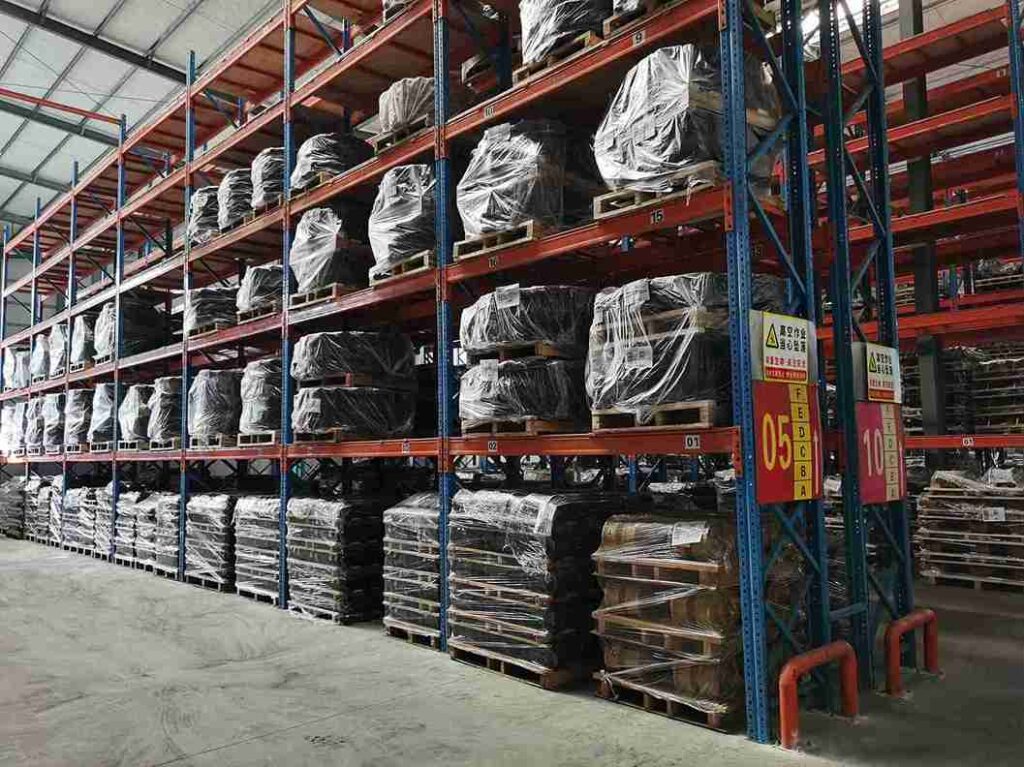
Even in a seismically quiet region, a warehouse storing heavy materials presents its own extreme anchoring challenges. The primary enemy here is fatigue, and the kaedah penguncian rak sinar must be selected to combat it.
Dynamic Loads: The Silent Anchor Killer
A pallet rack holding 2,000 kg is one thing. A pallet rack that has that 2,000 kg pallet being inserted and removed 20 times a day by a forklift is another. Each cycle imparts a dynamic shock and vibration into the upright frame and, consequently, into the anchors. Over thousands of cycles, this can lead to:
Anchor Loosening: Mechanical anchors from inadequate kaedah penguncian rak sinar can gradually work themselves loose.
Concrete Fatigue: The constant stress concentration can cause micro-fractures in the concrete around the anchor, leading to a progressive reduction in holding power, a failure mode that must be considered in kaedah penguncian rak sinar for high-cycle environments.
Progressive Failure: A single anchor loosens, transferring more load to its neighbors, which then become overloaded, starting a silent, invisible failure sequence. Robust kaedah penguncian rak sinar are designed to prevent this domino effect.
The Critical Importance of Torque and Re-Torquing
For mechanical expansion anchors, achieving and maintaining the specified installation torque is not a suggestion; it is a fundamental requirement for developing the advertised holding strength. A professional approach to kaedah penguncian rak sinar enforces a strict two-stage process:
Initial Torquing: Using calibrated, regularly certified torque wrenches to achieve the exact manufacturer’s specification.
Re-Torquing: After a settling-in period (typically 24-48 hours of operational use), technicians re-torque every single anchor. This compensates for the initial embedding and settling of the anchor and ensures the long-term clamp load is maintained. This is a non-negotiable part of high-capacity kaedah penguncian rak sinar protokol.
A Deep Dive into Anchor Types: Choosing the Right Weapon for the Fight
There is no single “best” anchor. The choice of kaedah penguncian rak sinar is a calculated decision based on seismic requirements, load capacity, concrete conditions, and installation practicality.
Undercut Anchors: The Gold Standard for Seismic and High-Capacity
Industry experts often consider undercut anchors the premier choice for the most demanding applications within the spectrum of kaedah penguncian rak sinar. Instead of expanding against the concrete (which can generate high stress in seismic cracks), they create a mechanical interlock at the bottom of the hole.
How They Work: A special drill bit creates an undercut at the base of the hole. The anchor is inserted, and when torqued, a sleeve expands into this undercut, creating a positive mechanical lock.
Key Advantages:
High Performance in Cracked Concrete: They are less sensitive to concrete cracking than expansion anchors, making them a superior choice in seismic kaedah penguncian rak sinar.
Excellent Shock and Vibration Resistance: The interlock mechanism is highly resistant to loosening, a critical feature for kaedah penguncian rak sinar in high-traffic areas.
High Load Values: They typically offer the highest pull-out and shear values for a given bolt diameter.
Chemical Anchors: The Power of Bonding
Chemical anchoring, or epoxy anchoring, involves injecting a two-part resin into a drilled hole, then inserting the threaded rod. The load is transferred to the concrete through a continuous bond along the entire embedded length. This method represents a distinct category of kaedah penguncian rak sinar.
How They Work: The high-strength epoxy adhesive fills the hole and bonds the steel rod to the concrete substrate.
Key Advantages:
Versatility in Concrete Conditions: Excellent in cracked concrete and can be used near edges or in close proximity to other anchors, offering flexibility in kaedah penguncian rak sinar reka bentuk.
No Expansion Stresses: Does not generate hoop stresses in the concrete, making it ideal for weaker concrete or where minimal slab disturbance is required.
Water Resistance: Certain formulations are suitable for wet holes or high-humidity environments, expanding the applicability of these kaedah penguncian rak sinar.
Critical Considerations: Installation is highly sensitive to procedure. Hole cleanliness (no dust), resin mixing, and cure time are absolutely critical to performance. The most reliable kaedah penguncian rak sinar using chemical agents often involve CCTV borescopes to verify hole cleanliness before injection.
Mechanical Expansion Anchors: The Common but Misunderstood Workhorse
These are the most common type but require careful specification and installation within the universe of kaedah penguncian rak sinar.
How They Work: As the nut is tightened, a cone is pulled into an expansion sleeve, forcing it outward against the walls of the hole.
Key Advantages: Cost-effective, quick to install, and suitable for a wide range of standard applications where less demanding kaedah penguncian rak sinar are acceptable.
Significant Limitations:
Sensitive to Cracked Concrete: Their performance can drop significantly in cracked concrete unless specifically designed and tested for it, limiting their use in seismic kaedah penguncian rak sinar.
Vibration Sensitivity: More prone to loosening under dynamic loads compared to undercut or chemical anchors, a major drawback for certain kaedah penguncian rak sinar.
High Stresses: The expansion process creates significant stresses in the concrete, which can be a problem in low-strength concrete or near slab edges.
The Installation Protocol: Where Engineering Meets Execution
A perfect anchor design is worthless if the installation is flawed. The field-proven protocol for kaedah penguncian rak sinar is meticulous and uncompromising. The entire value of sophisticated kaedah penguncian rak sinar can be negated by poor field practices.
Step 1: Pre-Installation Verification and Slab Assessment
Before a single hole is drilled, a rigorous process for kaedah penguncian rak sinar must begin:
Verify the concrete slab design strength and condition.
Use ground-penetrating radar (GPR) to map rebar placement to avoid conflicts.
Confirm the anchor type, diameter, and embedment depth against the approved structural calculations for the kaedah penguncian rak sinar.
Step 2: Precision Drilling and Hole Preparation
This is the most critical physical step in implementing kaedah penguncian rak sinar.
Drilling: Using rotary-hammer drills with depth-stops ensures holes are drilled to the exact diameter and depth. An oversized or too-deep hole can ruin the anchor’s capacity and violate the design intent of the kaedah penguncian rak sinar.
Hole Cleaning: This is non-negotiable for quality kaedah penguncian rak sinar. A combination of compressed air and specialized wire brushes removes all drilling dust from the hole. A dusty hole can reduce the holding capacity of a chemical anchor by over 50%. Verification with a borescope is a best practice in professional kaedah penguncian rak sinar.
Step 3: Anchor Setting and Torque Control
For chemical anchors, calibrated injection bars ensure the hole is filled from the bottom up, preventing air pockets, a crucial step for these kaedah penguncian rak sinar.
For mechanical and undercut anchors, calibrated torque wrenches achieve the specified torque. Detailed logs of every anchor’s location and final torque value are maintained, completing the documentation for the installed kaedah penguncian rak sinar.
Beyond Installation: The Lifecycle of an Anchoring System
An anchoring system is not a “fit and forget” component. It requires a lifecycle management approach. The responsibility for kaedah penguncian rak sinar extends long after the installers have left the site.
The Mandatory Post-Installation Inspection and Proof-Loading
After installation and the initial re-torquing, a statistical proof-load test on a percentage of the anchors is recommended. This involves applying a predetermined test load to a sample of anchors to verify the installation’s integrity across the entire project. This final verification step validates the effectiveness of the chosen kaedah penguncian rak sinar.
A Rigorous Ongoing Inspection Regime
Annual racking inspections must include a specific check of the anchors, an essential part of maintaining kaedah penguncian rak sinar. Technicians look for:
Signs of rust or corrosion.
Visible damage to the concrete around the anchor.
Verification that anchor nuts are tight using a torque wrench.
Any loose or damaged anchor must be immediately reported and replaced, following the same rigorous protocol that defined the initial kaedah penguncian rak sinar.
Case Study: Retrofitting a High-Capacity Warehouse in a Seismic Zone
A distribution center in Southeast Asia that had experienced minor seismic tremors provided a classic case study. The client’s existing beam racking was anchored with standard expansion anchors. An inspection, which included pull-testing a sample, revealed that over 30% of the anchors had lost pre-load and several were below the required capacity. The solution was a full-scale retrofit using undercut anchors designed for the site’s seismic parameters.
This project highlighted the critical need for site-specific kaedah penguncian rak sinar. The project was executed in phases to minimize disruption. Post-installation proof-load testing confirmed all anchors met or exceeded the design strength, demonstrating the success of the upgraded kaedah penguncian rak sinar and giving the client confidence to continue high-density operations safely.
Navigating International Standards and Local Building Codes
A global operation cannot rely on a single standard. Engineers design and specify kaedah penguncian rak sinar in accordance with a matrix of international and local codes, including:
Rack Design Standards: EN 15635 (Europe), RMI MH16.1 (North America).
Seismic Standards: ASCE 7 (USA), Eurocode 8 (Europe), and local national annexes.
Anchor Approval Standards: EOTA (European Technical Assessment), ICC-ES (International Code Council Evaluation Service) reports.
Understanding the interplay and hierarchy of these codes is essential for compliant and safe kaedah penguncian rak sinar anywhere in the world. The best kaedah penguncian rak sinar are those that are not only technically sound but also fully certified and compliant.
Conclusion: Anchoring as an Investment in Operational Resilience
Specifying and installing the correct kaedah penguncian rak sinar for challenging environments is one of the most critical decisions a warehouse operator or logistics manager will make. It is a complex discipline sitting at the intersection of structural engineering, geotechnics, and practical construction. Cutting corners on kaedah penguncian rak sinar is a false economy that risks everything—inventory, facility, and most importantly, lives.
By understanding the forces at play, selecting the right anchor technology, and enforcing a ruthless commitment to proper installation and ongoing inspection, operators transform their storage system from a passive asset into a resilient, reliable, and safe backbone of the supply chain. This endeavor is not just about meeting a code; it’s about embracing a culture of safety and engineering excellence, with superior kaedah penguncian rak sinar at its core. The implementation of rigorous kaedah penguncian rak sinar is, ultimately, what separates a vulnerable storage facility from a resilient logistics asset.
Soalan Lazim (FAQs)
1. How often should the torque on our beam racking anchors be checked?
Professionals recommend that torque checks be incorporated into the annual racking inspection performed by a qualified engineer. However, in high-traffic, high-vibration environments (e.g., frequent AGV or forklift traffic), a semi-annual inspection is prudent. Any time a rack is significantly impacted, the anchors in the affected area should be immediately inspected and re-torqued if necessary. The frequency is a key part of a long-term strategy for kaedah penguncian rak sinar maintenance.
2. Can we use the same anchoring method for a new warehouse slab versus an existing, older slab?
Not necessarily. The condition and design of the concrete slab are paramount. New slabs have known properties, but older slabs may have unknown compressive strength, carbonation, or pre-existing cracks. An older slab requires a thorough assessment, potentially including core sampling and testing, to determine the appropriate kaedah penguncian rak sinar and their design capacity. Chemical anchors often provide more flexibility in older concrete, making them a suitable choice for retrofit kaedah penguncian rak sinar.
3. What is the lead-time for specialized seismic or high-capacity anchors?
While standard expansion anchors are often off-the-shelf, specialized undercut anchors or specific chemical anchor systems for advanced kaedah penguncian rak sinar may have lead times of several weeks. This is a critical path item that must be factored into the project timeline during the design phase. Procuring anchors well in advance of the scheduled installation date is a standard practice for complex kaedah penguncian rak sinar projects.
4. Our warehouse uses AGVs (Automated Guided Vehicles). Do they impact anchoring requirements?
Absolutely. AGVs provide exceptionally consistent and repetitive dynamic loads and vibrations directly to the base of the racking uprights. This constant, low-level shaking can be more detrimental over the long term than occasional forklift impacts. For AGV-served racking, engineers invariably specify anchors with high vibration resistance, such as undercut anchors or specific chemical anchors, as part of a robust kaedah penguncian rak sinar strategy, and implement a more frequent re-torquing and inspection schedule.
5. Who is legally responsible for the design and specification of the anchoring system?
The legal responsibility is typically shared, but it falls most heavily on the Professional Engineer who stamps the racking design drawings. This engineer must specify the anchor type, diameter, embedment depth, torque, and concrete requirements—the core components of the kaedah penguncian rak sinar. The installing contractor is responsible for executing the installation exactly per the engineer’s specifications. The system supplier ensures the entire system, including anchors, is designed and specified correctly for the intended application. Ultimately, the kaedah penguncian rak sinar are a critical engineered system with clear lines of responsibility.
Jika anda memerlukan lukisan CAD yang sempurna dan sebut harga untuk rak gudang, Sila hubungi kami. Kami boleh menyediakan perkhidmatan perancangan dan reka bentuk rak gudang serta sebut harga secara percuma. Alamat e-mel kami ialah: jili@geelyracks.com