📐 "Le prime 50 richieste aziendali ricevono un design personalizzato del magazzino 3D". Piano
















In the fast-paced world of warehousing and logistics, industrial pallet rack systems serve as the backbone of efficient storage operations. Whether managing a small distribution center or a large automated warehouse, selecting the right industrial pallet rack setup can mean the difference between smooth operations and costly inefficiencies.
This guide dives deep into the critical factors that influence industrial pallet rack selection, ensuring businesses make informed decisions that enhance storage density, improve safety, and support long-term scalability. Unlike generic overviews, this resource provides actionable insights backed by decades of industry expertise—helping warehouse managers, logistics coordinators, and procurement specialists optimize their storage infrastructure.

1. The Critical Role of Industrial Pallet Racks in Modern Warehousing
1.1 Why Industrial Pallet Racks Are Indispensable
Industrial pallet racks are not just storage solutions—they are strategic assets that directly impact:
Space Utilization – By maximizing vertical storage, warehouses can store more goods without expanding their footprint.
Operational Efficiency – Well-organized pallet racking systems reduce picking times and minimize forklift travel distances.
Inventory Control – Properly configured racks support FIFO (First-In, First-Out) and LIFO (Last-In, First-Out) inventory management.
Companies that neglect industrial pallet rack optimization often face:
Wasted Storage Space (underutilized vertical clearance)
Increased Labor Costs (longer travel times for order pickers)
Safety Risks (overloaded beams, unstable loads)
1.2 The Evolution of Pallet Racking Technology
From traditional selective pallet racks to advanced automated storage and retrieval systems (AS/RS), industrial pallet rack designs have evolved to meet growing demands. Modern innovations include:
High-Density Mobile Racking – Sliding systems that reduce aisle space.
Hybrid Cantilever Racks – For storing long, bulky items like pipes and lumber.
Robotic Pallet Shuttles – Automated systems that maximize throughput.
2. Key Considerations When Selecting an Industrial Pallet Rack System
2.1 Assessing Warehouse Layout & Space Constraints
Non tutti industrial pallet racks fit every warehouse. Critical factors include:
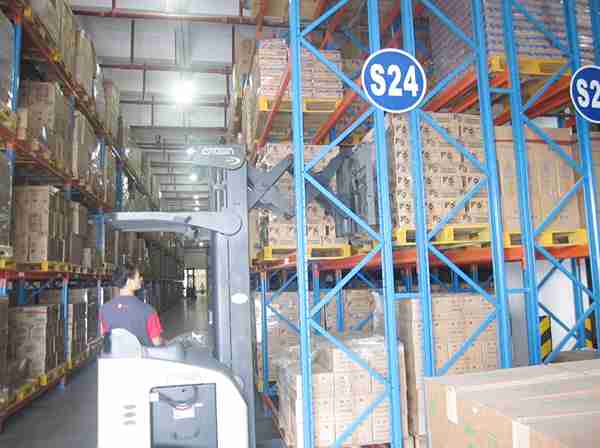
Aisle Width Requirements – Narrow-aisle racks (e.g., VNA racks) save space but require specialized forklifts.
Clear Height Availability – High-bay warehouses (30+ feet) benefit from scaffalature push-back o pallet flow systems.
Floor Load Capacity – Heavy-duty industrial pallet racks require reinforced concrete floors.
2.2 Understanding Load Capacity & Weight Distribution
A common mistake is underestimating load requirements. Key considerations:
Static vs. Dynamic Load Ratings – Dynamic loads (moving forklifts) exert more force than static pallet weight.
Beam Deflection Limits – Excessive bending can lead to rack failure (ANSI MH16.1 standards recommend ≤ L/180 deflection).
Uniformly Distributed Load (UDL) vs. Point Loading – Some industrial pallet racks handle concentrated loads better than others.
2.3 Material & Durability: Ensuring Long-Term Performance
Non tutti industrial pallet racks are built the same. Critical material factors:
Steel Grade & Thickness – 14-gauge steel is standard, but heavy-duty applications may require 12-gauge.
Corrosion Protection – Powder-coated racks resist rust, while galvanized steel is ideal for cold storage.
Seismic & Wind Load Ratings – Warehouses in earthquake-prone regions need seismic-compliant racks.
3. Types of Industrial Pallet Rack Systems Compared
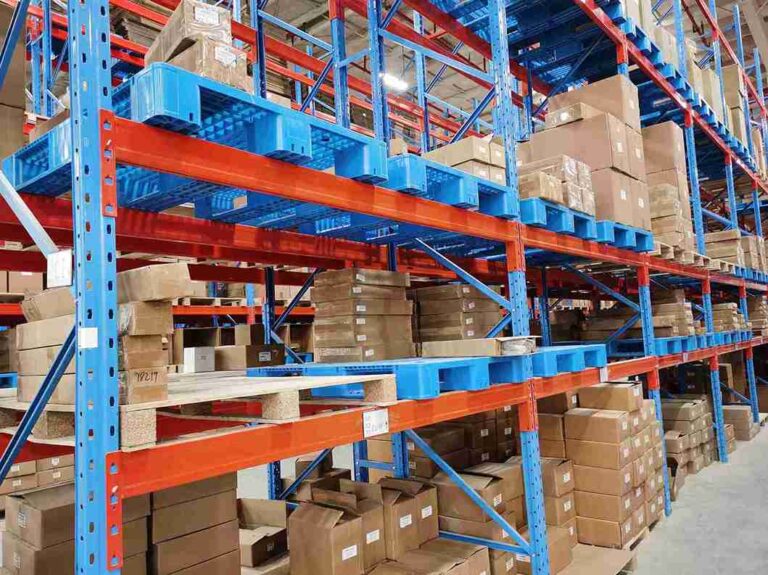
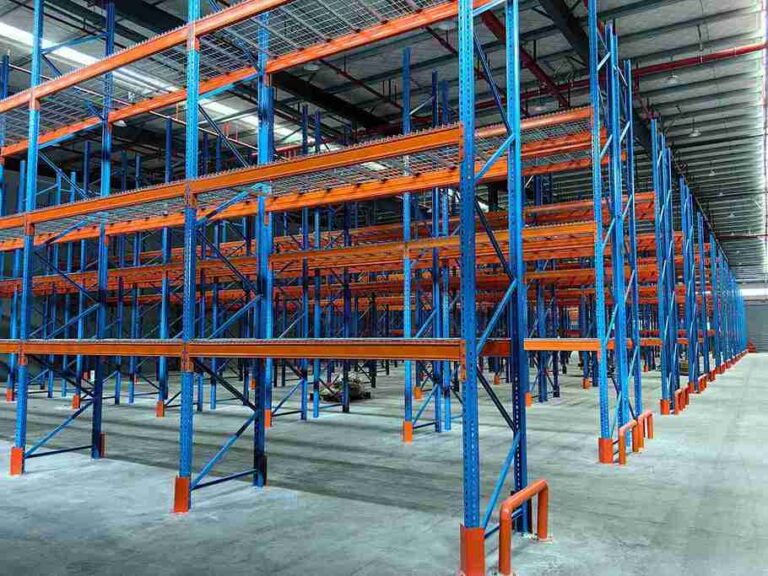
3.1 Selective Pallet Racking (Most Common)
Ideale per: Warehouses with high SKU variety needing direct access.
Advantages: Easy to install, flexible for different pallet sizes.
Disadvantages: Lower storage density than high-density alternatives.
3.2 Drive-In & Drive-Through Racking (High-Density Storage)
Ideale per: Cold storage, beverage, and bulk goods (FIFO/LIFO compatible).
Advantages: No aisles between racks = 75% more storage than selective racks.
Disadvantages: Reduced selectivity (last pallet must be removed first).
3.3 Push-Back Racking (LIFO High-Density Solution)
Ideale per: Warehouses needing better selectivity than drive-in racks.
Advantages: Multiple pallets deep, but still accessible.
Disadvantages: Higher cost due to nested cartridges.
(Continue with 3.4 Pallet Flow Racking, 3.5 Cantilever Racking, 3.6 Mobile Racking for full coverage.)
4. Safety & Compliance: Avoiding Costly Mistakes
4.1 OSHA & ANSI MH16.1 Standards for Industrial Pallet Racks
Required Clearances – Minimum 3″ beam deflection space.
Load Capacity Signage – Must be visible on every rack section.
Forklift Impact Protection – Column guards & rack protectors reduce damage.
4.2 Common Causes of Pallet Rack Failures (And How to Prevent Them)
Overloading Beams – Exceeding UDL limits causes catastrophic collapses.
Improperly Secured Anchors – Concrete anchors must be torque-checked annually.
Forklift Collisions – Training and protective barriers minimize accidents.
5. Future-Proofing Your Industrial Pallet Rack Investment
5.1 Modular Design: Adapting to Changing Needs
Expandable Bays – Adding levels without full replacement.
Reconfigurable Layouts – Adjusting for new inventory profiles.
5.2 Automation Compatibility (AGVs, AS/RS, Conveyors)
AGV-Friendly Racking – Wider aisles for robotic forklifts.
AS/RS Integration – High-bay racks with automated cranes.
Conclusione
Choosing the right industrial pallet rack system requires balancing immediate needs with long-term growth. By evaluating load requirements, space constraints, and automation potential, businesses can invest in a system that maximizes ROI.
Need a Custom Solution? Our engineers specialize in industrial pallet rack optimization—contact us for a free warehouse assessment.
Domande frequenti
1. How much weight can industrial pallet racks hold?
2. What’s the difference between roll-formed and structural pallet racks?
3. Can I modify my existing rack system for automation?
4. How do I calculate the required upright frame strength?
5. What are the best pallet racks for cold storage warehouses?
Geelyracks specializes in the production of warehouse racks and is a global rack customization expert
Benvenuti a contattarci, se avete bisogno di disegni CAD di scaffalature per magazzini. Possiamo fornirvi gratuitamente la pianificazione e la progettazione di scaffalature per magazzini. Il nostro indirizzo e-mail è: jili@geelyracks.com