📐 "Les 50 premières requêtes d'entreprise bénéficient d'une conception personnalisée de l'entrepôt 3D" Plan
















Introduction: Why Selective Pallet Racking Dominates Modern Warehousing
In an era where supply chain efficiency dictates business success, rayonnages à palettes sélectifs has emerged as the backbone of warehouse storage systems. Unlike high-density alternatives that sacrifice accessibility for space, rayonnages à palettes sélectifs delivers the perfect balance—direct load access, unmatched flexibility, and cost-effective scalability.
For warehouse managers, logistics coordinators, and operations directors, rayonnages à palettes sélectifs isn’t just an option—it’s the most reliable, adaptable, and efficient way to store and retrieve inventory. Whether handling perishable goods, high-SKU retail products, or industrial materials, this system ensures smooth operations, faster order fulfillment, and optimized space utilization.
This in-depth guide will explore:
How selective pallet racking works and why it outperforms alternatives
Key structural components that make it so versatile
Real-world benefits for different industries
Design best practices for maximum efficiency
Maintenance tips to extend system lifespan
By the end, readers will understand why rayonnages à palettes sélectifs remains the #1 choice for warehouses worldwide—and how to implement it for their own operations.
H1: What Is Selective Pallet Racking? (The Definitive Guide)
H2: The Anatomy of Selective Rayonnage à palettes
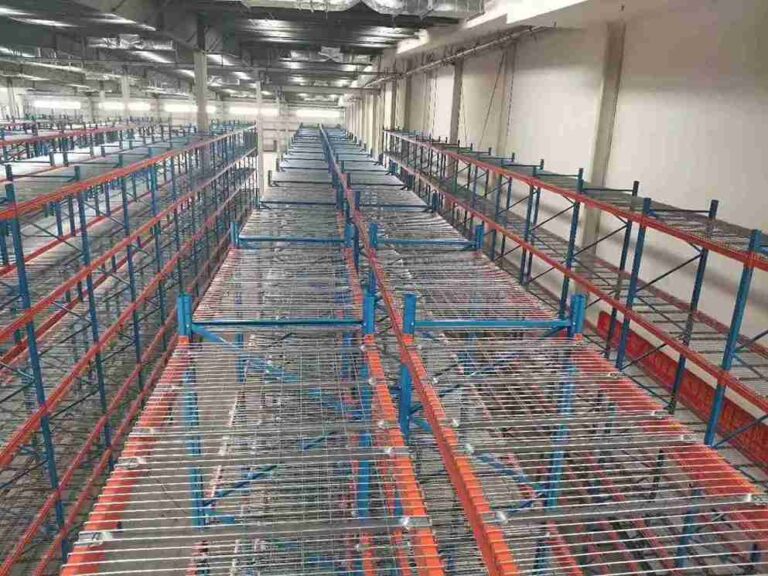
A la base, rayonnages à palettes sélectifs est un modular, adjustable storage system designed for easy pallet access. Its structure consists of:
Upright Frames (Columns): Vertical steel supports with pre-punched holes for height customization.
Horizontal Beams: Load-bearing arms that hold pallets at desired levels.
Bracing & Connectors: Diagonal and horizontal supports that prevent sway and collapse.
Wire Decking (Optional): Adds safety for loose or small-item storage.
Unlike drive-in or push-back racking, rayonnages à palettes sélectifs follows a “one pallet, one location” principle, meaning every SKU is instantly accessible without moving other loads.
H2: How Selective Pallet Racking Functions in Real-World Warehousing
The operational brilliance of rayonnages à palettes sélectifs lies in its simplicity and efficiency:
Direct Access Loading – Forklifts can retrieve any pallet without rearranging others.
First-In, First-Out (FIFO) Compliance – Critical for industries like food & beverage.
Optimized Space Utilization – Adjustable beams allow for custom configurations based on pallet dimensions.
For warehouses with high inventory turnover, rayonnages à palettes sélectifs minimizes labor costs and maximizes productivity.
H1: 7 Reasons Why Selective Pallet Racking Is the Best Storage System
H2: 1. Unparalleled Accessibility & Speed
Selective pallet racking eliminates the need for load shuffling, a common drawback in high-density systems. This means:
Faster order picking = improved customer satisfaction.
Reduced forklift travel time = lower operational costs.
No dead stock = better inventory rotation.
H2: 2. Cost-Effective Installation & Maintenance
Compared to automated systems or mobile racking, rayonnages à palettes sélectifs offers:
Lower upfront costs – No need for specialized machinery.
Minimal maintenance – No moving parts to repair.
Easy scalability – Expand by adding more uprights and beams.
H2: 3. Flexibility for Any Warehouse Layout
Whether dealing with narrow aisles, high ceilings, or irregular floor plans, rayonnages à palettes sélectifs adapts effortlessly:
Adjustable beam heights accommodate varying pallet sizes.
Compatible with Very Narrow Aisle (VNA) forklifts for space-constrained facilities.
Supports single-deep, double-deep, and even roll-out configurations.
H2: 4. Enhanced Safety & Durability
Built from high-grade steel, rayonnages à palettes sélectifs withstands heavy loads while offering:
Column protectors to prevent forklift damage.
Anti-slip pallet supports for secure storage.
Seismic bracing options for earthquake-prone regions.
H2: 5. Ideal for High-SKU Environments
Businesses with diverse product ranges (e.g., retail, e-commerce, pharmaceuticals) benefit from:
Clear visibility of all inventory.
No product mixing—each SKU has a dedicated slot.
Efficient cycle counting for accurate stock management.
H2: 6. Seamless Integration with Warehouse Tech
Selective pallet racking works flawlessly with:
Barcode & RFID scanning for real-time tracking.
Warehouse Management Systems (WMS) for automated inventory control.
Automated Guided Vehicles (AGVs) in smart warehouses.
H2: 7. Long-Term ROI & Resale Value
Unlike proprietary systems, rayonnages à palettes sélectifs retains value because:
Components are interchangeable—no vendor lock-in.
Used racking markets exist, allowing resale if needed.
Upgrades (e.g., adding mezzanines) are simple.
H1: Selective Pallet Racking vs. Other Storage Systems
H2: Selective vs. Drive-In Racking – Which Is Better?
| Facteur | Rayonnage à palettes sélectif | Drive-In Racking |
|---|---|---|
| Access Method | Direct access to every pallet | LIFO (Last-In-First-Out) |
| Densité de stockage | Lower (more aisles) | Higher (fewer aisles) |
| Best For | Fast-moving inventory | Bulk identical items |
Verdict: Selective pallet racking wins for high-rotation warehouses, while drive-in suits long-term bulk storage.
H2: Selective vs. Push-Back Racking – A Speed vs. Space Tradeoff
Push-back racking offers better density but:
Slower picking (pallets must be pushed back).
Higher maintenance (due to moving carts).
Best Choice: Selective pallet racking for speed, push-back for space savings.
H2: Selective vs. Pallet Flow Racking – FIFO Efficiency Compared
Pallet flow racking uses gravity rollers for automatic FIFO, but:
Higher installation cost.
Limited to homogeneous products.
Best Choice: Selective pallet racking for versatility, flow racking for high-speed FIFO operations.
H1: Designing the Perfect Selective Pallet Racking Layout
H2: Step 1 – Calculate Load Requirements
Weigh pallets (max load per beam).
Check floor capacity (psi ratings).
Factor in seismic & wind loads (if applicable).
H2: Step 2 – Optimize Aisle Width
Standard aisles (10-12 ft) for sit-down forklifts.
Narrow aisles (6-8 ft) for reach trucks.
Very Narrow Aisles (<6 ft) for turret trucks.
H2: Step 3 – Maximize Vertical Space
Utilize clear ceiling height (up to 40 ft possible).
Add safety netting for high-level storage.
H2: Step 4 – Enhance Safety Features
Install column guards at impact zones.
Use end-of-aisle protectors.
Ensure proper lighting & signage.
H1: Industry-Specific Applications of Selective Pallet Racking
H2: Retail & E-Commerce Warehouses
Fast order picking for same-day shipping.
Multi-SKU organization reduces mispicks.
H2: Food & Beverage Storage
Respect de la norme FIFO prevents spoilage.
Sanitation-friendly open design.
H2: Manufacturing & Industrial Use
Raw material staging near production lines.
Work-in-progress (WIP) storage.
H1: Maintaining Selective Pallet Racking for Longevity
Monthly inspections for damage.
Re-torque bolts annually.
Never exceed load limits.
H1: Conclusion – Why Selective Pallet Racking Is the Smart Choice
For warehouses prioritizing speed, flexibility, and cost-efficiency, rayonnages à palettes sélectifs remains the undisputed leader. Its direct-access design, scalability, and durability make it the best long-term investment for any storage operation.
Ready to optimize your warehouse? Contact us for a custom selective pallet racking solution today!
H1: Frequently Asked Questions (FAQ)
H2: 1. Can selective pallet racking handle heavy loads?
Yes! Beam capacities range from 1,000 to 20,000+ lbs, depending on steel gauge.
H2: 2. How tall can selective pallet racking be?
With proper engineering, up to 40 ft, though most facilities stay under 30 ft.
H2: 3. Is selective pallet racking compatible with automation?
Absolument...AGVs, AS/RS, and WMS integrate seamlessly.
H2: 4. What’s the lifespan of selective pallet racking?
With proper care, 20+ years—far longer than high-density alternatives.
H2: 5. Can selective racking be relocated?
Yes! Its modular design allows disassembly and reinstallation in new facilities.