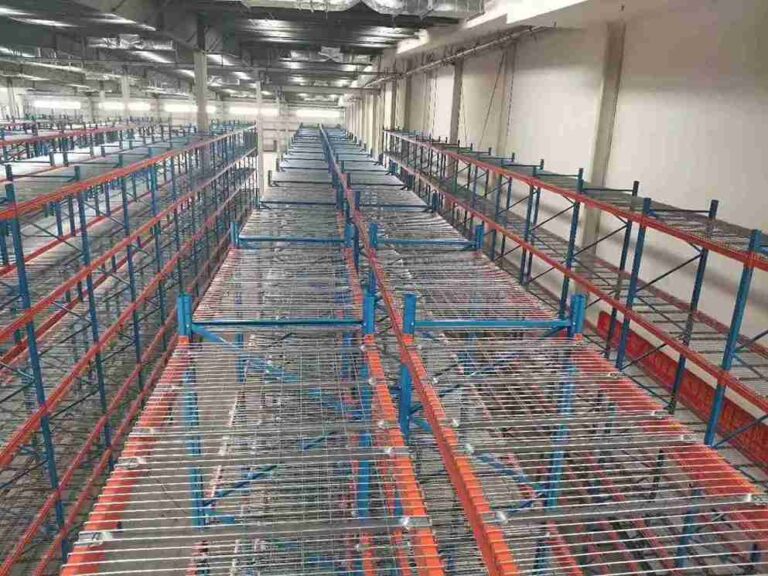
📐 "Les 50 premières requêtes d'entreprise bénéficient d'une conception personnalisée de l'entrepôt 3D" Plan
















Maximize Storage Density & Operational Efficiency with Heavy-Duty Pallet Racking Solutions
In the high-stakes arena of global supply chains, the silent workhorse that dictates success or failure is often the most fundamental: the rayonnage à palettes system. For decision-makers in manufacturing, large-scale distribution, and logistics hubs across emerging markets, the choice of rayonnage à palettes is a strategic cornerstone. It is the critical infrastructure that transforms empty cubic air into a high-performance, three-dimensional asset.
This comprehensive exploration delves into how engineered heavy-duty pallet racking, when fully customized, becomes the backbone of a radically efficient operation. It’s not just about storing goods; it’s about orchestrating them for maximum velocity and minimal cost. The following sections will provide a masterclass in selecting, configuring, and integrating advanced rayonnage à palettes systems, offering the deep industry insight necessary to specify a solution that drives tangible ROI and scalable growth for years to come.

The Critical Role of Heavy-Duty Pallet Racking in Modern Supply Chains
Why does heavy-duty pallet racking remain the undisputed foundation of industrial storage from Southeast Asia to Latin America? The answer lies in its unmatched ability to marry immense structural strength with operational flexibility. A properly engineered rayonnage à palettes system does more than hold weight; it creates a dynamic, accessible inventory matrix that directly influences every other warehouse process, from receiving to shipping.
For operations handling substantial unit loads—be they automotive components, bulk raw materials, or fast-moving consumer goods—the integrity of the storage structure is non-negotiable. Inferior rayonnage à palettes introduces constant risk, from potential collapse under dynamic load to inefficient space utilization that strangles productivity. In contrast, a professionally specified heavy-duty pallet racking system, built from high-tensile steel, is designed to withstand not only the static weight of fully laden pallets but also the daily rigors of forklift traffic and regional environmental factors.
This resilience is paramount for businesses in regions prone to seismic activity or operating in corrosive environments like cold storage facilities. The strategic implementation of robust rayonnage à palettes is, therefore, the first and most crucial step in building a resilient and scalable logistics operation.
The Engineering Science Behind Load Capacity and Durability
The term “heavy-duty” in the context of rayonnage à palettes is not a marketing slogan but a precise engineering discipline. Understanding the core specifications is essential for any procurement professional.
Uniformly Distributed Load (UDL): This critical figure represents the maximum safe weight per beam level when the load is evenly spread across the entire beam. It is the baseline for most rayonnage à palettes capacity calculations.
Point Load Capacity: Often overlooked, this specification dictates the maximum weight that can be applied to a single, concentrated point on the beam. This is vital for pallets with uneven weight distribution or unusually heavy items.
Upright Frame Capacity: This is the total load a single upright frame can safely support from all connected beam levels. It is the foundational element that determines the overall system’s strength.
A world-class rayonnage à palettes provider doesn’t just sell components; they deliver a fully engineered storage asset. Their design process involves a forensic analysis of pallet specifications, forklift dynamics, and even warehouse floor conditions. This ensures the proposed rayonnage à palettes system offers not just immediate functionality but long-term durability, drastically reducing the total cost of ownership through minimized maintenance and downtime.
A Comprehensive Guide to Customized Pallet Racking Configurations
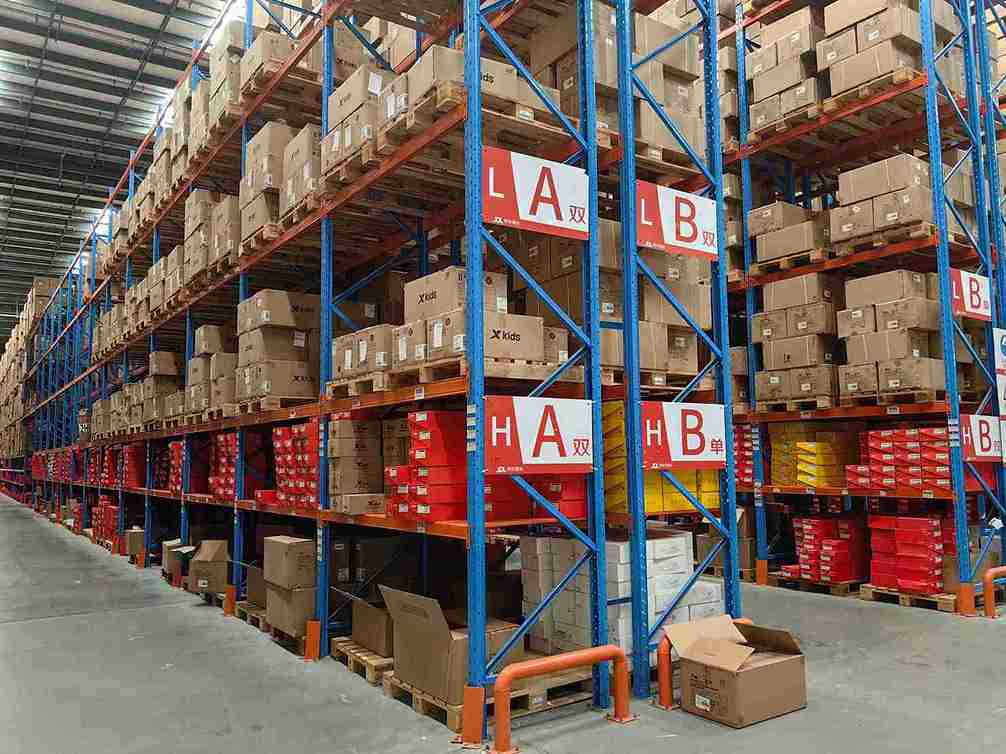
The versatility of selective rayonnage à palettes makes it the industry’s default choice, but true optimization emerges from deep customization. The most advanced logistics operations leverage a mix of rayonnage à palettes types, each tailored to specific inventory profiles and throughput requirements.
Selective Pallet Racking: The Unbeatable Workhorse for Accessibility
As the most ubiquitous form of storage system, selective rayonnage à palettes provides direct, 100% access to every single pallet. Its open-frame design offers unparalleled flexibility for operations with a high number of SKUs and unpredictable order patterns. The customization of this seemingly simple rayonnage à palettes system is where expertise shines:
Beam Step Increments: Professional providers offer fine-tuned vertical beam adjustments, allowing the racking to be perfectly tailored to pallet heights, eliminating wasted vertical space and maximizing density.
Upright Frame Design: The depth and gauge of the upright frame are selected based on required load capacity and bay depth, ensuring the rayonnage à palettes structure is neither over-engineered (wasting budget) nor under-specified (creating risk).
Integrated Safety Components: Beyond the basic frames and beams, a superior rayonnage à palettes installation includes wire mesh decking for safety and support of small items, pallet support bars for unstable loads, and robust column protectors to safeguard the system’s integrity.
This level of detail in configuring selective rayonnage à palettes is what separates a basic storage installation from a high-performance operational tool.
Push-Back Racking: High-Density Storage with Dynamic Flow
For operations that need to store multiple pallets of the same SKU but still require good selectivity and stock rotation, Push-Back Racking represents a sophisticated evolution from standard rayonnage à palettes. This system utilizes a series of nested carts on inclined rails within the rayonnage à palettes structure. When a new pallet is loaded, it pushes the previously stored pallets back. During unloading, the next pallet smoothly moves to the front by gravity.
Operational Advantages: This form of rayonnage à palettes can increase storage density by up to 75% compared to selective layouts by dramatically reducing the number of aisles. It is ideal for beverage distribution, cold storage, and any environment with medium-to-slow-moving products where batch management is key.
Design Considerations: The structural rayonnage à palettes framework for a push-back system must be engineered to handle the dynamic loads and the specific forces exerted by the carts, requiring a provider with deep experience in these complex installations.
Drive-In/Drive-Thru Racking: The Ultimate in Storage Density
Where storage density is the paramount concern for slow-moving, homogeneous goods, Drive-In/Drive-Thru Racking is the definitive solution. This configuration transforms the rayonnage à palettes bay into a tunnel, allowing forklifts to drive directly into the structure to place or retrieve pallets.
Drive-In (LIFO) vs. Drive-Thru (FIFO): Drive-in systems, operating on a Last-In, First-Out principle, are suitable for products where stock rotation is less critical. Drive-thru systems, enabling First-In, First-Out flow, are essential for industries with strict expiry dates, such as food and chemicals.
Structural Demands: Ce type de rayonnage à palettes requires immense structural reinforcement. The upright frames must be designed to withstand continuous forklift entry and exit, necessitating heavy-duty guide rails, reinforced uprights, and impact protection systems. Specifying this rayonnage à palettes requires a vendor capable of certifying the structure’s integrity under such demanding conditions.
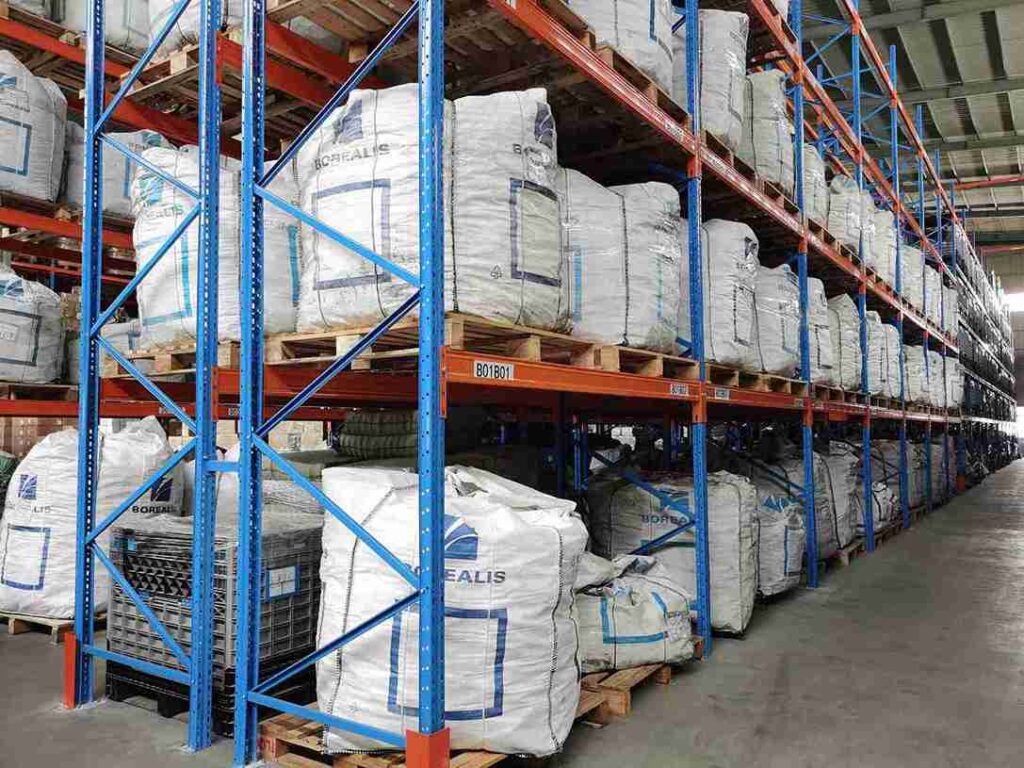
The Strategic Integration of Pallet Racking with Warehouse Automation
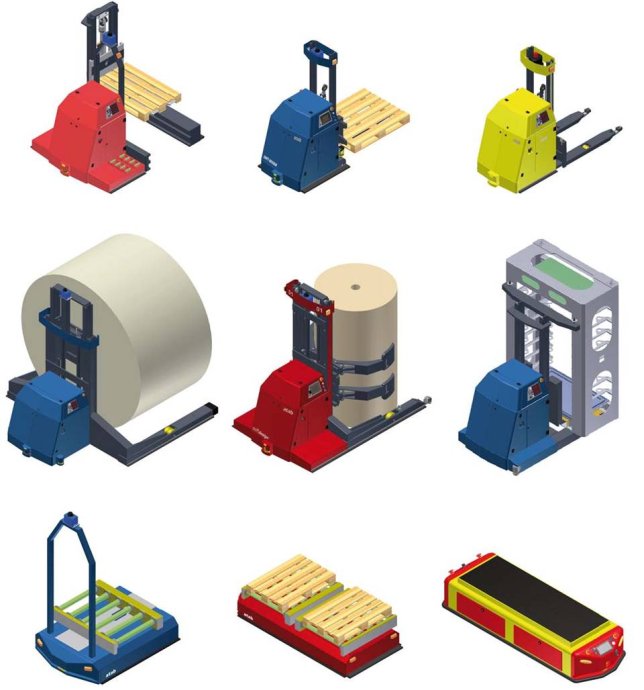
The modern warehouse is a symphony of fixed infrastructure and mobile automation. The rayonnage à palettes system is no longer a passive storage entity; it is the critical interface for technologies like Automated Guided Vehicles (AGVs) and Automated Storage and Retrieval Systems (ASRS). The highest ROI from a rayonnage à palettes investment is realized when it is conceived as part of this integrated ecosystem.
Engineering Racking for AGV and Robotic Forklift Compatibility
Integrating automated material handling equipment demands a paradigm shift in rayonnage à palettes design. Precision, consistency, and durability are non-negotiable.
Ultra-Precise Alignment: The tolerance for misalignment in a rayonnage à palettes system designed for AGVs is measured in millimeters. The entire structure must be installed with laser-guided precision to ensure repeatable, reliable interactions with robotic forks.
Enhanced Interface Components: The pick-face of the rayonnage à palettes is often customized with integrated guide channels, rollers, or sensor targets. These features assist the AGV in perfectly positioning itself for load hand-off, preventing costly mission failures or product damage. This level of integration elevates standard rayonnage à palettes into a smart component of the automated workflow.
Durability for 24/7 Operations: An automated warehouse operates around the clock, meaning the rayonnage à palettes endures significantly more transaction cycles. The specification of materials, protective coatings, and connection systems must be upgraded to meet this demanding operational tempo.
Pallet Racking as the Framework for AS/RS
In a high-volume, high-throughput distribution center, an Automated Storage and Retrieval System (ASRS) represents the pinnacle of logistics technology. In these installations, the rayonnage à palettes is the fundamental building block and the guided pathway for the entire system.
The Runway for Stacker Cranes: In an AS/RS, the rayonnage à palettes structure serves as the support and alignment guide for the stacker cranes. This requires an extraordinary level of fabrication and installation accuracy to ensure the cranes can operate at high speeds and great heights without deviation or vibration.
High-Bay Storage Engineering: AS/RS installations often utilize clear building heights of 30 meters or more. The rayonnage à palettes for these applications is a feat of civil and structural engineering, designed to create a rigid, stable framework capable of supporting immense loads at dizzying heights, all while providing a perfect digital representation of every storage location for the Warehouse Management System (WMS).
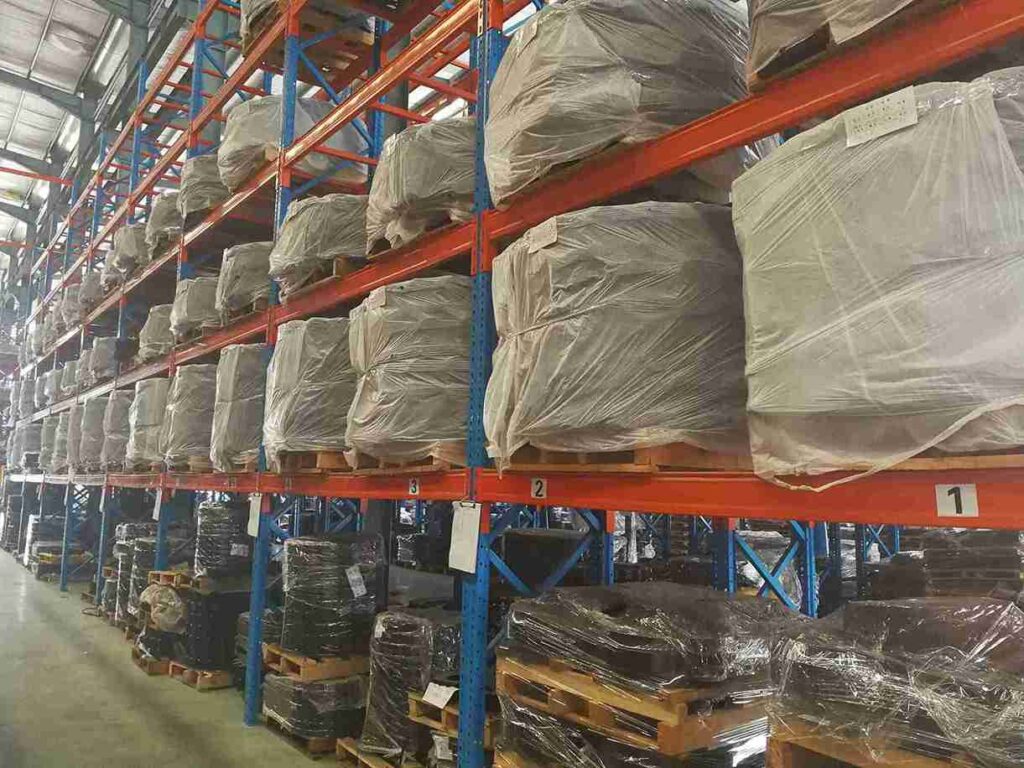
The Provider’s Blueprint: A Phased Approach to a Customized Storage Solution
Selecting a partner for a major rayonnage à palettes project is as critical as the design itself. A reputable provider follows a meticulous, transparent process that de-risks the investment and ensures a perfect operational fit.
Phase 1: Deep-Dive Discovery and Operational Analysis
The foundation of a successful project is laid during the initial consultation. Expert providers act as industrial consultants, conducting a comprehensive analysis that includes:
Process Flow Mapping: Documenting the entire journey of goods from receiving to dispatch to identify bottlenecks and opportunities.
Inventory ABC Analysis: Profiling SKUs by turnover velocity to determine the optimal mix of rayonnage à palettes types (e.g., selective for “A” items, push-back for “B” items).
Future-Proofing Strategy: Discussing business growth projections, potential mergers, or new product lines to ensure the rayonnage à palettes system is scalable and adaptable.
Phase 2: Custom Engineering, Simulation, and Transparent Documentation
This is the phase where technical expertise is translated into a actionable plan. A superior provider offers more than just a CAD drawing.
Detailed CAD Layouts and Load Calculations: Providing engineered drawings that optimize every square meter and full structural calculations stamped for compliance with local and international standards (FEM, RMI).
3D Immersive Simulation: Allowing clients to virtually walk through their proposed new warehouse. This visual proof-of-concept builds confidence and helps validate workflow designs before installation begins, ensuring the rayonnage à palettes layout aligns perfectly with operational reality.
Comprehensive Project Proposal: Delivering a clear, itemized proposal that details every component of the rayonnage à palettes system, associated services, and a definitive project timeline.
Phase 3: Flawless Execution and Certified Installation
The most brilliant design fails without impeccable execution. A world-class installation is characterized by:
Dedicated Project Management: A single point of contact manages logistics, timeline, and communication, providing peace of mind and accountability.
Certified Installation Crews: Teams trained and certified in the specific rayonnage à palettes products being installed, adhering to strict safety and quality protocols.
Phased Roll-Out Plans: Implementing the new rayonnage à palettes system in strategic phases to minimize disruption to ongoing warehouse operations, demonstrating a partnership approach.
Phase 4: Long-Term Partnership and System Stewardship
The relationship with a rayonnage à palettes provider should not end at installation. A true partner offers ongoing services to protect the client’s capital investment.
Scheduled Racking Integrity Audits: Conducting annual or bi-annual inspections by certified engineers to assess the system’s condition, identify any damage, and recommend repairs, ensuring ongoing safety and performance.
System Reconfiguration and Expansion Services: Providing expert services to modify or expand the rayonnage à palettes system as business needs evolve, ensuring the infrastructure remains aligned with operational goals.
Global Spare Parts Network: Maintaining an inventory of critical spare parts to facilitate rapid repair and minimize any potential operational downtime.
Case Study: Revolutionizing a Regional Logistics Hub in Southeast Asia
A major multinational electronics distributor operating a key hub in Vietnam faced critical challenges: their existing, poorly planned rayonnage à palettes was causing severe aisle congestion, slow pick rates, and an alarming frequency of product damage from forklift collisions. Their growth was physically constrained by their own storage infrastructure.
The Customized Pallet Racking Solution:
A detailed audit revealed a one-size-fits-all approach was the root cause. The solution was a hybrid rayonnage à palettes strategy. For high-velocity “A” items, a narrow-aisle (VNA) rayonnage à palettes system was installed, which required specialized forklifts but reduced aisle width and increased storage density by over 25%. For medium-turnover “B” items, a push-back pallet racking system was implemented, providing high density with excellent selectivity. The entire design was meticulously planned to ensure seamless compatibility with the client’s existing and future material handling equipment.
The Quantifiable Results:
Storage Capacity: Increased by 40% within the same warehouse footprint.
Order Picking Efficiency: Improved by 30% due to optimized travel paths and reduced congestion.
Product Damage Incidents: Reduced by over 60%, directly attributable to clearer aisles and a more logical rayonnage à palettes layout that minimized risky maneuvers.
This case underscores that a strategically customized rayonnage à palettes system is not an expense but a transformative investment that directly enhances profitability and scalability.
Conclusion: Engineering a Foundation for Future Growth
In the final analysis, the selection and implementation of a rayonnage à palettes system is one of the most consequential decisions a logistics or operations leader will make. It is the fixed geometry upon which all variable warehouse activities are performed. Opting for a generic rayonnage à palettes solution inevitably leads to operational bottlenecks, hidden costs, and limited scalability.
Conversely, partnering with an expert provider to deploy a fully customized, engineered rayonnage à palettes infrastructure is an investment in future-proofing the supply chain. It creates a robust, adaptable, and highly efficient platform that not only stores goods but actively accelerates business velocity, reduces operational risk, and provides a clear competitive advantage in the fast-paced markets of Southeast Asia, the Middle East, Africa, and beyond.
Foire aux questions (FAQ)
1. What are the key differences between roll-formed and structural bolted pallet racking, and which is better for heavy-duty applications?
Roll-formed rayonnage à palettes is created by bending steel sheets into C-shaped or I-beam profiles. It is cost-effective and excellent for standard loads. Structural bolted rayonnage à palettes, however, is fabricated from hot-rolled steel sections, typically with a teardrop-style connection. It offers superior strength and durability, making it the preferred choice for heavy-duty pallet racking applications, high-bay warehouses, and environments with high seismic activity. The choice hinges on a detailed load and operational analysis.
2. How does the design of a pallet racking system account for seismic activity in prone regions?
In seismic zones, rayonnage à palettes design moves beyond static load calculations. Engineers perform dynamic analysis, designing the system with specific seismic parameters (e.g., seismic zone factor, soil type). This results in rayonnage à palettes with features like increased base plate sizes, specialized seismic anchors, stronger connectors, and often a structural bolted frame design to absorb and dissipate seismic energy without collapsing.
3. Can a pallet racking system be designed to accommodate multiple pallet sizes and non-standard loads within the same warehouse?
Absolutely. This is a core aspect of a customized pallet racking solution. Through the use of adjustable beams, convertible decking (e.g., wire mesh or beam-and-bar), and even mixed configurations (e.g., selective racking alongside carton flow modules), a single, cohesive rayonnage à palettes system can be designed to efficiently store a vast array of product types, sizes, and weights, maximizing flexibility for evolving business needs.
4. What are the safety protocols and certifications we should expect from a professional pallet racking installer?
A reputable installer will have crews certified by the rack manufacturer or a recognized industry body. They should strictly enforce protocols including site-specific risk assessments, the use of Personal Protective Equipment (PPE), fall protection systems for high-bay work, and defined procedures for the safe erection and plumbness-checking of the rayonnage à palettes. They should also provide a full set of “as-built” drawings upon project completion.
5. Beyond the initial purchase and installation, what are the ongoing maintenance requirements for a heavy-duty pallet racking system?
A rayonnage à palettes system requires proactive stewardship. This includes regular visual inspections by trained warehouse staff for any visible damage, formal bi-annual inspections by a qualified engineer, and immediate repair or replacement of any damaged component (uprights, beams, connectors) with OEM-approved parts. Maintaining clear aisle widths and ensuring loads never exceed the rated capacity are fundamental to the system’s long-term safety and performance. A professional rayonnage à palettes provider will offer an ongoing audit and maintenance service to facilitate this.
Si vous avez besoin de dessins CAO parfaits et de devis pour des rayonnages d'entrepôt, veuillez nous contacter. Nous pouvons vous fournir gratuitement des services de planification et de conception de rayonnages d'entrepôt ainsi que des devis. Notre adresse électronique est la suivante : jili@geelyracks.com