📐 "Les 50 premières requêtes d'entreprise bénéficient d'une conception personnalisée de l'entrepôt 3D" Plan















H2: Racking Procurement and Engineering Deep Dive for Metal Light-Duty Combination Rayonnage
The metal light-duty combination racking standard SB/T 10166-1993 is often treated by buyers as a simple compliance document, but experienced procurement teams treat it as a practical filter for separating reliable racking manufacturers from trading companies that merely resell generic shelving. A racking system that meets the standard must demonstrate repeatable assembly, verified load capacity, controlled welding quality, coating durability, and dimensional consistency. Those requirements matter because light-duty racking is rarely purchased once and left untouched. It is reconfigured, expanded, relocated, and reused. A racking unit that cannot survive repeated assembly and disassembly without damage becomes a liability in fast-moving warehouses, retail backrooms, and e-commerce fulfillment centers.
For importers, project buyers, and warehouse planners, the value of the standard lies in its specificity. The racking standard defines Type A two-post support racking et Type B four-post support racking, each with single-sided, double-sided, narrow-panel, and wide-panel variants. It also defines the load capacity coefficient K, the relationship between rated load and racking self-weight. A racking unit with a higher K coefficient delivers more storage capacity per kilogram of steel, which directly affects freight cost, material cost, and long-term return on investment. Procurement teams that understand this coefficient can compare racking quotations with far greater precision than buyers who only compare price per unit.
H3: Why Rayonnage Buyers Should Read the Standard Before Requesting Quotations
A racking inquiry that lacks technical specificity attracts vague quotations. When a buyer asks only for “light-duty racking” or “metal shelving,” suppliers may quote different racking structures, different steel thicknesses, different coating systems, and different load assumptions. The resulting quotations are difficult to compare. A better approach is to build the inquiry around the racking standard: model designation, structural type, number of shelf levels, rated load per shelf, total unit load, coating requirement, and inspection documentation.
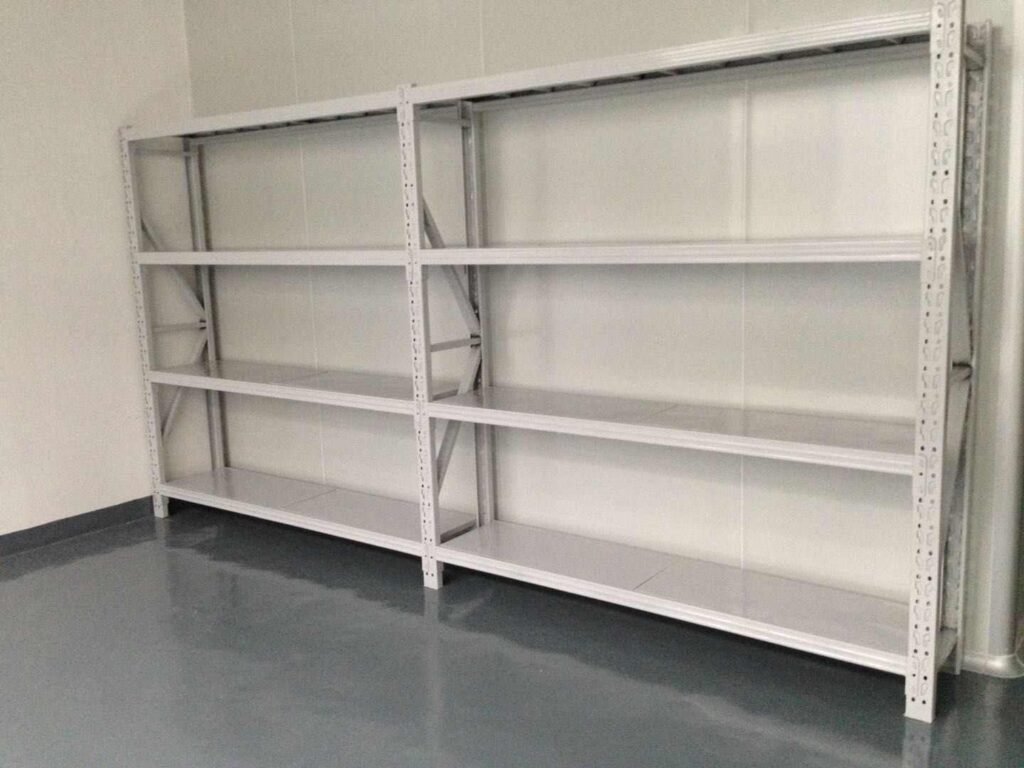
The standard’s model system gives buyers a common language. A JHA₁ racking unit is a double-post, single-sided combination racking structure. A JHA₂ racking unit is a double-post, double-sided combination racking structure. A JHB₁ racking unit is a four-post narrow-panel racking structure. A JHB₂ racking unit is a four-post wide-panel racking structure. When these designations appear in a racking RFQ, suppliers immediately understand the expected configuration. The buyer also gains leverage because the racking specification can be checked against a published industry standard rather than against a supplier’s marketing brochure.
Racking buyers should also note that the standard’s load tables are not suggestions. The rated load per shelf for JHA₁ racking is 120 kg, for JHA₂ racking is 240 kg, and for both JHB₁ racking et JHB₂ racking is 150 kg. The total rated load per unit is 480 kg, 960 kg, 600 kg, et 600 kg respectively. These figures assume four shelf levels and uniform load distribution. A racking supplier that claims a much higher load without providing test evidence is not offering a standard-compliant racking product; it is offering an unverified racking claim.
H3: Rayonnage Load Ratings and the K Coefficient in Commercial Negotiation
Le load capacity coefficient K is one of the most useful commercial metrics in the light-duty racking market. It is calculated by dividing the rated total load of a racking unit by the total self-weight of its component parts. The standard specifies minimum K values of 12 for JHA₁ racking, 15 for JHA₂ racking, 12 for JHB₁ racking, et 10 for JHB₂ racking. These values allow a buyer to evaluate whether a racking design is material-efficient or overbuilt.
A racking manufacturer that achieves a higher K coefficient may offer a lighter racking system that reduces shipping weight and steel consumption. However, a higher K coefficient must not come at the expense of stability, weld integrity, or coating quality. A racking unit that is too light may flex excessively under load, especially in tall racking configurations. A racking unit that is too heavy may be unnecessarily expensive and difficult to relocate. The K coefficient is therefore a balancing metric, not an isolated performance target.
During negotiation, buyers can ask for the calculated K value of each racking quotation. Suppliers should be able to show the total self-weight of the racking components and the rated load used in the calculation. If a supplier cannot provide this information, the racking quotation should be treated with caution. Transparent racking suppliers welcome such questions because they demonstrate that the buyer understands the difference between a genuine racking system and a generic shelving product.
H3: Material Traceability for Racking Uprights, Beams, and Shelf Panels
The racking standard requires metal materials to meet referenced Chinese standards, including GB/T 710 for hot-rolled carbon structural steel sheets, GB/T 2270 for stainless steel seamless tubes, GB/T 3280 for stainless steel cold-rolled sheets, GB/T 4437 for aluminum and aluminum alloy extruded tubes, and GB/T 3880 for aluminum and aluminum alloy sheets. These references matter because racking performance depends on material consistency. A racking upright made from inconsistent steel may crack during forming, weaken at welded joints, or deform under rated load.
For racking buyers, material traceability should be part of the purchase specification. A reputable racking manufacturer can provide mill certificates or material test reports for the steel used in uprights, beams, shelf panels, and base plates. The racking standard’s type inspection requirements include tensile testing of upright and beam materials, with no fewer than three specimens per material type. This requirement exists because racking failures often begin with material defects that are invisible after painting or powder coating.
Racking components should also be checked for thickness consistency. A racking upright that is thinner than specified may pass a visual inspection but fail under load. A racking beam that is undersized may deflect beyond the standard’s limits. A racking shelf panel that is too thin may oil-can or permanently deform. These are not theoretical concerns. They are common findings in third-party racking inspections, especially when buyers purchase from suppliers that prioritize low price over material compliance.
H4: Racking Steel Grades and Corrosion Exposure
The choice of racking steel grade depends on the operating environment. Standard carbon steel racking is suitable for dry warehouses, retail stockrooms, and general industrial storage. Stainless steel racking is preferred in food processing, pharmaceutical, and humid environments where corrosion resistance is critical. Aluminum racking is useful where weight reduction matters, but aluminum racking generally has lower stiffness than steel racking and may not be suitable for high-load racking applications.
Corrosion exposure is a major factor in racking lifecycle cost. A racking unit installed in a humid basement, cold storage room, or coastal warehouse will deteriorate faster than the same racking unit installed in a climate-controlled facility. The standard’s coating requirements provide a baseline, but modern racking buyers often specify higher salt spray performance than the original standard requires. A racking supplier should be able to recommend the appropriate coating system based on the actual racking environment, not simply quote the minimum standard.
H3: Welding Quality in Racking: What Buyers Cannot See but Must Verify
Welding is one of the most critical yet least visible aspects of racking quality. The standard requires racking weld points to be smooth, fully penetrated, and strong, with no slag inclusions, cold laps, or burn-through. These requirements apply to upright-to-base plate welds, upright-to-bracket welds, beam-to-endplate welds, and other structural connections. A racking unit with poor welds may appear acceptable when empty, but it can fail suddenly under load.
The standard’s weld inspection method is practical and revealing. A steel plug or wedge with a diameter 6% larger than the internal diameter of the upright tube is driven into the tube at the weld location. The weld must not crack. This test evaluates the ductility and fusion quality of the weld. A racking manufacturer that cannot perform this test or refuses to provide weld test records is a risk to any racking project.
Racking buyers should also inspect welds on sample racking units before placing bulk orders. Visual inspection should look for undercut, porosity, spatter, and uneven weld beads. A magnetic particle inspection or dye penetrant inspection may be used for critical racking welds in high-value projects. The cost of weld inspection is small compared with the cost of a racking collapse.
H4: Racking Weld Testing and Upright Tube Expansion
The upright tube expansion test is especially important for boltless racking. In boltless racking, the upright is not only a vertical column; it is also the connection interface for beams, brackets, and shelf supports. If the upright weld fails during expansion, the racking connection may loosen under load. A racking unit that uses thin-walled uprights with poor welds may pass a static load test but fail after repeated loading and unloading cycles.
For racking suppliers, the expansion test should be part of routine quality control, not only type inspection. For racking buyers, the test report should be included with the racking inspection documents. When a racking supplier provides a type inspection report that includes weld test results, the buyer gains confidence that the racking product has been evaluated beyond appearance.
H3: Coating Systems for Racking: Salt Spray, Adhesion, and Impact
The racking standard specifies coating performance requirements for gloss, hardness, impact strength, salt spray corrosion resistance, and adhesion. The minimum salt spray resistance in the standard is 1 hour, which reflects the coating technology available when the standard was published. Modern racking buyers typically require much higher performance, often 240 hours to 1,000 hours of salt spray resistance, depending on the racking application.
Coating adhesion is equally important. A racking coating that flakes off during assembly exposes bare metal and creates a corrosion site. The standard requires adhesion of not less than Grade 2 using the cross-hatch test. A racking supplier should be able to provide adhesion test results for the actual coating system used on the racking. Powder coating, epoxy coating, and zinc-rich primers each have different adhesion characteristics, and the choice should match the racking environment.
Impact resistance matters because racking is frequently bumped by forklifts, pallet jacks, carts, and hand trucks. A racking coating with poor impact resistance will chip easily, especially on uprights and beam edges. The standard’s impact strength requirement of 4–5 N·m provides a baseline, but heavy-traffic racking areas may require a more robust coating system.
H4: Racking Coating Failure Modes in Humid Warehouses
In humid warehouses, racking coating failure often begins at cut edges, weld seams, and boltless connection points. These are the areas where the coating is thinnest or where bare metal is exposed. A racking unit with inadequate edge coverage may develop rust within months. A racking unit with poor adhesion may blister and peel when moisture penetrates under the coating.
Racking buyers should specify edge coverage, weld seam protection, and touch-up procedures. A racking supplier should provide touch-up paint or powder coating repair material for installation damage. Racking maintenance teams should inspect coating integrity during regular racking safety audits. Small coating repairs prevent larger corrosion problems and extend racking service life.
H3: Dimensional Tolerances and Racking Interchangeability
The racking standard defines dimensional tolerances for length, width, and height, with typical tolerances of ±4 mm for length and width and ±5 mm for height. These tolerances ensure that racking components fit together properly and that racking units can be assembled without forcing or modification. The standard also requires that similar racking parts be interchangeable. This means a replacement upright, beam, or shelf panel of the same part number should fit any corresponding racking connection point.
Interchangeability is a major advantage of standard-compliant racking. A warehouse that expands its racking system can order additional racking components without worrying about whether they will match the existing racking. A retail chain that relocates racking between stores can mix components from different batches, provided the racking supplier maintains dimensional control. A racking manufacturer that ignores tolerances may produce components that only fit together in the original factory assembly, creating costly problems in the field.
Racking buyers should verify interchangeability by requesting a sample assembly test. A supplier that can assemble racking components from different production batches without difficulty is more likely to deliver a racking system that performs reliably in the field. A supplier that requires matched sets or custom fitting should be viewed with suspicion.
H4: Racking Assembly Without Bolts: Engineering Advantages and Limits
Boltless racking assembly is one of the defining features of light-duty combination racking. The standard describes racking that can be assembled and disassembled repeatedly without complex tools, welding, or bolts and nuts as the primary connection method. This design reduces installation time, allows racking reconfiguration, and lowers labor cost. However, boltless racking also has limits. Boltless connections depend on precise fit, material strength, and connection geometry. If the racking upright is too thin or the beam bracket is poorly formed, the boltless connection may loosen under load.
Racking buyers should therefore evaluate both the convenience and the engineering integrity of boltless racking. A racking unit that assembles easily but flexes excessively is not a good racking investment. A racking unit that is rigid but difficult to assemble may slow down warehouse reconfiguration. The best racking designs balance ease of assembly with structural stiffness.
H3: Load Testing a Racking Unit: From Preload to Rated Capacity
The standard’s load test procedure is detailed and practical. A racking unit is loaded with 20 kg Class 4 weights ou 10 kg iron filings bags, distributed uniformly across shelf levels, starting from the lowest shelf and working upward. The center of gravity should be near the lateral centerline of each shelf, and loads should not extend beyond the shelf edges. The racking unit is loaded to rated capacity and observed for stability, sway, fracture, cracking, or damage.
This test is valuable because it simulates real racking use. A racking unit that is loaded unevenly may tilt or deflect more than a racking unit loaded uniformly. A racking unit that is loaded from the top down may become unstable during loading. A racking unit that is loaded beyond its rated capacity may show permanent deformation. Racking buyers should require a load test report for the specific racking model being purchased, not a generic racking load certificate.
The standard also requires geometric measurements under load, including upright parallelism, perpendicularity, shelf tilt, and beam deflection. These measurements confirm that the racking unit remains within tolerance when loaded. A racking unit that exceeds these tolerances may be unsafe or may not function properly in a warehouse environment.
H4: Racking Deflection Limits and Long-Term Deformation
The standard specifies beam deflection limits of 3.5 mm/m for JHB₁ racking et 4.5 mm/m for JHB₂ racking. These limits control how much the racking beam can sag under load. Excessive beam deflection can cause shelf panels to slope, products to slide, and racking components to fatigue over time. A racking beam that deflects beyond the limit may not fail immediately, but it may reduce the racking’s usable life and create safety risks.
Long-term deformation is a particular concern for racking installed in high-temperature environments or subjected to constant heavy loads. A racking unit that is loaded to its rated capacity for years may creep or sag more than a racking unit that is loaded intermittently. Racking buyers should specify a design margin when the racking will be continuously loaded. A racking supplier with engineering experience can recommend appropriate racking beam sizes and shelf panel thicknesses.
H3: Inspection Rules That Separate Reliable Racking Suppliers from Traders
The standard divides inspection into factory inspection et type inspection. Factory inspection covers weld quality and appearance quality for every production batch. Type inspection covers all technical requirements and is conducted annually or when triggered by significant changes. This two-tier system gives racking buyers a clear framework for supplier evaluation.
A reliable racking supplier should provide factory inspection records for each racking batch and type inspection reports for each racking model. A trading company that does not control racking production may struggle to provide these documents. A racking manufacturer that invests in testing equipment and quality control personnel can provide them consistently. For buyers, the presence of inspection documentation is often a better indicator of racking quality than a low price.
The standard’s sampling plans are based on GB/T 2828 for factory inspection and GB/T 2829 for type inspection. Factory inspection uses an AQL of 6.5 and inspection level I. Type inspection uses an RQL of 40, discrimination level II, sample size n = 10, with acceptance number Ac = 2 and rejection number Re = 3. These statistical sampling rules ensure that racking quality is evaluated systematically rather than by random visual checks.
H4: Factory Inspection and Type Inspection for Racking
Factory inspection is the first line of defense against racking defects. It catches weld defects, coating defects, and appearance problems before racking components leave the factory. Type inspection is the deeper evaluation that verifies material properties, coating performance, weld strength, and load capacity. A racking supplier that only performs factory inspection may miss material or design problems that only appear under load.
Racking buyers should request both inspection reports when evaluating a new racking supplier. The factory inspection report should show the batch size, sample size, acceptance number, rejection number, and inspection results. The type inspection report should include material test results, weld test results, coating test results, and load test results. A racking supplier that cannot provide these reports should not be considered for critical racking projects.
H3: Packaging, Transport, and Storage of Racking Components
The standard includes requirements for racking packaging, transportation, and storage. Racking components should be packed in corrugated boxes or other protective packaging. Internal components should be wrapped in non-fading paper. Packaging should be strong enough to prevent damage during transport. Racking should be protected from rain, snow, sunlight, and impact during transportation. Racking should be stored in a ventilated, dry, sun-protected, and rain-protected warehouse.
These requirements are often overlooked, but they have a direct impact on racking quality. A racking unit that is damaged in transit may arrive with bent uprights, scratched coatings, or deformed shelf panels. A racking unit that is stored in a damp warehouse may develop rust before installation. A racking unit that is mishandled during unloading may suffer hidden damage that only appears under load.
Racking buyers should specify packaging requirements in the purchase order. Uprights should be protected at the ends, beams should be bundled securely, shelf panels should be separated to prevent scratching, and hardware should be packed in labeled bags. A racking supplier that understands export packaging will reduce the risk of transport damage and installation delays.
H4: Preventing Racking Damage Before Installation
Pre-installation damage is a common cause of racking complaints. Uprights are often bent when they are dropped or dragged. Shelf panels are often scratched when they are stacked without protection. Coating is often chipped when components rub against each other in transit. These problems can be avoided with proper packaging, careful handling, and clear unloading instructions.
Racking buyers should inspect racking shipments before signing the delivery receipt. Damaged racking components should be photographed and reported immediately. A racking supplier that provides replacement components quickly is more valuable than one that disputes every damage claim. Racking installation teams should also be trained to handle racking components carefully and to use touch-up paint when minor coating damage occurs.
H3: International Racking Standards and Export Compliance
The Chinese racking standard is not the only racking standard in the world. Racking buyers in Europe, North America, and Australia may require compliance with EN 15512, RMI MH16.1, ou AS4084:2023. These standards differ in scope, design methodology, safety factors, and testing requirements. A racking manufacturer that exports to multiple markets must understand these differences and design racking products accordingly.
EN 15512 is the European standard for adjustable pallet racking. It uses limit state design and partial safety factors. RMI MH16.1 is the North American standard for industrial steel storage racks. It emphasizes load testing, seismic design, and rack safety. AS4084:2023 is the Australian and New Zealand standard for steel storage racking. It focuses on structural performance, load information, and safe warehouse operation.
These international racking standards are generally more rigorous than the Chinese light-duty racking standard because they apply to heavier racking systems. However, they provide useful benchmarks for racking buyers who want to compare racking designs. A racking manufacturer that can design to both Chinese and international racking standards is better equipped to serve global customers.
H4: EN 15512, RMI MH16.1, and AS4084 Compared with Chinese Racking Standard
The Chinese racking standard is prescriptive and practical for light-duty combination racking. EN 15512 is performance-based and applies to adjustable pallet racking. RMI MH16.1 is testing-oriented and applies to industrial steel storage racks. AS4084 is operationally focused and applies to steel storage racking in Australia and New Zealand.
A racking buyer should not assume that a racking product compliant with one standard is automatically compliant with another. The racking design, material thickness, connection details, and load ratings may need to be modified. A racking supplier that claims compliance with multiple racking standards should provide test reports and design calculations for each standard. A racking supplier that cannot provide this evidence is making a marketing claim, not an engineering claim.
H3: Racking Applications in E-Commerce, Retail, Workshops, and Archives
Light-duty combination racking is used in many environments. In e-commerce fulfillment centers, racking supports fast-moving SKUs, picking bins, and returns processing. In retail backrooms, racking stores overstock, seasonal merchandise, and supplies. In workshops, racking organizes tools, parts, and sub-assemblies. In archives, racking stores document boxes, files, and records.
Each application places different demands on racking. E-commerce racking must be easy to reconfigure and must support frequent picking. Retail racking must be presentable and must fit limited backroom space. Workshop racking must resist impact and support heavy individual items. Archive racking must maximize storage density and support uniform box loads. A racking supplier that understands these differences can recommend the right racking configuration for each application.
H4: How Racking Configurations Affect Order Picking Efficiency
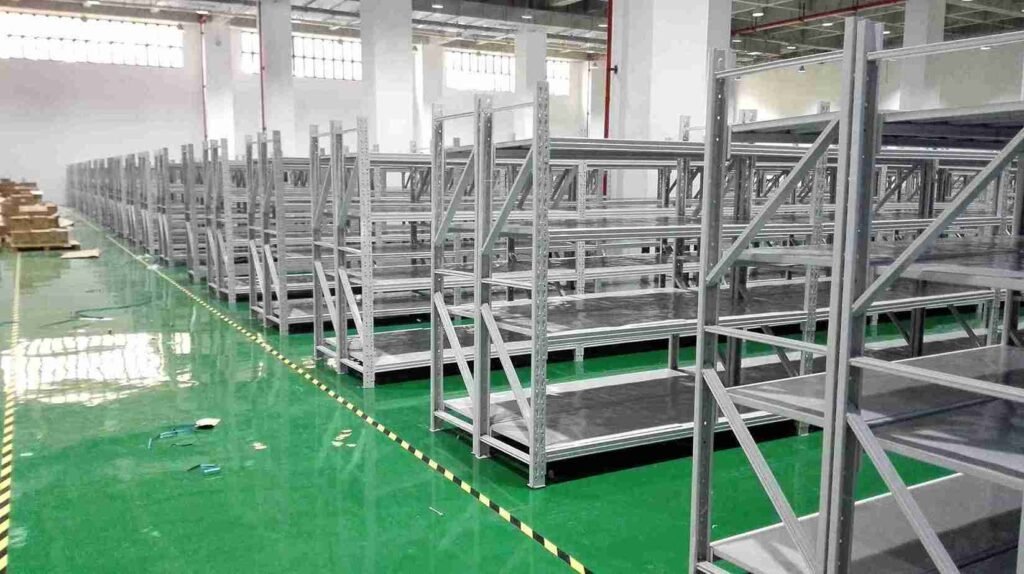
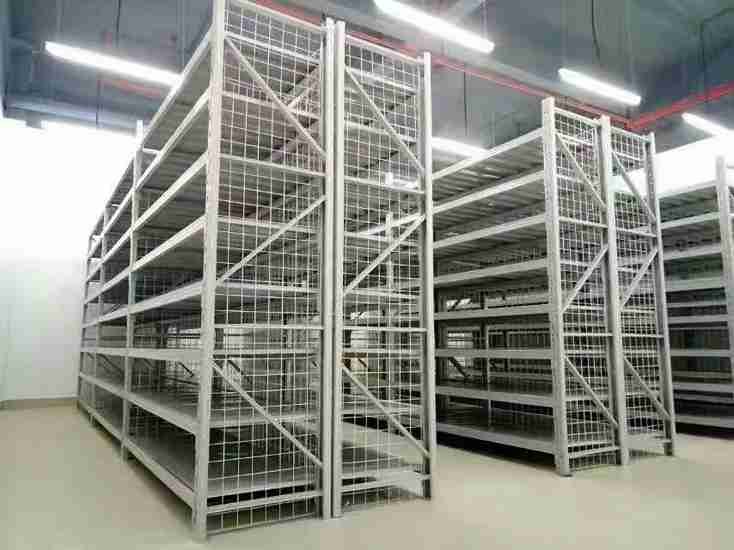
Racking configuration affects picking efficiency. Single-sided racking is suitable for wall placement and narrow aisles. Double-sided racking is suitable for island layouts and higher storage density. Four-post racking provides greater stability and is suitable for wider shelf panels. Narrow-panel racking is suitable for small parts and document boxes. Wide-panel racking is suitable for bulkier items and cartons.
Racking buyers should consider picking flow when selecting racking. A racking layout that forces pickers to walk long distances reduces productivity. A racking layout that places fast-moving items at convenient heights improves picking speed. A racking layout that allows easy replenishment reduces stockouts. These operational factors are as important as the racking standard itself.
H3: Racking Maintenance and Safety Audits
Racking maintenance is essential for safety and performance. Racking should be inspected regularly for damage, deformation, loose connections, and coating failure. Damaged racking components should be replaced immediately. Racking load labels should be visible and legible. Racking inspection records should be maintained.
A racking safety audit should check upright verticality, beam deflection, shelf levelness, and connection integrity. It should also check for impact damage from forklifts or pallet jacks. A racking unit that is damaged but not replaced may collapse under load. A racking unit that is overloaded may deform permanently. A racking unit that is missing components may be unstable.
Racking buyers should establish a racking inspection schedule based on racking usage and risk. High-traffic racking areas may require weekly inspections. Low-traffic racking areas may require monthly or quarterly inspections. Annual racking inspections should include dimensional checks and load rating verification. A qualified racking inspector can identify problems that untrained staff may miss.
H4: Load Labels, Inspection Tags, and Racking Damage Reporting
Load labels are a simple but effective safety measure. A racking load label should state the rated load per shelf, the total racking unit load, and the maximum load per shelf level. Inspection tags should record the date of the last inspection, the inspector’s name, and any defects found. Damage reporting should be easy and encouraged so that problems are fixed quickly.
Racking buyers should require racking suppliers to provide load labels and inspection tags with every racking unit. Racking suppliers should also provide replacement labels when racking configurations change. A racking system without load labels is a safety risk because operators may not know the racking’s capacity.
H3: Common Racking Procurement Mistakes
Racking procurement mistakes are common and costly. One mistake is buying racking based only on price. Another is accepting load claims without test reports. Another is mixing racking components from different suppliers. Another is ignoring coating requirements. Another is failing to plan for future racking expansion.
A racking buyer should avoid these mistakes by specifying the racking standard, requesting inspection documents, verifying material certificates, checking dimensional tolerances, and planning for future racking needs. A racking supplier that supports these requirements is more likely to deliver a racking system that performs reliably.
H4: False Load Claims, Missing Test Reports, and Incompatible Components
False load claims are a serious problem in the racking market. Some suppliers advertise racking capacities that are not supported by testing. Some suppliers provide test reports for a different racking model. Some suppliers use thinner materials than specified. Some suppliers use incompatible components that do not fit together properly.
Racking buyers should verify load claims by requesting a load test report for the exact racking model being purchased. The report should include the test method, test load, deflection measurements, and inspection results. The racking buyer should also verify that the racking components are interchangeable and that replacement parts will be available in the future.
H3: Racking RFQ Checklist for Importers and Project Buyers
A clear racking RFQ helps suppliers quote accurately and helps buyers compare quotations. The RFQ should include racking type, model designation, dimensions, shelf levels, load per shelf, total load, coating requirement, color, packaging requirement, inspection documents, delivery terms, and warranty.
A racking RFQ should also include the racking application and environment. A racking system for a humid warehouse may require a different coating than a racking system for a dry stockroom. A racking system for a seismic zone may require additional bracing. A racking system for export may require stronger packaging. The more information the buyer provides, the more accurate the racking quotation will be.
H4: Technical Documents Required from a Racking Manufacturer
A reliable racking manufacturer should provide technical documents including racking drawings, load calculations, material certificates, weld test reports, coating test reports, load test reports, inspection reports, assembly instructions, and maintenance guidelines. These documents support the buyer’s due diligence and provide a record for future racking expansion or modification.
Racking buyers should treat missing documents as a warning sign. A racking manufacturer that cannot provide basic technical documents may not have the engineering capability to produce consistent racking. A racking manufacturer that provides complete documentation demonstrates professionalism and accountability.
H3: Total Cost of Ownership for Light-Duty Racking
The purchase price of racking is only one part of the total cost of ownership. Other costs include transportation, installation, reconfiguration, maintenance, replacement parts, and downtime. A low-cost racking system that requires frequent repairs may cost more over its life than a higher-quality racking system that performs reliably.
Racking buyers should evaluate racking suppliers on total cost of ownership, not just unit price. A racking supplier that provides durable coating, consistent dimensions, and reliable load performance can reduce long-term costs. A racking supplier that provides good technical support and fast replacement parts can reduce downtime. These factors matter in warehouses where racking downtime disrupts operations.
H4: Racking Material Efficiency, Reconfiguration, and Resale Value
Material-efficient racking uses less steel without compromising strength. Reconfigurable racking can be adapted to changing storage needs. Racking with good resale value can be sold or reused when a warehouse relocates. These factors make racking a more flexible investment.
A racking system that meets the standard is more likely to be reconfigurable and resalable because it uses standardized components. A racking system that uses custom components may be difficult to expand or repair. A racking buyer should consider the racking’s long-term flexibility when selecting a racking supplier.
H3: Future of Racking Standards and Smart Warehousing
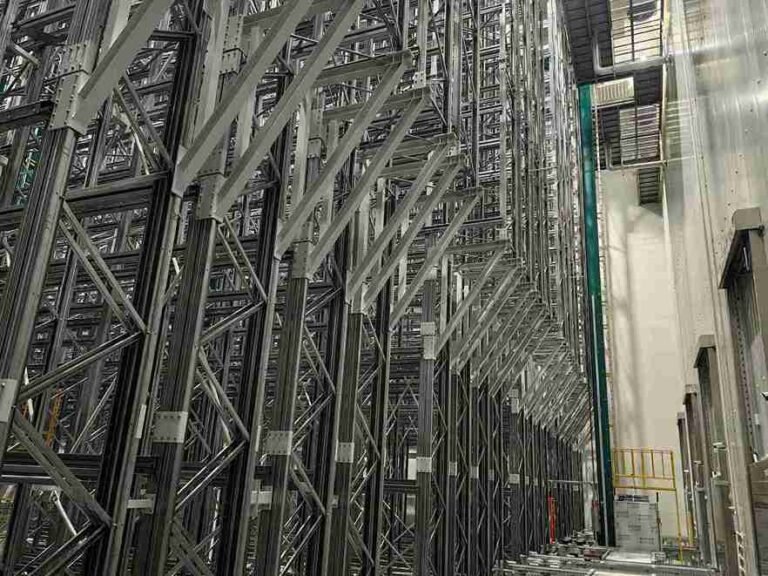
Racking standards continue to evolve. New standards address shuttle racking, cold storage racking, and automated storage systems. Smart warehousing technologies are changing how racking is used. Sensors can monitor racking load and damage. Automated guided vehicles can move racking modules. Robotics can pick from racking systems.
Racking buyers should look for suppliers that understand these trends. A racking supplier that invests in research and development can help buyers prepare for future warehousing needs. A racking supplier that only offers basic shelving may not be able to support automation or smart warehouse integration.
H4: Automation-Ready Racking and Shuttle Systems
Automation-ready racking must be designed for precise positioning, consistent dimensions, and reliable load handling. Shuttle racking systems use powered shuttles to move pallets or bins within racking lanes. These systems require high-quality racking components and strict dimensional control.
Racking buyers considering automation should involve racking suppliers early in the planning process. The racking design must match the automation equipment, the warehouse layout, and the product profile. A racking system that is not designed for automation may cause jams, mispicks, or equipment damage.
H3: Conclusion
The metal light-duty combination racking standard provides a practical foundation for racking design, manufacturing, testing, and procurement. Racking buyers who understand the standard can specify racking more accurately, compare racking quotations more effectively, and verify racking quality more confidently. Racking suppliers who follow the standard can differentiate themselves from low-quality competitors and build trust with international buyers.
The racking market rewards buyers who ask technical questions. Racking load capacity, racking material thickness, racking weld quality, racking coating performance, racking dimensional tolerances, and racking inspection documentation are not optional details. They are the evidence of a reliable racking system. A racking purchase based on price alone often leads to racking problems. A racking purchase based on standard compliance, verified testing, and transparent documentation leads to a racking system that supports safe, efficient, and long-term storage operations.
For importers, project buyers, and warehouse operators, the most effective racking procurement strategy is to treat the racking standard as a checklist. Confirm the racking model, verify the racking load rating, request the racking test reports, inspect the racking sample, and plan for future racking expansion. Racking suppliers that can meet these requirements are better partners for serious racking projects. Racking buyers that insist on these requirements are better positioned to achieve accurate quotations, reliable delivery, and strong long-term value from every racking investment.
Geelyracks is a factory specializing in warehouse racking and a global expert in custom racking solutions: https://geelyracks.com/
We can provide you with free warehouse racking design plans and price quotes; veuillez nous contacter. Our email address is jili@geelyracks.com