📐 "Ensimmäiset 50 yrityskyselyä saavat mukautetun 3D-varaston suunnittelun" Suunnitelma


Introduction: Why Forklift Requirements Matter in Double Deep Racking Systems
Double deep racking systems are a game-changer for warehouses looking to maximize storage density. However, operating in these systems isn’t as simple as using any standard forklift. The double deep racking forklift requirements are strict—get them wrong, and businesses risk:
- Rack collisions and structural damage
- Unstable loads leading to tip-overs
- Reduced productivity due to inefficient handling
This guide dives deep into the forklift requirements for double deep racking, covering equipment selection, operator training, safety protocols, and maintenance best practices. Whether you’re upgrading your warehouse or optimizing existing operations, understanding these double deep racking forklift requirements is critical for success.
1. The Right Forklift for Double Deep Racking: Key Equipment Choices
1.1 Reach Trucks: The Industry Standard for Double Deep Operations
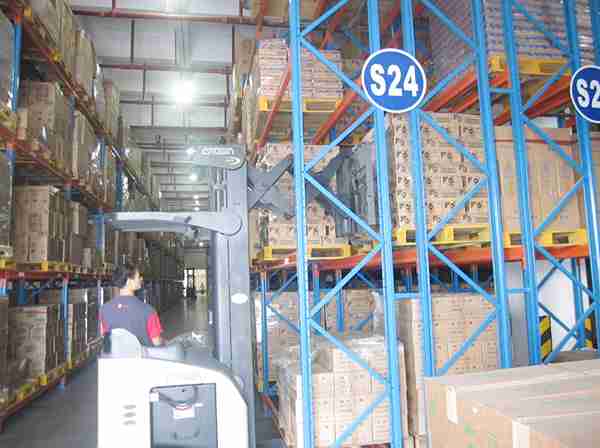
When it comes to double deep racking forklift requirements, reach trucks are the top choice. Their design is tailored for deep storage lanes, offering:
- Extendable forks that slide forward to access second-pallet positions
- Narrow aisle compatibility, allowing operation in tight spaces (as little as 7 feet)
- High lifting capacity, typically between 2,500 to 3,500 kg
For optimal performance, warehouses should look for models with:
- High-visibility masts to improve operator sightlines
- Load stabilizers to prevent pallet sway
- Precision control systems for smooth handling
1.2 Double Reach Trucks: The Best Solution for Extra-Deep Storage
For warehouses pushing storage limits, double reach trucks meet even stricter double deep racking forklift requirements with:
- Extended fork lengths (up to 4.5 meters) for deeper access
- Dual telescopic mechanisms for superior stability
- Compatibility with triple-deep racking setups
1.3 Counterbalance Forklifts: Can They Work in Double Deep Racking?
While counterbalance forklifts are versatile, they fall short in meeting double deep racking forklift requirements unless:
- Aisles are widened (minimum 12 feet)
- Operators receive specialized training
- Additional safety measures (like cameras or sensors) are installed
For most warehouses, reach trucks remain the smarter choice.
2. Critical Forklift Specifications for Double Deep Racking Systems
2.1 Mast Height and Free Lift: Non-Negotiable Requirements
Meeting double deep racking forklift requirements means ensuring:
- Mast height exceeds the highest rack level by at least 6 inches
- Free lift capability allows forks to extend without mast interference
2.2 Load Capacity and Fork Length: Avoiding Overloading Risks
- Fork length must support double pallet depth (96″ minimum)
- Load capacity should never exceed racking system limits
2.3 Aisle Width Compatibility: Matching Equipment to Warehouse Layout
- Narrow aisle (NA) forklifts for 8-9 ft aisles
- Very narrow aisle (VNA) forklifts for aisles under 7 ft
3. Operator Training: A Must for Safe Double Deep Racking Operations
3.1 Specialized Training for Double Deep Handling
Since double deep racking forklift requirements demand precision, operators must be trained in:
- Depth perception adjustments for second-pallet placement
- Slow, controlled movements to prevent collisions
- Load balancing techniques
3.2 Safety Features Every Forklift Should Have
To comply with double deep racking forklift requirements, look for:
- Anti-collision sensors
- Automatic braking systems
- Load weight indicators
4. Maintenance and Inspections: Keeping Forklifts in Top Shape
Regular checks should include:
- Fork alignment and wear
- Hydraulic system integrity
- Mast functionality
5. Conclusion: Meeting Double Deep Racking Forklift Requirements for Maximum Efficiency
Selecting the right forklift for double deep racking isn’t just about equipment—it’s about safety, efficiency, and long-term cost savings. By following these double deep racking forklift requirements, warehouses can optimize storage density while minimizing risks.
Usein kysytyt kysymykset: Answering Key Questions on Double Deep Racking Forklift Requirements
1. Can a standard forklift be used in double deep racking?
While possible, it’s not recommended due to visibility and reach limitations.
2. What is the minimum aisle width for double deep forklifts?
Typically 8-9 feet for reach trucks, but VNA models can work in narrower aisles.
3. How often should forklifts be inspected in double deep systems?
Daily pre-shift checks and scheduled professional maintenance every 250 hours.
4. Are automated forklifts suitable for double deep racking?
Yes, AGVs (Automated Guided Vehicles) with precise navigation can be effective.
5. What happens if a forklift is too heavy for double deep racking?
Exceeding load limits can cause rack collapse, leading to safety hazards and costly damages.
By following these guidelines, warehouses can optimize their double deep racking systems with the right forklift requirements, ensuring both productivity and safety.