📐 "أول 50 استفسار مؤسسي يحصل على تصميم مستودع ثلاثي الأبعاد مخصص" الخطة
















Introduction to Shuttle Rack Systems and Their Working Principle
In the fast-evolving world of warehouse automation, shuttle rack systems have emerged as a leading solution for high-density storage and efficient material handling. At the heart of their success is the shuttle rack working principle, which combines automation, precision, and space optimization to transform warehouse operations.
Unlike traditional pallet racking, which relies heavily on manual forklift operations, shuttle rack systems operate on an advanced shuttle rack working principle that uses self-driven carts to store and retrieve pallets autonomously. This system minimizes human intervention, reduces errors, and maximizes storage capacity—making it indispensable for modern logistics.
This in-depth guide explores the shuttle rack working principle in detail, covering its mechanics, benefits, and real-world applications to help businesses understand why this technology is a game-changer.

H2: Understanding the Shuttle Rack Working Principle
H3: The Core Mechanism Behind Shuttle Rack Systems
The shuttle rack working principle revolves around three key components:
- The Shuttle Cart – A battery-powered, robotic vehicle that moves horizontally within rack lanes to transport pallets.
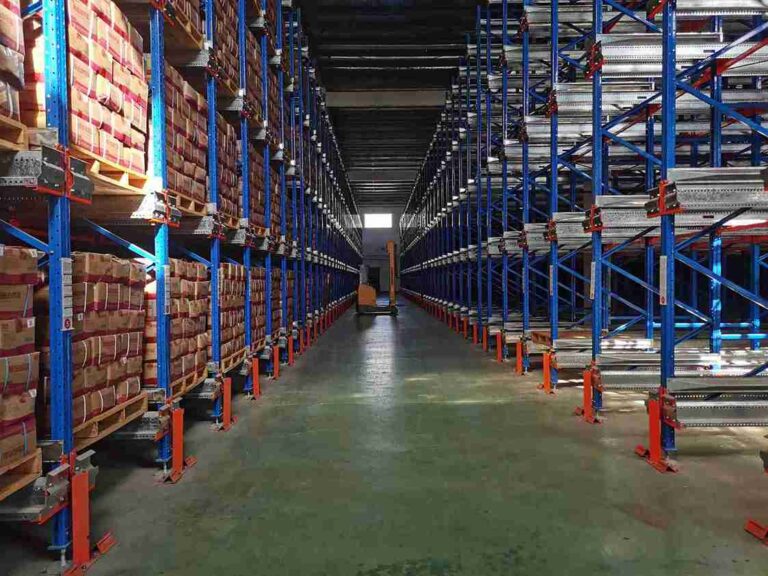
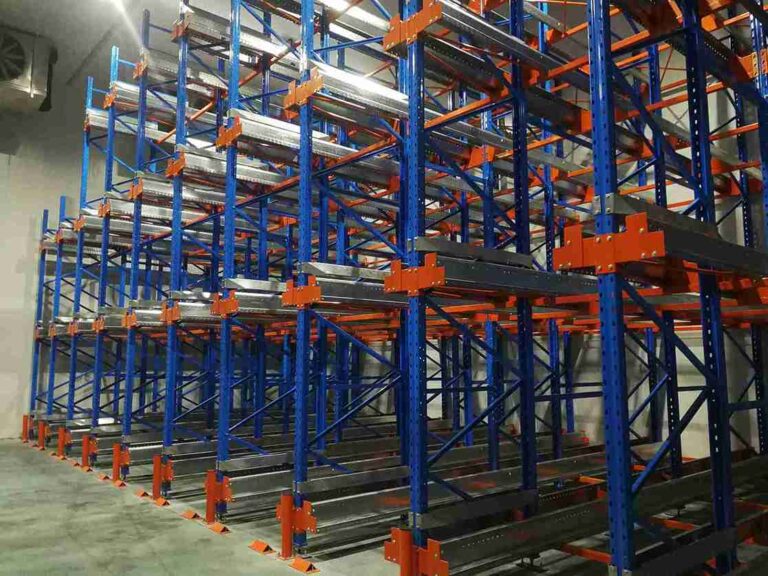
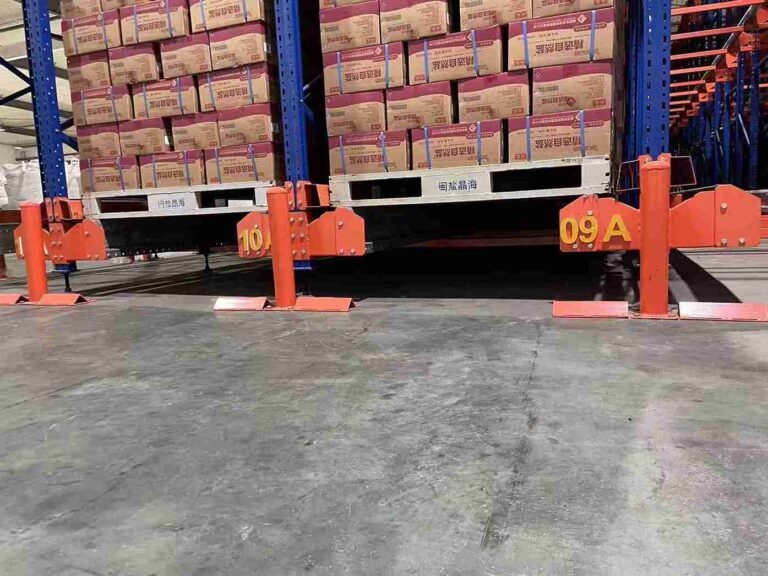
- The Rack Structure – Designed for deep-lane storage, allowing multiple pallets to be stored in a single row.
- The Control System – A software-driven interface that manages shuttle movements, ensuring seamless operation.
When a pallet enters the system, the shuttle rack working principle ensures that the cart automatically transports it to the first available position within the lane. For retrieval, the shuttle moves the required pallet to the front, where a forklift or conveyor takes over.
H3: How the Shuttle Rack Working Principle Differs from Traditional Systems
- No Forklift Dependency – Unlike drive-in racking, the shuttle rack working principle eliminates the need for forklifts to enter storage lanes.
- Higher Speed & Accuracy – Automated shuttles operate continuously, reducing retrieval times by up to 50%.
- Optimized Space Utilization – The shuttle rack working principle allows for deeper lanes, increasing storage density by 60% or more.
H2: Types of Shuttle Rack Systems Based on Working Principle
H3: 1. Semi-Automated Shuttle Systems
- Working Principle: Forklifts place pallets at the lane entrance, and the shuttle handles internal storage and retrieval.
- Best For: Warehouses transitioning from manual to automated systems.
H3: 2. Fully Automated Shuttle Systems
- Working Principle: Integrated with Warehouse Management Systems (WMS) for end-to-end automation.
- Best For: High-volume distribution centers requiring minimal human intervention.
H2: Key Advantages of the Shuttle Rack Working Principle
H3: 1. Unmatched Storage Density
The shuttle rack working principle enables deep-lane storage, allowing warehouses to store up to twice as many pallets compared to selective racking.
H3: 2. Faster Load/Unload Cycles
- Continuous Operation: Shuttles work non-stop, reducing downtime.
- Reduced Congestion: Fewer forklifts mean smoother warehouse traffic.
H3: 3. Enhanced Inventory Control
The shuttle rack working principle ensures real-time tracking, minimizing lost or misplaced inventory.
H3: 4. Long-Term Cost Efficiency
While initial costs are higher, the shuttle rack working principle reduces labor expenses and energy consumption (especially in cold storage).
H2: Industries Leveraging the Shuttle Rack Working Principle
H3: 1. Cold Storage & Food Distribution
- Energy Efficiency: The shuttle rack working principle minimizes door openings, preserving temperature control.
- FIFO Compliance: Critical for perishable goods.
H3: 2. Pharmaceutical Warehousing
- Precision Handling: The shuttle rack working principle ensures secure storage of high-value medications.
- Regulatory Compliance: Automated tracking meets strict industry standards.
H3: 3. E-Commerce Fulfillment
- Same-Day Shipping: The shuttle rack working principle accelerates order processing.
- Scalability: Easily adapts to fluctuating demand.
H2: Comparing the Shuttle Rack Working Principle to Alternatives
H3: Shuttle Rack vs. Drive-In Racking
| الميزة | حامل المكوك | أرفف القيادة في السيارة |
|---|---|---|
| Automation | High (self-driven shuttles) | Low (forklift-dependent) |
| كثافة التخزين | Very High | Moderate |
| Access Speed | Fast (automated retrieval) | Slow (manual handling) |
H3: Shuttle Rack vs. AS/RS (Automated Storage & Retrieval Systems)
- AS/RS requires major infrastructure changes, while the shuttle rack working principle offers a more flexible, scalable solution.
H2: Implementing a Shuttle Rack System: Key Considerations
H3: 1. Warehouse Layout Optimization
- Lane Depth: Impacts how many pallets fit per row.
- Aisle Width: Shuttle systems require less space than traditional racking.
H3: 2. Integration with WMS
A robust Warehouse Management System (WMS) maximizes the shuttle rack working principle by coordinating shuttle movements and inventory tracking.
H3: 3. Maintenance & Durability
- Battery Life: Most shuttles use lithium-ion batteries with 8-10 hours of runtime.
- System Lifespan: Proper maintenance ensures 10-15 years of operation.
H2: Future Innovations in the Shuttle Rack Working Principle
H3: AI & Predictive Analytics
- Smart Routing: AI optimizes shuttle paths based on demand.
- Self-Diagnostics: Detects maintenance needs before failures occur.
H3: Sustainable Shuttle Solutions
- Solar-Powered Shuttles: Emerging in eco-friendly warehouses.
- Energy Recovery Systems: Regenerative braking reduces power consumption.
H2: Conclusion – Why the Shuttle Rack Working Principle is the Future
The shuttle rack working principle represents the pinnacle of warehouse automation, delivering higher density, faster operations, and lower costs. As industries demand smarter logistics, this technology will only grow in importance.
For businesses seeking greater efficiency, scalability, and ROI, adopting a shuttle rack system is a strategic investment.
H2: Frequently Asked Questions (الأسئلة الشائعة)
H3: 1. How does the shuttle rack working principle improve accuracy?
Automated tracking ensures real-time pallet location data, reducing errors.
H3: 2. Can shuttle rack systems handle heavy loads?
Yes, most support 1,500–3,000 kg per pallet, depending on design.
H3: 3. What’s the ROI for a shuttle rack system?
Typically 3-5 سنوات, thanks to labor and energy savings.
H3: 4. Are shuttle racks suitable for small warehouses?
Best for medium to large operations, but compact models exist.
H3: 5. How do shuttles handle power failures?
Most have backup power or manual retrieval options.